


Note: This is not the traditional article you’ve come to expect from us. It may not be for you, and it may not even appeal to our bosses (I probably should have asked first), editors, or fellow contributors. I am speaking only for myself. Perhaps it will speak to you.
“Though a tree grows so high, the falling leaves return to the root.”
— Malay proverb
A Date with Echoes
April 19, 1775:
Farmers and shopkeepers stood with muskets in fields outside Lexington and Concord.
They didn’t know they were starting a revolution.
They just knew they’d had enough.
April 19, 2025:
People will gather again — not in fields, but on courthouse steps, town squares, sidewalks outside shuttered agencies.
Not to fire, but to be heard.
Not to overthrow, but to reclaim.
The organizers call it 50501.
One day. Fifty states. One demand: a democracy that includes us.
It’s a date with echoes; if we listen, it might teach us what the first revolution forgot.
What We Fought For, What We Forgot
The story we tell about the American Revolution is tidy.
A noble fight for liberty. A brilliant Constitution. A brave new world.
But the truth — like all truths — is messier.
The revolutionaries fought for freedom, yes.
But not for everyone.
They fought to be heard while they silenced others.
They demanded justice yet codified injustice.
They broke from empire, but kept the empire mindset.
The enslaved were counted but not freed.
The Indigenous were named but not respected.
Women were remembered only when they resisted, and then, mostly forgotten.
We fought for a democracy.
Then handed it to elites to define, to guard, to gatekeep.
That’s the first lesson we forgot:
A revolution for the people must include the people. All of them.
And the second?
That revolution isn’t the end. It’s the beginning of hard work, hard questions, and harder compromises.
The founders made space for change but also built firewalls to slow it.
The Senate. The Electoral College. The courts. The loopholes.
It wasn’t just about liberty.
It was about control.
And for 250 years, that tension has remained:
But how much of this democracy is truly shared?
And how much of it is still being performed, managed, and rationed?
If we’re rising again — if we’re marching again — then we must remember the revolution we inherited was incomplete.
And this time, we don’t stop at what they started.
The Protest and the Promise
50501 isn’t about nostalgia.
It isn’t about reenactment.
It’s a moment — chosen intentionally — to say: this time must be different.
The movement calls on Americans to show up in every state, defend civil liberties, reject unchecked executive power, and remind the country that the people still hold the blueprint for what comes next.
In their own words, 50501 exists to “uphold the Constitution and end executive overreach.” They speak of plutocrats, disappearing rights, and institutions stripped of purpose.
They call on the working class — the ones most impacted by deregulation, disinformation, and dehumanization — to reclaim their voice.
And they don’t stop at protest. April 19 will see mutual aid drives, cleanup efforts, and community organizing.
It’s not a flashpoint.
It’s a foundation.
Forest of Governments
Not every system of governance looks the same, and not every system is built to last.
Some are towering. Some are twisted.
Some offer shade. Others cast shadows.
And some are planted with care, while others are shaped to control.
The United States is a willow.
It bends. It yields. It survives storms by swaying rather than snapping.
Its flexibility has been its strength — surviving civil war, scandal, and stagnation.
But its roots? Shallow. Sprawling.
Creeping into everything — water lines, foundations, foreign soil.
It holds on, but not always with honor.
And now the ground is shifting beneath it.
China is a bonsai.
Controlled. Clipped. Perfect from a distance.
But its roots are bound. Its shape is not chosen — it is imposed.
What appears serene is actually tension, tightly wound.
Break the pot, and it cannot hold.
France is an oak that’s been cut down and replanted five times.
Majestic, but never permanent.
It topples. It regrows. It reinvents.
Its orchard is wild — but it is still growing.
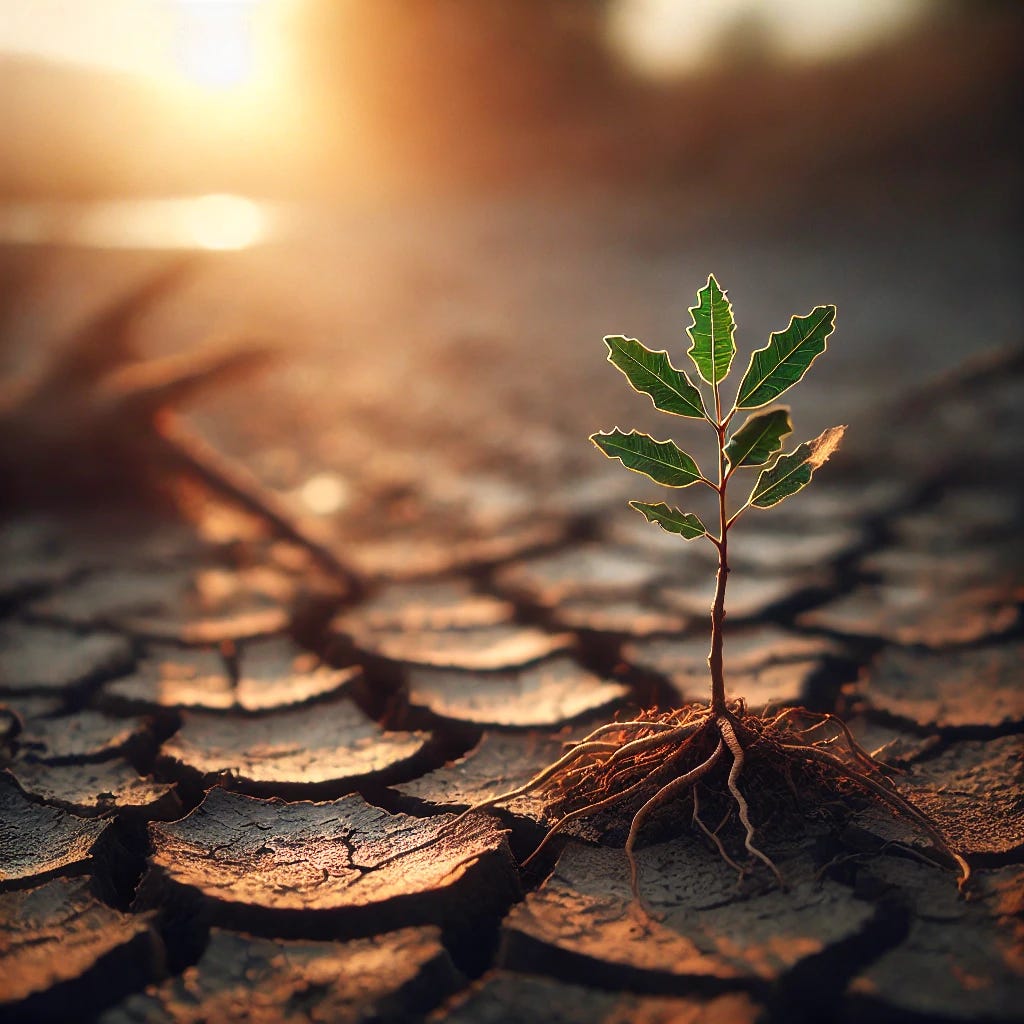
South Africa is a sapling.
Young, hopeful, scarred by the soil it sprang from.
But resilient. Stretching upward.
It needs care, not conquest.
And what of us? What might we become?
“When you plant something, you invest in a beautiful future amidst a stressful, chaotic, and, at times, evil world.”
— Monty Don
What We Might Still Grow
If the American system has long been a willow — bending, sprawling, creeping — maybe it’s time to plant something else.
Something deeper.
Something steadier.
Something native.
We’ve borrowed democracy from Greece, from Rome, from Enlightenment Europe.
We’ve spent centuries performing it. Projecting it.
But what if we stopped planting systems in this soil and started growing them from it?
We might look to the black gum.
A tree native to this continent. Deep-rooted, slow-growing, and astonishingly adaptable.
Brilliant in autumn. Quietly strong the rest of the year.
It holds the soil. Feeds the birds. Bends in storms, but does not break.
Or the tanoak.
A tree sacred to some Indigenous communities, not just for its strength, but for its role in the ecosystem.
It doesn’t dominate the forest.
It sustains it.
These are not trees of conquest.
They are trees of relationship.
And maybe that’s what democracy could become next.
Not an empire in disguise.
Not a brand.
But a living, breathing ecosystem, rooted in care, shaped by community, and grown not for appearances, but for survival.
Let April 19 be that planting.
Let us grow something not borrowed, but truly ours.
Not perfect, but native.
Not nostalgic, but enduring.
Not a performance.
A home.
“They tried to bury us. They didn’t know we were seeds.”
— Mexican proverb
Editor’s Note
When I wrote The Coup You Missed, I didn’t want to. I resisted it because naming something that dark— that irreversible— felt like crossing a line, like giving up on what came before.
But this piece — this one — is what comes after that line.
It’s what happens when you sit in the wreckage and start looking for seeds.
This isn’t about blind hope. It’s not a silver lining.
It’s about asking what kind of future we might still build if we stop trying to repair something that never fully worked and instead grow something new.
Not a return. A beginning. A beginning that finally remembers who’s been here all along.
And what kind of world they might help us create if we listen.
I’m not arguing for abandoning the Constitution; I’m asking if we can adapt it to our modern world and our modern ideals to sustain us all. Because if we must fight, it can’t be just to return to the inequity and broken promises of the past.

Independent News. Just $1/Week.
We just hit 10,000 subscribers—thank you! We’re offering full access to The Coffman Chronicle for just $1 a week ($52/year) to celebrate.
Get exclusive analysis and fearless reporting you won’t find in corporate media.
Support truth. Stay informed.
We really have no choice.
Thank you for your integrity and bravery 🇨🇦❤️💪🏽