


On March 29, 2025, a limousine from Russian President Vladimir Putin’s official fleet exploded in central Moscow, just steps from the Federal Security Service (FSB) headquarters at Lubyanka. The armored Aurus Senat—a symbol of the regime’s wealth and power—was quickly engulfed in flames. No injuries were reported, and details remain scarce, but the location and timing have shaken Kremlin watchers.
The incident comes amid intensifying reports of internal fear and paranoia surrounding Putin. In recent weeks, his security detail has grown increasingly extreme: ceremonial guards disarmed, weapons loaded with plugs instead of bullets, sewers and trash bins checked for explosives.
The timing of the explosion has also sparked speculation, particularly in light of Ukrainian President Volodymyr Zelenskyi’s recent public remark that “Putin will not live long.” While there is no evidence connecting Ukraine to the incident, the backdrop of increasingly bold Ukrainian strikes deep into Russian territory has fueled anxiety in Moscow, and possibly inside Putin’s security apparatus. Whether the blast was symbolic, accidental, or deliberate, it occurred at a moment when the narrative of invincibility around Putin is visibly unraveling.
It may have been mechanical. It may have been sabotage. But to many, it was something else: a sign that even Putin’s fortress isn’t safe anymore.
As the war in Ukraine enters its fourth year and Russia's elite grow restless under the weight of sanctions, global isolation, and a crumbling economy, the real question isn't about a burning limousine. It's about what else might be catching fire inside the Kremlin.
Independent News. Just $1/Week.
We just hit 10,000 subscribers—thank you! To celebrate, we’re offering full access to The Coffman Chronicle for just $1 a week ($52/year).
Get exclusive analysis, daily rundowns, and fearless reporting you won’t find in corporate media.
Support truth. Stay informed.
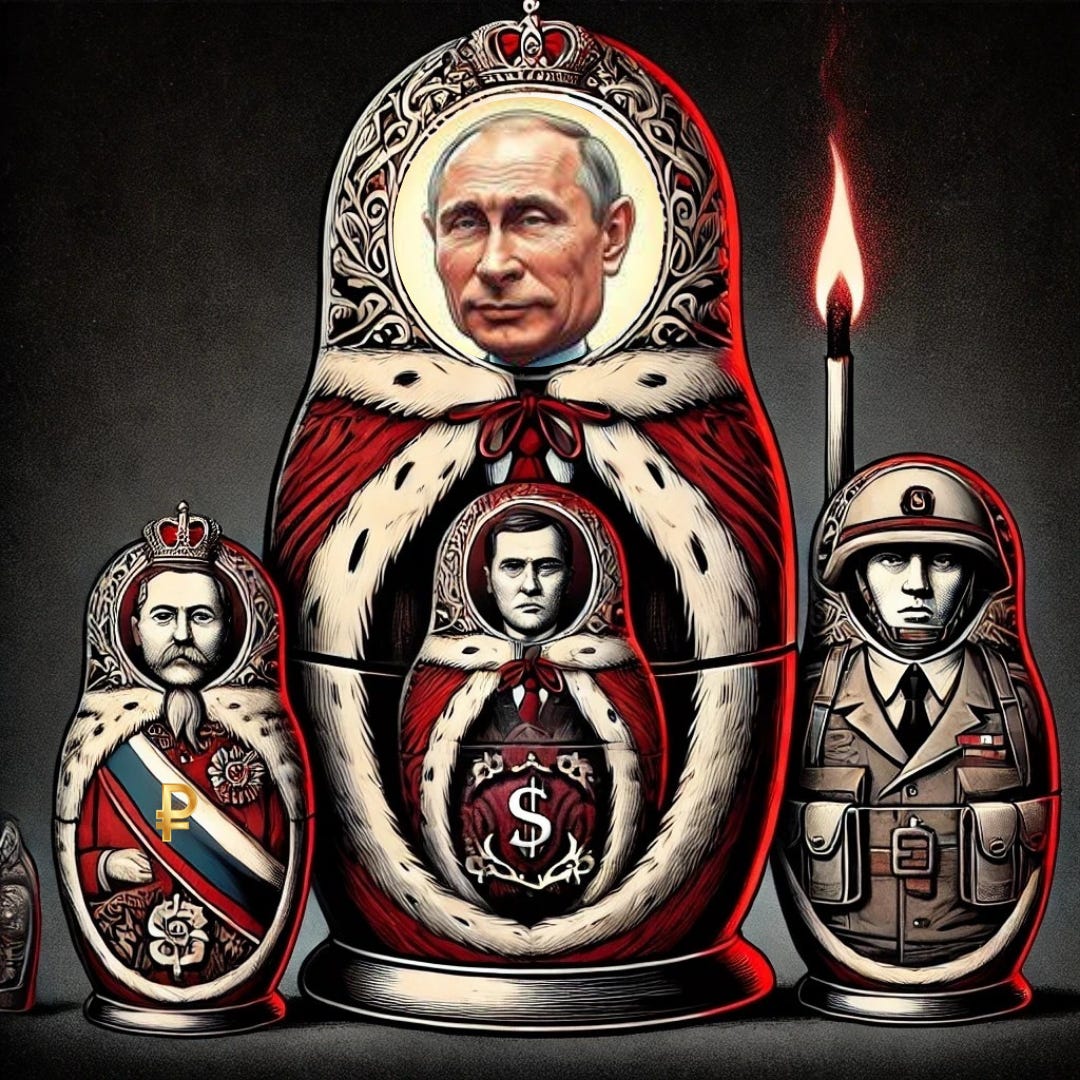
The Faustian Bargain: How Putin and the Oligarchs Coexisted
When Vladimir Putin rose to power in 2000, he inherited a chaotic, privatized Russia where a handful of oligarchs held enormous sway over both the economy and politics. Putin moved quickly to consolidate control. The 2003 arrest of oil tycoon Mikhail Khodorkovsky sent a chilling message: wealth alone would not protect anyone from Kremlin wrath.
A Faustian bargain was struck; oligarchs could keep their fortunes if they stayed out of politics and served the state. Those who didn’t were imprisoned, exiled, or killed.
For years, the arrangement worked. Putin provided protection and access; in return, oligarchs financed the regime, enabling its consolidation of media, elections, and law enforcement. But after the 2022 invasion of Ukraine, the glue holding that bargain together began to dissolve.
Why Oligarchs Are Losing Faith: Cracks in the Bargain
Financial Devastation and Western Sanctions
The war has triggered unprecedented global sanctions. Luxury assets were seized, yachts impounded, London townhouses confiscated. Many oligarchs lost access to Western banks and markets. By 2025, the EU and G7 expanded secondary sanctions to hit shell companies, family members, and previously untouchable trust networks.
Loss of Global Influence
Pre-2022, many Russian elites mingled with Hollywood stars, U.S. senators, and Davos financiers. Now, they’re persona non grata, booted from boards, banned from banks, and blacklisted from even neutral events.
The message is clear: even Putin’s protections may not be enough to keep them loyal. That faithfulness is costing them their wealth and influence. And what is the point in being an oligarch if your power no longer has meaning?
Putin’s Isolation and the Paranoia Spiral
Now, Putin’s paranoia has gone from cold calculation to full-blown bunker mentality. The ridiculously long vacant tables were an early indicator of his growing distrust, and rumors of body doubles have been prevalent for over a decade.
According to The Moscow Times, the Kremlin secretly intensified Putin’s personal security in 2024. He now wears bulletproof vests, avoids spontaneous appearances, and eats only food tested for poison. Visitors endure weeks of clearance. Ceremonial guards are disarmed. Sewer grates are searched for bombs.
The last chapters of autocrats often look eerily similar. Historians have noted that Hitler, in his final years, became increasingly isolated, suspicious of his inner circle, obsessed with loyalty tests, and bunkered against perceived plots. Putin may not be in a bunker, but the patterns of extreme control, deepening paranoia, and narrowing trust are hauntingly familiar.
Signs of Rebellion: Are Oligarchs Beginning to Turn?
Public Dissent from Prominent Figures
A few brave elites have spoken out:
Oleg Deripaska warned of economic collapse.
Mikhail Fridman called the war a “tragedy.”
Oleg Tinkov labeled the invasion “insane.”
They’ve all faced serious consequences. Tinkov was reportedly forced to sell his bank stake under duress, Fridman was sanctioned and pressured to divest, and Deripaska remains under intense scrutiny.
Watch This Space: While these men have not (yet) faced the full wrath of the Kremlin, their futures are far from secure. In Putin’s Russia, public dissent is never forgotten.
Quiet Negotiations and Backchannel Deals
Leaks suggest several oligarch families are engaging with European intermediaries, offering intelligence or reconstruction funds in exchange for asset unfreezing or safe passage. These moves, though clandestine, reflect a deep fracture forming beneath the surface. Can these be leveraged into an uprising?
Death and Dissent: The Kremlin’s Trail of Poison and Fear
The Russian oligarchs are right to be careful. Crossing the Kremlin has very real consequences.
Opposing Putin can be fatal.
Alexander Litvinenko was poisoned with polonium in London.
Sergei Skripal and his daughter were hit with Novichok in Salisbury.
Alexei Navalny, poisoned in 2020, died in prison in 2024.
Since 2022, over 20 Russian businessmen have died under strange circumstances, including falls (most often the elusive “window cancer”), drownings, and “sudden illnesses.”
Poison is more than a weapon. In Putin’s Russia, it’s a signature. A warning. A final message to those thinking of dissent.
Why Oligarchs Remain Cautious
Despite their grievances, oligarchs remain hesitant. The fear of reprisal looms large; one misstep could lead to exile, ruin, or worse. They are divided, competitive, and ultimately powerless without unity.
Most critically, the siloviki—Putin’s security elite—remain fiercely loyal. Without their support, no oligarch rebellion can succeed.
What Happens If the Cracks Widen?
A quiet coup is the most likely path: a managed transition cloaked in rhetoric, not revolt. More turbulent scenarios—civil unrest, financial collapse, or even a post-Putin power vacuum—pose grave risks to Russia and global stability.
“The real fear isn’t Putin’s fall,” one former Kremlin insider reportedly said. “It’s the chaos after.”
Conclusion: The Fragile Core of Autocracy
Putin’s 2024 re-election may have secured another decade on paper, but his grip on the elite is visibly weakening. Sanctions, paranoia, and now explosions near the heart of power are shaking the foundation of his regime.
Whether the oligarch class will act—or continue to wait and watch—is unclear. But history tells us this much: autocracies rarely crack quietly.
We’ve covered several aspects of the Russian factor. You may be interested in these articles below:


To access our full archive, consider becoming a paid subscriber. You’ll also receive periodic exclusive content and early access. And right now, we have a deal just for you!
We just hit 10,000 subscribers—thank you! We’re offering full access to The Coffman Chronicle for just $1 a week ($52/year) to celebrate.
Bibliography:
"Limo from 'Putin's car fleet' is blown up in huge blast as troops from paranoid tyrant's honour guard searched for bombs" The Sun, March 29, 2025.
"£275,000 Aurus Senat limousine, believed to be Vladimir Putin's, goes up in flames; limo explodes in Moscow" Hindustan Times, March 29, 2025.
"Watch: Putin’s £275,000 Limousine explodes in Moscow" The Times of India, March 30, 2025.
"Bulletproof Vests on Red Square: Kremlin Secretly Beefs Up Putin's Personal Security" The Moscow Times, June 4, 2024.
"Some Russian oligarchs speak out, cautiously, against war" Associated Press News, March 2, 2022.
"Russian Oligarch Deripaska Calls For End Of War Against Ukraine" Radio Free Europe/Radio Liberty, March 7, 2022.
"Oligarch Outcries Against War Show Putin Is Losing Loyalty: DOJ" Business Insider, May 2022.
"Here are the Russian oligarchs speaking out against invading Ukraine" Axios, March 2, 2022.
"Limousine from Putin's official car fleet explodes near FSB secret service headquarters; details inside" The Financial Express, March 29, 2025.
"Vladimir Putin's limo blows up in massive explosion as car engulfed in flames near FSB headquarters" GB News, March 29, 2025.
"Russian oligarchs speak out against invasion of Ukraine" El País, March 3, 2022.
"Unable to Criticize Putin, Russian Oligarchs Turn Ire on Central Banker" The Wall Street Journal, December 2024.
"Protests against the Russian invasion of Ukraine" Wikipedia, February 2025.
Swan Lake will be playing soon across Russia!!!
Oh my, are we a little paranoid now? Have some enemies do ya? Gee, let's see who it could be? Your own people??? Hmmm. Not like the whole world doesn't hate you so ....