


In a moment that has reverberated far beyond the walls of the Washington National Cathedral, Reverend Mariann Edgar Budde delivered a powerful and heartfelt appeal to President Donald Trump during the National Prayer Service. Her message was simple but profound: show mercy. She called attention to the fears of LGBTQ+ youth, the struggles of immigrants, and the urgent need for compassion in leadership. Her words—rooted in faith and humanity—were as much a challenge to power as they were a plea for justice (Reuters).
Predictably, the backlash was swift. President Trump dismissed Budde as "radical" and demanded an apology for what he perceived as politicization of the church (AP News). Conservative commentators lambasted her for daring to criticize, while progressive voices celebrated her courage. This polarization mirrors the broader chasm in America, especially as it relates to the issues her remarks touched upon: LGBTQ+ rights, immigration, and the dignity of marginalized communities.
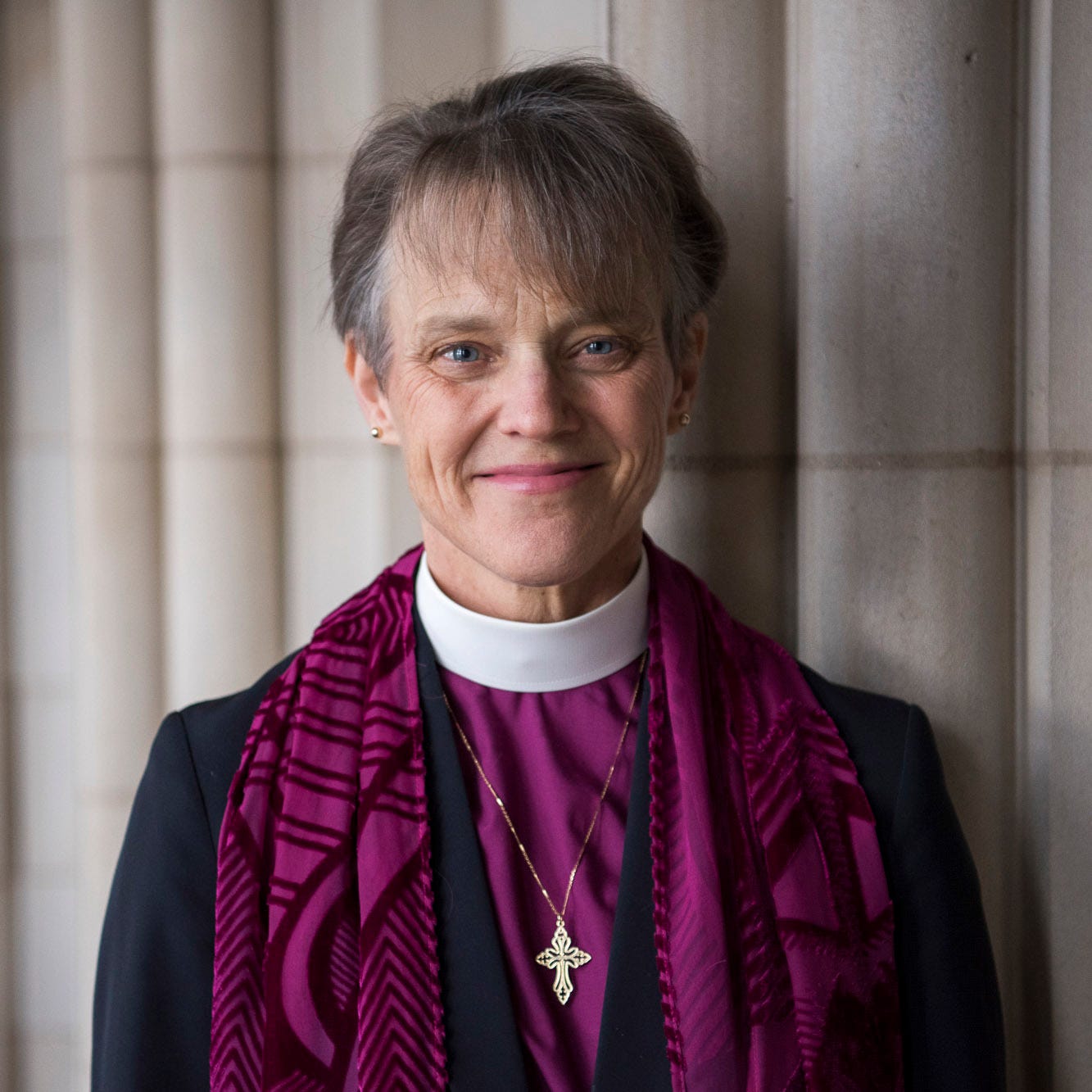
Image of Right Reverend Mariann Edgar Budde from the National Cathedral
The Executive Orders and the Nation's Heartbeat
Budde’s remarks are deeply relevant to recent executive orders issued by the Trump administration. Among them, the rollback of gender identity protections, the dismantling of Diversity, Equity, and Inclusion (DEI) programs, and a proposed end to birthright citizenship stand out as directly intersecting with her plea.
The Coffman Chronicle is powered by YOU—no billionaires, no corporate overlords. Help us keep exposing the BS, delivering sharp insights, and keeping you informed.
For just $8 a month or $80 a year, you can fuel the fight and be part of the movement .
Not ready to subscribe? No worries, chaos loves company, and you're always welcome. But if you’re fired up to keep us loud, proud, and unfiltered, smash that subscribe button now!
The executive order redefining gender recognition in federal policies, for example, codifies the government’s acknowledgment of only two genders, rooted in biological sex as determined at birth. As the Independent reported, “critics pointed out that genitalia at conception are ‘phenotypically female,’ according to the National Library of Medicine.” This policy erases the lived experiences of transgender individuals and, as noted above, dismisses the complexities of biological sex itself—such as variations like Androgen Insensitivity Syndrome or chromosomal differences like XXY (Klinefelter Syndrome). Even the presence or absence of the SRY gene on the Y chromosome plays a critical role in sex differentiation, underscoring that biology is far more intricate than simple binaries (NCBI).
Similarly, the executive order ending federal DEI initiatives signals the administration’s priorities: a rejection of policies aimed at equity and inclusion. For women, LGBTQ+ individuals, and marginalized groups, these programs have been lifelines, providing pathways to fair treatment and equal opportunity (Business Insider).
The proposed termination of birthright citizenship—a direct rebuke to the 14th Amendment—targets immigrant communities with devastating consequences. The policy would upend the lives of families and children, creating a new underclass of stateless individuals born on American soil but denied the right to belong.
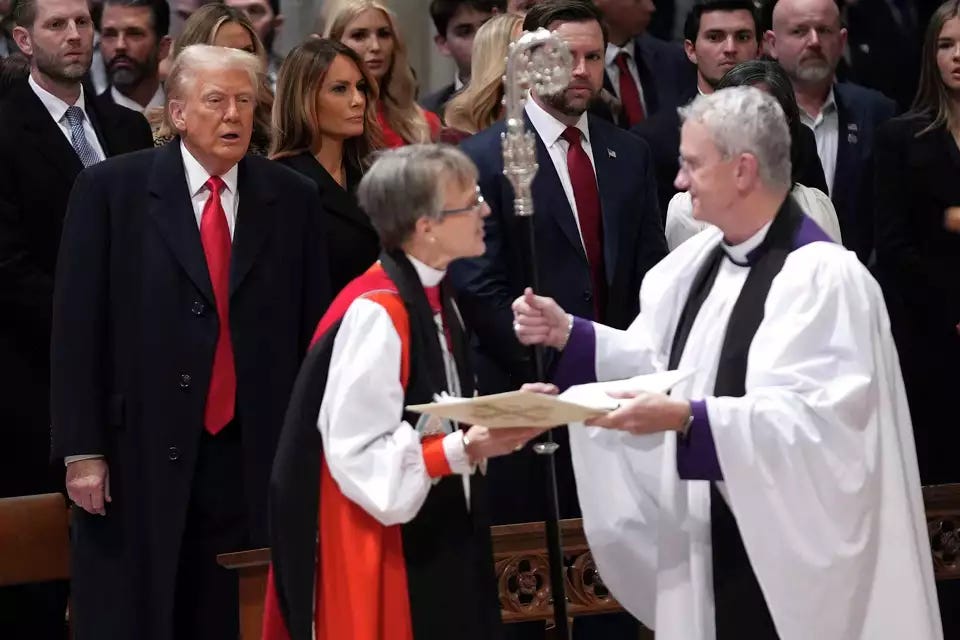
Image from Evan Vucci/AP. Trump as Reverend Budde arrives at the National Cathedral
Public Opinion and the Moral Crossroads
Polling shows a complicated but increasingly progressive trajectory on these issues. The majority of Americans—over 70%, according to Gallup—support same-sex marriage. Even more, 83% favor anti-discrimination protections for LGBTQ+ individuals (Pew Research). While opinions on transgender rights and gender-affirming care are more divided, a significant portion of the population resists policies that ban access to care for minors or deny the legitimacy of gender identity.
On immigration, a 2023 Economist/YouGov poll found that 60% of Americans support maintaining birthright citizenship, reflecting a broad consensus against such drastic policy shifts (The Hill). Yet, public opinion on border security remains split, with half supporting more vigorous enforcement while remaining skeptical of mass deportations or punitive measures (The Guardian).
Notably, religious functions tied to the White House have been used for political messaging before. During the 2020 National Prayer Breakfast, President Donald Trump openly criticized his political opponents and discussed his policy agenda. This moment blurred the lines between a faith-based event and political discourse, setting a precedent for intertwining politics and religion in high-profile venues (HuffPost).
Budde’s Moral Call: A Nation at Odds with Itself
Reverend Budde’s remarks were a moral plea to recognize the humanity of the vulnerable. But her words and the reaction they sparked reveal an America deeply at odds with itself. As reports of death threats against the Reverend grow, other religious leaders continue to use their pulpits to promote political agendas, a clear example of the double standard rooted deeply in the current political sphere. On one side stands a vision of the country as a place of inclusion, dignity, and compassion—reflected in her sermon and echoed by millions who support LGBTQ+ rights, immigrant protections, and equitable treatment for all. On the other side is a hardening stance against such progress, often framed as a defense of tradition and biology but frequently devoid of the nuance these issues demand.
Reverend Budde’s sermon was not radical; it was righteous. It was a call to return to the core values of empathy and inclusion, values that transcend politics and speak to our shared humanity. Compassion and empathy, core tenets of every major religion, are cornerstones of democratic and free societies. The public’s growing support for LGBTQ+ rights, gender diversity, and fair treatment of immigrants suggests that, despite divisive leadership, the American people are moving toward a more just and inclusive future. It is time our elected officials reflect the values of the majority instead of catering to fringe regressive groups.
Whether those in power choose to listen—or continue to weaponize fear and division—will define this administration and the nation's soul. As Reverend Budde said, mercy is what we need most now. And mercy, like justice, is a choice.
watching her live as the Drumpf listened unable to interrupt was hopefully raising some thoughts how to create situations where he can not obstruct in his usual ways. He was totally cornered by this courageous person, - just saying as an agnostic😁
Bishop HAS ALWAYS walked in the light, fearing NO EVIL. I pray that I can find the right words should I be called upon one fine day. SHE'S MY HERO.💙🗽🌻♥️