


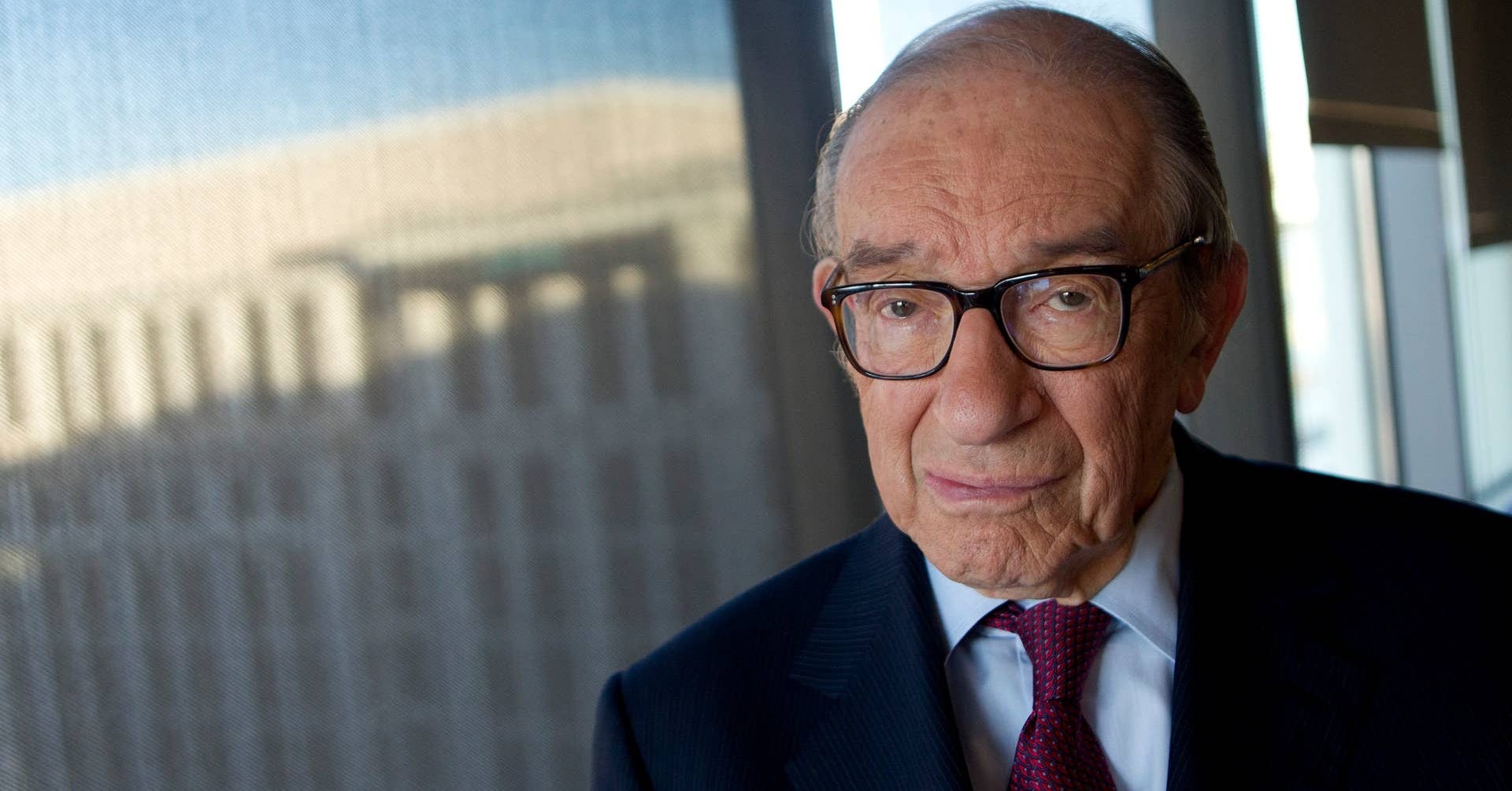
Former Federal Reserve Chairman Alan Greenspan, who guided U.S. monetary policy for nearly two decades and became one of the most influential economic figures of the modern era, has died at age 100.
Andrea Mitchell, his wife and longtime NBC News correspondent, said Greenspan died from complications of Parkinson’s disease. The Federal Reserve also issued a statement recognizing his role in strengthening the institution’s credibility.
Greenspan served as Fed chairman from 1987 through 2006 under Presidents Ronald Reagan, George H.W. Bush, Bill Clinton, and George W. Bush. During that period he became synonymous with central banking, helping steer the economy through the 1987 stock market crash, the 1990-91 recession, the Asian financial crisis, the dot-com boom and bust, and the aftermath of the Sept. 11 terrorist attacks.
Subscribe free for daily political analysis they won’t broadcast. Join 110K+ readers →
His influence was so significant that financial markets routinely reacted to even subtle changes in his public comments. The press and many investors referred to him as “The Maestro,” reflecting the extraordinary confidence placed in his economic judgment during the 1990s expansion.
Yet Greenspan’s legacy became increasingly contested after the 2008 financial crisis. Critics argued that years of low interest rates and support for deregulation helped create conditions that fueled excessive risk-taking in financial markets and housing. Greenspan later acknowledged flaws in his belief that financial institutions would effectively regulate themselves.
The immediate reaction to his death reflects both sides of that history, tributes to a transformational central banker, and renewed debate over the long-term consequences of policies that shaped a generation of American finance.
Subscribe free for daily political analysis they won’t broadcast. Join 110K+ readers →