


On May 4, 2025, Donald Trump took to Truth Social with a bold and deeply alarming announcement: he was ordering federal agencies to reopen and expand Alcatraz Island to house “America’s most ruthless and violent offenders.” He named the DOJ, the Bureau of Prisons, Homeland Security, and the FBI as the agencies involved. The post was classic Trump: high-drama, heavy on fear, and light on feasibility.
But behind the bluster is something far more serious: a signal of authoritarian intent masked as law-and-order posturing, meant to rally fear and spectacle over substance. It is a symbolic power play cloaked in the language of law and order. Trump isn’t just proposing to bring back a defunct prison—he’s reviving a symbol of authoritarian control for political theater. And he wants you to pay for it.
This isn’t about justice. It’s not about safety. It’s about sending a message, and that message is dangerous.
We just hit 13,000 subscribers—thank you! We’re offering full access to The Coffman Chronicle at 50% off to celebrate.
Get exclusive analysis and fearless reporting you won’t find in corporate media.
Support truth. Stay informed.
The Ghost of Alcatraz
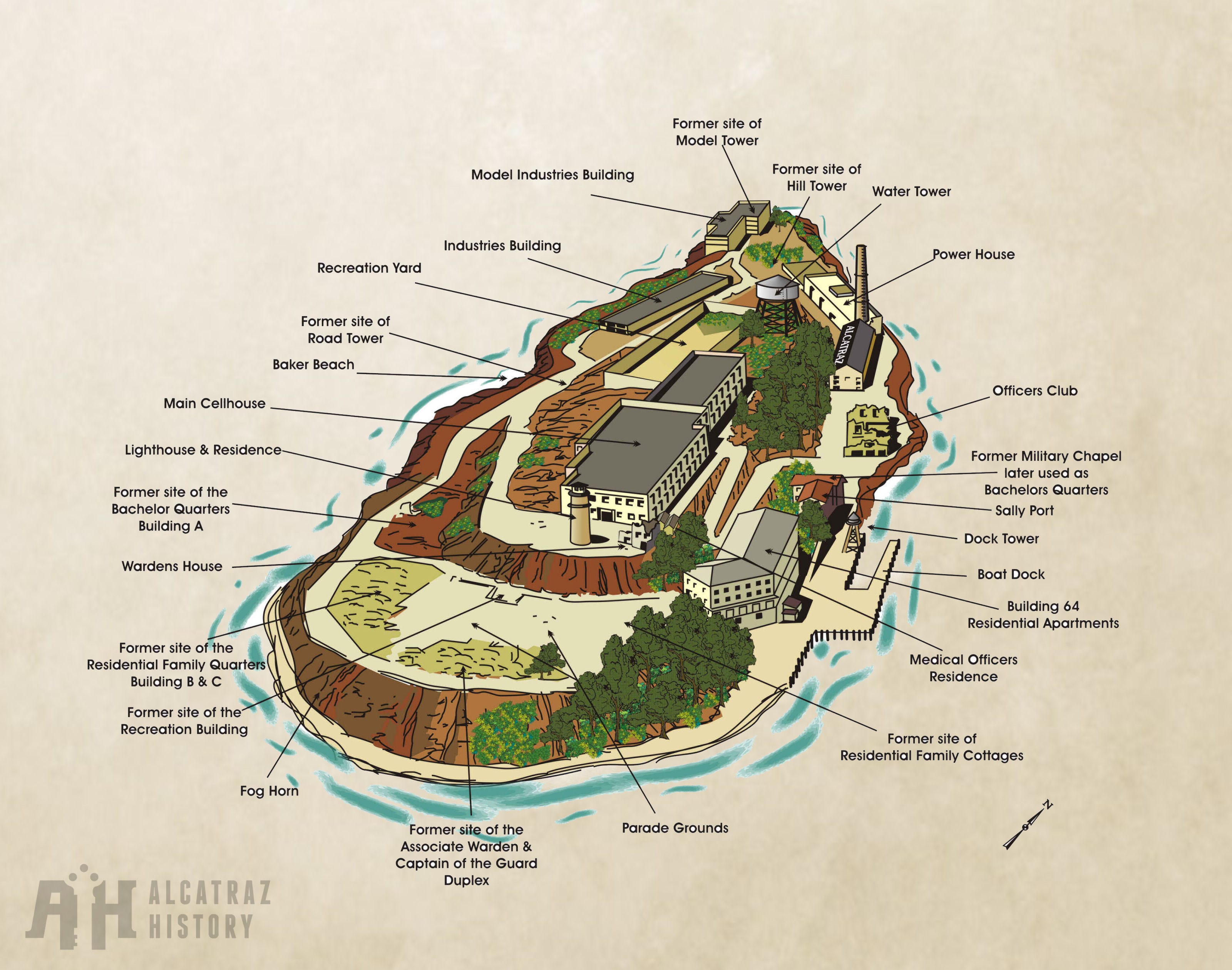
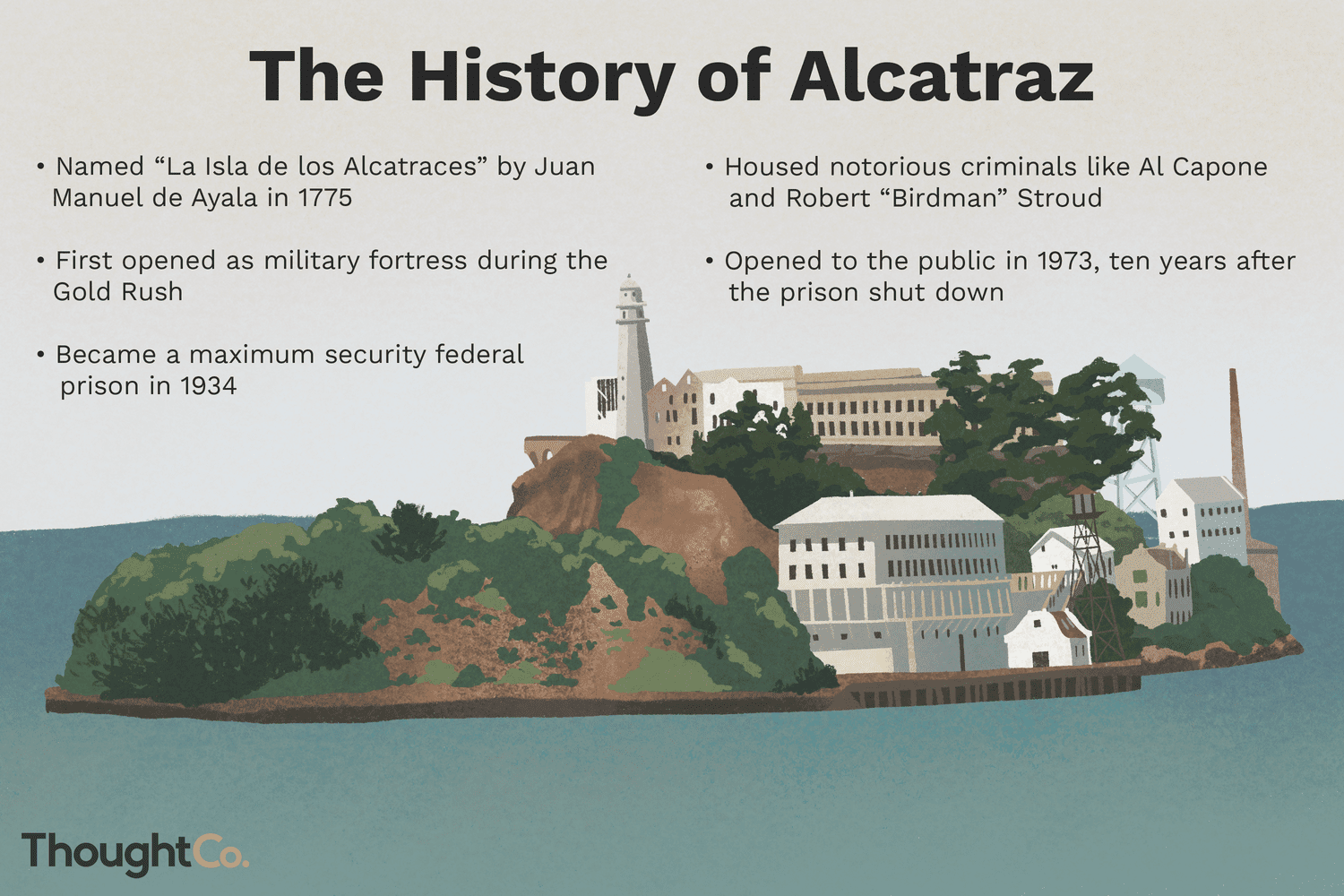
Alcatraz operated as a federal prison from 1934 to 1963. Built to house America’s most infamous criminals, it quickly became known for its harsh isolation, cold waters, and escape-proof reputation. But its reign ended not with a bang, but with a budget: the prison was shut down because it was too expensive and deteriorated to maintain.
Since then, Alcatraz has transformed into a national landmark, a tourism hub, and museum operated by the National Park Service. It attracts over a million visitors annually and generates local economic activity while preserving a painful chapter in America’s carceral history.
To reopen it as a prison now would mean reversing six decades of progress—progress not just in corrections policy, but in how we remember and reckon with our history—and destroying a living monument in favor of a dystopian photo op.
What Trump Claims He’ll Do
According to Trump’s post, the new Alcatraz would be a “substantially enlarged and rebuilt” facility, a high-security fortress meant to incarcerate violent criminals. He hasn’t provided specifics on costs, timelines, or how such a project would overcome legal restrictions.
There’s no executive order filed, no confirmed agency directives, and no formal policy behind the claim. However, as with many of Trump’s pronouncements, the details don’t matter. What matters is the performance, the ability to seize headlines and stir fear.
The Real Cost to You
Rebuilding Alcatraz wouldn’t be cheap. It could become one of the most expensive prisons in U.S. history. Experts estimate:
Construction and renovation: $600 million to over $1 billion, due to the island’s remote location, decaying infrastructure, and historical protections.
Annual operations: $60–$100 million annually, primarily due to marine transport, island staffing, and emergency logistics.
That’s more than enough to build multiple new schools, staff a network of mental health clinics, or provide emergency housing for tens of thousands. Instead, the money would be funneled into a political stunt.
What $1 Billion Could Buy Instead
Trump’s plan would drain taxpayer funds into a symbolic prison. Here's what the same $1 billion could do if used for real public safety and human wellbeing:
Hire 17,000 teachers for one year, reducing class sizes and addressing staffing shortages in public schools.
House over 55,000 people experiencing homelessness through permanent supportive housing programs.
Expand mental health care nationwide by building or upgrading hundreds of community mental health centers, especially in areas hardest hit by addiction and incarceration cycles.
Provide housing and care for every single homeless veteran in the United States—more than 30,000 Americans who served this country and are now struggling to survive.
The contrast is staggering. Trump is asking the country to invest in punishment and spectacle, while ignoring proven investments that actually reduce crime, heal communities, and save lives.
Who Wins & Who Loses
So, who benefits from this?
Winners:
Donald Trump: He regains media dominance, deflects from legal investigations, and shores up his base with a dramatic law-and-order gesture that appeals to authoritarian instincts. Even if Alcatraz never opens, he’s already won the headline war.
Federal Contractors: Construction firms, security system vendors, marine logistics providers, and defense-adjacent suppliers would line up for lucrative multi-million-dollar contracts. This project would be a windfall, especially for politically connected firms.
Private Prison Lobbyists: While Alcatraz would be federally run, normalizing prison expansion gives more political cover to the broader carceral industry, including private prisons, surveillance firms, and prison-labor profiteers.
Right-Wing Media: Culture war fuel. The Alcatraz stunt gives them a new line of attack against reformers and Democrats, while firing up outrage-based fundraising and engagement.
Losers:
Taxpayers: Ordinary Americans would bear the burden of a billion-dollar boondoggle. Meanwhile, schools, healthcare, housing, and real public safety solutions go underfunded.
Criminal Justice Reformers: This move undermines bipartisan progress on reducing mass incarceration, sentencing reform, and community-based interventions.
San Francisco’s Local Economy and the National Park Service: Alcatraz is a top tourist destination, drawing over a million visitors annually. Reverting it to a prison would gut local tourism, destroy historic preservation work, and likely prompt lawsuits.
Marginalized Communities: Communities of color, immigrants, and poor Americans—already disproportionately targeted by law enforcement—would face renewed criminalization under a system built more for punishment than prevention.
In the end, this isn’t a public safety policy. It’s a spectacle of power, where political enemies are rebranded as threats, and a prison becomes a stage.
Alcatraz as Political Prop
Trump’s use of Alcatraz isn’t random. The island's symbolic weight evokes fear, isolation, and state power. By invoking it, Trump sends a clear message: he’s not just going after criminals; he’s going after whoever he defines as “the enemy.”
This is part of a broader authoritarian tactic: turn fear into a governing tool, and transform punishment into political branding. Trump’s rhetoric—“the most violent offenders,” “America’s worst”—is vague by design. Depending on who's in power, it could just as easily apply to protesters, journalists, whistleblowers, or political opponents.
Legal Reality Check
Alcatraz isn’t just any piece of land. It’s a protected federal landmark managed by the National Park Service. Rebuilding it would require:
Environmental reviews
Historic preservation waivers
Congressional funding
Extensive legal battles with California and preservation groups
In short, the logistics make this more a public relations fantasy than a policy reality. But again, the plan doesn’t need to happen. It just needs to dominate headlines.
Trump’s Media Playbook
Trump doesn’t need a real policy; he needs a headline. His Alcatraz proposal is part of a pattern: bold announcements that aren’t meant to be implemented, only broadcast. Think of:
The border wall that never fully materialized
Space Force, a half-serious militarized rebranding
“Draining the swamp,” which morphed into filling the government with loyalists
It’s governing by spectacle: provoke outrage, dominate the news cycle, and move on before consequences catch up.
What Authoritarians Do with Prisons
Throughout history, authoritarian regimes have used prisons not just for criminals, but to neutralize political threats. Consider:
Chile under Pinochet, where sports stadiums became holding centers for political prisoners.
Russia, where dissidents and journalists are routinely jailed under vague laws, often in isolated and severe Siberia.
Turkey, where President Erdoğan has imprisoned thousands of academics, judges, and opposition leaders.
By promising to reopen Alcatraz, Trump is not signaling a commitment to justice. He’s signaling a willingness to weaponize incarceration as a means of domination.
Who Would He Put There?
Let’s stop pretending this is just about violent criminals. Trump has never hidden who he thinks belongs behind bars. He’s threatened to jail journalists. He’s called political opponents “vermin.” He’s vowed to purge the federal government of “traitors.” And now, he’s proposing a prison island.
So let’s ask the only question that matters: who would he lock up in Alcatraz?
Protesters? Whistleblowers? Judges who rule against him? Reporters who expose him?
When a leader like Trump talks about resurrecting prisons—especially in the shadow of regimes like Pinochet’s Chile, Erdoğan’s Turkey, or Putin’s Russia—it’s not an idle suggestion. It echoes a well-documented pattern of using incarceration to silence dissent, not just punish crime. It’s not just a law-and-order message; it’s a warning. The bars may not be built yet, but the blueprint is already political.
This Isn’t Just a Headline; It’s a Warning
Don’t look away. This isn’t just about a prison. It’s about what happens when fear is repackaged as leadership, when history is repurposed as punishment, and when a crumbling island becomes a blueprint for what one man thinks justice should look like.
You’re not outside this story. You live in it. You’re living with the consequences, whether it’s the billion-dollar boondoggles dressed up as justice or the slow erosion of institutions repurposed as instruments of control. And if we let this pass as just another outrageous Trump headline, we’re doing exactly what he wants: tuning out while he rewrites the rules.
Conclusion: Locking Up the Future
Alcatraz isn’t coming back, not because Trump won’t try, but because the law, the budget, and public resistance will likely stop him. But the idea of it—reopening a prison to project dominance—should be a wake-up call.
This isn’t about crime. It’s about control. It’s about transforming the criminal justice system into a political weapon. And it’s about demanding loyalty to a leader rather than fidelity to the law.
We don’t need new prisons. We need new priorities.
If we want a safer, freer, more just America, we must reject fear-driven governance and spectacle politics and invest instead in the people and systems that actually make our country work.
This Isn’t a Drill
We’ve seen this script before. The spectacle. The scapegoating. The “lock them up” chants. If we don’t speak now—boldly, publicly, persistently—we risk waking up in a country where Alcatraz isn’t just a symbol.
Share this. Organize locally. Push your leaders. And vote like democracy depends on it, because it does.
We just hit 13,000 subscribers—thank you! We’re offering full access to The Coffman Chronicle at 50% off to celebrate.
Get exclusive analysis and fearless reporting you won’t find in corporate media.
Bibliography:
Associated Press. “Trump Says He Will Reopen Alcatraz Prison.” AP News, May 4, 2025.
San Francisco Chronicle. “Here’s Why Attorney General Robert F. Kennedy Ordered Alcatraz to Close in 1962.” San Francisco Chronicle, May 4, 2025.
National Park Service. “Learn About the Park – Alcatraz Island.” U.S. National Park Service, 2025.
National Park Service. “Central to Visitor Access: Stabilizing 1939 Alcatraz Island Wharf.” U.S. National Park Service, 2025.
Freedom House. “Damage Done by Political Imprisonment and ‘Civil Death’.” Freedom House, 2024.
Freedom House. “A Legacy of Political Violence: Political Imprisonment in Latin America and the Caribbean.” Freedom House, 2024.
Reuters. “Trump Orders the Reopening of Alcatraz Prison.” Reuters, May 4, 2025.
NBC Bay Area. “Trump Tells FBI, Homeland Security to Reopen Alcatraz — Closed Since 1963 — as a Prison.” NBC Bay Area, May 4, 2025.
National Park Service. “Alcatraz Island.” U.S. National Park Service, 2025.
Diplomacy & Law Journal. “The Struggle for Human Rights in Authoritarian Regimes.” Diplomacy and Law, 2024.
Let's not forget Alcatraz is in the San Francisco Bay. Trump hates San Francisco. In his demented mind, he's also punishing San Francisco.
If it were to happen, "the new Alcatraz would be a “substantially enlarged and rebuilt” facility, a high-security fortress meant to incarcerate violent criminals....."
DJT could be Prisoner 001. Wouldn't that be lovely.
It's about the movie he watched in Florida on Saturday night!