


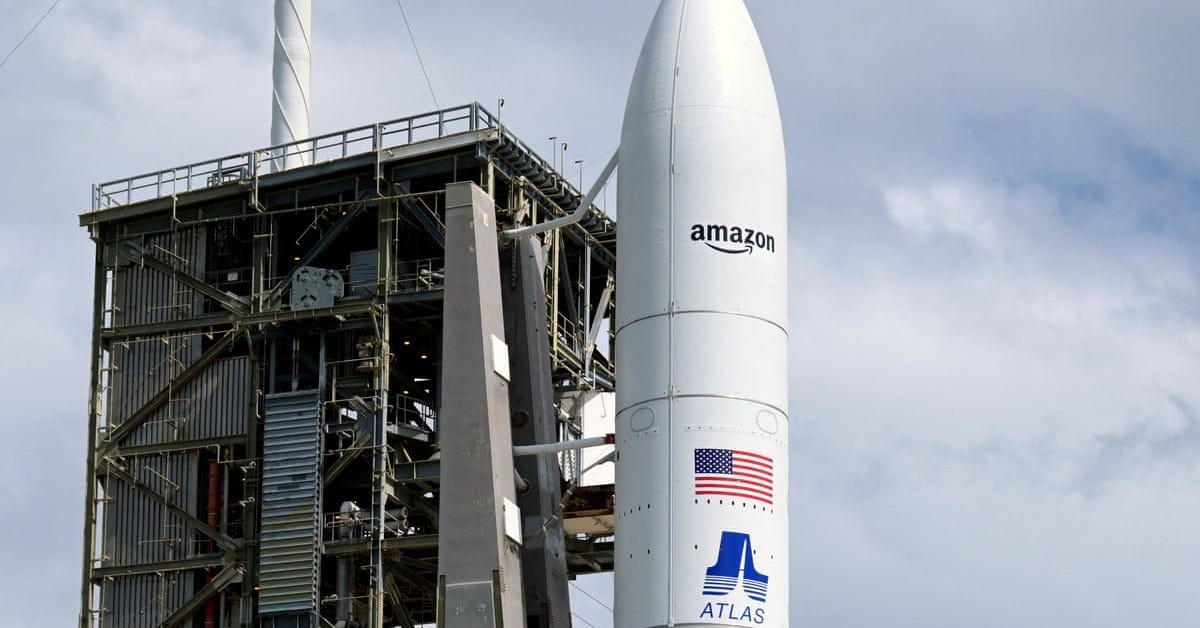
Amazon says its latest satellite launch has pushed Amazon Leo, its low Earth orbit broadband network, to a milestone that could allow the company to begin limited continuous service.
The company said a United Launch Alliance Atlas V rocket deployed 29 Amazon Leo satellites on July 2, bringing the total number deployed to 396. Amazon said that is enough to support continuous service across initial latitudes and keeps the company moving toward commercial availability.
The launch matters because Amazon Leo is the company’s direct answer to SpaceX’s Starlink. The network, formerly known as Project Kuiper, is designed to deliver satellite internet to customers and communities beyond the reach of existing broadband networks. Amazon says the system will eventually rely on more than 3,000 low Earth orbit satellites connected to ground infrastructure and customer antennas.
Subscribe free for daily political analysis they won’t broadcast. Join 110K+ readers →
But the milestone is not the same as parity with Starlink. The Verge noted that early Amazon Leo users should expect a limited rollout, with performance improving as more satellites are added. Starlink already has a much larger deployed network and broader service footprint.
There is also a regulatory clock behind the launch campaign. The FCC recently gave Amazon conditional flexibility on an interim deployment deadline, while keeping the company’s full Gen 1 deployment deadline in place for July 2029. SpaceX opposed giving Amazon more time, arguing the company should wait for a future processing round.
The plain-English consequence: Amazon is now closer to selling satellite internet service, but it still has to prove the network can scale. The next major tests are commercial launch timing, coverage areas, customer pricing, and real-world performance.
Subscribe free for daily political analysis they won’t broadcast. Join 110K+ readers →