


On January 7, 2026, the U.S. government released its newest edition of the Dietary Guidelines for Americans, a document updated every five years that serves as the foundation of federal nutrition policy. This edition, unveiled with great fanfare by Health and Human Services Secretary Robert F. Kennedy Jr. and Agriculture Secretary Brooke Rollins, resets decades of nutrition guidance.
It replaces the familiar “MyPlate” graphic with a bold inverted pyramid. This version encourages Americans to prioritize red meat, full‑fat dairy, eggs, and protein at every meal, and endorses cooking with animal fats such as butter and beef tallow. It still encourages avoidance of highly processed foods and added sugar. The message is framed as a return to “real food” and “science‑based” advice, but in reality, it reflects a political agenda far more than a sober appraisal of the science and economics of eating.
The release of these guidelines should have been a moment of clarity on what we know about diet and health. Instead, it has become a flashpoint precisely because it challenges nearly every principle that modern public health nutrition has built over the last five decades.

(AP Photo/Evan Vucci)
Want to Know Your Rights?
Download a free digital copy of the U.S. Constitution, the same document Trump is trying to bulldoze. Learn exactly what he’s breaking, and how to fight back.
100,000+ strong — and counting.
This winter, become a paid subscriber for just $1 a week and help us keep the truth alive.
Join The Coffman Chronicle — $1/Week
A Radical Departure from Past Recommendations
For generations, federal dietary guidance, as summarized in the 1980s, 1990s, and into the 2020–2025 guidelines, emphasized balanced eating patterns that include abundant vegetables and fruits, whole grains, lean proteins, and limits on saturated fat, added sugars, and sodium. MyPlate, introduced in 2011 and widely used in education and policy, reflected that consensus by visually emphasizing a balance among fruits, vegetables, grains, protein, and dairy.
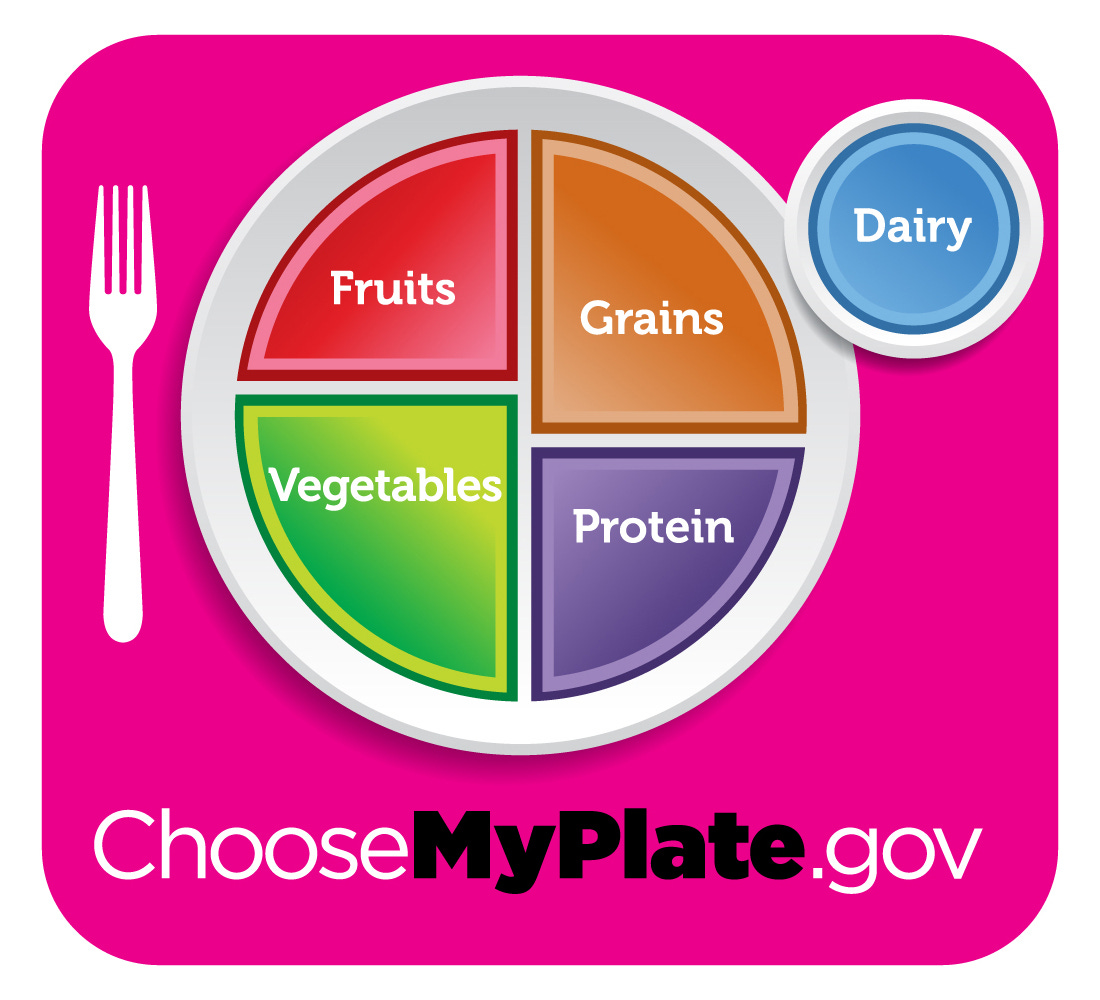
The new guidelines reorient those priorities. Meat, dairy, and higher overall protein intake now occupy the apex of the food pyramid. Grains, once a significant component of the federal recommendations, are placed at the very bottom. Full‑fat dairy products are explicitly embraced as part of healthy eating. Even though the text retains an upper limit on saturated fat intake (no more than 10 percent of daily calories), the accompanying food graphic and narrative incentives have effectively increased consumption of high-saturated-fat foods, such as red meat, cheese, butter, and beef tallow.
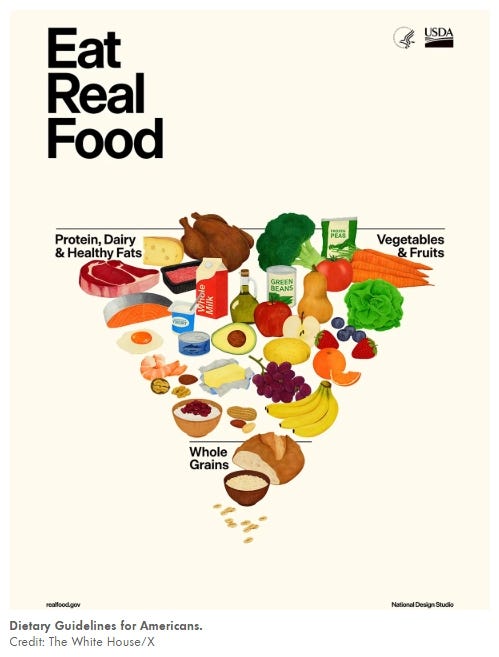
Nutrition experts have been struck by this contradiction. The independent advisory committee’s scientific review, in line with decades of research, found strong evidence that lowering saturated fat intake reduces cardiovascular disease risk, yet the final guidelines were shaped to promote foods rich in that very fat.
The result is not just a tweak to portion guidance. It is a philosophical shift away from patterns associated with long‑term chronic disease prevention, and toward a dietary pattern resembling what Americans ate in the mid‑20th century, a style of eating historically associated with rampant heart disease and other chronic conditions.
What This Gets Right and What It Conveniently Ignores
To be clear, not every change in the 2025–2030 Dietary Guidelines is misguided. One of the most widely praised elements is its sharpened stance against added sugars and ultra-processed foods. While previous editions recommended limiting added sugars and choosing less refined foods, this is the first time the guidelines explicitly call on Americans to “avoid highly processed packaged, prepared, ready-to-eat, or other foods that are salty or sweet.” It also goes further than before by advising zero added sugars or non-nutritive sweeteners for children under four, a stronger stance than prior guidance, which often stopped short of categorical prohibitions. These moves reflect genuine public health consensus, and a long-overdue recognition of the harm these foods can do, especially to children.
However, the attention paid to sugar and processed food obscures what the guidelines leave out entirely: alcohol. The 2020–2025 guidelines, under pressure from medical researchers, introduced modest limits: no more than 2 drinks per day for men and 1 for women. These recommendations came amid growing awareness of alcohol’s link to cancer, liver disease, and cardiovascular risk. Yet in the 2025 guidelines, alcohol is missing. It is not reduced, updated, or downplayed. It is simply gone.
The omission is striking. In a document that claims to be a science-based reset of American nutrition policy, it erases one of the clearest modern public health messages: that there is no safe level of alcohol consumption, especially for long-term health. This silence becomes even more conspicuous when paired with the rhetorical framing of the rest of the guidelines, which present their reversals as hard truths too long ignored.
The truth is, this new policy carefully selects its science. It rightly calls out the dangers of sugar, but ignores those of saturated fat. It warns against processed snacks but says nothing about processed meats. It preaches “real food” but says little about whole grains. And it excises alcohol guidance completely.
In this way, it sets the stage for the guidelines’ most dramatic shift: a wholesale inversion of what nutrition science, medical research, and dietary epidemiology have been telling us for decades.
The Price Americans Are Paying for This Advice
One need only walk into a grocery store in 2026 to see how disconnected these guidelines are from economic reality.
At the center of the new pyramid is the most expensive food category many Americans can afford: red meat. Beef prices climbed to historic highs in 2025 and remain elevated because cattle herds are unusually small, processing capacity has been constrained, and global supply dynamics have shifted toward competitors such as Brazil. These conditions have pushed retail prices for many beef cuts far beyond the reach of average households and sparked fierce debate among ranchers, trade policymakers, and farmers alike.
Meanwhile, dairy prices, including butter and milk, remain well above long‑term averages, driven by higher feed and production costs.
At the same time, many fruits and vegetables are increasingly expensive due to tariffs on imported produce, which have raised costs at the border, and domestic supply chains have struggled to fully compensate. Even grains and legumes, staples of more affordable diets, have seen their markets disrupted by tariff policies that slowed export demand, particularly for soybeans. The soy market, once buoyed by exports to China, has been left oversupplied and depressed, hurting farmers even as soy products could serve as inexpensive, plant‑based protein for consumers. The net effect is that the foods most affordable to low‑ and moderate‑income families — beans, lentils, rice, oats, seasonal produce — are effectively deprioritized while the most costly items are put front and center.
This economic inconsistency is not a minor detail. It means that following these federal recommendations would be prohibitively expensive for many households. A dietary pattern built around frequent beef and full‑fat dairy consumption is not financially feasible for large segments of the population. It wedges federal policy against the lived reality of families struggling with food budgets, even as policymakers trumpet “eat real food.”
An Environmental Impact Ignored
Economics is only part of this problem. The foods elevated by the new guidelines are also among the most environmentally taxing. Red meat production, especially beef, is one of the most carbon‑intensive agricultural activities, requiring vast land, water, and feed inputs while producing significant methane and greenhouse gas emissions. Dairy production, while not as severe as beef, also contributes disproportionately to emissions compared with predominantly plant‑based food systems.
This stands in stark contrast to the direction of climate science and international dietary recommendations that encourage reduced reliance on high‑emission foods in favor of plant‑rich patterns. Nutrition guides from global health and environmental bodies now emphasize sustainable diets that reduce environmental burdens while improving human health.
A Rejection of Consensus Science on Chronic Disease
The heart of the controversy, however, lies in what these guidelines say about health. Heart disease has been the leading cause of death in the United States for more than 70 years, and chronic conditions such as hypertension, Type 2 diabetes, and obesity are endemic. Decades of evidence have established that diets low in saturated fat and high in fiber, whole grains, legumes, and vegetables are protective against cardiovascular disease. Major health organizations consistently recommend limiting red and processed meats, choosing lean protein sources, and favoring unsaturated fats from plants and fish.
Yet the new guidelines pivot toward a pattern that, if interpreted literally, would make it difficult for many people to stay within the existing limits on saturated fat and cholesterol. Worse, they elevate the foods most associated with higher low‑density lipoprotein cholesterol than those most consistently linked with reduced cardiovascular risk. Even many of the advisory committee members whose work informed the draft guidelines noted that increasing animal fats and proteins while downplaying plant‑based nutrition contradicts the weight of evidence around heart disease risk, especially around long‑term dietary patterns that reduce risk of stroke and heart attack.
In the public reaction to the release, major cardiovascular health organizations welcomed the focus on reducing added sugars and ultraprocessed foods but urged caution about the emphasis on high‑fat animal products. They continued to recommend prioritizing plant proteins, seafood, and lean meats, and limiting red meat and butter, which are linked to cardiovascular risk.
The Role of the CDC and Institutional Trust
Perhaps most troubling of all is the role of our trusted public health institutions. The Centers for Disease Control and Prevention (CDC) is widely regarded as the nation’s guardrail against misinformation and a voice for science‑based health guidance. Its mission is to protect Americans from disease and to communicate clear, evidence‑based recommendations. In this case, however, the CDC’s involvement in supporting and disseminating guidelines that deviate so markedly from established science has shaken confidence in that role.
The administration claimed to be “restoring science and common sense,” but the panel of experts chosen for the 2025–2030 guidelines included multiple individuals with direct financial ties to the very industries being elevated in the guidance. According to the Associated Press, five of the ten lead reviewers under HHS Secretary Robert F. Kennedy Jr. reported recent ties to beef, pork, or dairy groups, or to makers of infant formula and dietary supplements. That’s not restoring trust in science. That’s deepening the perception that public health is for sale.
When an institution tasked with chronic disease prevention endorses a framework that appears more rooted in political narrative than scientific consensus, it undermines not only public trust but also years of progress in preventive health. It sends a message that public health guidance can be shaped by ideology as much as empirical evidence.
Nostalgia, Not Nutrition
If these guidelines were named after a decade, 1950 might be the choice. That was an era when whole milk, steak, and hearty butter were everyday fare for many Americans, and when chronic coronary disease was already the nation’s leading health threat. We now have better science, better diagnostic tools, and a clearer understanding of how diet affects long‑term health. And yet we seem determined, through federal policy, to romanticize an eating pattern from a time before those insights existed.
This dietary guidance does not offer a path to better health, greater affordability, or environmental sustainability. It offers instead a nostalgic image of eating that, if followed at scale, will exacerbate the very conditions — cardiovascular disease, diabetes, and health inequities — that our public health institutions should be striving to reduce.
In the end, this is not a nutrition policy that meets Americans where they are. It is a policy that tells Americans to return to a mythical past, without regard to science, the economy, or the future.
The administration calls this ‘evangelizing real food,’ but this isn’t public health. It’s revivalist nostalgia disguised as nutrition, and it will leave Americans sicker, poorer, and more divided than ever
Support independent media.
We are fueled by you, not corporations, and our goal is always to expose the patterns and the truth, however inconvenient.
Sources:
Kennedy, Rollins Unveil Historic Reset of U.S. Nutrition Policy, Put Real Food Back at Center of Health — U.S. Department of Health and Human Services press release (Jan. 7, 2026)
Fact Sheet: Trump Administration Resets U.S. Nutrition Policy, Puts Real Food Back at the Center of Health — HHS.gov
New Dietary Guidelines Urge People to Eat More Protein and Avoid Highly Processed Foods — TIME (Jan. 7, 2026)
New Dietary Guidance Pushes Whole Milk, Warns Against Processed Food — The Washington Post (Jan. 7, 2026)
New Dietary Guidelines Urge Americans to Avoid Processed Foods and Added Sugar — Associated Press (Jan. 7, 2026)
’Eat real food’: Trump administration urges protein, no added sugar in new federal dietary guidelines — Spectrum News (Jan. 7, 2026)
RFK Jr. Unveils ‘Upside Down’ Food Pyramid Prioritizing Red Meat and Full-Fat Dairy, Declares ‘War on Sugar’ — People (Jan. 7, 2026)
The New Food Pyramid Is Lying to You — Vox (Jan. 9, 2026)
I’m a Registered Dietitian. Here’s My Take on the Controversial New Dietary Guidelines — Oprah Daily (Jan. 9, 2026)
Understanding the New Dietary Guidelines for Americans — Harvard T.H. Chan School of Public Health (Jan. 8, 2026)
How the 2025–2030 Dietary Guidelines Are Shifting America’s Plate — FoodNavigator‑USA (Jan. 7, 2026)
Dietary Guidelines for Americans — Wikipedia
History of USDA Nutrition Guidelines — Wikipedia
Consumers Are Facing ‘Sticker Shock’ at the Beef Counter — Yahoo! Finance (Nov. 11, 2025)
Consumers Are Facing ‘Sticker Shock’ at the Beef Counter — ConsumerAffairs (Oct. 7, 2025)
US Cattlemen’s Association Responds to Trump’s Remarks on Beef Prices — Meat & Poultry (Oct. 20, 2025)
Follow the money. What industries have paid bribes and tributes to the kingpin's coffers? Beef? Dairy? Or is it that they're lowering the fruits and vegetables to be able to say, "see? we don't need immigrants picking fruits and vegetables because we don't need that stuff. It's not important."
Good article about this regimes idiotic health/nutrition guide. Really going backwards, as if we are all agricultural or factory workers in early 1900s with the ability to resource foods we no longer have access to! Rediculous.