


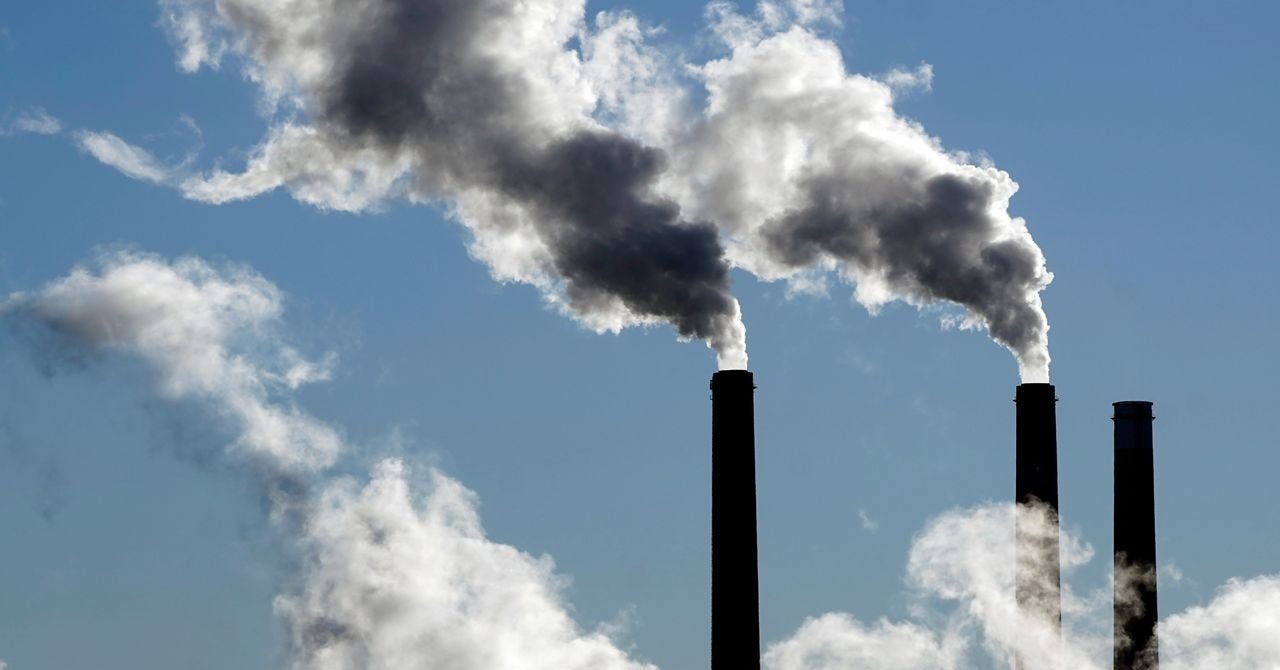
A federal appeals court rejected the Trump administration EPA’s attempt to abandon a Biden-era soot pollution rule, preserving a stricter national health standard for fine particle pollution.
The U.S. Court of Appeals for the D.C. Circuit denied petitions challenging the 2024 rule and also denied EPA’s motion to vacate it. The rule lowered the annual PM2.5 standard from 12 micrograms per cubic meter to 9. In an opinion by Senior Judge Douglas Ginsburg, the court said EPA’s new arguments against the rule “lack merit.”
The legal consequence is significant. The court rejected arguments that EPA had to consider costs and attainability when deciding whether to revise national ambient air-quality standards. The panel said injecting those factors into the NAAQS process would conflict with controlling precedent because the Clean Air Act directs EPA to set those standards based on public health.
The Biden EPA finalized the stricter soot standard in 2024, saying it would better protect families, workers, and communities from fine particle pollution. EPA projected the rule could prevent up to 4,500 premature deaths, avoid 290,000 lost workdays, and yield up to $46 billion in net health benefits in 2032.
Subscribe free for daily political analysis they won’t broadcast. Join 110K+ readers →
The Trump EPA later reversed course and asked the court to vacate the rule after industry groups and Republican-led states challenged it. AP reported that opponents argued the standard could raise costs for manufacturers, utilities, and families and complicate new manufacturing projects. EPA said Friday it was reviewing the decision.
Reaction came quickly from environmental and Democratic state officials. California Attorney General Rob Bonta called the ruling a major clean-air victory and urged EPA to implement the standard immediately. Earthjustice and NRDC also praised the decision, framing it as both a public-health win and a rebuke of EPA’s rollback effort.
The next fight is implementation. The 2024 standard remains in effect, but states and EPA still face the practical work of identifying areas that fail to meet the standard and setting plans to reduce pollution.
Subscribe free for daily political analysis they won’t broadcast. Join 110K+ readers →