


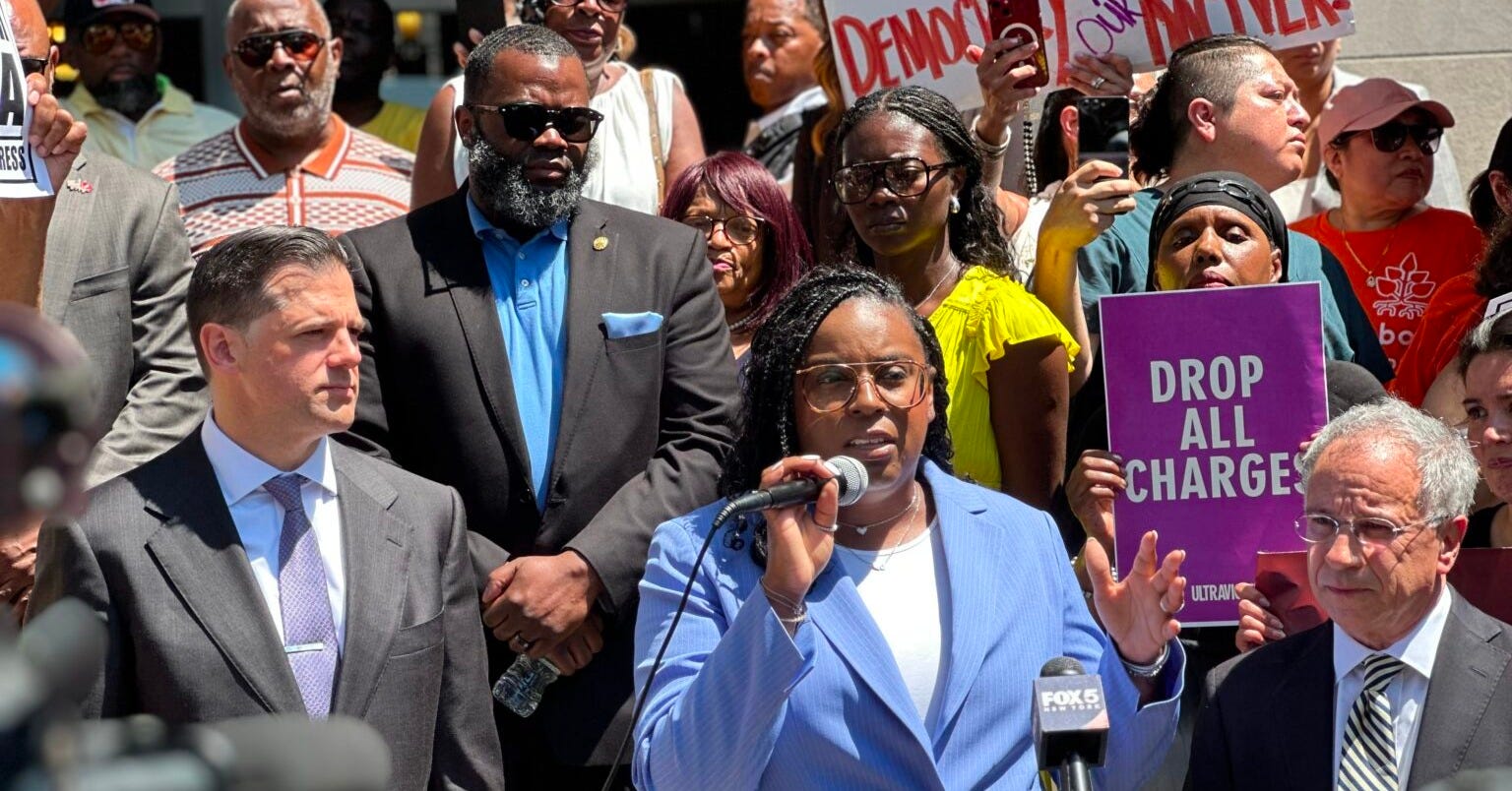
Federal appeals judges appeared skeptical Wednesday as Rep. LaMonica McIver asked them to throw out criminal charges tied to a confrontation outside a Newark immigration detention facility, setting up a high-stakes test of how far congressional immunity reaches during oversight of federal agencies.
McIver, a New Jersey Democrat, is fighting a three-count federal indictment stemming from a May 9, 2025 incident at Delaney Hall Federal Immigration Facility. The Justice Department says McIver forcibly impeded and interfered with federal officers as they attempted to arrest Newark Mayor Ras Baraka outside the facility. McIver and two other members of Congress were there for what DOJ described as a congressional oversight inspection.
Her defense argues the case should be dismissed because her conduct was part of protected legislative oversight. The argument relies on the Constitution’s Speech or Debate Clause, which says members of Congress may not be questioned elsewhere for speech or debate in either chamber. Courts have generally treated the clause as protection for legislative acts, though not every action by a lawmaker is automatically covered.
That distinction is the center of the case.
Subscribe free for daily political analysis they won’t broadcast. Join 110K+ readers →
For McIver, the prosecution is a politically motivated effort by the Trump administration to punish oversight of immigration enforcement. For prosecutors, the charges concern alleged physical interference with federal officers, not legislative speech or a protected inspection.
The practical consequence is significant. If McIver prevails, the ruling could strengthen legal protections for lawmakers conducting oversight visits at federal facilities. If she loses, the prosecution can continue and the decision could mark a limit on congressional immunity when an oversight visit becomes a confrontation with law enforcement.
The appeals court has not issued a ruling. Until it does, the case remains both a criminal prosecution and a constitutional fight over Congress’s ability to inspect executive-branch enforcement operations.
Subscribe free for daily political analysis they won’t broadcast. Join 110K+ readers →