


Editor’s Note: Autism is a deeply complex and multifaceted topic, one that intersects with science, identity, public health, history, and human rights. In this piece, we focus on recent comments by HHS Secretary Robert F. Kennedy Jr., using them as a springboard to explore broader truths about autism. We recognize that one article cannot cover every nuance, and we encourage readers to seek out autistic voices and specialized advocacy organizations for further insight.
Autism Isn’t New. We’re Just Now Seeing It Clearly
When Robert F. Kennedy Jr. recently declared that individuals with autism "will never pay taxes, hold a job, or go on a date," his words didn’t just echo decades-old myths; they revealed a profound misunderstanding of what autism is, and what it isn’t.
One of the most persistent misconceptions is that autism is a new condition, a modern crisis born from environmental pollutants, parenting styles, or, in the most fringe cases, vaccines. But this simply isn’t true.
Autistic people have always been with us, though they weren’t always seen, let alone understood. Historical accounts and retrospective diagnoses suggest that many individuals throughout history likely lived with what we would now recognize as autism. The reason we’re “seeing more” autism today is because we’ve gotten better at looking for it.
Independent News. Just $1/Week.
We just hit 10,000 subscribers—thank you! To celebrate, we’re offering full access to The Coffman Chronicle for just $1 a week ($52/year).
Get exclusive analysis and fearless reporting you won’t find in corporate media.
Support truth. Stay informed.
Since the 1990s, the diagnostic criteria for autism have broadened to reflect a more accurate—and inclusive—understanding of the condition. Once limited to very narrow and extreme presentations, the definition now encompasses a much wider spectrum of behaviors, traits, and needs. This includes people who speak fluently, work full-time, raise families, and navigate life with quiet but very real challenges.
The rise in diagnoses isn’t an epidemic; it’s a reckoning. A long-overdue acknowledgment of people who were previously misdiagnosed, misunderstood, or overlooked entirely. This is especially true for women, people of color, and LGBTQ+ individuals, who have often been excluded from research and diagnostic models rooted in a narrow view of autism.
That makes Kennedy’s framing not only scientifically inaccurate but deeply exclusionary.
And nowhere is that more evident than in his continued embrace of long-debunked myths about the causes of autism.
Genetics, Not Myths: What the Science Actually Says About Autism
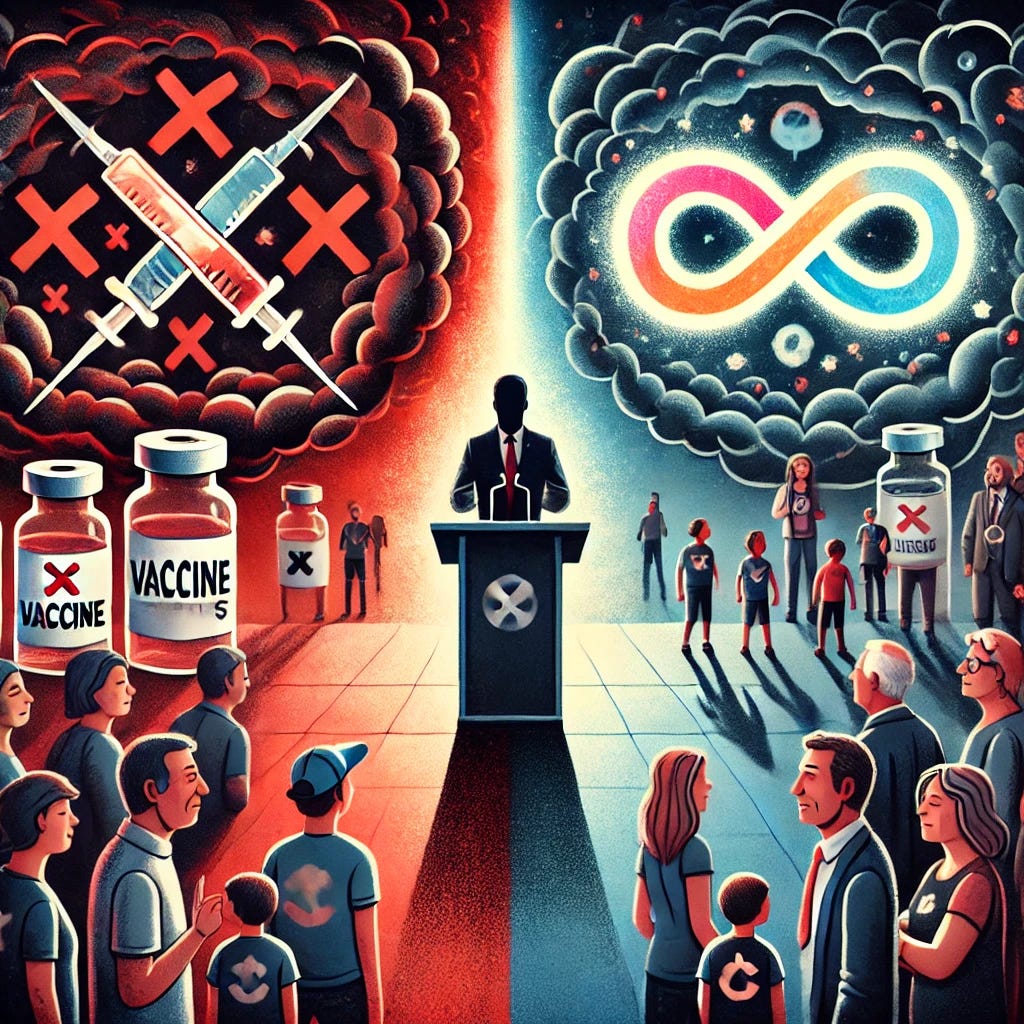
One of the most troubling aspects of RFK Jr.’s statements—and indeed, his broader history—is his insistence on questioning the scientific consensus around the causes of autism. By reigniting the long-debunked claim that vaccines might be responsible, Kennedy not only undermines decades of rigorous research but also contributes to the dangerous spread of medical misinformation.
The science is clear: genetics are the strongest known factor in the development of autism. Twin studies, genome sequencing, and large-scale population data have all consistently pointed toward a hereditary component. Environmental factors may interact with genetic predispositions, but there is no credible evidence that vaccines play any role.
And yet, Kennedy continues to lend legitimacy to these discredited ideas. Most alarmingly, he’s appointed individuals with a track record of anti-vaccine activism—including some who have lost medical licenses—to lead new autism “investigations.” This is not curiosity-driven inquiry. It’s ideological crusading dressed up as science.
We’ve seen the consequences of this before. Vaccine hesitancy, fueled by misinformation, leads to real-world harm. Measles outbreaks have re-emerged in under-vaccinated communities across Texas and New York. Public trust in childhood immunizations, one of modern history's most significant public health triumphs, is being chipped away.
These narratives don’t just frighten parents; they erode public health infrastructure and put the most vulnerable at risk.
Worse still, this misinformation pulls critical resources away from real needs. Every dollar spent chasing ghosts is a dollar not spent on support services, inclusive education, mental health care, or research into how best to help autistic people thrive.
This diversion of attention and funding is especially dangerous in today’s political climate.
We’ve covered the massive upheaval in federal health systems before. See our reporting here:
Note: This article is more than 45 days old and now lives in our archive. Consider becoming a paid subscriber to enjoy the full 450+ article archive, exclusive reporting, and occasional early access.

Misplaced Priorities in a Time of Austerity
At a time when the federal government is aggressively cutting social programs, mental health services, and medical research under the banner of “efficiency,” RFK Jr.’s obsession with chasing discredited autism theories feels especially cruel.
The Department of Government Efficiency has already gutted key services relied upon by autistic people and their families, from Medicaid supports to inclusive education grants and community disability programs. Autism research that centers the needs of autistic individuals, like studies on sensory support, communication tools, or employment pathways, has seen budgets slashed or frozen.
And yet, Kennedy now wants to pour time, resources, and taxpayer dollars into “investigating” a vaccine-autism link that’s been repeatedly disproven. It’s not just medically reckless; it’s fiscally indefensible.
The severe cuts to federal health services have been outlined in our reporting before. See our story here:

This isn’t about science. It’s about ideology. It’s about energizing a base through grievance and fear rather than facts. And in the meantime, autistic individuals and their families are left with fewer services, longer waitlists, and deepening stigma.
Kennedy claims to want answers. But the answers already exist. We need action—funding, inclusion, and support—not another inquiry built on misinformation.
To understand how deeply this system has failed, we must ask: Who has been left out all along?
Who Gets Seen? Bias and Invisibility in Autism Diagnosis
For decades, autism research and diagnosis have centered on a very narrow demographic: young, white, cisgender boys. This bias has had a profound effect on who gets diagnosed, when, and how, leaving many autistic individuals, especially those from marginalized communities, effectively invisible.
Girls, for instance, are often diagnosed years later than boys, if at all. Autistic traits in girls tend to present differently: more social mimicry, internalized distress, or interests that fly under the radar of traditional stereotypes. Many women only receive a diagnosis in adulthood, after years of being misdiagnosed with anxiety, depression, or borderline personality disorder.
The disparities extend beyond gender. Black and Hispanic children are less likely to be diagnosed early and more likely to be misdiagnosed with behavioral disorders instead of autism. LGBTQ+ and nonbinary individuals also report high rates of late diagnosis, compounded by medical discrimination and a lack of culturally competent care.
These gaps aren't just statistical; they're deeply personal. Delayed or denied diagnosis can mean missed support, education, community, and self-understanding opportunities. It can lead to a lifetime of confusion, shame, or being labeled "difficult" rather than understood.
Kennedy’s rhetoric doesn’t just flatten the diversity of the autism spectrum. It compounds this erasure. By presenting a monolithic, tragic version of autism, he reinforces a system that already fails to recognize and support those outside its narrow lens.
Which brings us to a fundamental truth about autism that Kennedy seems either unaware of or willfully ignores.
An additional component to consider? How deregulation may further negatively impact health services. See our reporting here:

Autism Is a Spectrum & That Changes Everything
When Kennedy speaks about autism, it’s clear he’s only talking about a narrow segment of the spectrum—those with the most visible, highest support needs. And even then, his language is shockingly dehumanizing. To suggest that autistic people “will never pay taxes, hold a job, or go on a date” is not just wrong—it’s an insult to millions of people living full, complex, and meaningful lives.
Autism is a spectrum. That means it includes individuals who are non-speaking and need 24/7 care, and those who hold down jobs, raise families, advocate for civil rights, and change the world in their own ways. It includes people with dual diagnoses and people with extraordinary talents. It includes joy and struggle, genius and vulnerability—often all at once.
And the fact that it’s a spectrum doesn’t make autism less real. It makes it more human.
That diversity of experience is what Kennedy seems unable—or unwilling—to grasp. His rhetoric reduces autism to a single worst-case scenario, ignoring the broad range of identities and expressions that define the spectrum. This is more than ignorance. It's a narrative that isolates families, stigmatizes children, and leads to policies rooted in fear rather than inclusion.
Importantly, the neurodiversity movement—which includes many autistic adults—has challenged this deficit-based model for years. Instead of asking how to “fix” autistic people, they ask how society can accommodate difference and provide the supports needed for everyone to thrive.
Kennedy’s framing takes us backward. It undermines decades of advocacy, research, and progress, and it tells autistic people that unless they meet neurotypical standards, they don’t count.
But they do.
The Genius of Neurodivergence
Kennedy’s portrayal of autism—as a life sentence of dependency and isolation—does more than stigmatize. It erases an essential truth: that many of humanity’s most extraordinary contributions have likely come from neurodivergent minds.
Albert Einstein. Isaac Newton. Emily Dickinson. Nikola Tesla. Simone Weil. Alan Turing. These are just a few historical figures modern psychologists and researchers believe may have exhibited traits consistent with autism. Their brilliance was not despite their neurological differences—it was often shaped by them. Intense focus, unconventional thinking, obsessive curiosity, and a disregard for social norms—traits frequently found on the autism spectrum—are the very things that push science, art, and philosophy forward.
To be clear, this isn’t to romanticize or reduce autism to “giftedness.” Not every autistic person is a misunderstood genius, nor should they have to be to deserve dignity and inclusion. But it’s worth stating, loudly, that the spectrum includes creativity, innovation, and insight as much as it includes difficulty and difference.
When Kennedy paints autism solely as a tragedy, he erases not just present-day autistic individuals who are thriving; he erases a lineage of neurodivergent brilliance that helped build the modern world.
We do ourselves a disservice as a society when we dismiss the minds that don’t fit our expectations. Autistic people are not broken. They are different. And often, they are extraordinary.
Kennedy’s Rhetoric and the Real-World Consequences
Robert F. Kennedy Jr. isn’t just wrong about autism. He’s dangerous. His remarks do more than distort science; they devalue people. When someone with his platform describes autistic individuals as tax burdens, jobless, and unlovable, he’s not simply offering an opinion—he’s reinforcing stigma, fueling fear, and legitimizing discrimination.
Words like his ripple outward. They influence public opinion. They justify underfunding services. They make it harder for parents to seek diagnoses. They give cover to schools and employers who already marginalize autistic people. And in a time when the federal government is actively slashing disability support and medical research budgets, his rhetoric could shape actual policy. That’s not theoretical—it’s terrifying.
And let’s not forget: this same administration is defunding evidence-based programs while giving a green light to pseudoscience. The vaccine-autism myth Kennedy clings to has been disproven time and time again. Every dollar spent “investigating” is taken from early intervention, housing support, community integration, and inclusive education. In short, it’s money stolen from the future autistic people deserve.
This isn’t leadership. It’s exploitation of public fear for political gain.
Autism isn’t a tragedy. But stigmatizing autistic people? That is. And as long as Kennedy continues to wield his position to spread misinformation, we owe it to every autistic individual—and every family who loves them—to push back with truth, clarity, and compassion.
In Solidarity, Not Stigma
Autism is not a crisis. The crisis is the stigma that continues to surround it—the ignorance, the misinformation, the systemic neglect. When public figures like Robert F. Kennedy Jr. use their power to amplify discredited science and paint millions of people as burdens, it’s not just an insult; it’s an attack on dignity, inclusion, and progress.
But we don’t have to accept that narrative. We can listen to autistic voices. We can push for policies that center support over fear, facts over fantasy. We can fight for a future where every autistic person, regardless of support needs, background, or diagnosis date, is recognized as fully human, fully deserving, and fully capable of contributing to a world that welcomes difference.
Let Kennedy’s comments be a wake-up call. Not to double down on old myths, but to rise up in defense of truth, science, and community.
To the autistic community: we see you, we hear you, and we stand with you.
We just hit 10,000 subscribers—thank you! We’re offering full access to The Coffman Chronicle for just $1 a week ($52/year) to celebrate.
Get exclusive analysis and fearless reporting you won’t find in corporate media.
Bibliography:
Autism Society of America. “Statement on Robert F. Kennedy Jr.'s Comments Regarding the Cause of Autism and Misleading Deadline.” Autism Society, April 12, 2025.
“Autism Rates in US Children Hit Record Level in 2022, CDC Data Show.” Reuters, April 15, 2025.
Hull, Laura, et al. “Sex/Gender Differences in Symptomology and Camouflaging in Adults with Autism Spectrum Disorder.” National Center for Biotechnology Information.
Tick, Brian, et al. “Heritability of Autism Spectrum Disorders: A Meta‐Analysis of Twin Studies.” National Center for Biotechnology Information.
Centers for Disease Control and Prevention. “Spotlight on a New Pattern in Racial and Ethnic Differences Emerges in Autism Spectrum Disorder (ASD) Identification among 8-Year-Old Children.”
What Is Neurodiversity?” Harvard Health Publishing, November 23, 2021.
“Measles Cases Are Rising. Other Preventable Diseases Could Follow.” Wired, April 17, 2025.
“Measles Exploded in Texas After Stagnant Vaccine Funding. New Cuts Threaten the Same Across the US.” Associated Press, April 14, 2025.
“RFK Jr. Claims Children with Autism Can 'Never Play Baseball.' His Aunt Dedicated Her Life to Proving That Wrong.” People, April 17, 2025.
Autistic Self Advocacy Network. “Trump and Kennedy Spouting Dangerous Autism Misinformation.” April 11, 2025.
Letting RFKjr lead the HHS is going to be an issue....
What a great narrative, Marie! I understand autism much more in depth now. It is just despicable what RFK Jr. is doing to this community of people. Not to mention the nerve of him to discredit the scientific community the way he does.
What an embarrassment to his family legacy!!