


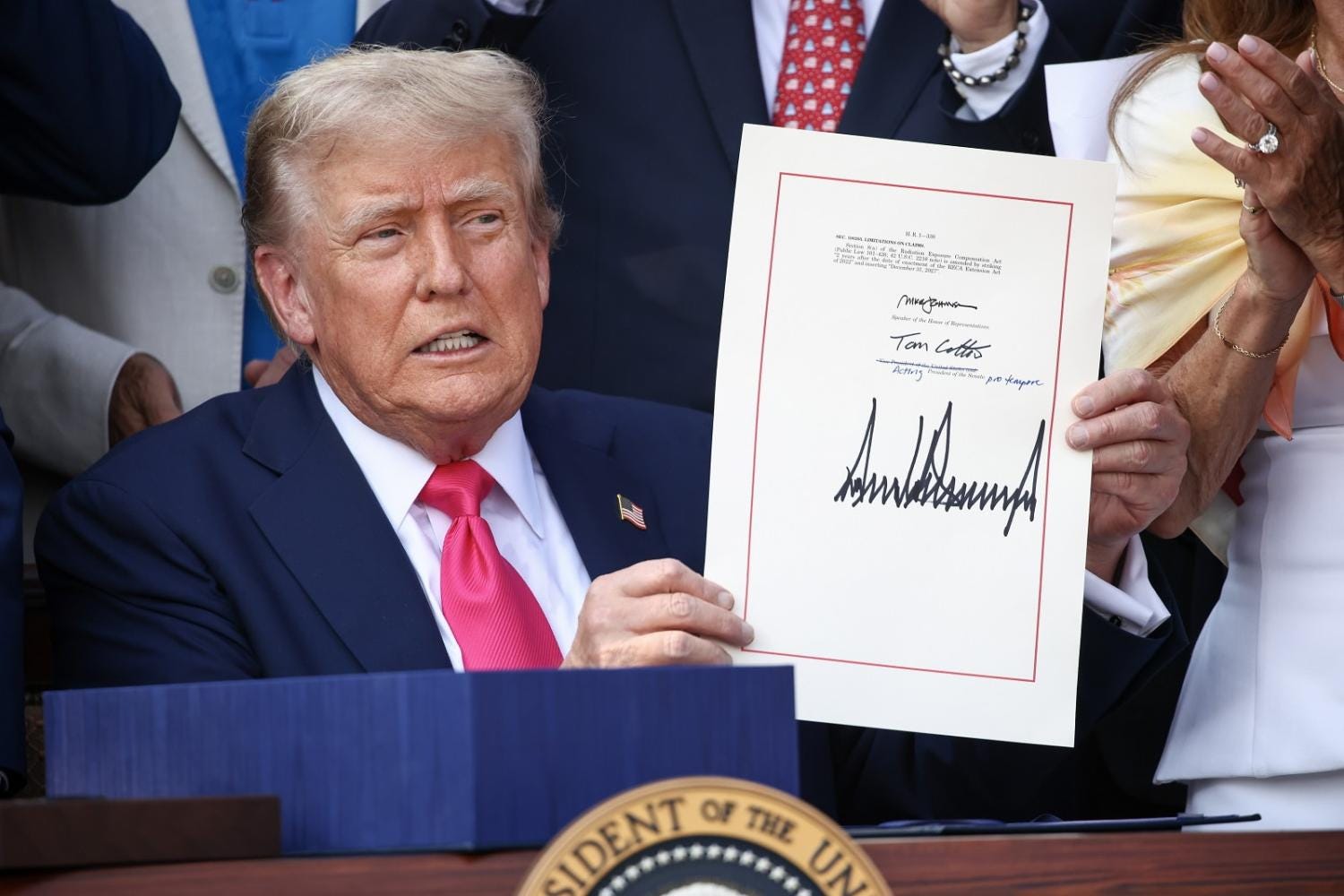
U.S. corporate tax revenue fell sharply in the months following the enactment of President Donald Trump’s sweeping July tax law, according to reporting cited by multiple economists and policy analysts.
The legislation, signed into law on July 4, 2025, made permanent several major corporate tax provisions first introduced in 2017, including full expensing for business investments, research and development costs, and factory construction. Those changes allowed large companies to immediately deduct significant expenses, reducing near-term tax liabilities.
Between July and November, federal corporate income tax receipts declined by roughly $52 billion, representing an estimated 33 percent drop over that period, according to figures cited by New York Times reporting and shared by tax policy experts on social media. Analysts attributed much of the decline to corporations accelerating deductions under the new law.
Follow The Coffman Chronicle on NewsBreak for daily breaking political coverage.
Supporters of the tax package argue the revenue dip reflects timing effects rather than long-term losses. Joseph Rosenberg of the Tax Policy Center has described provisions like full expensing as standard economic tools intended to spur investment and encourage domestic manufacturing, even if they temporarily reduce government receipts.
The law also included a range of individual tax benefits, such as eliminating federal taxes on tips, overtime pay, Social Security benefits, and interest on U.S.-made car loans, along with expansions to the child tax credit. The package earmarked funding for border security and military priorities as well.
Critics, however, contend the corporate provisions overwhelmingly benefit large companies and wealthy shareholders while increasing pressure on the federal budget. Some economists warn that if expected investment gains do not materialize, the revenue losses could contribute to higher deficits in the coming years.
Treasury officials have not yet released a full post-implementation analysis of the revenue impact, and experts note that corporate tax collections can fluctuate significantly due to payment timing, economic conditions, and accounting changes.
More comprehensive federal data is expected later this fiscal year, which could clarify whether the decline represents a short-term adjustment or a longer-lasting shift in corporate tax collections.
Follow The Coffman Chronicle on NewsBreak for daily breaking political coverage.