


On September 29, YouTube quietly settled a lawsuit brought by Donald Trump, agreeing to pay $24.5 million. The lawsuit stemmed from YouTube’s suspension of Trump’s account in the aftermath of the January 6th Capitol attack, a decision that Trump claimed amounted to political censorship.
Though his account was reinstated in 2023, the lawsuit persisted. The settlement comes with no admission of wrongdoing, no policy changes from YouTube, and no apology. Instead, the bulk of the money — $22 million — is being funneled to the Trust for the National Mall, earmarked for a “White House State Ballroom” project backed by Trump himself. The rest is being divided among the conservative co-plaintiffs.
YouTube’s decision to settle doesn’t reflect a legal defeat. It reflects a strategic surrender, a calculated decision to avoid discovery, political spectacle, and further litigation in an already volatile political climate.
It also mirrors a broader trend that can no longer be ignored.
We just hit 20,000 subscribers, 1,000 articles, and 1,000 podcast episodes. To celebrate, paid subscriptions are 20% off for two weeks only. That’s just $64/year—less than $1.25 a week.
A Pattern of Payouts
YouTube is merely the latest in a series of powerful platforms that have paid Trump to make a lawsuit go away. Before this:
Meta (parent of Facebook and Instagram) settled with Trump for an estimated $25 million in early 2025.
X (formerly Twitter) settled for around $10 million.
In each case, the pattern remains the same: Trump sues over being deplatformed or moderated. Platforms resist — briefly. Then, quietly, they pay out. No changes to policy. No confession of fault. Just a check and a press release.
These are not legal victories. They’re PR management decisions, desperate attempts to make a persistent political problem disappear. And yet, for Trump, the outcomes are far more than symbolic. He’s not just rehabilitating his image as a so-called victim of “Big Tech censorship.” He’s also cashing in.
Broadcast Media Pays, Too
It’s not just tech platforms folding. Traditional media has been just as eager to avoid a fight.
Earlier this summer, CBS/Paramount settled with Trump for $16 million over a 2020 “60 Minutes” interview he claimed was deceptively edited. ABC/Disney followed with its own $15 million settlement after Trump targeted anchor George Stephanopoulos for supposed on-air defamation.
See our reporting here:
Note: These articles are more than 45 days old and now live in our archive. Consider becoming a paid subscriber for exclusive perks including full access to our 1000+ articles.


Again, no apologies or corrections. Just settlements. A cost of doing business.
These aren’t isolated incidents. They’re part of a growing phenomenon, one where litigation is used not necessarily to win in court, but to reshape the media environment through intimidation and attrition. The lawsuits themselves are the point. They drain resources, distort incentives, and shift editorial decisions before a verdict is ever reached.
The Press Is Still on Defense
And the lawsuits haven’t stopped. They’re just shifting targets.
This summer, Trump filed a staggering $10 billion defamation suit against The Wall Street Journal and its parent company, Dow Jones. The trigger was an article describing a lewd drawing and birthday note allegedly contributed by Trump to Jeffrey Epstein’s “birthday book.” The WSJ reported on the document after it surfaced in a congressional investigation. Trump denied authoring the note and sued.
See our reporting here:
Note: These articles are more than 45 days old and now live in our archive. Consider becoming a paid subscriber for exclusive perks including full access to our 1000+ articles.


Meanwhile, a fresh round of legal threats has been aimed at The New York Times, continuing a years-long pattern of targeting publications that investigate or challenge him.
The message to the press is unmistakable: If you report critically, you will pay — in dollars, in time, in legal exposure.
The TikTok Bow
While media companies and platforms settle and self-censor, Trump’s influence is creeping even deeper, now into the infrastructure of platform control itself.
On September 25, Trump signed an executive order supporting a deal that would hand majority control of TikTok’s U.S. operations to a consortium of American investors, including Oracle and Silver Lake, both of which have longstanding ties to Trump allies and Republican donors. The deal satisfies the 2024 divestment law passed to address national security concerns over Chinese ownership.
Under this new arrangement, ByteDance retains a minority stake — less than 20% — but still retains key revenue-generating operations, such as TikTok Shop and parts of its advertising backend.
Trump, once a vocal critic of TikTok’s Chinese ties, is now helping reshape it into something far more useful: a powerful social platform governed, indirectly, by his own political and financial allies.
And here’s the concern no one wants to say out loud: if Trump’s team helps negotiate control, what’s stopping them from influencing moderation, from algorithmically boosting friendly content and shadow-throttling criticism?
Nothing. There’s no watchdog or oversight. Just a politically aligned ownership structure and a massive cultural engine with billions of users.
The Coup Already Happened
Trump has long claimed he was silenced by the media, but now, it’s the media that’s learning to be silent.
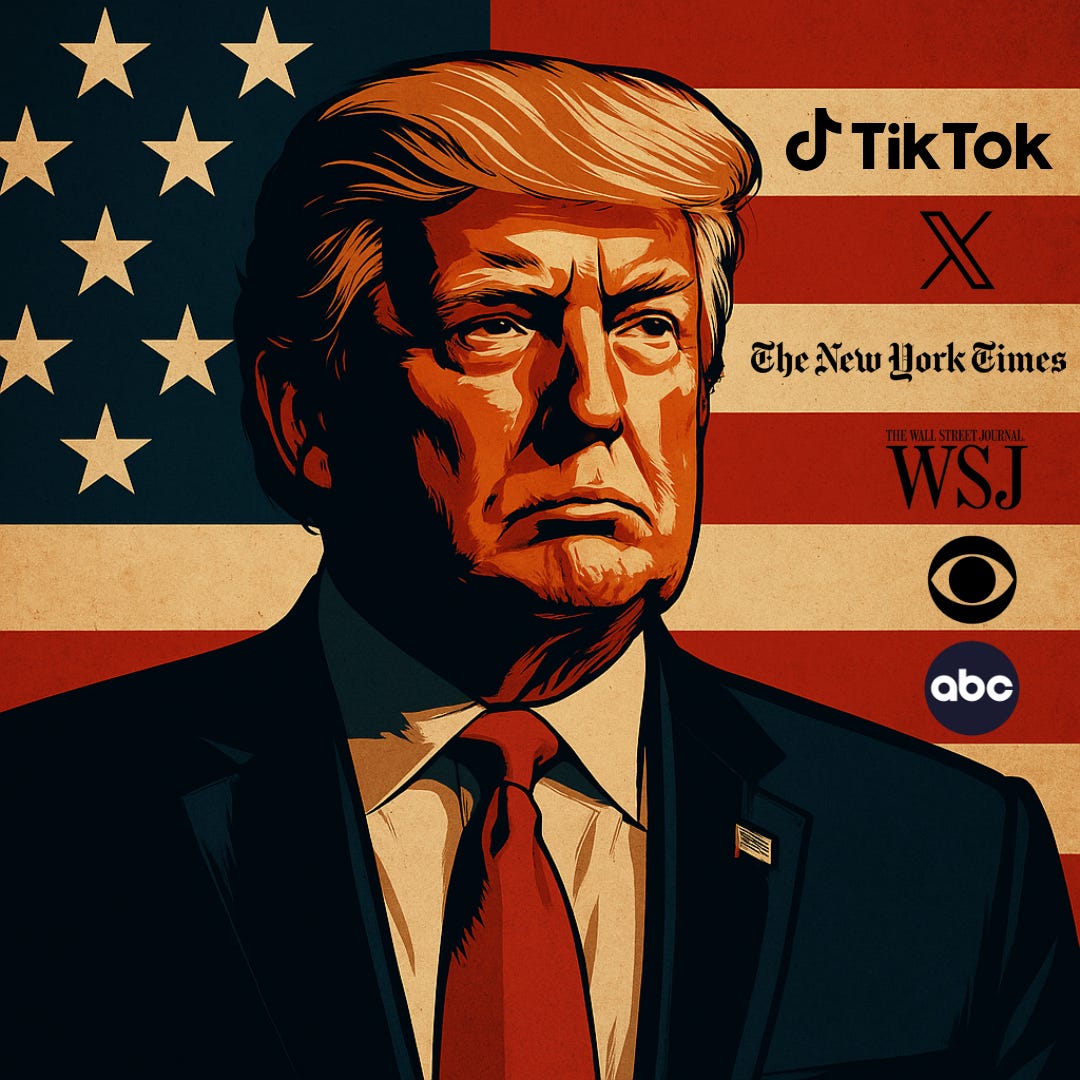
YouTube paid him. Meta paid him. CBS paid him. ABC paid him. He’s still suing the rest. And now TikTok is poised to operate under the guidance of people who, at best, will never want to cross him, and at worst, are his active donors.
This is not just a string of coincidences. It’s not just media outlets trying to avoid bad press. This is something else.
This is how a media coup happens in a democracy. Quietly. Legally. Profitably.
Not with tanks in the streets or broadcasters dragged off the air, but with lawsuits, settlements, algorithmic opacity, and the slow, relentless erosion of institutional confidence.
The Endgame
What began as a post-insurrection backlash has been turned into a financial and political asset. Trump sued for being silenced. Now, he’s building a media ecosystem that won’t dare speak against him.
Between big tech, network news, cable networks, and now social media, there is no platform remaining for people to access reliably fact-checked, nonpartisan, and trustworthy news. NPR? Defunded. Voice of America? Handed over to OAN. Both have been accused by the administration of being left-wing mouthpieces. Podcasters, influencers, and even Substack writers now must tread carefully or prepare to be targeted. With demonetization, shadow-bans, unclear strikes, targeted trolling, and doxxing, creators are at a greater risk than ever.
Trump said he was silenced. Now, everyone else is just whispering or echoing his talking points to stay alive.
Stay Informed. Stay Loud.
Subscribe to The Coffman Chronicle for no-BS political analysis, action guides, and daily truth bombs you won’t get from corporate media.
Sources:
YouTube to pay $24.5 million to settle Trump account suspension suit - Reuters
YouTube to pay $24.5 million to settle lawsuit over Trump’s account suspension after Jan. 6 attack - AP News
YouTube settles with Trump for $24.5 million - Politico
Paramount settles with Trump over ‘60 Minutes’ interview for $16 million - Reuters
Meta agrees to pay $25 million settlement to Trump over Jan. 6 suspension lawsuit - PBS / Associated Press
YouTube will pay $24.5 million to settle lawsuit over post‑Jan. 6 suspension - Washington Post
Paramount will pay $16 million to settle Trump lawsuit over ’60 Minutes’ interview with Harris - PBS / AP
Paramount agrees to pay $16m to settle Trump lawsuit over CBS interview - Al Jazeera
YouTube agrees to pay Trump $24.5m to settle lawsuit over account suspension - The Guardian
Trump sues CBS / Paramount, says he received $16 million payment in settlement - Reuters

Why isn't anyone stopping these criminals?