


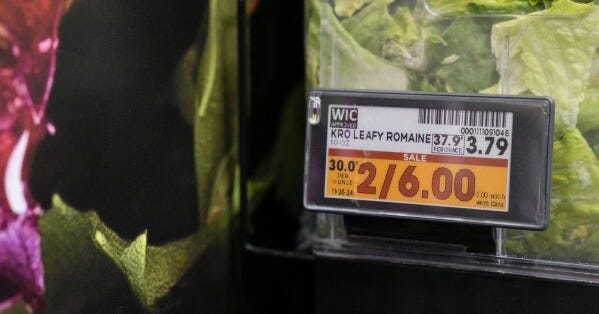
Digital price tags now appearing in grocery stores across California and the U.S. are drawing renewed scrutiny from lawmakers and consumer advocates concerned about how the technology could be used to raise prices on everyday goods.
Known as electronic shelf labels, or ESLs, the digital tags replace traditional paper price stickers and allow retailers to update prices instantly from a central system. Major grocery chains including Walmart, Kroger-owned stores such as Ralphs and Food 4 Less, and Whole Foods have been rolling out the technology as a way to reduce labor costs, limit pricing errors, and respond more quickly to promotions.
The controversy stems from fears that the technology could enable “surge pricing” or so-called “surveillance pricing,” where prices fluctuate based on demand, shopper behavior, or personal data rather than remaining fixed on store shelves. Consumer advocates warn that such practices could disproportionately impact shoppers purchasing essential items, particularly during periods of high inflation.
In early 2025, California legislators introduced several bills aimed at restricting algorithm-driven pricing practices. While electronic shelf labels were mentioned in legislative discussions as a potential tool that could facilitate rapid price changes, none of the proposals sought to ban the digital tags outright. Instead, lawmakers focused on limiting the use of consumer data and automated systems to manipulate prices unfairly.
Retailers have pushed back strongly against the allegations. Companies including Walmart and Kroger have said they do not use ESLs for surge pricing and maintain that prices are set centrally and applied uniformly to all customers. They argue the technology improves transparency and efficiency rather than enabling abuse.
Academic research has also tempered some of the concerns. Multiple studies analyzing millions of grocery transactions before and after the introduction of digital shelf labels found no evidence that prices fluctuated more frequently or rose faster once the technology was installed.
As grocery prices remain under close public scrutiny, electronic shelf labels are likely to stay at the center of debates over technology, affordability, and consumer trust — even as evidence so far suggests the fears may be more theoretical than real.
Follow The Coffman Chronicle on NewsBreak for daily breaking political coverage.