


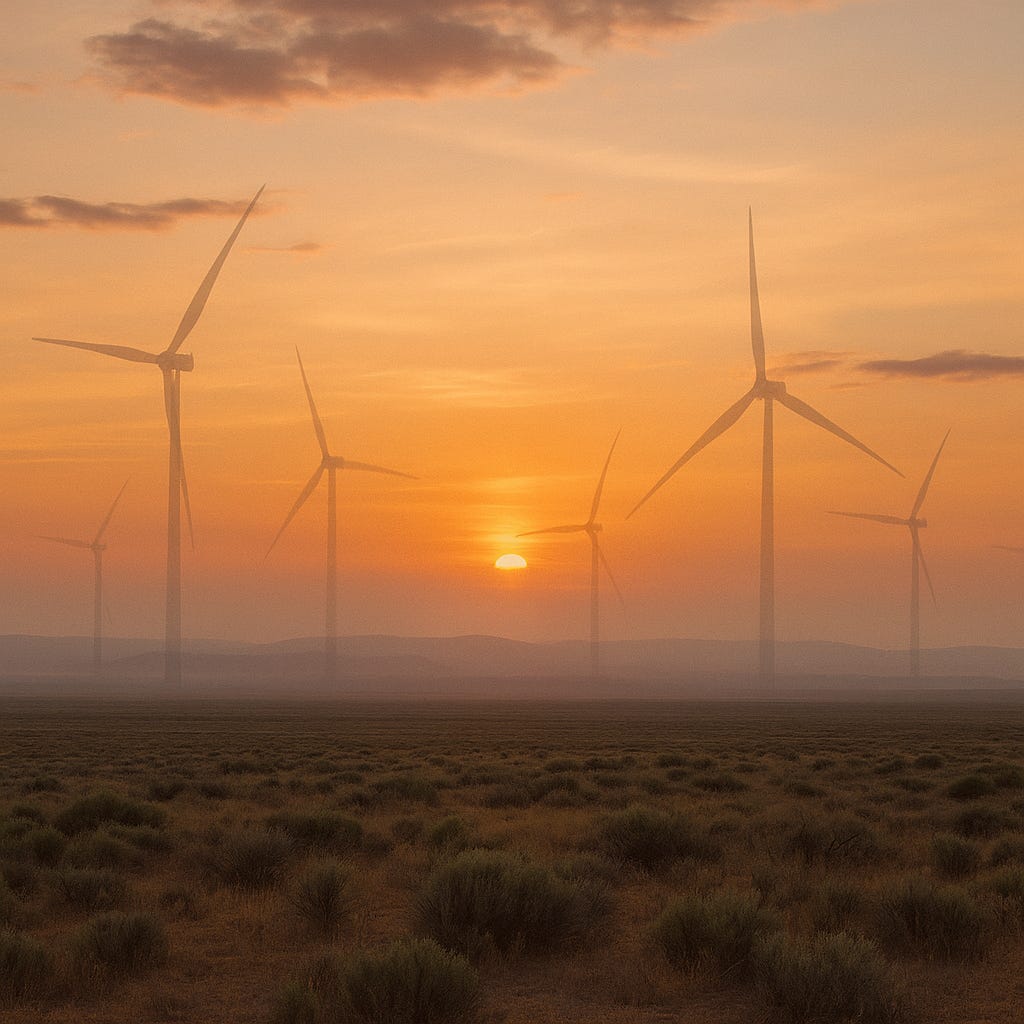
On August 6, 2025, the Trump administration abruptly canceled the Lava Ridge Wind Project, a billion-dollar renewable energy development in southern Idaho that had already cleared years of federal review, been scaled back to address local concerns, and won formal approval from the Biden administration just eight months earlier.
Interior Secretary Doug Burgum called the reversal a victory for “rural communities” and “taxpayers.” What he didn’t mention was that the project was designed to generate up to a gigawatt of clean power — enough for roughly half a million homes — in a state where drought is eroding hydroelectric output and dependence on imported fossil power is growing.
With one announcement, a fully approved project became a warning to every renewable developer in the country: even the finish line isn’t safe anymore. The Lava Ridge decision isn’t just about turbine height or land use. It’s a signal that federal approval, once the final word, is now subject to political mood swings, and that in this administration, clean energy will be the first on the chopping block.
Stay Informed. Stay Loud.
Subscribe to The Coffman Chronicle for no-BS political analysis, action guides, and daily truth bombs you won’t get from corporate media.
What Lava Ridge Was And What It Wasn’t
Lava Ridge wasn’t some speculative sketch on a corporate wish list. It was a fully vetted, utility-scale onshore wind farm planned for the wide-open rangelands of south-central Idaho, backed by Magic Valley Energy, a subsidiary of LS Power with a track record of building and operating major energy projects across the U.S.
The Bureau of Land Management (BLM) approved the project in December 2024 after nearly four years of environmental study, public comment, and design revisions. And “approved” didn’t mean a green light for the original proposal. The Biden administration signed off on a scaled-down plan that had already been trimmed from 400 turbines to 241, with a maximum height of 660 feet, a haircut meant to address concerns about viewsheds, wildlife habitat, and aviation safety.
Even in its reduced form, Lava Ridge would have been transformative for Idaho’s grid:
~1,000 megawatts of capacity, enough to power up to 500,000 homes.
Turbines are to be sited on BLM-managed land, with long-term disturbance limited to about 992 acres.
The nearest turbine was to be located nine miles from Minidoka National Historic Site, after consultation with Japanese American advocacy groups.
Seasonal restrictions on construction to protect wildlife, plus road and transmission design changes to reduce habitat fragmentation.
In a state where wind already supplies about 15% of electricity and hydropower is increasingly vulnerable to drought, a gigawatt of new generation isn’t a luxury. It’s a hedge against future price spikes and power shortages.
But even after years of scaling back and mitigation, Lava Ridge still ran into a wall, one built on history, emotion, and local politics.
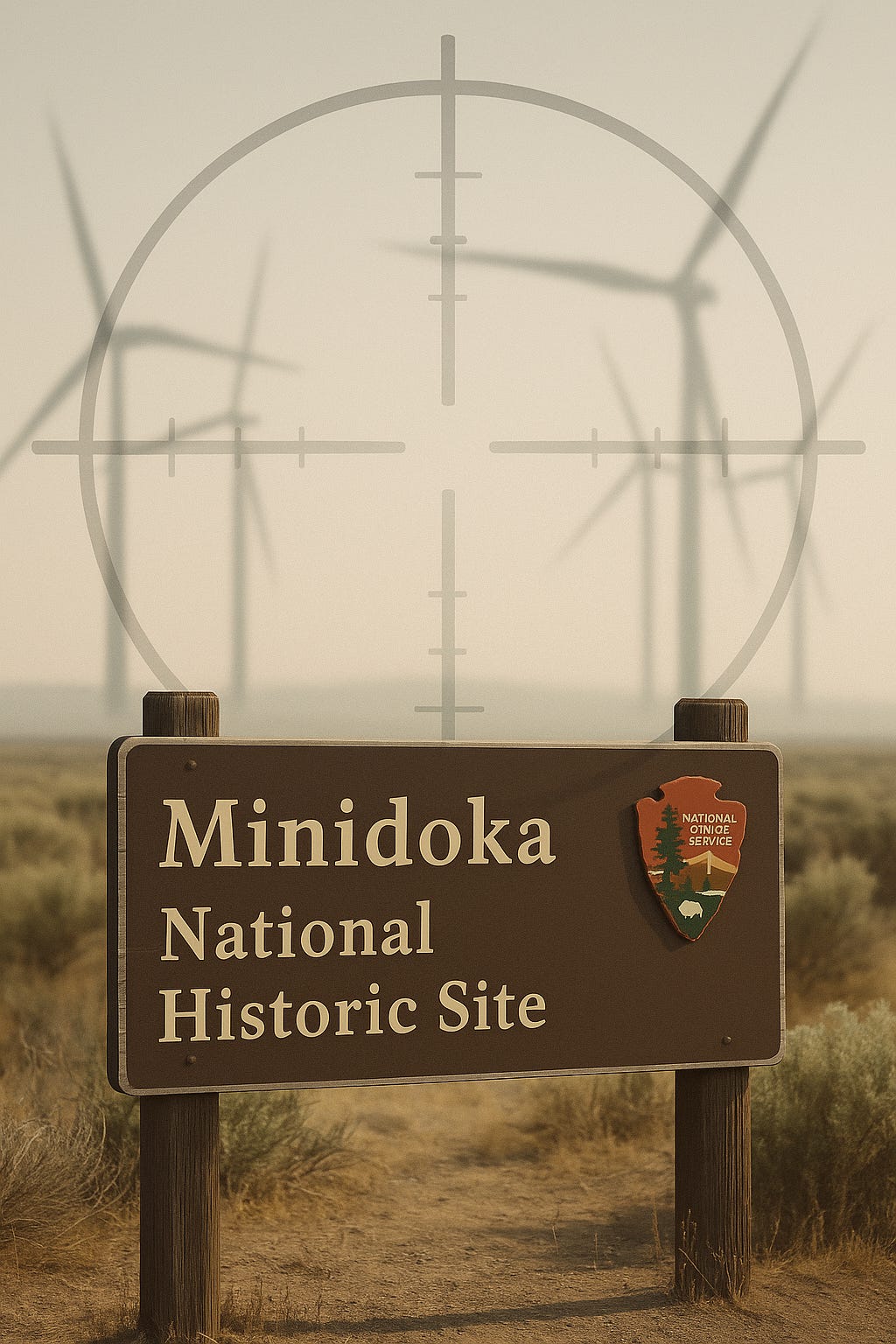
The Opposition: History, Viewsheds, and 660-Foot Towers
The fiercest resistance to Lava Ridge didn’t come from energy economists or grid planners. It came from the ground and from history.
At the center of the storm was Minidoka National Historic Site, once the site of a World War II incarceration camp where more than 13,000 Japanese Americans were imprisoned. For survivors and descendants, Minidoka is not just a landmark; it’s a place of grief, resilience, and unfinished remembrance. The idea of industrial turbines — each taller than the Washington Monument — looming within view was, for them, an intolerable intrusion.
Groups like the Friends of Minidoka and the National Parks Conservation Association mobilized early, framing the fight not as a “green energy” debate but as a question of cultural respect. They warned that the project’s scale would disrupt the solemn landscape, compromise educational programs, and alter the way future generations experienced the site.
Local objections piled on. Ranchers worried about disrupted grazing lands. County officials cited aviation safety hazards from turbines nearly 660 feet tall. Conservationists flagged potential impacts on sage-grouse habitat, migratory bird corridors, and other wildlife. Some saw the project as a Trojan horse for more industrial development on Idaho’s public lands.
BLM’s final plan tried to meet these concerns head-on:
Moving the closest turbine to nine miles from Minidoka.
Cutting turbine count and height.
Adding seasonal construction limits and re-routing roads and transmission lines.
Deferring over 200,000 acres from additional wind development until a comprehensive resource assessment could be done.
For opponents, it wasn’t enough. For them, mitigation was still intrusion, and intrusion was unacceptable. And in the political climate of early 2025, their resistance was amplified by a federal administration eager to find symbolic battlegrounds against renewable energy, especially ones with emotionally powerful narratives attached.
That made Lava Ridge irresistible to a Trump administration looking for the perfect battleground in its opening war on renewables.
The Reversal: A National Policy Shift Wearing Local Clothes
On January 20, 2025 — Trump’s first day back in the Oval Office — the new administration slapped a blanket “pause” on wind energy permits, both offshore and onshore. The memo claimed it was about “reviewing leasing practices.” In reality, it was a kill switch, quietly freezing dozens of projects in limbo, including Lava Ridge.
For months, Interior let the project twist in bureaucratic purgatory. Then, in August, they made it official: Lava Ridge was dead. The press release was wrapped in the language of localism — “protecting rural communities,” “respecting Idaho’s heritage” — but the real message was aimed far beyond the Gem State: Federal approval means nothing if we don’t like the politics behind it.
Doug Burgum, Trump’s Interior Secretary, called the Biden-era decision “reckless” and “legally deficient” without offering a single concrete example of which laws had supposedly been broken. This wasn’t a legal correction; it was a political stunt. They didn’t need airtight lawyering; they needed a trophy kill to hang on the wall of their war against clean energy.
Lava Ridge fit the bill perfectly:
High-profile enough to make national headlines.
Already carrying local controversy, making it easy to paint as unwanted.
Tied to Biden’s climate agenda, ensuring maximum partisan value in the reversal.
By cloaking the cancellation in the language of “protecting heritage” and “standing with local voices,” the administration managed to sell sabotage as stewardship. But make no mistake: this wasn’t about safeguarding Minidoka. If heritage were the true priority, the same zeal would be applied to blocking oil rigs, pipelines, and mining operations in sacred or historic landscapes. It never is.
Was the Original Approval Actually “Legally Deficient”?
When Interior Secretary Doug Burgum called the Biden-era approval of Lava Ridge “reckless” and “legally deficient,” it sounded damning. That’s the point. If you want to kill a project without admitting you just don’t like it, you wrap the execution in the language of legal necessity.
The problem? The record doesn’t back it up.
The Bureau of Land Management’s Record of Decision (ROD), signed in December 2024, was the product of years of NEPA review, NHPA consultation, and FLPMA compliance. It included a full Environmental Impact Statement, formal mitigation plans, and a final, signed determination by the Department of the Interior.
If the administration really found a “legal deficiency,” they’d be able to point to the specific statute, procedural step, or evidentiary gap that invalidates the ROD. They haven’t. No missing wildlife survey. No unconsulted tribe. No skipped public notice. Just a vague assertion of flaws which conveniently require no proof when you’ve already decided on the outcome.
Under the Administrative Procedure Act (APA), rescinding a final agency action requires:
Identifying the error or changed circumstance.
Providing a reasoned explanation for the change that directly engages with the prior record.
Showing that the reversal itself isn’t arbitrary or politically motivated.
And once you strip away the legal window dressing, what’s left is a playbook, one that’s already being deployed far beyond Idaho.
The Bigger Pattern: Making One Project the Poster Child
The Lava Ridge reversal is part of a coordinated shift in federal energy policy that treats large-scale renewable projects as political targets.
1. The January 20, 2025, Kill Switch
Trump’s first-day memorandum halting wind permits froze both new proposals and projects with existing approvals, including Lava Ridge.
2. The Trophy Kill Strategy
Pick a high-profile, controversial project tied to your opponent’s agenda. Cancel it, and you’ve got a symbolic win.
3. Changing the Money Rules Mid-Stream
The Treasury Department is narrowing the definition of “begin construction” for tax credit eligibility, a move that can cripple financing for slow-moving projects.
4. Chilling the Market
Once investors believe federal approvals are meaningless, capital dries up.
5. Selective “Heritage” Protection
Heritage arguments are deployed against renewables, but not against fossil fuel projects in sacred or historic areas.
But while the message was national, the immediate damage was local, and Idaho’s grid will feel it first.
Idaho’s Energy Reality Check
Idaho’s energy security rests heavily on hydropower, but drought and shifting river flows are eroding that stability. Without Lava Ridge’s ~1,000 MW of capacity, the state remains more dependent on natural gas and imported electricity from coal-heavy neighbors.
Wind is one of Idaho’s cheapest backup options. The EIA shows new onshore wind beating natural gas in cost and helping diversify a grid vulnerable to climate-driven hydro shortfalls. Killing Lava Ridge means higher rates, fewer local jobs, and millions in lost tax revenue for rural counties.
Was Mitigation Enough? The Minidoka Question
BLM’s final plan moved turbines nine miles from Minidoka, capped their height, deferred 200,000 acres from future development, and added seasonal restrictions. It wasn’t perfect — some groups still objected — but it was unprecedented in its level of cultural mitigation for a renewable project.
Trump’s Interior framed the cancellation as defending heritage. However, that reverence never appears when oil rigs or pipelines threaten sacred Native lands. In this case, Minidoka’s legacy became political cover for a much larger anti-renewable agenda.
That’s how you turn a cultural flashpoint into a political weapon, and it’s exactly what Trump’s team plans to do again.
The Playbook From Here
Freeze everything first. Pick a trophy kill. Wrap it in noble language. Change the rules mid-stream. Let fear do the rest.
The goal isn’t to stop one project. It’s to make developers doubt all of them, long enough for fossil fuels to keep their grip.
The Bottom Line
Lava Ridge was vetted, scaled back, and approved. Killing it wasn’t about Idaho, heritage, or legal flaws. It was about showing that under Trump, no renewable project is safe from political execution.
Idaho will pay in higher rates and greater fossil dependency. The rest of the country will pay when their own clean energy plans die in the same crossfire.
Stay Informed. Stay Loud.
Subscribe to The Coffman Chronicle for no-BS political analysis, action guides, and daily truth bombs you won’t get from corporate media.
Bibliography:
“Trump Administration Reverses Biden Approval of Major Wind Farm in Idaho.” AP News, August 6, 2025.
Bureau of Land Management. “BLM Advances Lava Ridge Wind Project in Southern Idaho.” Press release, December 6, 2024.
Department of the Interior. “Interior Department Moves to Cancel Reckless Biden-Era Approval of Lava Ridge Wind Project.” Press release, August 6, 2025.
“U.S. Secretary of Interior Announces End to Lava Ridge Wind Project in Idaho.” Idaho Capital Sun, August 6, 2025.
“Notice of Availability of the Record of Decision for the Lava Ridge Wind Project in Jerome, Lincoln, and Minidoka Counties, Idaho.” Federal Register, December 11, 2024.
Idaho Attorney General’s Office. “Attorney General Vows Opposition Despite BLM Decision to Push Lava Ridge Wind Project Forward.” Press release, December 6, 2024.
“BLM Issues Final Approval of Scaled-Down Lava Ridge Wind Project in Idaho.” Idaho Capital Sun, December 9, 2024.
“A Decision Is Made for the Lava Ridge Wind Project.” KMVT/KSVT, December 6, 2024.
“The Trump Administration’s Concerted Attacks on Wind Threaten the Industry’s Future.” Governors’ Wind Energy Coalition, August 13, 2025.
“Lava Ridge Wind Project.” Wikipedia.
There is no legitimate reason to axe this project. It’s all about greed and lack of respect for Earth by this illegal administration.
The actions of the Trump regime are never about what will benefit the people but what supports his 3rd grade comprehension of science, economy, diplomacy, etc. and as a bonus allows him to grift lie and steal. The most unintelligent uneducated and corrupt administration ever.