


China’s long-built energy strategy is being tested by a global oil shock, and early signals show it’s holding.
As conflict tied to Iran disrupts global supply, the contrast with the United States is drawing new attention from analysts and policymakers.
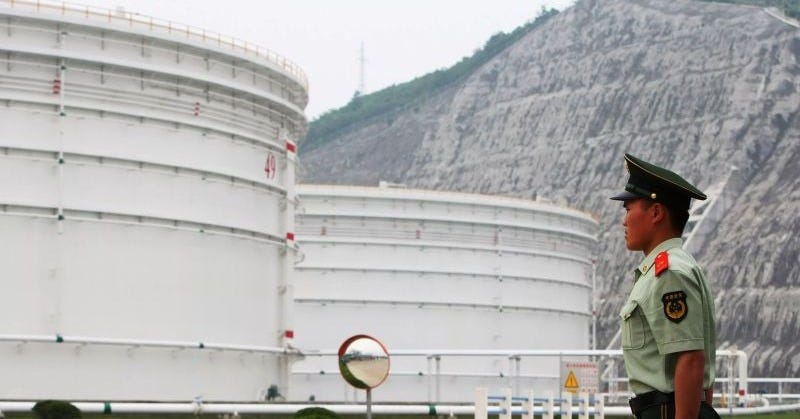
For more than a decade, China has expanded oil reserves, boosted domestic energy production, and invested heavily in renewables, according to CNN reporting.
Estimates from the U.S. Energy Information Administration show China now controls roughly 1.4 billion barrels in combined strategic and commercial inventories, far exceeding U.S. reserves.
That gap is shaping the response.
While China leans on stockpiles and diversified supply lines, the U.S. and its allies have moved to release hundreds of millions of barrels from emergency reserves to stabilize prices.
Subscribe free for daily political analysis they won’t broadcast. Join 110K+ readers →
U.S. Treasury Secretary Scott Bessent said China has been “an unreliable global partner” during the crisis.
The divide reflects two fundamentally different approaches to energy security.
China has prioritized insulation from global markets through stockpiling, state control, and alternative energy expansion, including electric vehicles and renewables.
The U.S., by contrast, relies more on market flexibility, domestic production, and coordinated releases from its Strategic Petroleum Reserve, which holds just over 400 million barrels.
That difference may carry economic consequences.
Analysts warn that rising fuel costs could hit U.S. consumers harder, given the economy’s dependence on spending, while China’s centralized system may better absorb price shocks.
The next phase will depend on how long supply disruptions last, and whether reserve releases can keep pace with demand.
For now, the crisis is becoming a real-time test of two competing energy strategies.
Download a FREE Pocket Constitution NOW →
