


On January 28, 2025, President Donald Trump threw a wrench into the machinery of American governance, issuing an executive order to freeze federal grants and loans. Billed as a crackdown on wasteful spending, the move sent shockwaves through states, nonprofits, and public institutions that rely on federal funding for healthcare, education, housing, and other essential services. While Trump’s loyal base may cheer this as a long-promised stand against big government, the reality paints a bleaker picture: Medicaid portals crashing, housing programs scrambling to pay bills, and research projects left in limbo.
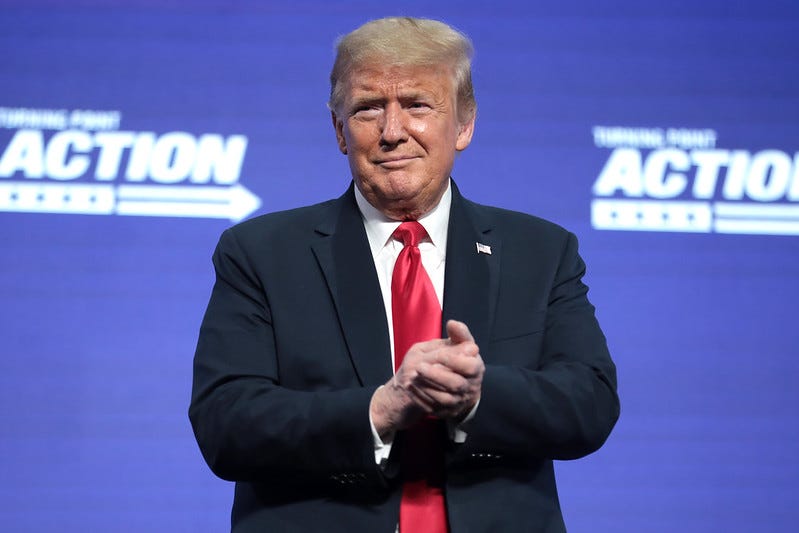
Image Gage Skidmore
Behind the rhetoric of fiscal discipline and “America First,” the freeze is part of a more profound ideological agenda to consolidate executive power and reshape the federal government to reflect hardline conservative priorities. But as the dust settles, the question becomes unavoidable: who really pays the price?
Spoiler alert: it’s not the affluent supporters cheering from their suburban enclaves or corporate boardrooms. It’s low-income families, rural communities, and the very states that form Trump’s heartland stronghold.
The Freeze: A Sweeping Disruption
Trump’s order halts discretionary federal grants and loans across many programs. Think education funding for low-income schools, housing assistance for struggling families, Medicaid operations, infrastructure grants for rural communities, and research funding for public health and climate science. Programs like Social Security, Medicare, and SNAP (food stamps) are technically exempt, along with Head Start.
But even here, the freeze casts a long shadow. While SNAP benefits will continue, states rely on federal administrative grants to run the program, meaning the systems behind those benefits could falter. Similarly, while Head Start funding is protected, other early childhood initiatives that depend on state-level federal support could still face budget shortfalls. It’s a ripple effect: the freeze doesn’t have to touch a program directly to disrupt the ecosystem it depends on.
In the meantime, actual harm is already happening. States have reported crashes in their Medicaid portals, leaving healthcare providers unable to process claims. Housing nonprofits reliant on HUD grants are burning through reserves to stay afloat, and rural development projects—lifelines for underserved communities—are being placed on indefinite hold.
The Rationale: “America First” or Ideological Reboot?
Trump has framed the freeze as part of his crusade to cut down on government waste and eliminate funding for what he and his administration see as frivolous or politically charged programs. Grants supporting diversity, equity, and inclusion (DEI) initiatives, climate change research, and LGBTQ+ programs are reportedly under the microscope. For Trump, this fulfills his 2024 campaign promises, rooted in the Project 2025 agenda—a conservative playbook drafted by the Heritage Foundation to overhaul federal governance and prioritize conservative goals.
But critics see it differently. They argue this isn’t about cutting waste but gutting programs that serve the most vulnerable in favor of redirecting resources to defense spending, immigration enforcement, and corporate interests. Programs disproportionately benefiting low-income and minority communities are being sacrificed on the altar of ideology, leaving millions to wonder if they’re collateral damage or the intended target.
The Legal Showdown: Courts Step In
Unsurprisingly, the freeze has triggered a legal firestorm. A coalition of 23 Democratic state attorneys general, led by New York AG Letitia James, has filed a lawsuit to block the freeze, arguing it violates the Impoundment Control Act of 1974 (ICA) and the Constitution. The ICA was enacted in response to Richard Nixon’s abuses of impoundment powers and explicitly bars the president from withholding funds that Congress has already appropriated without its consent.
On January 28, Judge Loren AliKhan issued a temporary restraining order (TRO), halting the freeze until at least February 3. At that point, the court will decide whether to issue a preliminary injunction, which would block the freeze for the duration of the case. The lawsuit’s arguments are compelling:
The freeze violates the ICA: Congress controls federal spending, not the president.
Irreparable harm: Medicaid, housing, and education programs already feel the strain, and prolonged disruption could devastate millions.
Public interest: Cutting off critical lifelines to low-income Americans is not in the public’s best interest.
If the court denies the preliminary injunction, the freeze will resume, creating even more significant disruption. However, legal experts believe the plaintiffs have a strong case, bolstered by precedents like Train v. City of New York (1975) and the GAO’s ruling in Trump’s 2019 Ukraine aid scandal.
Who Gets Hit Hardest?
Here’s the bottom line: this freeze doesn’t touch Trump’s wealthy supporters. It won’t affect the corporate donors cheering on regulatory rollbacks or the ideologues drafting policy memos in think tanks. But it does devastate the Americans who rely most on federal support:
Low-Income Families: Cuts to Medicaid administrative grants could mean delayed doctor reimbursements, leaving patients without timely care. Housing assistance could dry up, increasing homelessness. Education programs like Title I for low-income schools and school lunch subsidies could face uncertainty, impacting millions of children.
Rural Communities: Federal grants support broadband expansion, healthcare clinics, and infrastructure in rural areas—services these communities cannot afford to self-fund. Without them, rural Americans will fall even further behind urban areas.
States Dependent on Federal Aid: States like Mississippi and West Virginia, which rely heavily on federal funds for healthcare and education, are particularly vulnerable. Ironically, many of these states are Trump strongholds, and the freeze risks creating economic chaos for his most loyal supporters.
A Recipe for Greater Inequality
The freeze doesn’t just hurt—it widens the divide between rich and poor. Wealthier Americans, insulated from these disruptions, can rely on private healthcare, private education, and self-funded infrastructure. Meanwhile, working-class families are left scrambling for essentials like food, housing, and medical care.
This disparity isn’t accidental. By targeting discretionary spending—which funds public services critical to economic mobility—Trump’s freeze shifts the burden onto those already struggling. At the same time, wealthier Americans and corporations face little to no impact. It’s a move that accelerates the growing wealth gap, ensuring the most vulnerable Americans have an even harder time climbing out of poverty.
The Coffman Chronicle is powered by YOU—no billionaires, no corporate overlords. Help us keep exposing the BS, delivering sharp insights, and keeping you informed.
For just $8 a month or $80 a year, you can fuel the fight and be part of the movement.
Not ready to subscribe? No worries, chaos loves company, and you're always welcome. But if you’re fired up to keep us loud, proud, and unfiltered, smash that subscribe button now!
Trump’s Base: A Ticking Time Bomb?
Trump’s less affluent base, particularly in rural America, faces the harshest consequences of this freeze. These are the very people who rely on Medicaid, rural development grants, and federally subsidized housing. Federal programs are economic lifelines in states like West Virginia and Kentucky, where Trump won decisively in 2024.
Many of these voters remain loyal, swayed by Trump’s message that this freeze targets "wasteful spending" and programs that don’t align with their values. But loyalty has its limits. If the freeze drags on and essential services collapse, Trump risks alienating the very people he claims to fight for.
What’s Next?
The February 3 preliminary injunction hearing will determine whether the freeze remains blocked for the duration of the lawsuit. If the courts strike it down permanently, it would be a significant rebuke of Trump’s overreach. However, if the freeze is reinstated, the fallout could worsen, with prolonged disruptions to essential services.
This freeze isn’t just a technical policy move—it’s a gamble with real lives on the line. For Trump, it tests how far he can push his ideological agenda before the political costs outweigh the benefits. For millions of Americans, it’s a battle for survival in a system already tilted against them.
One thing is clear: the stakes have never been higher, and the divide between those who govern and those who are governed has never been wider.
They are not “conservative.” They’re dangerous radicals.
And he flipped https://www.msn.com/en-us/news/politics/trump-white-house-reverses-course-rescinds-freeze-on-federal-grants/ar-AA1y4PD5?PC=EMMX01