


The Colonial Ghost in the Oval Office
When South African President Cyril Ramaphosa sat across from Donald Trump in the Oval Office this week, he didn’t just encounter a President—he encountered a centuries-old worldview.
In a meeting that quickly turned confrontational, Trump presented Ramaphosa with discredited far-right claims of a “white genocide” in South Africa, rhetoric rooted in white nationalist conspiracy, not diplomatic truth. Elon Musk, who hails from South Africa and has echoed similar narratives, watched from the sidelines. This was less diplomacy than spectacle, a display of racial grievance masquerading as foreign policy.
But beneath the headlines lies something deeper: the confrontation was not just about South Africa. It was about the legacy of empire, and the fact that its logic still governs us.
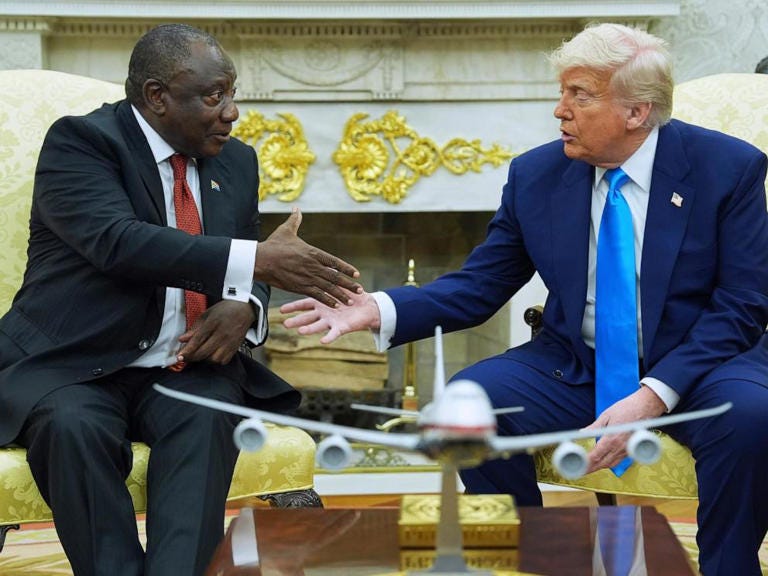
© Evan Vucci/AP
We just hit 13,000 subscribers—thank you! To celebrate, we’re offering full access to The Coffman Chronicle at 50% off.
Get exclusive analysis and fearless reporting you won’t find in corporate media.
Borders Drawn in Blood
South Africa, like much of the Global South, is a country still wrestling with the aftershocks of colonial rule. Its borders, like those of Nigeria, Iraq, India, and dozens more, were carved by imperialists with zero regard for history, language, or humanity. The result? Decades of conflict, dispossession, and division have left scars that still shape its society today.
Trump’s racialized alarm over land redistribution echoes the colonial fear of a “native uprising.” It also exposes how deeply colonial anxieties still drive Western discourse.
The American Mirror
We Americans like to think we moved past colonialism, but our foreign policy and our domestic governance say otherwise.
We spend billions on border militarization, police, and prisons, while underfunding housing, schools, and healthcare. Abroad, we back strongmen, cut development aid, and react to migration by closing doors rather than opening opportunities.
This is not a coincidence. It is the continuation of a worldview that values control over care, punishment over prevention, and security over justice.
China, Migration, and Missed Opportunities
If Trump truly saw China as a global threat, he would have invested heavily in the Global South, including South Africa. But instead of building partnerships, he built walls, literally and diplomatically. And while China was offering infrastructure deals and trade, the U.S. was cutting aid and blaming migrants.
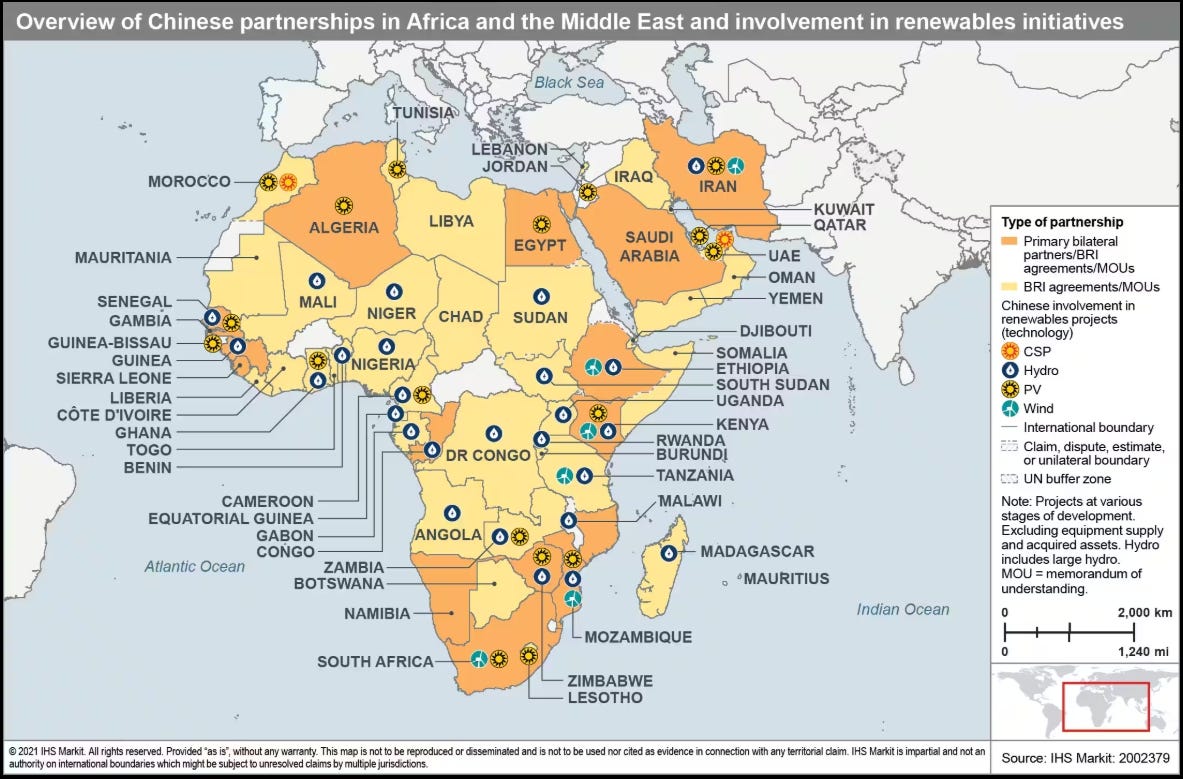
Nowhere is this more evident than in Latin America, where U.S. intervention destabilized entire nations, and then slashed aid just as migration crises exploded. The money is there, but it's being funneled into militarized responses, not systemic solutions.
Colonialism Isn't History. It's Policy.
From the townships of Johannesburg to the barrios of El Salvador to the borders of Texas, the same logic persists:
Control, not cooperation.
Exploitation, not equity.
Borders, not bridges.
It’s time to confront this, not just by fact-checking Trump, but by rejecting the worldview that makes his rhetoric possible and politically profitable.
The Path Forward
A progressive foreign policy means:
Investing in the root causes of migration and instability—jobs, climate resilience, education, not just in border patrols and weapons.
Respecting the sovereignty and agency of nations historically colonized, not dictating from Washington.
Recognizing and repairing the harm of past imperial policies, from coups to coups of silence.
But this isn’t just about the world out there. We must apply the same decolonizing principles at home.
That means:
Divesting from carceral systems and militarized policing, and investing in public health, education, and housing.
Returning land and power to Indigenous communities, and addressing the generational theft caused by slavery and segregation.
Treating poverty and migration not as criminal threats, but as failures of justice and imagination.
Ramaphosa didn’t just walk into the White House. He walked into the shadow of a system built to control countries like his. But that system also cages our own people, evicts our own families, and suppresses our own voices.
If we’re serious about justice—global or domestic—we don’t just need new policies.
We need to decolonize the way we see the world and ourselves.
We just hit 13,000 subscribers—thank you! To celebrate, we’re offering full access to The Coffman Chronicle at 50% off.
Get exclusive analysis and fearless reporting you won’t find in corporate media.
Bibliography:
"Ramaphosa-Trump Updates: US Pushes South Africa on ‘Genocide’ Claims." Al Jazeera, May 21, 2025.
"Trump Ambushes South African Leader with Claim of Afrikaners Genocide." BBC News, May 21, 2025.
"US-China Engagement in Africa: A Crossroads." Brookings, March 2025.
Council on Foreign Relations. "Central America's Turbulent Northern Triangle." CFR, October 2023.
"China’s Role in African Infrastructure and Capital Projects." Deloitte, 2018.
"The Violent Legacy of Africa's Arbitrary Borders." Freakonomics, December 2011.
"Trump Confronts South Africa's Ramaphosa with False 'White Genocide' Claims." Reuters, May 21, 2025.
"The Problem with Africa's Borders: A Legacy of Colonialism." SchoolTube, n.d.
"Trump Ambushes South African President with Video and False Claims of Anti-White Racism." The Guardian, May 21, 2025.
"Ramaphosa Wanted to Talk Golf. Trump Took a Swing." The Times, May 21, 2025.
"U.S. Efforts to Address Irregular Migration." U.S. Department of State, n.d.
"Colonial Borders in Africa: Improper Design and Its Impact on African Borderland Communities." Wilson Center, n.d.

Donald Trump admirers dictators. He is trying to turn the USA into a version of the Russian oligarchy. Resist!!!!!
Interesting idea to apply the idea of colonialism to the own country in the western world. It sounds convincing to me. Thank you