


On April 28, Donald Trump stood before a crowd and declared he would “bring Columbus Day back from the ashes.” He spoke as if a national tragedy had occurred, not the centuries of violence that followed 1492, but the perceived loss of a holiday. For many Americans, it sounded like red-meat rhetoric, a nod to patriotic nostalgia. But for Indigenous communities, it was something more dangerous: a signal. It was confirmation that their erasure—historical, political, spiritual—was not only overlooked but endorsed.
Columbus Day has never been a celebration of discovery for Native peoples; it’s a day of mourning. “When you honor Columbus, you’re honoring the beginning of our genocide,” said Tara Houska (Couchiching First Nation), a lawyer and activist. Christopher Columbus didn’t discover America; he enslaved and killed Indigenous people, selling children into sexual slavery and igniting a brutal age of conquest. To “bring it back,” as Trump promised, is to celebrate invasion over survival. Indigenous Peoples Day wasn’t created to erase history but to finally tell it honestly.
Independent News. Just $1/Week.
We just hit 12,000 subscribers—thank you! We’re offering full access to The Coffman Chronicle for just $1 a week ($52/year) to celebrate.
Get exclusive analysis and fearless reporting you won’t find in corporate media.
Support truth. Stay informed.
The Return of Policy-Driven Erasure
While Trump revives the mythology of Columbus, his administration quietly enacts policies that threaten Indigenous survival. The Department of Government Efficiency has become a scalpel aimed at tribal infrastructure. Over $900 million in proposed budget cuts have targeted the Bureau of Indian Affairs, tribal education programs, housing, healthcare, and environmental protections. “These cuts are not just numbers. They’re lifelines being taken away,” said Fawn Sharp, President of the National Congress of American Indians (Quinault Nation).
Meanwhile, sacred land like Oak Flat has been handed to foreign-owned mining companies in land deals buried inside military bills. ICE agents detain tribal citizens, demanding proof of U.S. residency on lands their ancestors never left.
Systemic attacks have been ongoing for generations, through multi-pronged attacks on culture, language, health, and more.
They Called It Education: Boarding Schools and the Legacy of Forced Assimilation
Education for Indigenous people in the U.S. has never been about learning. It was about erasure. For over a century, Native children were taken, often by force, from their homes and placed in federal and church-run boarding schools designed to strip them of their language, culture, and community. “Kill the Indian, save the man” was not a metaphor. It was a policy.
Children were forbidden to speak their languages. Their hair was cut. Their names replaced. They were beaten for practicing their traditions. Many endured sexual, physical, and emotional abuse. Some never made it home. The last federally run Indian boarding school didn’t close until 2008.
The legacy lingers. Today, Native students face lower graduation rates, limited access to culturally relevant curricula, and chronic underfunding of tribal schools. Tribal colleges—crucial lifelines for Indigenous learning and leadership—are once again under threat, facing disproportionate cuts under Trump’s DOGE initiative.
As Tara Houska put it: “Education reform can shape future generations, and it is imperative for school curriculums to become inclusive in order for Indigenous people’s rights to be valued by others now and into the future.”
The Silence After the Schools: Language as Survival
Beyond education, the systemic attacks continued to culture, beginning with language. At the time of European contact, over 300 Indigenous languages were spoken across what is now the United States. Of the roughly 167 Indigenous languages still spoken in the United States, nearly all are considered endangered. According to recent data, 193 out of 197 living Native languages (existing but not necessarily still spoken) in North America face extinction in the coming decades.
This isn’t accidental. It is the result of generations of forced assimilation. In those same boarding schools, children were punished, sometimes violently, for speaking their mother tongues. Fluency disappeared, replaced by silence and shame.
To lose a language is to lose an entire way of seeing the world. Indigenous languages are not just communication tools; they carry stories, ethics, ceremonial protocols, and ancestral memory.
“Our languages don’t just describe the world,” said Jessie Little Doe Baird (Wampanoag). “They create the world.”
Today, the fight to revive them is fierce. Immersion schools, community classes, digital dictionaries, and youth-run TikTok accounts keep words alive. When an elder speaks a language nearly forgotten, it’s not just beautiful—it’s resistance.
Health by Design: The Poisoning of Bodies and Land
Removing the cultural tie of language took generations. Attacks on bodies are faster. Native Americans experience the highest rates of diabetes, heart disease, and early death of any racial group in the U.S., not because of biology, but because of public policy. When their lands were stolen or poisoned, so too were their food systems and health.
Traditional foodways were destroyed, and in their place came government rations: white flour, canned meat, powdered milk. These weren’t substitutions. They were weapons of mass malnourishment. Many reservations remain food deserts today, where fast food is cheaper and more accessible than fresh produce.
This is exacerbated by the decimation of the land that could nourish communities. The environmental damage is no accident. Oil pipelines, uranium mines, and waste dumps are routinely placed near tribal lands. Water sources are polluted. Sacred sites are desecrated. And when Indigenous people get sick, they’re sent to the chronically underfunded Indian Health Service (IHS), a system often described as third-world care in the wealthiest country on earth.
These same patterns echo what we’ve reported in rural America: shuttered clinics, food insecurity, and environmental collapse. But where rural decline is seen as a tragedy, Indigenous suffering is treated as background noise.
See our recent reporting on rural communities here:

The Vanishing: Missing and Murdered Indigenous People and the Politics of Neglect
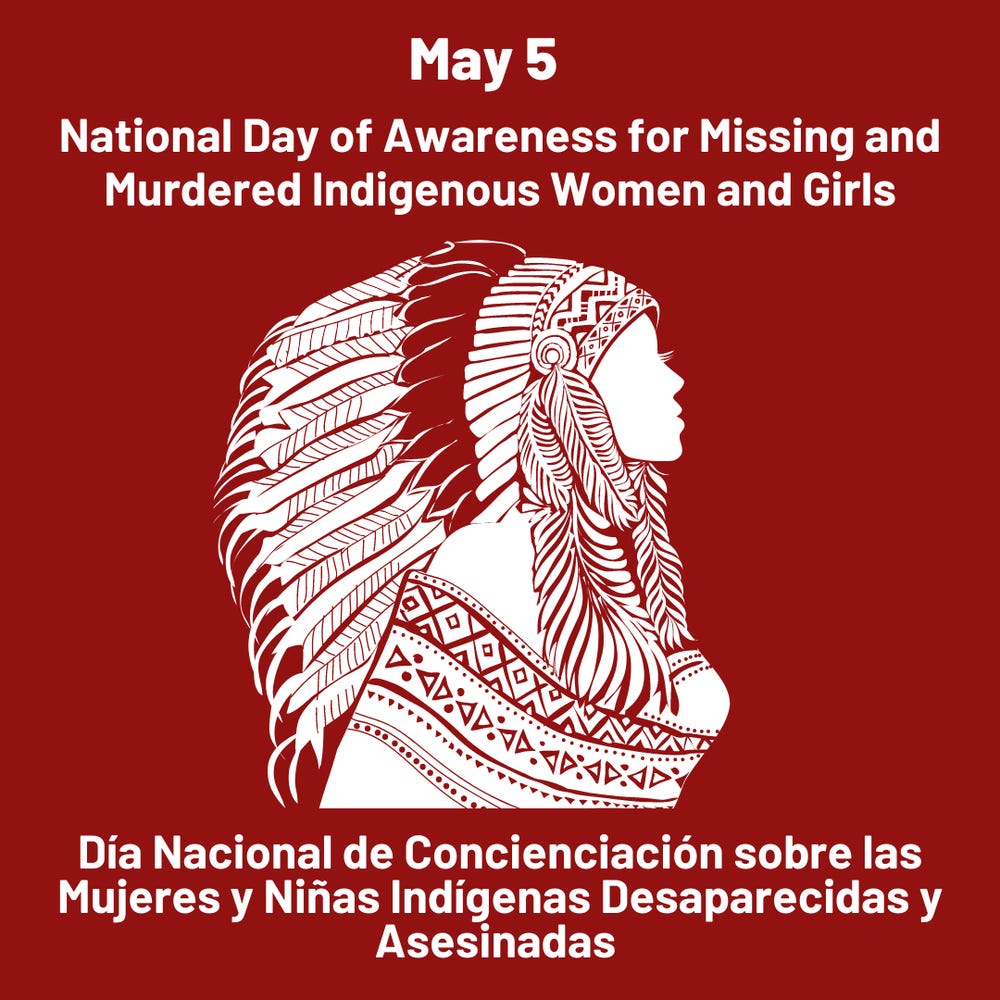
Endangering health is just the tip of the iceberg. Exploitation and violence continue the trend. The crisis of Missing and Murdered Indigenous People (MMIP) is not new; it’s just finally being noticed. In 2023, over 10,600 cases were logged, and over 1,600 remained unsolved. But even that is likely a vast undercount.
Many of the missing are never classified correctly. Jurisdictional chaos—tribal vs. state vs. federal—delays or derails investigations. Families are left to search alone. “We’re not missing,” said activist and athlete Rosalie Fish (Cowlitz). “We’re being ignored.”
To understand this, look to the 1980s. When inner-city Black communities cried out for help amid economic collapse, the government gave them police, not care, and criminalization, not compassion. Today, the same formula is playing out in Indian Country. Politicians offer task forces and federal alerts, but keep cutting the programs that might prevent the violence in the first place.
And they ignore a more profound truth: most MMIP perpetrators are not Native. They are traffickers, serial predators, and cartel operatives who specifically target reservations because they know the system can’t touch them. Under federal law, tribal police cannot prosecute non-Native offenders, even if the crime happens on tribal land. And those who exploit that loophole? They know it.
This isn’t just neglect. It’s the same logic police once used for marginalized murder victims such as the unhoused, addicted, or sex workers: NHI—No Humans Involved. They may not stamp it on files anymore, but the system still behaves like it’s true.
The Land They Still Take
As hundreds of betrayed treaties attest, if anything of value is left, the feds will come for it, if they haven’t already destroyed it through environmental damage. And when those left to protect it are sick, desperate, or missing, who will speak?
The theft never stopped; it just changed paperwork. Sacred places like Oak Flat are still being sold off to foreign-owned mining companies under legal loopholes buried in defense bills. Tribes are rarely consulted. When they resist, they’re treated as obstacles to "progress."
We explored the Oak Flat situation and others like it in this article:

In 2014, Congress approved a land swap with Resolution Copper, giving away a sacred Apache site in Arizona that had been protected since the Eisenhower administration. The result? A copper mine that would collapse the entire site, creating a scar visible from space.
As Wendsler Nosie Sr. of Apache Stronghold said:
“The land is not ours to give away. It’s part of us. When they take it, they’re taking who we are.”
This isn’t history. It’s now. And it’s accelerating under the guise of deregulation and “efficiency.”
The Frontlines of Climate Survival
While pipelines rupture and forests burn, Indigenous nations are not just canaries in the coal mine; they are holding the mine’s collapse at bay. Their fight for land, water, and air isn’t just cultural; it’s climate defense, and they’ve been leading it for generations.
From Standing Rock to the Arctic Circle, Indigenous communities have resisted extraction not just because it’s harmful, but because it violates treaties, desecrates sacred places, and accelerates ecological collapse. Their resistance is rooted in relational thinking, land as relative, not resource.
Yet the state treats them not as leaders, but as liabilities. Tribal climate programs are defunded. Fossil fuel infrastructure is forced through reservations. Treaty guarantees of environmental protection are ignored or rewritten to serve corporate interests.
And still, they lead. According to the U.N., indigenous-managed lands hold 80% of the world’s remaining biodiversity. Their food systems, fire stewardship, and ecological knowledge are not ancient curiosities but roadmaps for survival.
Sovereignty is not just a justice issue. It is a climate strategy. And the fight to preserve it.
Erasure by Executive Order
In early 2025, Trump’s anti-DEI executive order led to the deletion of dozens of public pages honoring the Navajo Code Talkers, Native Marines who helped win WWII. The AI flagged their names as “diversity-related content, " and the system deleted them.
Peter MacDonald Sr., a 96-year-old Code Talker, said:
“That code saved hundreds of thousands of lives. And it has absolutely nothing to do with DEI.”
The pages were only restored after public outrage, but the message was unmistakable: even Indigenous heroism is conditional, and even their patriotism can be erased.
Couple this with Trump’s executive orders on how history is taught in public schools, and it is clear: even their history is not safe.
However, theft doesn’t stop at culture or history. It reached into graves. For over a century, museums and universities collected and stored the remains of Indigenous ancestors, alongside sacred burial items and ceremonial regalia. Bones were cataloged like artifacts, often looted from gravesites or “donated” without consent.
In 1990, Congress passed the Native American Graves Protection and Repatriation Act (NAGPRA), a law requiring federally funded institutions to return human remains and cultural items to affiliated tribes. It was a landmark victory for Indigenous rights. But more than 30 years later, the fight continues. As of 2023, over 70,000 Native American human remains are still held in institutional collections, often because museums delay compliance or deny “cultural affiliation” to avoid repatriation.
“It’s like having to beg to bury your grandmother,” said Suzan Shown Harjo (Cheyenne & Hodulgee Muscogee), one of NAGPRA’s original authors.
This isn’t academic housekeeping. It’s spiritual violence. And every delay is another act of erasure.
The Costume of Respect
Even in erasure, Native culture is not left alone; it’s mined like the land, stripped of meaning, and sold back to the public in fragments. America loves the idea of Native people: the “earth wizards,” the stoic elders, the mystical warriors. They smudge sage in yoga studios, wear faux turquoise at music festivals, and claim a long-lost Cherokee grandma as proof of spiritual depth. But they have no interest in listening to actual Native voices, let alone funding Native futures. The same people who adopt Indigenous aesthetics will vote for policies that cut Indigenous healthcare. They’ll quote “Native wisdom” while Oak Flat is cratered or children on the rez go without running water. This isn’t reverence. It’s extraction—the spiritual equivalent of fracking.
As Cutcha Risling Baldy put it:
“They want our ceremonies, but not our sovereignty.”
Everything from spirituality to aesthetics is extracted, stripped of meaning, repackaged, and sold. This isn’t respect. It’s colonial cosplay.
“They take the parts of our culture they like,” said Nick Estes, “and leave us with the pain.”
XIV. No Humans Involved
In every era, every policy, every silence, one message repeats: they were never meant to survive this system. Not when their land was taken. Not when their children were taken. Not when their languages were silenced. Not when their bodies went missing. And not now, as the erasure continues, by spreadsheet, bulldozer, or badge.
This is what structural violence looks like. It doesn’t always wear a uniform. Sometimes it wears a necktie. Sometimes it signs a memo. Sometimes it deletes a webpage. Sometimes it just refuses to look.
In the 1980s, police stamped unsolved murder files with a chilling acronym: NHI—No Humans Involved. They didn’t use it for white women in the suburbs. They used it for Black girls, sex workers, queer youth, and the poor—the victims whose lives didn’t matter. Today, the acronym is gone, but the logic remains. It’s in the funding cuts, the jurisdictional dead ends, the media silence, the detention centers, and the empty chairs at tribal councils and family tables.
And yet—they are still here.
Indigenous people are not relics or mascots. They are educators, water protectors, land defenders, scientists, and matriarchs. They are the original caretakers of this continent, and their continued resistance is a map for how to live on it with honor. “We’ve always been here,” said LaDonna Brave Bull Allard (Standing Rock), “and we’re not going anywhere.”
We cannot speak for them, but we can amplify their voices. We can refuse to look away. We can demand that a nation built on treaties start honoring them and that a country obsessed with patriotism finally honor those who first called it home.
We just hit 12,000 subscribers—thank you! We’re offering full access to The Coffman Chronicle for just $1 a week ($52/year) to celebrate.
Get exclusive analysis and fearless reporting you won’t find in corporate media.
Bibliography:
Houska, Tara. "Tara Houska TED Talk Summary." University of Maryland English Department. Accessed May 3, 2025.
Sharp, Fawn. "Northwest tribes slam Donald Trump's budget for cuts to Indian programs." Indianz.com. June 13, 2017.
Fish, Rosalie. "Athlete and activist Rosalie Fish runs for the missing and murdered." University of Washington Magazine. Accessed May 3, 2025.
Estes, Nick. "Our History Is the Future Important Quotes with Page Numbers." SuperSummary. Accessed May 3, 2025.
MacDonald, Peter Sr. "Peter MacDonald: 'Without Navajo, Marines would never have taken Guadalcanal'." Speakola. Accessed May 3, 2025.
Allard, LaDonna Brave Bull. "Turtle Island Storyteller LaDonna Brave Bull Allard." Wisdom of the Elders. Accessed May 3, 2025.
Baird, Jessie Little Doe. "We Still Live Here." The Santa Barbara Independent. January 28, 2011.
“Pentagon restores histories of Navajo Code Talkers, other Native veterans after public outcry.” Associated Press. March 20, 2025.
“Anger, then relief after Pentagon restores Navajo code talker webpages.” The Washington Post. March 22, 2025.
“Standing Rock Sioux Tribe Historian LaDonna Brave Bull Allard on DAPL Protests and Seventh Generation Activists.” Teen Vogue. Accessed May 3, 2025.
Fields, Asia, Mary Hudetz, Logan Jaffe, and Ash Ngu. "Remains of Thousands of Native Americans Were Returned in 2023." ProPublica, January 17, 2024.
"Museum in New York State Returns Remains of 19 Native Americans to Oneida Indian Nation." Associated Press, August 24, 2023.
"Cornell Univ. Returns Native American Remains Dug Up in 1964." Associated Press, February 22, 2023.
"University Returning 1,500 Artifacts to Oneida Indian Nation." Associated Press, November 7, 2022.
"Native American Graves Protection and Repatriation Act." National Park Service. Accessed May 3, 2025.
"Native American Graves Protection and Repatriation Act." Britannica. Accessed May 3, 2025.
"Women’s History Month Featuring Native Rights Champion Suzan Shown Harjo." Smithsonian Magazine, March 29, 2024.
"The Race to Save Indigenous Languages." NPR, February 25, 2024.
Warne, Donald, and Siobhan Wescott. American Indian Health Disparities and Policy in the 21st Century. San Francisco: Jossey-Bass, 2019.
Estes, Nick. Our History Is the Future: Standing Rock Versus the Dakota Access Pipeline, and the Long Tradition of Indigenous Resistance. New York: Verso, 2019.
U.S. Department of the Interior. Federal Indian Boarding School Initiative Investigative Report. May 2022.
Federal Bureau of Investigation. 2023 Missing American Indian and Alaska Native Persons Data. January 2024.
"State of New Mexico Establishes Turquoise Alert to Address MMIP." Native News Online, April 2024.
"Doctor On What It's Like To Fight The Coronavirus On The Navajo Nation." NPR, December 8, 2020.
