


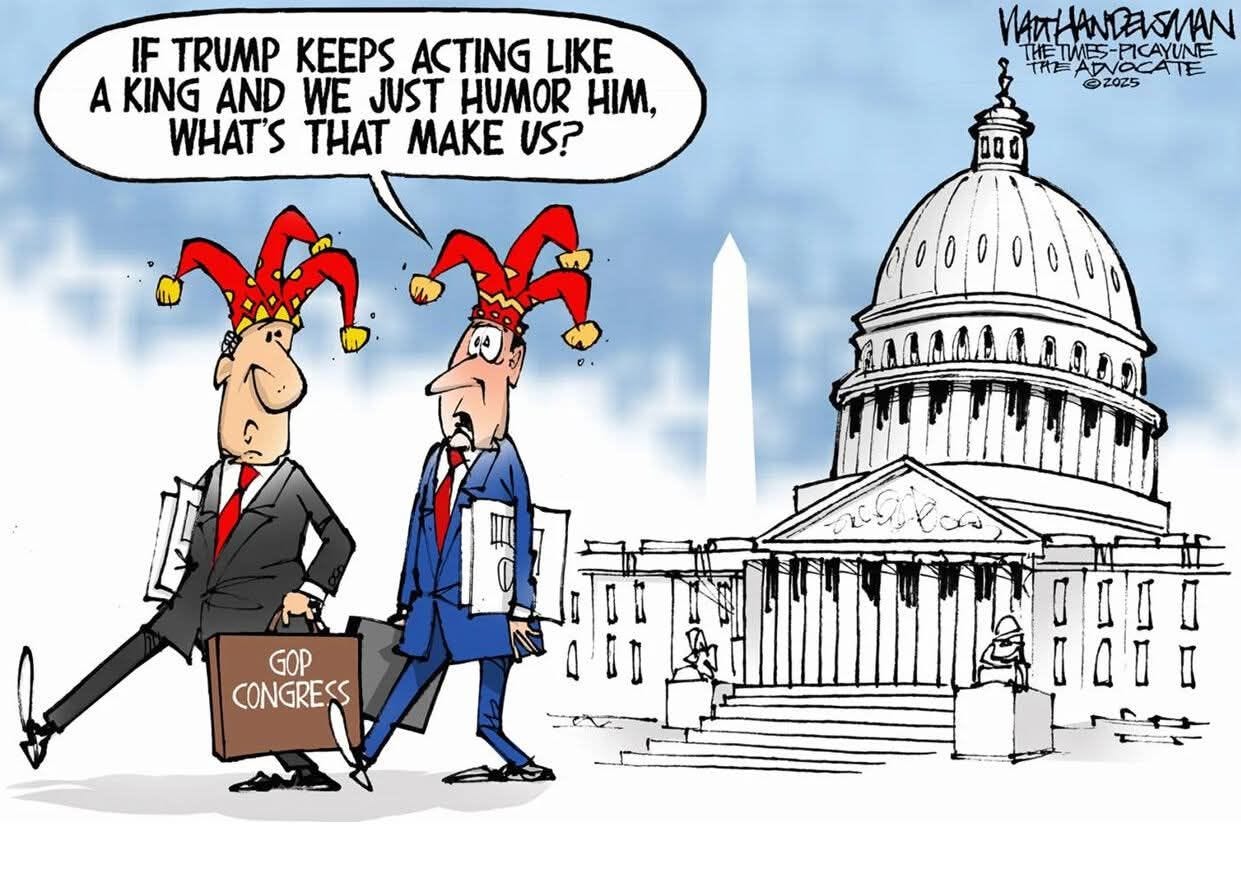
When Republicans took control of the White House, the Senate, and the House of Representatives in 2025, many expected a year of sweeping legislation, bold policy action, and the legislature taking a central role. Instead, what unfolded was a year defined by dysfunction, political theater, and a retreat from the very duties for which Congress was created. By almost any measure — lawmaking, budget oversight, even basic floor activity — the 119th Congress was one of the least productive in recent memory. It wasn’t merely gridlock; it was a refusal to govern.
The starkness of that reality requires examination not just of what didn’t happen, but of what did. A few narrow laws were passed. A record number of executive orders were issued by the president. And the legislative branch, far from asserting its authority, repeatedly stepped aside while power consolidated in the executive.
To understand how this breakdown became not just possible but predictable, we need to look at the most tangible evidence from 2025.
Want to Know Your Rights?
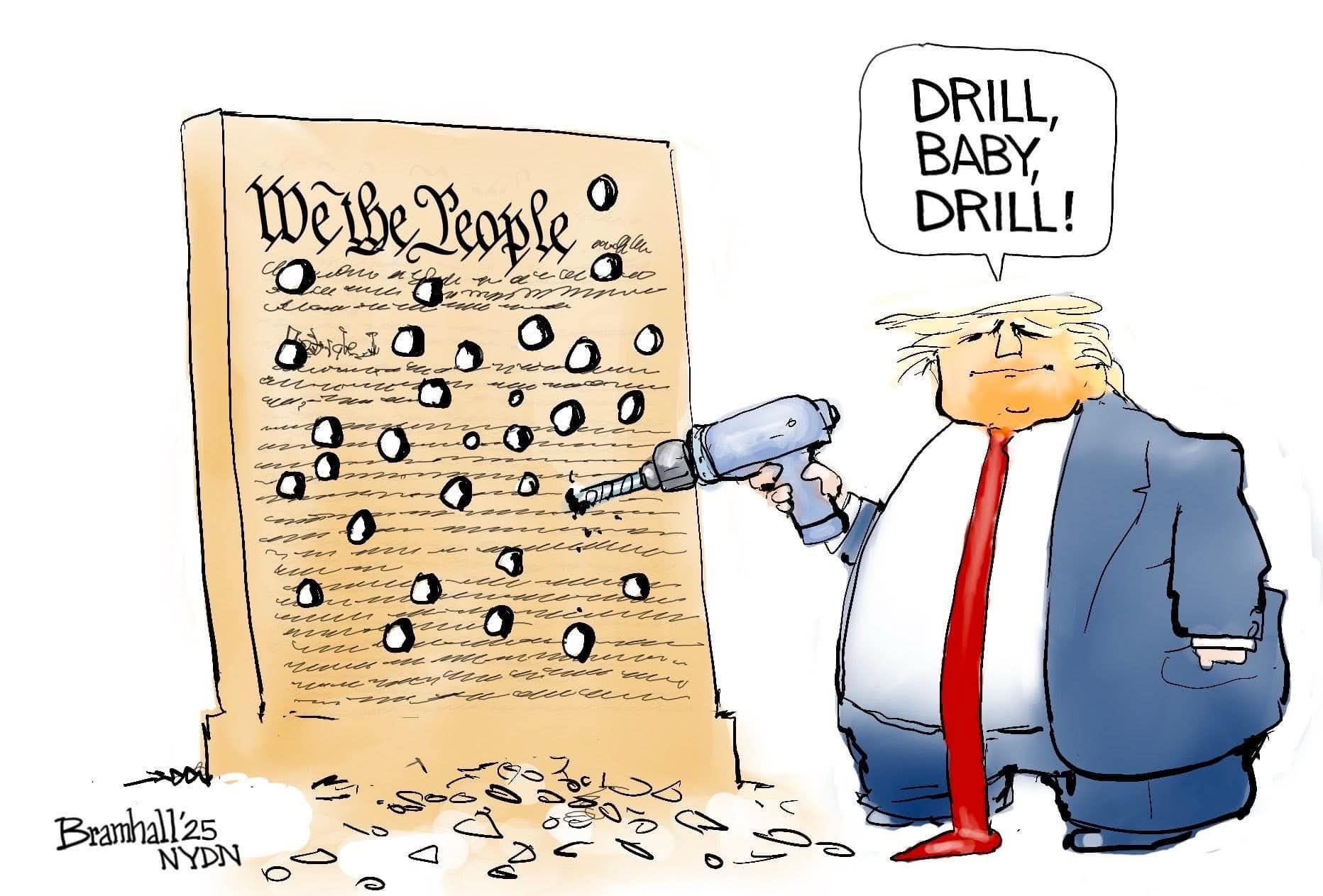
Download a free digital copy of the U.S. Constitution, the same document Trump is trying to bulldoze. Learn exactly what he’s breaking, and how to fight back.
100,000+ strong — and counting.
This holiday, become a paid subscriber for just $1 a week and help us keep the truth alive.
Join The Coffman Chronicle — $1/Week
A Sparse Legislative Record
In 2025, the Republican-led Congress set records not for achievement, but for minimal output. Fewer than forty bills were signed into law in a year when unified government control was supposed to translate to expansive governance. That is the fewest legislative enactments in a first year of a new presidency in modern history. Most of the Senate’s work went into roll-call votes on confirmations rather than crafting substantive public policy, and the House recorded a historically low number of floor votes.
“With the new leadership and narrow margins, Republicans were only able to enact 38 public laws out of nearly 10,000 bills introduced. This means that most federal policy changes resulted from the 217 executive orders signed by Trump – a number not seen since President Franklin Roosevelt.”
— NAOIP
One Big Beautiful Bill
The most consequential item to pass was the so-called One Big Beautiful Bill (H.R.1), a massive reconciliation act that combined sweeping tax cuts with spending changes and adjustments to fiscal policy. Marketed by supporters as a vehicle for implementing the “America First” agenda, it was Congress’s main legislative showcase. On its face, it reduced taxes, reshuffled funding priorities across federal programs, and altered the federal debt structure. However, in practice, it amounted to tax breaks benefiting corporations and wealthier individuals, alongside spending shifts that rolled back some social safety net provisions rather than meeting the urgent needs of working families.
See our extensive reporting here:
Note: Over time, articles roll into the archive. Please consider becoming a paid subscriber for exclusive perks including occasional early access, unique content, and full access to our extensive article archive.


Veterans Bills and Symbolic Wins
A handful of other laws focused on veterans’ benefits, adjustments to cost-of-living allowances, and small expansions to specific aid programs. These were the easiest wins politically. No politician from either side wants to be portrayed as unsupportive of people who served in the armed forces, so these bills passed with relatively little controversy. However, they did not address the broader economic anxieties facing ordinary citizens, including health care insecurity, inflation, a lack of affordable housing, and stagnant wages.
Token Gestures and Pacifiers
One piece of legislation that drew media attention was a bill to ease restrictions on how breastfeeding mothers are treated at airport security. This change was a commonsense improvement in TSA procedures that made travel easier for parents, but its timing and prominence reflected not deep policy innovation but political calculation. It offered a visible, non-controversial “win” at a time when several women in leadership were publicly critical of the chamber’s dysfunction. In essence, it was a concession intended to quiet dissent rather than a breakthrough for public policy.
Culture War Legislation
The Laken Riley Act was one of 2025’s first laws, presented as a tough-on-crime measure. It requires the mandatory detention of non‑U.S. nationals arrested for certain offenses, including property crimes such as burglary, theft, and shoplifting. It allows states to sue the federal government for enforcement failures. The substance of the law, rooted in a tragic incident, had obvious emotional resonance but represented an ideological stance rather than a constructive public-safety framework backed by evidence.
This legislation fit neatly into a larger narrative: a focus on immigration enforcement that offered political cover to lawmakers fearful of backlash but contributed little to economic or social policy debates that affect the broader public.
See our recent reporting on a similar bill that is expected to be one of the first passed next year.

Budget Stopgaps and Shutdown Aftermath
Arguably, the most consequential “laws” of the year were not about new policy preferences but about bluntly responding to a crisis of the legislature’s own making. A 43‑day government shutdown in late 2025 was the longest in U.S. history, brought on by intra‑party fights over appropriations and fiscal priorities. Eventually, Congress passed continuing resolutions and stopgap funding measures to reopen the government. These were not the fruits of constructive deliberation; they were reactive and remedial, carried out only after public services were halted and pressure mounted.
See our extensive reporting on the shutdown here:
Note: Articles roll into our archive over time. For full access, become a paid subscriber and enjoy exclusive perks including occasional early access, unique content, and the entire 2000+ article archive.


Lobbyist-Favored Text and Foreign Policy Gestures
A small number of other laws, including a stablecoin regulatory framework and a transparency requirement for U.S. policy toward Taiwan, appeared more substantive at first glance but lacked meaningful enforcement or impact. The stablecoin legislation primarily codified language favorable to the financial industry. The Taiwan transparency law required periodic reporting but did not constitute a shift in strategic policy. There was also a bill releasing some records related to the Epstein investigation, which provided emotional catharsis for certain constituencies but did not address systemic justice gaps.
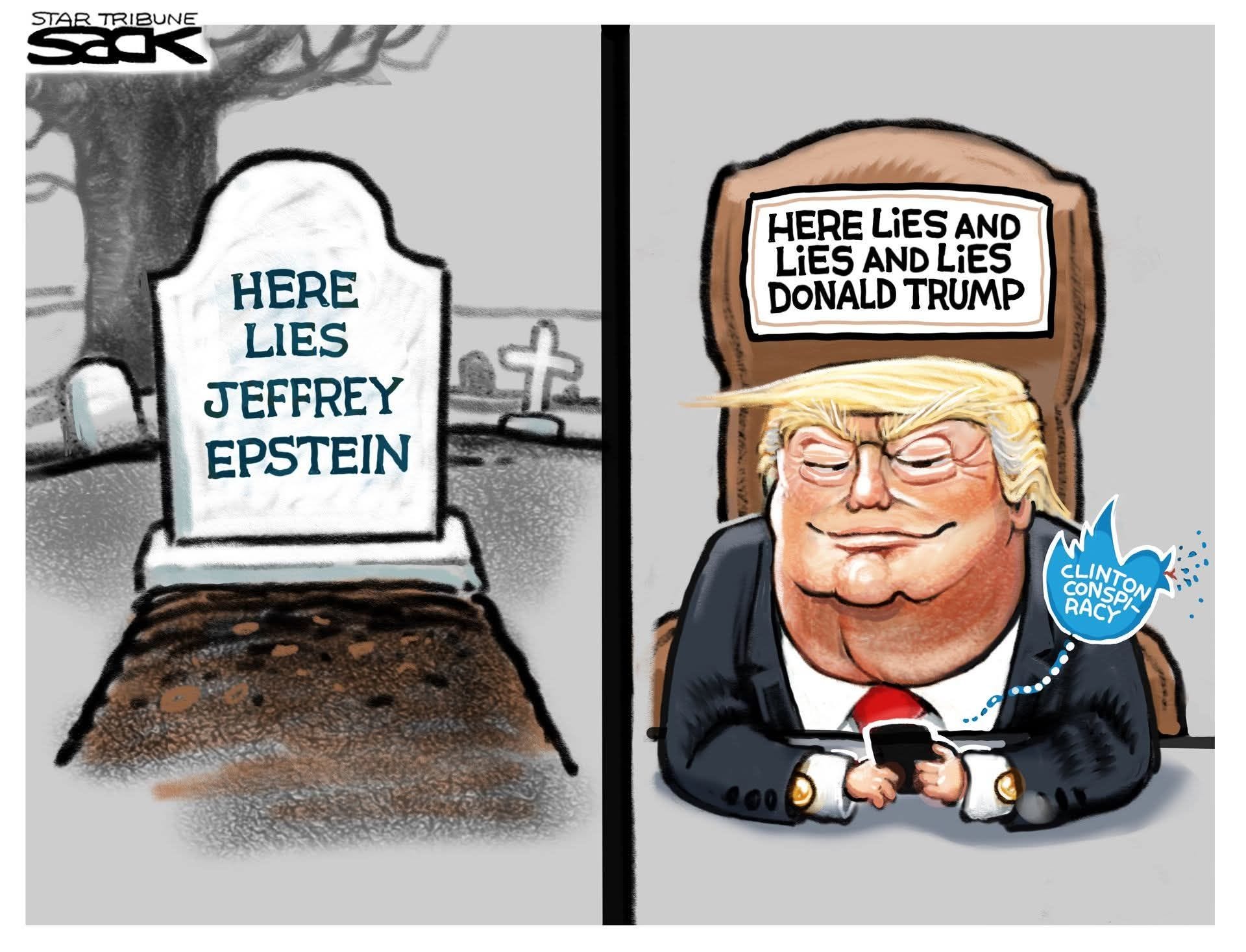
Taken together, these laws offer a tapestry of symbolic gestures, partisan signals, and damage control. Genuine policy innovation on core national challenges was nearly absent.
Clocking In Without Working: Session Days and Pay
Another revealing measure of Congress’s performance in 2025 is the number of days the chambers were actually in session. Officially, the House reported 161 legislative days, that is, days on which the chamber was formally convened and had a recorded Congressional Record entry. However, analysts who track substantive floor activity estimate that only about 87 of those days involved meaningful legislative work. Most of the remainder were brief procedural sessions, pro forma meetings to satisfy constitutional requirements, or days where the floor was technically open but nothing of consequence was advanced.
When you do the math, that tells an unsavory story. Members of the House of Representatives earn a base salary of at least $174,000 per year. If you divide that salary by the estimated 87 full working days, you get roughly $2,000 per day they genuinely worked on the floor. That figure is higher than what many Americans make in an entire month. Yet for that compensation and privilege, lawmakers produced a remarkably small legislative footprint.
These realities speak not only to a lack of output but to a misalignment between the public’s expectations of representation and the day-to-day operation of the institution.
Confirmation Chaos: Not Obstruction, But Self-Sabotage
One argument apologists for Congress often make is that the high number of Senate roll-call votes proves lawmakers were “busy.” Indeed, the Senate tallied hundreds of votes in 2025, far more than in a typical year. However, most of these votes were confirmations, not laws. The dismissive rejoinder — “look, they were trying” — collapses under scrutiny when you inspect who was being confirmed and how.
President Trump’s Senate nominees were often so extreme, unqualified, or ideologically partisan that even Republican senators proved reluctant to endorse them. Some withdrew their nominations entirely rather than face defeat. The nominees who did get confirmed tended to be media personalities, loyalists with limited governance experience, or ideological sycophants whose primary qualification was loyalty to the president. In multiple cases, confirmations passed by narrow margins, underscoring not a crisis of obstruction but of judgment.
In other words, this was not evidence of Democratic stonewalling. It was evidence of a party that had lost its ability to nominate and confirm broadly acceptable leaders.
See some of our reporting on the confirmations here:
Note: Articles roll over into the archive over time. Become a paid subscriber for full access to our 2000+ article archive plus exclusive content and occasional early access.


Internal Implosion: Civil War Within the Majority
It is important to understand that the gridlock of 2025 was not the usual partisan dance between Democrats and Republicans. 2025 joins the ignoble ranks of two other terrible legislative years. In 2013, Tea Party–aligned lawmakers used obstruction as a strategy against a Democratic president, resulting in fewer than 60 laws. In 2023, MAGA hardliners sought to paralyze a Democratic White House and Senate. That year wins the award for fewest laws passed, with just 34. However, in 2025, Republicans controlled every lever of government. There was nothing left to obstruct. And yet the legislature splintered.
Factions within the Republican majority, most notably traditional conservatives, MAGA loyalists, and institutionalists, spent much of the year in interparty conflict. Leadership challenges, public clashes between senior senators and populist House members, and strategic brinkmanship drained precious legislative time. Democrats, in contrast, watched from the sidelines as Republicans repeatedly undermined their own ability to act.
This was not opposition at work. This was a majority ineffective by its own divisions.
See some of our previous reporting here:
Note: Articles roll into the archive over time. Become a paid subscriber for full access to our extensive archive, plus exclusive content and occasional early access.


When the Predator Turns: The Face-Eating Cheetahs Came Back
One of the most striking metaphors for the year is the “face‑eating cheetah” — a symbol of power unleashed without accountability. For Republicans, that predator is President Trump himself. Once a tool for rallying base anger and disrupting Democratic governance, Trump has become a force that could not be contained by the very party that elevated him.
A strategy that began with the GOP aligning with MAGA to block or weaken Democratic initiatives eventually boomeranged. As the party leaned into populist fury and anti‑establishment fervor, it ceded control of its own agenda. Trump’s influence, once a means of energizing supporters, has become a destabilizing force even within his party’s ranks.
Lawmakers who once cheered his combative stance have found themselves unable to govern under it. Political alliances fractured, leadership struggled for coherence, and the predator that once feasted on the opposition has begun devouring its own allies.
Congress Didn’t Lose Power, It Gave It Away
By mid‑December 2025, President Trump had signed no fewer than 225 executive orders, the most in a single year by any U.S. president since, well, himself. This torrent of executive directives spanned trade policy, immigration enforcement, federal workforce restructuring, and public‑order proclamations. By day 100, he had surpassed Franklin D. Roosevelt, the record holder before Trump’s first term. Rather than legislate, Trump has governed by decree.
It is tempting to describe this as the executive filling a vacuum. However, that’s too passive. The truth is that Congress stepped aside and ceded policy control, not because it was powerless, but because it chose a political strategy of delegation and spectacle over governance. Trump signed 26 executive orders on January 20th alone, just hours after retaking the White House. For context, the House passed its first legislative piece, the Laken Riley Act, on January 9th, and the Senate sent it back to the House with changes on January 20th. Both chambers finally passed it on January 22nd.
Trump, however, was already deep in executive order ink by then. The tone was set within the first 20 days of the 119th Congress. The Executive would rule by pen. The Legislature would govern in name only.
Predictably, Congress obliged. Instead of countering orders with legislation—or even codifying them into law—they played to the cameras.
The founders designed a system of checks and balances to prevent exactly this dynamic. Yet a legislature that cannot produce laws and is content to issue statements instead has effectively resigned its constitutional role.
See some of our previous reporting here:
Note: Some articles may have rolled into our archive. Become a paid subscriber for full access to our extensive archive, plus exclusive content and occasional early access.


A Crisis Rooted in Citizens United
To understand why this dysfunction has become normalized, we must look back to 2010. The Supreme Court’s Citizens United decision opened the floodgates to unlimited independent political spending. Dark money, corporate interests, and ideological Super PACs gained the ability to shape campaigns, policy agendas, and public narratives without accountability. Within three years of that ruling, Congress began showing signs of chronic gridlock.
Over time, elected officials became more accountable to the deep-pocketed donors who funded their campaigns than to the voters they represented. The result was not just polarized elections, but a legislature that increasingly sees money over mandate, performance over policy, and the appearance of action over the substance of governance.
If nearly two decades of Citizens United have taught us anything, it is that money doesn’t just corrupt politics. It hollowed out the very institution meant to represent the people’s will.
See some of our previous reporting here:
Note: Some articles may have rolled into our archive over time. Become a paid subscriber for full access to our 2000+ article archive, plus exclusive content and occasional early access.


The Only Path Forward: Consequences and Reform
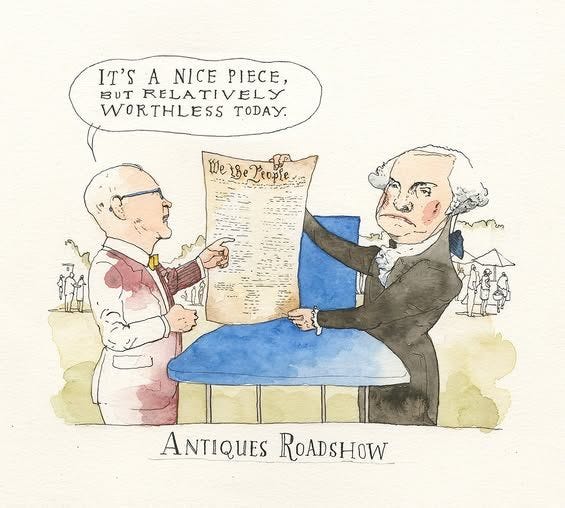
The lessons of 2025 are grim but instructive. A legislature that cannot legislate is not just ineffective. It’s symptomatic of a deeper rot.
The only remedy is accountability. Elected officials who refuse to represent their constituents in good faith should be challenged electorally. That means supporting good‑faith challengers in primaries, endorsing candidates who prioritize policy over personality, and, most importantly, demanding comprehensive campaign finance reform.
Overturning Citizens United is not a cure‑all, but it is a necessary first step. Until political funding is transparent, limited, and tied to real constituents rather than shadowy interests, we will continue to see a legislature that serves money and spectacle before governance.
Real change begins when voters stop buying the illusion that disruption equals progress. It begins when representation means something more than a headline.
We’ve published over 2,000 stories this year, tracking the erosion of norms under Trump2.0. This recap is built from daily reporting, not recycled outrage.
If you value facts with memory and politics without the corporate spin, stick with us.
📬 Subscribe now, because someone has to keep the receipts.
Sources:
Congress set records in 2025, some more dubious than others - The Washington Post (Dec. 24, 2025)
Top Republicans Give First Year Under Trump 2.0 a Failing Grade - The Daily Beast (Dec. 24, 2025)
119th Congress Brings Major Policy Changes Despite Modest Accomplishments -NAIOP Blog (Dec. 3, 2025)
List of bills in the 119th United States Congress - Wikipedia
Trump Wields Executive Orders Like No President Since FDR - Barron’s (Dec. 22, 2025)
The 141 executive orders Trump signed in his first 100 days - The Guardian (May 1, 2025)
US Legislation | 2025–2026 — 119th Congress | Passed - LegiScan
Guide to the 119th Congress - K&L Gates (Jan. 30, 2025)
H.R.1 - 119th Congress (2025-2026): An act to provide for reconciliation pursuant to title II of H. Con. Res. 14. - Congress.gov (Jul. 4, 2025)
H.R.29 - 119th Congress (2025-2026): Laken Riley Act - Congress.gov (Jan. 29, 2025)
2025 Donald J. Trump Executive Orders - Federal Register
List of executive orders in the second Trump presidency - Wikipedia
Even with total control, they STILL can't agree on anything except a tax break for themselves. The point is one person will never govern this country. It takes working across the aisle to run a country fairly for all.
Congress members are the Real Welfare Queens, no work, full pay, lifetime platinum medical care with no co-pays or deductibles.