


While scrolling through a streaming service tonight, I stumbled upon a show about the Radium Girls. It’s hard to believe that not so long ago, corporations were so fixated on profit that they willingly allowed workers to suffer, leading to unimaginable consequences. Workers’ faces and spines literally collapsed as corporate bosses buried evidence and employed legal obstructions to avoid accountability. By the 1920s, nearly 4,000 workers—many of them women—were employed in radium factories, where they were told their symptoms had nothing to do with their jobs. After numerous women died, their deaths were attributed to other factors, until the death of a male factory worker prompted an investigation that revealed the connection to radium exposure. Executives worked tirelessly to deny and conceal the evidence, hiring their own experts to dispel the rumors. After decades of legal struggles, a handful of plaintiffs finally won compensation from their employers in 1938, though few lived long enough to see the payout. It took another eleven years for legislation to follow, and even longer for the establishment of OSHA (1971).
This is precisely the world we are returning to with the current push for deregulation. Don’t take my word for it. The history speaks for itself.
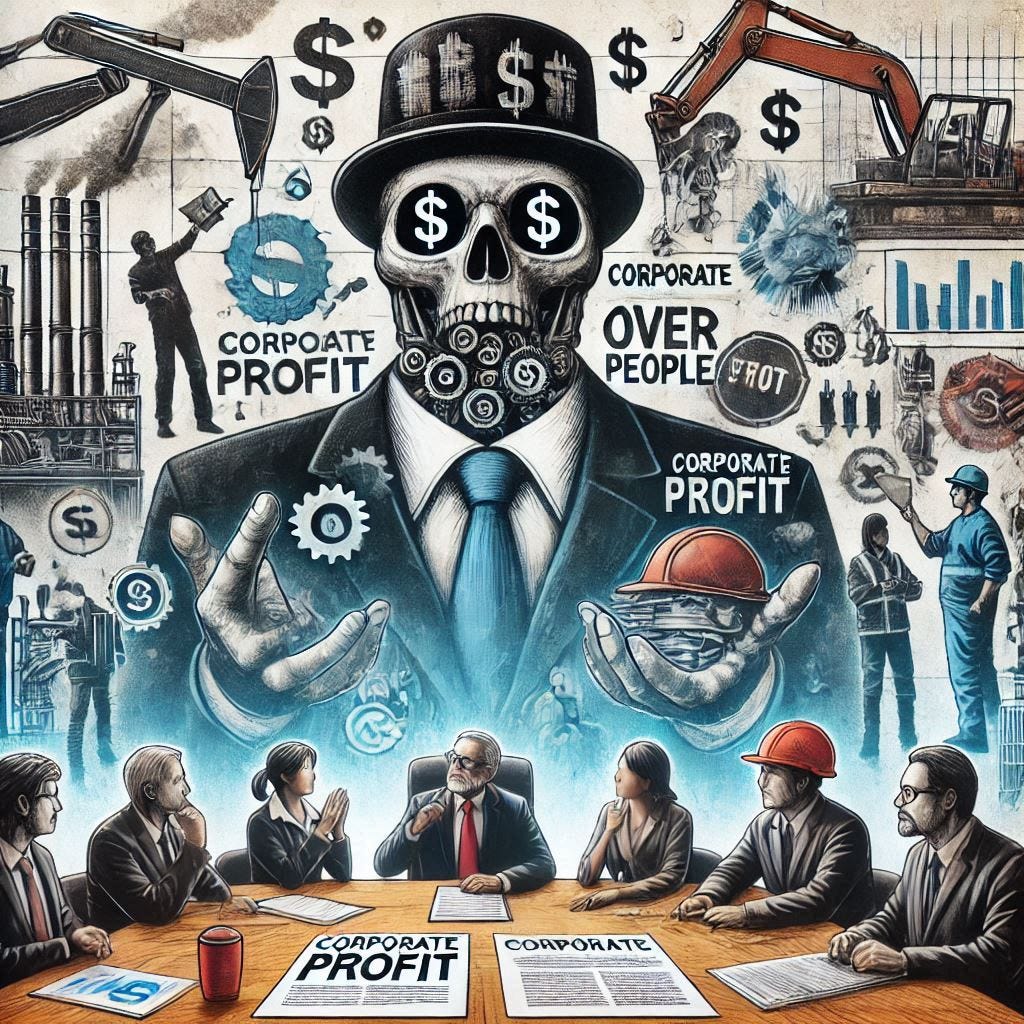
Historically, when companies were allowed to self-regulate, they often neglected their responsibilities. The tobacco industry is a prime example; it spent decades concealing the health risks of smoking. Documents uncovered during lawsuits revealed that as early as the 1950s, tobacco companies were aware of the dangers of their products yet chose to deliberately mislead the public. This kind of deception is not confined to history; we’ve seen it with the opioid crisis, where companies like Purdue Pharma exploited loopholes to aggressively market addictive painkillers, contributing to a public health crisis that claimed hundreds of thousands of lives.
This year, we witnessed another stark reminder of the potential dangers stemming from corporate negligence with the Boar's Head contamination case. The company faced scrutiny after reports emerged linking their products to a significant Listeria outbreak, which can lead to severe illnesses, particularly in vulnerable populations such as the elderly and pregnant women. While Boar's Head has a reputation for quality and safety, this incident highlighted the risks of foodborne pathogens and the critical need for robust safety measures. It serves as a reminder that even trusted brands can falter, underscoring the ramifications of lapses in quality control and the urgent need for regulatory oversight to protect consumers.
The vital labor rights we cherish in the United States today are remnants of the long, hard-fought battles often led by unions. The abolition of child labor is one such victory stemming from these struggles. The Keating-Owen Child Labor Act was finally passed in 1916 just to be overturn two years later by the Supreme Court. In 1924 a resolution was passed and sent to the states for ratification. Like the Equal Rights Amendment, it did not succeed. It took a full twelve years for the next significant legislation to pass – the Walsh-Healey Act—yet it only covered federal contracts. At the end of the 1930s, Franklin Delano Roosevelt signed further legislation and eleven years later in 1949, an amendment to the Fair Labor Standards Act finally making child labor illegal throughout the country. Yet now, several states are actively attempting to roll back protections designed to prevent the exploitation of minors. For example, Arkansas and Iowa have introduced legislation to relax child labor laws, allowing minors to work in hazardous conditions.
That brings me to OSHA, the Occupational Safety and Health Administration, established in 1971 following Richard Nixon’s signing of the Occupational Safety and Health Act. Workers continue to be injured or killed due to unsafe work practices, and corporations push for rollbacks and loopholes to avoid fulfilling their obligations, all in the name of profit. A timely example is the situation facing Amazon warehouse workers. Reports of grueling working conditions, high injury rates, and minimal breaks paint a troubling picture of an environment prioritizing delivery speed over employee safety.
In 2022, the situation escalated when Amazon workers at the Staten Island facility organized a successful strike for better working conditions and pay. For years CEO Jeff Bezos had told stockholders that he wants his employees to wake up every day in fear because it makes them more productive, exemplifying the working conditions under which they work. The strike marked a pivotal moment in labor organization as it was the first time Amazon workers in the U.S. unionized, demonstrating their collective power against exploitative practices. However, Amazon responded with aggressive anti-union measures, including campaigns to dissuade employees from supporting the union and retaliatory actions against organizers. Tensions have risen, resulting in more strikes and collective actions by Amazon employees nationwide, demanding better treatment and safer working conditions. The victory at JFK8 was a wake-up call for corporate giants and underscored the ongoing struggle workers face in their fight for rights.
As long as those with wealth and power control our politicians, workers on the front lines—in factories, fields, or warehouses—will continue to be exploited, facing low wages and denial of basic protections in the relentless pursuit of corporate profit. The echoes of corporate irresponsibility are louder now than ever, and it is imperative that we prioritize worker safety and rights over profits. Only by learning from our past can we hope to forge a more equitable and safe future in the workplace. Can we trust the incoming administration to put workers above their corporate donors?
Great article 👏
Thank you for this. More people need to know the history behind why we have regulations. There’s too much Reagan Revolution “pollution”in our country.
They think regulations and taxes apply to themselves and not on the billionaires and their corporations.