


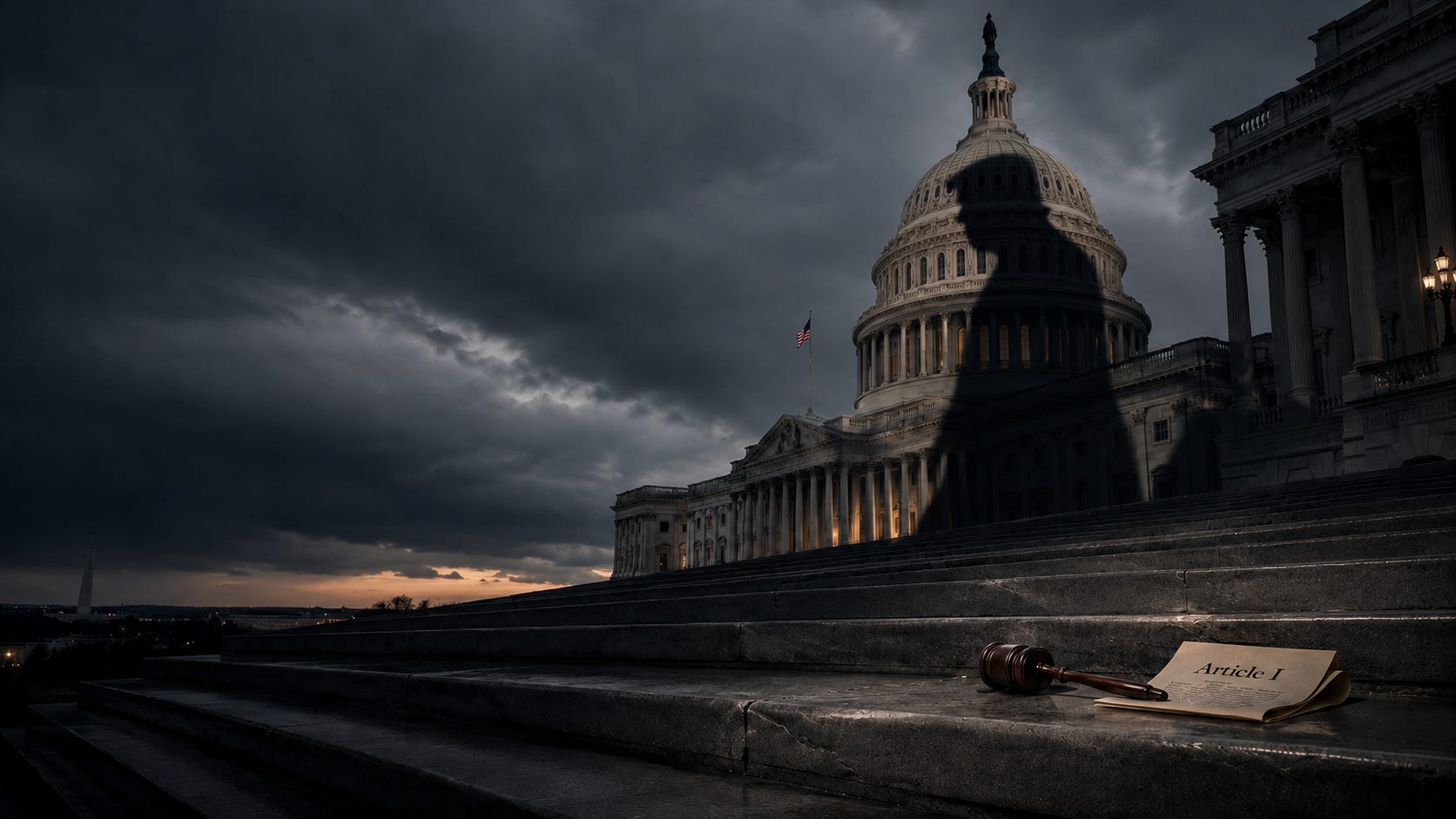
Commentator Tony Michaels recently put the crisis in one sentence: culture is compromise; principle is constitutional.
That line lands harder this week because America is not just arguing about Iran. It is arguing about power. President Trump told Coast Guard Academy graduates that the United States may have to hit Iran “even harder,” while the Senate advanced a War Powers Resolution aimed at limiting continued military action without congressional authorization. Iran is the headline. War powers are the issue. Article I versus Article II is the story.
Americans can debate Iran. They can debate diplomacy, deterrence, nuclear weapons, oil prices, Israel, regional security, and what strength should look like in a dangerous world. That is the cultural and political argument. However, constitutional principle asks a different question: who gets to decide whether this country goes to war?
That question is not supposed to be settled by a rally chant, a cable-news segment, a presidential threat, or a loyalty test inside Congress. Article I gives Congress the power to lay and collect taxes and duties, and to declare war. Article II names the president Commander-in-Chief, but it does not make the president Congress.
That is the line concentrated power keeps trying to erase.
The culture war is the bait. Concentrated power is the move. The public is told to pick a side on the conflict, the enemy, the president, the party, the flag, the troops, the threat, or the posture. Underneath that noise is the transfer of power. Congress gets smaller while the presidency gets larger.
And once that becomes normal, it does not stop with Iran.
This Community Is Powered by You
What started as a small circle has grown into something much bigger, and it’s all because of readers like you.
Every time you forward this email, post it on socials, or bring someone new into the fold, you’re helping build one of the most passionate, independent political communities out there.
Want to keep the momentum going?
Share this newsletter with someone who should be part of this conversation.
Thank you for being here. It means everything.
War Powers Are the Test
The question is not whether Iran is dangerous. Nuclear weapons, regional security matters, and American interests matter. Those are serious debates, and serious countries should have them.
Yet serious countries should also know who makes the decision.
That is why the Senate vote is essential. The Senate advanced a War Powers Resolution introduced by Sen. Tim Kaine that would end the war in Iran unless Trump obtains congressional authorization. The procedural vote was 50-47, with four Republicans joining most Democrats. That is not procedural noise. That is Article I trying to remind Article II that war is not supposed to be a presidential possession.
The House has already shown how thin that line has become. A similar effort failed in a 212-212 tie, the closest possible defeat. Congress came within one vote of asserting itself and still failed to act.
That is the danger. War powers are where congressional weakness becomes deadly. When Congress refuses to authorize, restrict, or stop military action, it does not merely avoid responsibility. It teaches the executive branch that war can continue through momentum. The president acts. Congress debates. The troops remain deployed. Then the public gets told that asking constitutional questions during conflict is weakness.
However, asking who authorized a war is not weakness. It is the Constitution.
Americans can argue over Iran policy, but the constitutional principle is simpler. You can debate Iran policy or Congress’s war powers. If Article I cannot assert itself when bombs are falling, Article II does not need to formally conquer Congress.
Congress has already started surrendering.
Article I Is Where America Compromises
The Constitution does not begin with the presidency. It begins with Congress.
That is not an accident. Article I comes first because lawmaking is supposed to belong to the people’s representatives. Congress is where the country is supposed to fight things out in public through debate, hearings, budgets, oversight, votes, and accountability. It is supposed to be frustrating. It is supposed to be slow. That slowness is not a flaw. It is a safeguard.
Culture is where America argues. Article I is where America is supposed to compromise. Article II is where the law is carried out. When those roles reverse, democracy does not become more efficient. It becomes more obedient.
Every major cultural fight produces a temptation. The president says Congress is too slow. The party says the threat is too urgent. The base demands action now. Then the executive branch offers what looks like a solution: one person, one order, one military action, one agency directive, one emergency declaration.
It feels decisive. It looks strong. However, constitutional government is designed around the division of powers, not emotional satisfaction. No single person is supposed to turn national fear into national policy without passing through the branch that represents the people.
Culture is compromise. Principle is constitutional.
Americans can disagree over Iran, immigration, abortion, schools, guns, prices, race, religion, crime, and national identity. Those fights are part of democracy. Yet once the president starts converting those fights into unilateral power, the issue changes. It is no longer only about the policy. It is about whether the constitutional structure still decides who gets to act.
Article I is not a speed bump. It is the lawmaking branch. And if Congress becomes too weak, too loyal, or too afraid to use the power it already has, Article II will keep filling the empty space.
Article II Is Not a Shortcut Around Congress
The presidency is powerful. It has to be. A president executes the law, manages the executive branch, responds to emergencies, conducts foreign policy within legal limits, and serves as commander in chief.
However, the president is not Congress.
That is the line modern politics keeps trying to blur. When Congress refuses to act, presidents are tempted to fill the space. When the public gets angry, presidents are tempted to promise action without waiting. When the issue becomes culturally explosive, the White House is tempted to turn fear into permission.
The border is an emergency. Crime is an emergency. War is an emergency. Prices are an emergency. Schools are an emergency. Protest is an emergency. The other side is an emergency. Once everything becomes an emergency, the presidency becomes the place where every problem is supposed to be solved by command.
That may feel satisfying, especially when the command is aimed at someone the public has been told to fear or resent. However, a president who promises to save people from Congress is asking them to surrender part of their own representation.
The public is told to focus on the enemy, the crisis, the outrage, the slogan, the loyalty test. Meanwhile, the real shift happens underneath. Oversight gets treated like harassment. War powers get treated like paperwork. Spending limits get treated like obstacles. Courts get treated like enemies. Congress gets treated like a delay mechanism, and the president becomes the only actor allowed to look strong.
That is not strength. That is constitutional drift.
Article II can lead, enforce, and respond in accordance with the law, but it cannot serve as the national workaround for Article I.
Congress Is Not Just a Victim
None of this works without Congress.
Presidents can reach for power. They can stretch emergency authority and test the boundaries of law. However, the presidency does not grow this large on its own. It grows because the branch designed to check it often refuses to do the job.
Congress has tools. It can legislate, investigate, subpoena, appropriate money, restrict funding, refuse authorization, hold hearings, and reclaim authority it previously delegated too broadly. Article I is not powerless.
It is, instead, often unwilling.
Too many members of Congress have become experts at performing outrage while avoiding responsibility. They complain about executive overreach when the other party controls the White House. Then, when their own party controls the executive branch, the language changes. What was overreach yesterday becomes leadership today.
That is not principle. That is convenience.
Both parties are not equally guilty in every moment. Some presidents push harder than others. Some abuses are more extreme than others. Yet the larger pattern is real. Congress has spent decades making the presidency bigger because too many lawmakers would rather outsource hard decisions than own them.
They do not want to vote on war, so presidents stretch military authority. They do not want to fix immigration, so presidents govern through enforcement swings. They do not want to take hard votes on tax and trade, so emergency authority becomes a tempting shortcut. Then, when the executive branch becomes too powerful, Congress acts shocked by the monster it helped feed.
That is how Article I hollows itself out.
Article II does not have to fully overthrow Article I if Article I keeps surrendering piece by piece. Their job is not to protect the president from oversight. Their job is to act like Congress.
The Pattern Does Not Stop With War
Iran is the sharpest example because war powers carry the highest stakes. However, the pattern does not stop with war.
It shows up in tariffs. A president can sell tariffs as toughness, patriotism, border security, or protection for American workers. But tariffs are not just slogans. They are taxes. Article I gives Congress the power to lay and collect taxes, duties, imposts, and excises. That is why the Supreme Court’s February 2026 ruling matters. The Court held that the International Emergency Economic Powers Act did not authorize the president to impose tariffs.
That is executive power reaching into people’s wallets. If a president can declare an emergency and impose broad tariffs without clear congressional authority, Article II is not merely enforcing trade policy. It is borrowing Congress’s taxing power.
The pattern also shows up in immigration oversight. ICE issued new restrictions in May requiring members of Congress to identify specific detainees by name at least two business days before speaking with them during detention-facility visits. Immigration is the cultural fight. Oversight is the constitutional principle. Congress’s ability to inspect the executive branch is not supposed to depend on whether the executive branch wants to be inspected.
It even shows up at the grocery store. Reuters reported that the Trump administration was considering executive actions to ease beef shortages and lower prices, even as the American cattle herd remained at its lowest level in 75 years. The pain is real, but kitchen-table problems need policy, oversight, competition enforcement, agriculture policy, trade policy, and public accountability. They cannot all become presidential performances.
The issue is not whether the policy matters. War matters. Trade matters. Immigration matters. Food prices matter. The issue is whether every real problem becomes another excuse to expand Article II while shrinking Article I.
The Principle Has to Apply Even When We Like the Policy
This is where the argument has to get uncomfortable.
It is easy to defend constitutional limits when they stop something we oppose. It is much harder to defend them when they slow down something we support. Yet that is the whole test. A principle that only works against the other side is not a principle. It is a tactic.
Trump has aggressively and openly pushed the theory of concentrated executive power, but the deeper problem did not begin with one president, and it will not end with one election.
The structural temptation is always the same. Congress is broken, the issue is urgent, the people are hurting, the opposition is unreasonable, and the president should just act. That argument can sound humane. It can sound practical. It can sound like the only way to get anything done in a country where Congress stalls while real people suffer.
However, understandable is not the same as constitutional.
If Congress has the power to authorize war, that principle has to hold even when the president says the target is dangerous. If Congress controls taxes and spending, that principle has to hold even when the president says the economy needs action now. If Congress has oversight power, that principle must apply even when the agency being inspected is carrying out a policy that some voters support.
The shortcut that feels useful today becomes the precedent that threatens you tomorrow. The emergency theory used against someone else can be turned against you. The power cheered by one side becomes the power inherited by the next. Once the presidency becomes the place where every unresolved national conflict is settled, every election becomes less about representation and more about capturing the command center.
Culture is compromise. Principle is constitutional. If constitutional limits only matter when they stop the other side, they do not really matter. They have become weapons. And once limits become weapons, every side eventually reaches for the same blade.
The Line We Cannot Afford to Lose
The country will keep arguing over Iran, immigration, abortion, schools, guns, crime, prices, religion, race, protest, speech, and national identity. Those arguments are not going away. However, voters have to learn to look underneath the argument.
Every time a politician says the crisis is too urgent for Congress, voters should ask: Who gains power if we believe that?
Every time a president says only he can act, voters should ask: What branch is being bypassed?
Every time lawmakers complain about executive overreach but refuse to vote, investigate, restrict funding, authorize, subpoena, or confront their own party’s president, voters should ask: Are they defending the Constitution, or are they performing frustration for the cameras?
A president who promises to save people from Congress is asking them to surrender part of their own representation.
Culture is compromise. Principle is constitutional.
America can argue over culture and survive. The greater danger comes when cultural conflict becomes the excuse to abandon constitutional structure.
That is what concentrated power needs: fear, urgency, an enemy, and a public convinced that normal process is too slow, Congress is too weak, oversight is too annoying, courts are too inconvenient, and one person must be trusted to act before anyone else can object.
That is how Article II grows, and too often, that is how Article I shrinks.
Culture is where America argues. Article I is where America is supposed to compromise. Article II is where the law is supposed to be carried out. When Article II replaces Article I, democracy stops negotiating and starts obeying.
That is the line we cannot afford to lose. Cultural disagreement is normal. Concentrated power is not. A republic can survive loud arguments, hard elections, bitter debates, and deep disagreements. It cannot survive a system where every fear becomes an emergency, every emergency becomes a command, and every command teaches Congress to become smaller.
So yes, America will keep arguing over culture, but principle has to remain constitutional, because once the structure gives way, the argument is already over.
Support Independent Media
If this piece helped you see the power move underneath the culture fight, consider becoming a paid subscriber to Coffman Chronicle.
Independent media matters because someone has to keep asking the question power hopes we forget: who benefits when the people’s branch gets smaller?
We are not here to chase every distraction. We are here to follow the pattern — from war powers to tariffs, from immigration enforcement to the grocery bill, from cultural panic to concentrated power.
Culture is compromise. Principle is constitutional.
If you believe journalism should defend that line, support independent media and help keep this work going.
Sources:
“ICE Issues Memo Restricting Congressional Visits to Detention Facilities.” AILA, May 11, 2026.
“ICE Puts New Restrictions on Members of Congress Inspecting Detention Centers.” Los Angeles Times, May 12, 2026.
Congress.gov. “S.J.Res.104 — A Joint Resolution to Direct the Removal of United States Armed Forces from Hostilities Within or Against the Islamic Republic of Iran That Have Not Been Authorized by Congress.” 119th Congress, introduced January 29, 2026.
Constitution Annotated. “Article I, Section 8: Enumerated Powers.” Congress.gov, Library of Congress.
Constitution Annotated. “Article II, Section 2: Powers.” Congress.gov, Library of Congress.
Constitution Annotated. “Overview of Congress’s Investigation and Oversight Powers.” Congress.gov, Library of Congress.
Cornell Legal Information Institute. “50 U.S. Code § 1541 — Purpose and Policy.”
Justia U.S. Supreme Court Center. “Learning Resources, Inc. v. Trump, 607 U.S. ___ (2026).” Decided February 20, 2026.
“Trump: May Have to Hit Iran Harder — or Maybe Not.” Reuters, May 20, 2026.
“United States Cattle Inventory Down Slightly.” USDA NASS, January 30, 2026.
“US House Narrowly Rejects Bid to Rein in Trump Iran War Powers.” Al-Monitor, May 14, 2026.
“US Senate Advances Measure Curbing Trump’s Iran War Powers.” Reuters, May 19, 2026.
“Trump Administration ‘Fine-Tuning’ Actions to Ease U.S. Beef Shortages, White House Says.” Agriculture.com, May 12, 2026.
General Azmundus, I don't know who writes these posts. I don't know if both of you do, or if each of you does. They are lengthy, comprehensive, extremely coherent, and as informative as humanly possible. I don't know if I think they're non-partisan because I agree with you, or if they're really non-partisan. This one relies relentlessly on quoting and referencing the Constitution. So I think you're simply right.
Thank you, as always, for these.
Trump is such a loose cannon that right after the election he said that he would be a dictator on day one. He doesn’t have to TACO because he has all three branches of government under his control. He must be forcibly removed from office immediately.