


On paper, the Supreme Court’s newest gun case looks simple enough. A Texas man, a Glock, some weed, a statute from the 1960s that says “unlawful users” of drugs can’t own firearms, and a conservative Court that already blew a hole in modern gun regulations with its 2022 Bruen decision.
In reality, it’s a referendum on something much bigger: who gets to be called “law-abiding” in a country where nearly half the states have legalized cannabis, and the federal government still pretends that makes you the same as a heroin addict with a rifle.
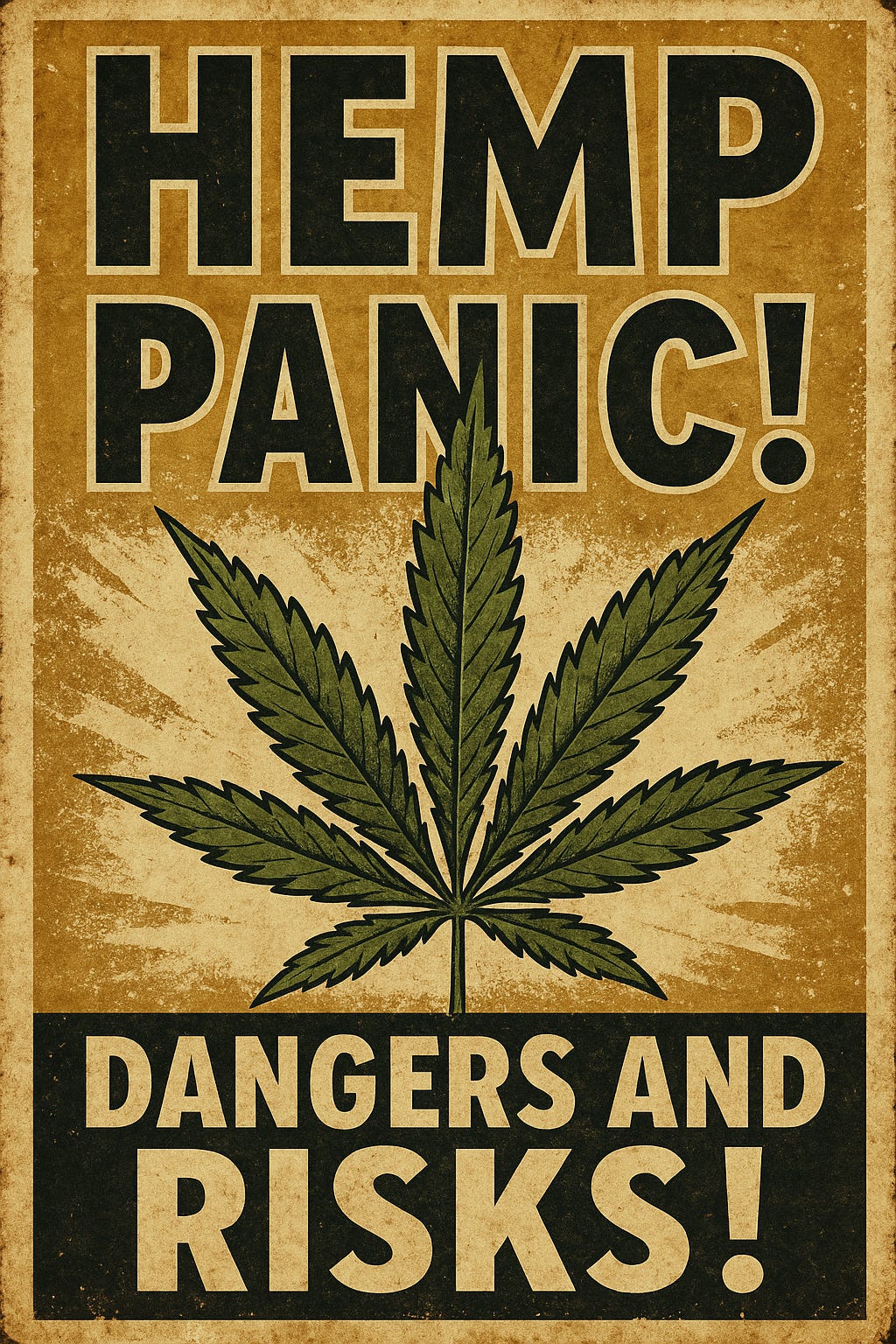
The Gun Case That Isn’t Really About Guns
The case, United States v. Hemani, started with an FBI search in Texas. Agents found a handgun, marijuana, and a small amount of cocaine in Ali Danial Hemani’s home. Hemani admitted he was a regular user of both. Prosecutors charged him under 18 U.S.C. § 922(g)(3), the federal law that makes it a felony for anyone who “is an unlawful user of or addicted to any controlled substance” to possess a firearm. A district court tossed the charge, and the Fifth Circuit largely agreed, ruling that after Bruen, the government hadn’t shown a historical tradition of disarming people simply for being drug users when they weren’t actively high at the time they possessed a gun. AP News
That should have been the end of it. Instead, the Justice Department asked the Supreme Court to step in and rescue the statute. The justices agreed. They’ll hear arguments in early 2026, with a decision expected by summer, another chance to stretch, twist, or “clarify” what the Second Amendment means in a country where your legal status can change depending on which plant is in your medicine cabinet.AP News
If this all feels a little abstract, it won’t for long. This isn’t just about Hemani or even marijuana users writ large. It’s about the millions of people — veterans, chronic-pain patients, cancer survivors, and perfectly ordinary adults — who live in one of the 20-plus states where recreational cannabis is legal under state law but still banned under federal law. In the eyes of Congress, every one of them is an “unlawful user.” Under § 922(g)(3), that status alone is enough to strip them of a constitutional right, permanently, even if they never touch a gun while impaired.
The Court will try to slot this into the language of history and tradition. Government lawyers are already digging up 19th-century laws disarming “habitual drunkards” to argue that modern cannabis users are their spiritual descendants. Civil liberties groups and gun-rights lawyers will counter that the founders disarmed people who were actively dangerous, not anyone who admitted to touching a forbidden substance in the last month. Somewhere in the middle, the justices will decide whether a plant that’s legal to buy in half the country automatically makes you too “irresponsible” to own a firearm. The Guardian
The Other Shoe Drops in Congress
If we lived in a system that treated law as neutral, that might be the end of the story: a clean doctrinal fight over history, text, and precedent. But we don’t. The same week the Court agreed to hear Hemani’s case, Congress quietly shoved a different cannabis fight into a completely different arena — the frantic effort to reopen the federal government.
In the Senate’s continuing resolution to end the longest shutdown in U.S. history, leadership slipped in a provision that would radically rewrite the federal definition of hemp. Under the 2018 Farm Bill, hemp became legal so long as it contained no more than 0.3% delta-9 THC by dry weight. Under the new language, “legal” hemp products would be capped at just 0.4 milligrams of total THC — per container, not per serving — and anything above that would no longer count as hemp at all. It would be treated as illegal marijuana under federal law. The Guardian
On paper, again, the stated target is “intoxicating hemp products” — the gummies, drinks, and vapes that have flooded gas stations and strip-mall vape shops under labels like delta-8, delta-10, and “hemp-derived THC.” In practice, hemp advocates estimate the language would instantly wipe out roughly 80–95% of the existing U.S. hemp market, including much of the CBD and cannabinoid sector that farmers were told would replace tobacco and revive rural economies. New York Post
Stay Informed. Stay Loud.
Subscribe to The Coffman Chronicle for no-BS political analysis, action guides, and daily truth bombs you won’t get from corporate media.
You’ll receive occasional early access, exclusive deep dives (like this), and full access to our 1200+ articles.
Kentucky: The Collision Point
The political irony is almost too on-the-nose. Kentucky — once the hemp capital of America, and now again one of its leading hemp states — is at the center of both eras. The same Mitch McConnell who championed hemp legalization in 2018 is now backing the crackdown language as a “clarification” to “protect children,” while his fellow Kentucky Republican, Rand Paul, is warning that the provision would “eradicate” the industry in their home state. Cato Institute
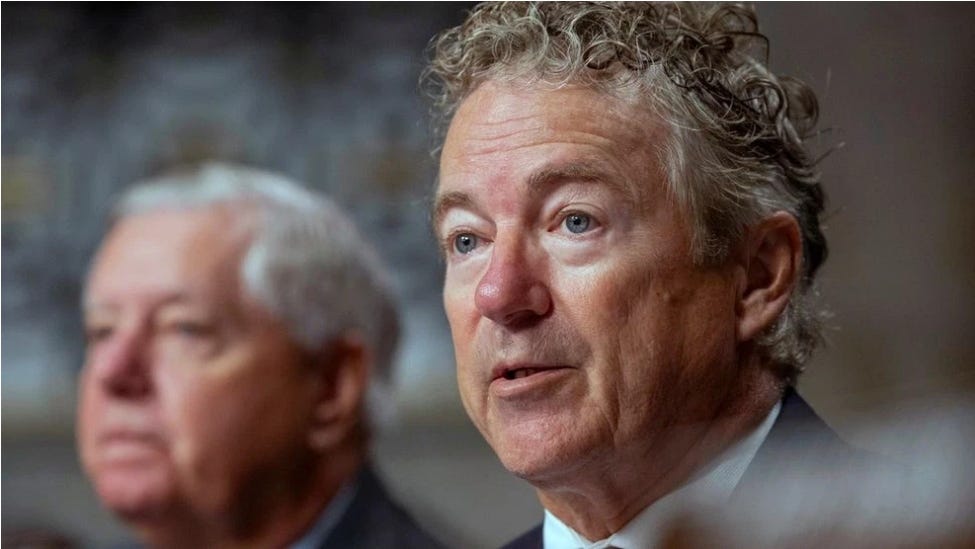
(AP Photo/Kevin Wolf)
So on one end of Pennsylvania Avenue, you have a Supreme Court deciding whether cannabis use should permanently mark you as too dangerous to own a gun. On the other end, you have Congress deciding whether the most promising sustainable crop in states like Kentucky should be reclassified into oblivion using a decimal point in a funding bill. Both stories are wrapped in the language of safety — public safety, child safety, historical safety — and both land on the same group of people: those who dared to bet their health or their livelihoods on a plant the law still insists on treating like a threat.
One Story, Seen Two Ways
That’s where this deep dive begins. The Hemani case gives the clean hook: guns, weed, and a Supreme Court that has already told lower courts to toss out any modern gun regulation that can’t find an ancestor in the 18th or 19th century. The hemp provision in the shutdown bill provides a parallel: a modern Congress using old fears to kneecap a young industry that was finally starting to look like a way forward for rural economies and the climate.
The two aren’t separate stories. They’re chapters in the same one: how America took a pair of ancient plants — cannabis and its non-intoxicating sibling hemp — and turned them into legal landmines, not because the science demanded it, but because the right people’s profits did.
How America Criminalized a Sustainable Crop
The Invention of a National Villain
Long before Congress buried a hemp restriction inside a shutdown bill, America had already perfected the art of criminalizing usefulness. Hemp was not just legal for most of the nation’s history — it was indispensable. From the colonial era through the late 19th century, American farmers grew hemp for rope, sailcloth, paper, textiles, and industrial uses. The U.S. Navy relied on it. Farmers were encouraged to plant it. It was so fundamental to daily life that several colonies required landowners to grow it, and the 1794 Patent Act lists hemp-processing among the country’s earliest recognized industries.
But by the 1930s, hemp had a new, carefully manufactured reputation: a cousin of “marihuana,” the foreign menace supposedly turning teenagers into knife-wielding lunatics. The story didn’t come from doctors or farmers. It came from newspaper magnates, chemical companies, and industrialists whose profits depended on hemp disappearing from the marketplace.
William Randolph Hearst, whose empire included vast timber holdings used for paper production, ran lurid anti-cannabis headlines that bore little resemblance to reality but were perfectly aligned with his business interests. At the same time, DuPont had just patented nylon, a synthetic fiber that would directly compete with hemp. Cotton interests in the South feared a cheaper, hardier rival. Together, they pushed a moral panic disguised as public safety, and Congress obliged.
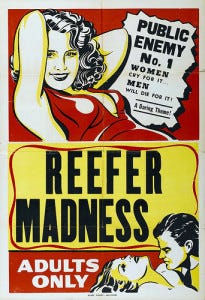
The Marihuana Tax Act of 1937 didn’t just criminalize cannabis. It effectively shut down the entire hemp industry by wrapping both plants in the same punitive bureaucratic net. Farmers who had grown hemp for generations suddenly faced burdensome paperwork, exorbitant taxes, and federal raids. A crop older than the Republic was reduced to a legal liability overnight.
The public was told this was about safety. What it was really about — then as now — was protecting the industries that feared hemp’s potential.
Kentucky: The First Great Casualty
Nowhere was the impact more devastating than in Kentucky.
For over a century, Kentucky was the American hemp capital. Its climate, soil, and farm economy were perfectly suited to the crop. By the mid-1800s, the state produced as much as three-quarters of the hemp in the United States. Hemp fiber from Kentucky fed ropewalks, bagging mills, textile operations, and shipyards up and down the Eastern seaboard. Entire rural economies were built around it. Families grew it for generations. Local schools, mills, and small towns thrived on its success.
Even during World War II, when the federal government briefly revived hemp production under the “Hemp for Victory” campaign, it was Kentucky’s fields the government turned to first.
Then came 1937.
The Marihuana Tax Act didn’t distinguish between a psychoactive flower and a non-intoxicating stalk. It didn’t care that Kentucky farmers weren’t getting high. The law simply made the crop too expensive, too risky, and too bureaucratic to grow. Within a generation, Kentucky’s hemp economy collapsed.
The fields went fallow. The mills shuttered. The expertise disappeared. Tobacco took its place, a crop that would eventually collapse too, leaving Kentucky’s rural counties with another economic crater.
The cruelty and absurdity of the moment we’re living through now is that Kentucky’s farmers finally began rebuilding, this time under the 2018 Farm Bill’s legalization of hemp. McConnell himself championed that bill, calling hemp a “new chapter” for the state. And it worked. Former tobacco farmers found new life in hemp. New processors opened. Entire rural counties began to see promise again.
Which is why the current effort to redefine hemp in the continuing resolution feels like déjà vu — not a new policy debate, but the second great shuttering of an industry that Kentucky helped build before America learned how to destroy it.
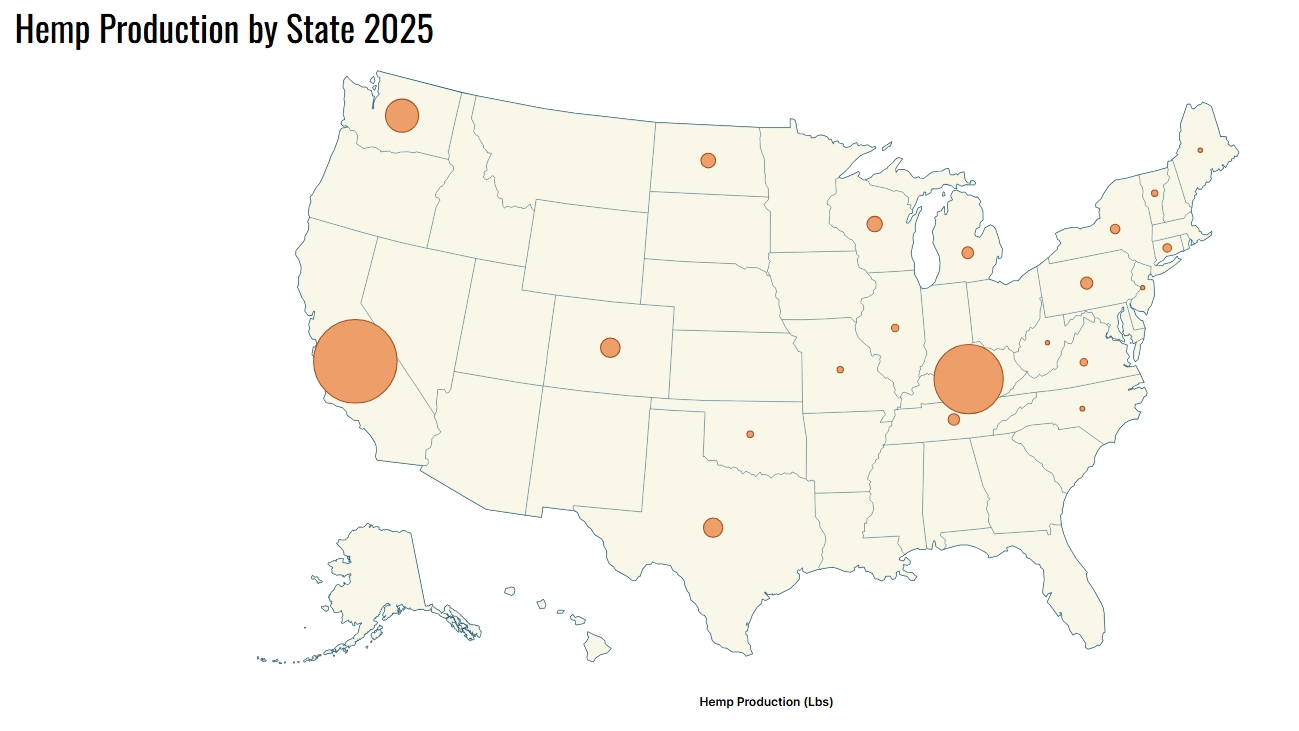
Hemp Production by State 2025
The pattern is the same as 1937: economic potential becomes a political threat, and a sustainable crop becomes collateral damage in someone else’s industrial comfort.
The Modern Lobbies Running the Show
What Changed and What Never Did
If the 1930s were the era of timber barons and synthetic-fiber tycoons trying to kill hemp in the crib, the 2020s are their spiritual sequel. The industries have changed —or rather, expanded —but the incentives remain the same. Wherever hemp or cannabis threatens an entrenched profit center, the political machinery snaps into place.
In modern America, the political machinery is far more sophisticated than Hearst running screaming headlines about “Mexican weed fiends.” Today, the panic comes packaged in the language of “consumer safety,” “unintended consequences,” and “protecting children.” Yet behind the jargon, the logic is unchanged: prevent a cheaper, cleaner, more adaptable plant from threatening the revenue streams of industries that have spent a century building political walls around their products.
Those walls are built with lobbyists now, not newspaper headlines, but they hold just as tightly.
The Industries With the Most to Lose
Consider who hemp threatens in 2025.
Big Alcohol, watching cannabis quietly peel away market share, has spent years funding “public safety” groups that oppose legalization while insisting alcohol’s own violence and health toll are unrelated to policy. Big Pharma, juggling opioid lawsuits while seeing millions of chronic-pain patients migrate to CBD and THC products, has every reason to keep plant-based medicine locked in a legal gray zone. The petrochemical giants that brought us plastics see hemp-based bioplastics and composites gaining ground, and lobby accordingly. Cotton growers, still reliant on pesticide-heavy monoculture, don’t relish the rise of a low-input competitor. Timber companies would prefer a world where paper still comes from trees that take decades to grow, rather than from plants that need just three months.
None of this is secret nor particularly subtle. When a crop threatens the balance sheets of industries powerful enough to sway Congress, the crop rarely wins.
What’s new is that the public conversation almost never names these industries as stakeholders. They appear only as abstract “job creators” or “economic engines,” while hemp is cast as the disruptor. But disruption is the point. If hemp weren’t so efficient, so sustainable, so multipurpose, it wouldn’t be a target.
The GOP’s Family Feud: McConnell vs. Paul
No state shows this contradiction more plainly than Kentucky, and no pair of lawmakers more sharply embodies it than Mitch McConnell and Rand Paul.
McConnell was the architect of hemp’s modern revival. In 2018, he shepherded the language that legalized hemp into the Farm Bill, posing for photos with farmers and calling it “an exciting new chapter” for Kentucky agriculture. That chapter finally offered a path out of the post-tobacco freefall. Farmers invested. Processors opened. For the first time in generations, Kentucky had a chance to lead a nationwide crop revolution.
And now, seven years later, McConnell is championing the language in the continuing resolution that could erase the very industry he spent years resurrecting.
He frames it as a responsible correction, a way to “protect children” and “clarify” Congress’s intent. However, no one in Kentucky’s hemp sector believes that. Farmers, processors, and retailers have issued warnings in increasingly desperate tones: the proposed THC cap isn’t a clarification; it is a kill switch. It would eviscerate the cannabinoid market, force processors to shut down, and — in Rand Paul’s own words — “eradicate the entire industry” in Kentucky.
Paul, the libertarian, has become the unlikely champion of the state’s hemp farmers. He voted against the CR. He warned publicly that Washington is repeating the sins of 1937. He understands what McConnell pretends not to: when you destroy the profitable part of a crop, you destroy the crop. Fiber and grain alone cannot support the infrastructure that keeps a statewide industry alive, not after nearly a hundred years of lost production.
The tension between McConnell and Paul is not ideological. It is infrastructural. One is willing to sacrifice an industry for political convenience; the other is not.
The Safety Language That Isn’t Really About Safety
McConnell’s justification for the crackdown is the same one used in every round of modern prohibition: it’s for the children. And there are real issues worth addressing, such as unregulated packaging, mislabeled products, and gas-station edibles that look like cartoon candy. However, none of those problems requires redefining hemp out of existence. They require labeling rules, age limits, and responsible regulation, all of which Congress could have enacted with a handful of sentences.
So why didn’t it?
Because regulation solves problems. Prohibition protects industries.
The safety language is a shield, a way to mask the political reality that the CR’s hemp provision isn’t about children at all. It’s about restoring a pre-2018 balance of power that kept hemp small, controllable, and safely noncompetitive. And the easiest way to get there is to cripple the segment of the market that threatens other industries’ profits: the cannabinoid side.
That’s why the CR doesn’t regulate delta-8 or delta-10. It vaporizes them. That’s why it doesn’t mandate child-proof packaging. It bans the products outright. That’s why it doesn’t set age limits. It sets THC limits so low that most commercially viable products could never meet them in the first place.
This is not what regulation looks like. It’s what industrial panic looks like — modernized, legalized, and tucked neatly into a bill meant to reopen the government.
What the Science Actually Says
A Crisis of Assumptions, Not Evidence
If you strip away the rhetoric, the moralizing, and the political theater, the heart of the cannabis-and-gun debate rests on a deceptively simple premise: that cannabis users are inherently more dangerous. It presumes they are impulsive, erratic, violent, or otherwise unpredictable enough that the mere act of using a plant should negate a constitutional right.
This claim has been repeated so often and for so long that many people assume it must be backed by piles of data. The truth is almost the opposite. For decades, federal law treated cannabis as too dangerous to allow research on, and then used the lack of research as proof that it was too dangerous to allow. It was a circular argument masquerading as science, one that still shapes public policy today.
However, now, with legalization spreading across the country and more data emerging, we have something we didn’t have in 1968, 1986, or even 2005: actual human evidence. And the picture it paints is not one of violence or chaos. It is one of a government clinging to assumptions that have quietly fallen apart.
A Plant With a Reputation It Didn’t Earn
Let’s start with the obvious question: Does cannabis use correlate with violent crime?
The short answer is no, at least not in the way the law imagines. Most studies find either no association or a very weak, context-dependent one. Cannabis users, taken as a whole population, do not commit more violent acts than non-users. Many states that legalized cannabis saw no increase in violent crime rates afterward, and some saw small declines. The federal government’s own crime statistics have never supported the idea that cannabis use drives violence the way alcohol clearly does.
As one 2025 review put it, “Results suggest that there is a link between cannabis use and violence; however, this relationship is strictly correlational, and the strength of this relationship varies depending on the population (e.g., populations with severe and persistent mental illness versus the general population).” In plain terms, you cannot treat cannabis use as a proxy for dangerousness without ignoring the actual evidence.
Even the studies that do find an association usually point to confounders — multiple substance use, pre-existing mental illness, high-risk environments — rather than a clean causal line from cannabis to violence.
If cannabis had never been criminalized — if it had entered American culture the same way wine or tobacco did — it is hard to imagine anyone would have built a national policy architecture around the fear of “marijuana users with guns.” The association is cultural, not empirical. It comes from eighty years of propaganda, not from criminology.
The Substance America Actually Has a Violence Problem With
The contrast with alcohol is stark and politically inconvenient.
Alcohol intoxication is strongly associated with violent crime, domestic violence, impulsive acts, assaults, and reckless firearm use. Hospital data, police reports, and decades of public health research all point to alcohol as one of the most reliable predictors of interpersonal violence. Yet no federal statute says that someone who “is an unlawful user of alcohol” cannot possess a firearm. No Supreme Court case has ever entertained such a claim. No senator has ever proposed a continuing resolution redefining beer to protect children from the dangers of malt liquor.
The discrepancy isn’t scientific. It’s political. Alcohol has lobbyists. Cannabis and hemp have targets on their backs.
The Psychosis Question, Handled Honestly
There is a caveat worth taking seriously: a small percentage of people experience psychosis when using high-THC cannabis. This is real, it is medically recognized, and it is something good policy should consider. However, it is also rare, heavily concentrated among individuals with underlying risk factors, and not predictive of widespread violence. Psychosis can make someone vulnerable or unstable; it does not automatically make them dangerous.
When policymakers cite cannabis-induced psychosis as a reason to restrict gun rights broadly, they are not following the science. They are stretching a narrow clinical phenomenon into a universal justification. It is the policy equivalent of banning all antidepressants because a small number of people have adverse reactions to SSRIs. It treats a specific medical risk as if it were a sweeping social threat.
The responsible response is individualized care, screening, and treatment, not a blanket definition that treats millions of responsible adults as if they were on the brink of a psychiatric break.
What Cannabis Users Actually Look Like
Most cannabis users, whether medical or recreational, do not become more aggressive, impulsive, or erratic. If anything, they skew toward reduced anxiety, softened mood, improved sleep, or mild distraction. The stereotype of the mellow, slightly zoned-out user isn’t far off for many people. It may not be flattering, but it is far from dangerous.
Ask anyone who’s been around both substances: the guy who has three craft beers is far more unpredictable than the person who smoked a joint an hour ago. Alcohol unlocks inhibition, amplifies bravado, and quickens temper. Cannabis tends to slow reactions, soften edges, and turn conflict into something to avoid rather than escalate. One leads to bar fights; the other to people forgetting what they were arguing about.
None of this means cannabis is harmless. It means that the harms we fear — gun violence, sudden aggression, impulsive acts — are not the harms cannabis is associated with. And it means the federal government’s framework for regulating cannabis and guns is built on assumptions that no longer match the lived reality of millions of Americans.
The Gap Between Science and the Law
The Hemani case at the Supreme Court isn’t really about one man in Texas. It’s about whether the country is willing to update its laws to match what science and everyday experience already tell us: that cannabis use is not a proxy for dangerousness, and treating it as one is neither historically grounded nor empirically sound.
Congress could have written a more honest statute decades ago. Instead, it doubled down on a model that treats cannabis users as inherently suspect, a model born from moral panic rather than evidence. The Court now has to decide whether it will follow that model or finally break from it.
And as we’ll see next, this isn’t the only place where science is being bent out of shape to serve an agenda.
Real Child Safety vs. Fake Panic
When Children Become a Policy Prop
Whenever lawmakers want to take a sledgehammer to an industry without saying so out loud, they reach for the same shield: the children. It is the universally accepted pretext, the rhetorical safe harbor for policy choices that would never withstand scrutiny on their own merits. And to be clear, there are genuine issues to care about, such as accidental ingestions, mislabeled products, and unregulated edibles packaged to look like candy. Parents have seen these risks firsthand. Doctors have treated the outcomes.
However, what the Senate did with hemp in the continuing resolution has almost nothing to do with any of that. It is the difference between fixing a cracked window and deciding the house must be bulldozed.
To understand how mismatched the response is, you have to start with the facts: what the data actually tells us about children, cannabis, and the unregulated corners of the hemp market.
The Real Problems No One Is Denying
In the last few years, as hemp-derived cannabinoids exploded into gas stations and vape shops, pediatric poison centers saw a noticeable rise in accidental ingestions, especially and predictably among very young children. Toddlers, doing what toddlers do, found gummies that looked like fruit snacks or sour bears, consumed more than their little bodies could handle, and ended up drowsy, unsteady, confused, or occasionally in a hospital overnight for observation.
Emergency physicians will tell you most cases resolve safely, but some are frightening. A small child cannot articulate what they took, how much, or when. The uncertainty is terrifying for parents. And because delta-8 and other hemp-derived cannabinoids fall in a regulatory gray zone, many products are mislabeled, inconsistently dosed, or packaged with bright colors and mascots that make them indistinguishable from candy to an unsupervised four-year-old.
These are real issues. No responsible public health expert pretends otherwise. States with legal cannabis figured this out early, which is why their products come in child-resistant packaging, with standardized labeling, clear THC totals, consistent potency, serving sizes, and strict prohibitions on cartoon branding. They also require age restrictions, testing for contaminants, and licensed retail environments.
These measures work. The data from legal states is unequivocal: when edibles are regulated, packaged correctly, and kept out of convenience stores, pediatric exposures drop sharply.
That’s what functional governance looks like. Not panic — policy.
What Washington Chose Instead
The federal government had the opportunity to adopt those same guardrails. It could have used the continuing resolution to set national standards aligned with lived experience from legal medical cannabis states. It could have created a regulatory framework that treated hemp-derived cannabinoids the way states already treat cannabis: as something adults can choose, children must be shielded from, and products must be honest about.
Instead, Congress opted for a definition so restrictive it might as well be a ban. A cap of 0.4 milligrams of total THC per package would make almost every existing product illegal overnight, including most CBD oils, tinctures, and therapeutic formulations used by parents of children with epilepsy or adults managing chronic pain. The CR did not regulate the market. It eliminated it.
And the problems that actually endanger children, such as packaging that looks like candy, stores that sell to teenagers, and products with inconsistent potency? None of those issues is addressed by redefining hemp. It’s like banning all cold medicine because toddlers sometimes swallow cough syrup, a solution that solves nothing except for companies that prefer the competition to go away.
If Congress actually cared about child safety, we would have seen guardrails, not a guillotine.
Parental Responsibility Is Not a Policy Substitute
There is a strange pattern in American lawmaking: the more straightforward a solution is, the more lawmakers prefer to avoid it. Child-proof packaging and age restrictions are not controversial. Parents understand them. Retailers know how to implement them. Every other regulated product — from wine to Windex — is already governed this way.
But because delta-8 and other hemp derivatives emerged without federal regulations attached, they slipped into the marketplace through the path of least resistance. They showed up where they shouldn’t be: corner stores, unlicensed retailers, strip-mall kiosks with neon signs. The predictable happened. Children found products that looked like candy because they were packaged to imitate candy. Teenagers experimented because no one was checking IDs.
This is not a hemp problem. It is a regulatory vacuum.
Parents always bear some responsibility for safe storage, just as they do with alcohol, cleaning supplies, vape pens, or prescription medications. But the government also has a role: it must require labels, packaging, child-resistant containers, and age verification. Without these, it is asking parents to navigate a minefield while blindfolded.
The CR language does not empower parents. It abandons them.
The Politically Convenient Fear
The most telling sign that the crackdown is about politics, not public health, is what Congress chose not to regulate. If the concern were truly over “intoxicating hemp products,” lawmakers could have required that these products be sold only in the same controlled environments as cannabis in legal states. They could have mandated third-party testing to ensure accurate potency. They could have penalized companies that produce look-alike packaging or those that sell without ID verification. They could have created a national standard for edible formulations.
None of these measures made it into the continuing resolution. Not a single sentence addresses the mechanisms by which children are exposed to these products. Instead, the law goes after the crop itself, kneecapping the entire industry under the guise of protecting minors.
It is prohibition wearing a child-safety costume, and it is just as flimsy as the costumes Hearst paraded through his newspapers nearly a century ago.
A Safer Market Was Possible and Still Is
The striking thing about this debate is how solvable the real problems are. Every state that has legalized cannabis has figured out how to regulate edibles to minimize pediatric exposure. The blueprint exists. It’s been refined, repeated, documented, and tested. There is no ambiguity about what works.
What’s missing is the political will to regulate instead of annihilate.
Congress could still choose a different path. It could still create a rational, evidence-based framework that protects children without scorched-earth consequences for farmers, processors, small businesses, and medical consumers. But doing that would require acknowledging that the issue is packaging, access, and oversight, rather than the plant itself.
And acknowledging that would require confronting the real motive behind the CR’s hemp language: protecting existing industries, not public health.
The Environmental Stakes No One Wants to Talk About: An Ode to Hemp
The Crop That Could Have Changed Everything
If you stripped away the politics, the propaganda, and the congressional contortions, hemp would read like a miracle crop. It grows fast — absurdly fast — reaching maturity in three to four months. It thrives in poor soil, pulling contaminants from the earth and leaving the ground healthier than it found it. It needs a fraction of the water or pesticides cotton demands and none of the backbreaking agricultural inputs that make modern monoculture so destructive.
It consumes carbon at a rate that embarrasses most industrial crops. It can be turned into fiber, food, paper, oil, bioplastics, insulation, construction materials, fuel, textiles, and thousands of other products. Nations with limited arable land have used it for centuries as a regenerative backbone for local economies.
If you gave a climate scientist an empty field and a wish list, hemp would be very close to what they’d draw.
Which is why it’s no coincidence that the industries most threatened by hemp — timber, cotton, petrochemicals, plastics, and fossil fuels — are the same ones that shape much of our modern political economy. Hemp is not dangerous. Its success is.
A Sustainability Revolution That Never Got the Chance
For decades, environmental scientists have pointed out that hemp could replace entire industrial supply chains. Hemp paper could reduce deforestation. Hempcrete could replace carbon-heavy concrete. Hemp textiles could disrupt the pesticide-intensive cotton industry. Hemp plastics — biodegradable, renewable, and strong — could chip away at the petrochemical stranglehold that produces everything from grocery bags to car interiors.
This isn’t hypothetical. Companies in Europe and Asia already use hemp composites in automobiles, construction, insulation, and packaging. Some U.S. companies do too, though quietly, carefully, and limited by a regulatory environment that cannot decide whether hemp is a plant, a drug, or a threat.
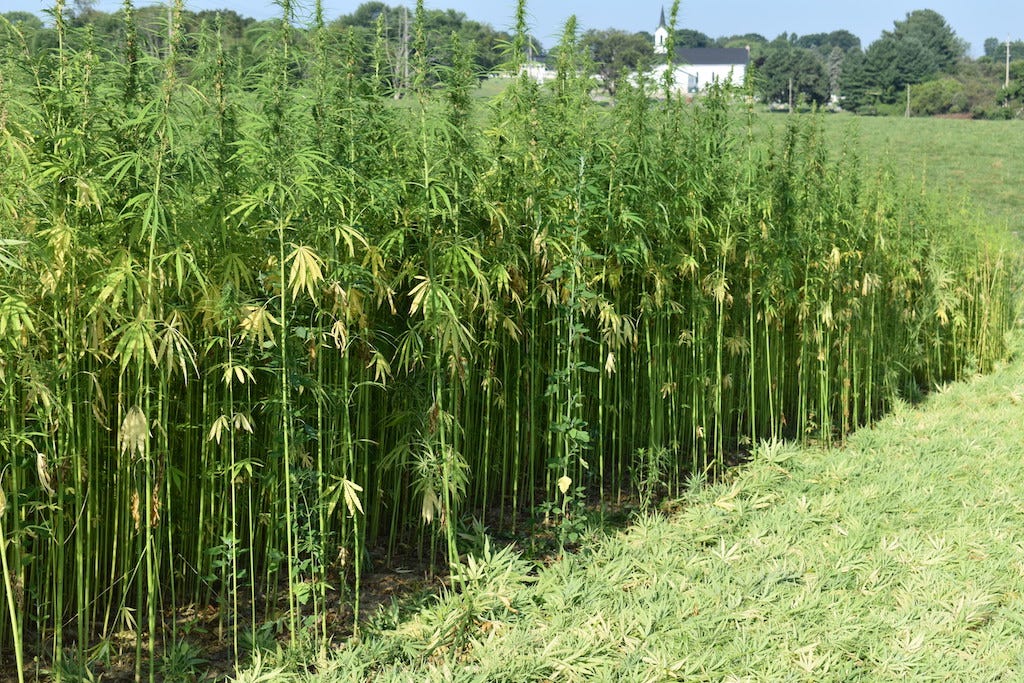
Image from Farm and Dairy
The 2018 Farm Bill was supposed to break that logjam. For a brief moment, it did. Hemp acreage exploded. Investors began funding processing centers. Agricultural universities launched new research programs. Construction companies experimented with hempcrete structures that produce a fraction of the carbon footprint of traditional buildings. Textile companies openly dreamed of a regenerative American fiber industry.
There was a sense — rare in modern agriculture — of genuine possibility.
The CR’s redefinition of hemp is not just a threat to cannabinoid businesses. It kneecaps the entire chain of innovation that depends on the plant's economic viability. Fiber and grain processors rely on a robust market to fund the infrastructure needed to scale. Cannabinoids were never the endgame. They were the launchpad.
Remove that launchpad, and the entire structure collapses. And that’s the point.
Kentucky’s Environmental Second Chance
This is where Kentucky re-enters the story — not as a place caught in a political tug-of-war, but as a symbol of what could have been.
Kentucky’s soil was made for hemp. Its climate, rainfall, and agricultural knowledge all align to create some of the best hemp-growing conditions in the world. Hemp offered a rare lifeline: a sustainable crop with real economic potential, something that could anchor rural economies without degrading land or poisoning groundwater.
Farmers who had watched entire communities shrink and hollow out finally saw a future that didn’t involve abandoning family land or selling to developers. Hemp was a way to rebuild, not retreat.
The new CR language threatens that revival. It signals to investors that the industry is unstable. It tells processors not to expand. It warns equipment manufacturers, builders, fiber mills, and bio-composite startups that the political risk is too high. It pulls the thread of the entire fabric of Kentucky’s second agricultural renaissance.
The irony is sharp enough to cut yourself on: a state that once fed the nation with hemp now risks losing its environmental comeback because Congress is more comfortable appeasing petrochemical lobbies than protecting rural livelihoods.
A Cleaner Future, Derailed on Purpose
The most important thing to understand about hemp and the climate is this: the plant’s potential isn’t radical. It’s practical.
Hemp doesn’t need a revolution. We’ve known for centuries what it can do. It needs permission.
It doesn’t require subsidies, massive industrial reorganizations, or futuristic technology. It simply requires a political environment in which entrenched industries do not get to veto better, cleaner alternatives. That is what hemp challenges— not morality, not safety. Power.
Every time America has a chance to choose sustainability over legacy industry interests, the legacy interests win. Hemp could help decarbonize construction, but concrete and steel lobbyists have deeper pockets. Hemp could reduce reliance on plastics, but petrochemical giants write the legislation. Hemp could regenerate soil and reduce pesticide load, but agribusiness is built on chemical inputs.
The CR’s hemp provision is not an aberration. It is the predictable outcome of a political system where the environmental benefits of a crop matter less than the discomfort it causes industries that built their empires on practices the planet can no longer sustain.
The Stakes Are Bigger Than One Plant
All of this raises the uncomfortable question Congress never answers out loud: what does America lose when it sabotages a sustainable industry to protect unsustainable ones?
We lose carbon reduction. We lose rural renewal. We lose innovation. We lose resilience. We lose the chance to build an agricultural economy that heals instead of harms.
Most of all, we lose time, the one resource no climate policy can manufacture.
What’s being destroyed here is not a niche sector of the wellness industry. It is a viable path toward a cleaner, more regenerative industrial future, sacrificed not because the science is uncertain, but because the politics are.
And the next section will show just how familiar that pattern is.
Industrial Betrayal & the Second Hemp Prohibition
The First Time America Buried Hemp, It Wasn’t an Accident
When the United States strangled hemp in 1937, it did so with intent. The Marihuana Tax Act was framed as a moral panic, a response to an allegedly dangerous drug foreign to American life. However, farmers knew better. So did industrialists. The law did not distinguish between hemp and cannabis because the people pushing for it didn’t want a distinction. They wanted the entire plant gone.
Timber magnates like Hearst wanted hemp paper dead before it could compete with their forests. Chemical companies wanted synthetic fibers to dominate without an agricultural rival. Cotton growers didn’t want to compete with a plant that required fewer pesticides and less water. And the federal government — which had no trouble encouraging hemp when it needed rope for a war — quickly returned to criminalization as soon as that need evaporated.
It wasn’t morality. It wasn’t safety. It was industrial self-preservation.
Everything that happened after — the criminalization, the demonization, the racialized policing, the collapsing farm economies — was downstream of that initial choice.
The Second Attempt Isn’t Even Trying to Hide It
What’s striking about the new hemp restriction buried in the continuing resolution is not how different it is from 1937, but how similar. The players have changed, but the stakes have not. Hemp threatens entrenched industries — old ones, powerful ones — and those industries have no intention of letting a three-month crop change their supply chains or their bottom lines.
The same industries we’ve already met — petrochemicals, timber, cotton, pharma, alcohol — all have a stake in keeping hemp small. They lobby on cannabis policy, hemp definitions, agricultural subsidies, and chemical regulations because they understand exactly what a cheap, fast, carbon-hungry crop could do to their balance sheets. It would be shocking if they didn’t intervene when a crop threatens their well-laid empires.
The CR does not eliminate hemp because science demands it. It eliminates hemp because the industries that funded Congress’s rise are uncomfortable with how much economic potential the plant has rediscovered.
A Pattern Older Than Hemp
If the story had stopped at hemp, it would have been revealing enough. However, this is just one chapter in a larger American pattern: when faced with a choice between an innovative, sustainable solution and the comfort of established industries, Congress almost always chooses the latter.
It chose fossil fuels over renewables for decades, burying research and manufacturing doubt even as the country warmed. It chose plastic over biodegradable materials. Again and again, the federal government protected industries whose profits depended on staying the same, and punished the innovators who dared to imagine a cleaner future.
Hemp is simply the newest casualty. It is not special in its fate. It is special in its potential.
What We’re Watching Now Is the Second Prohibition
The CR’s redefinition of hemp is not a minor technical fix. It is the policy equivalent of a guillotine: broad, blunt, and irreversible unless someone fights to reverse it. It is a second prohibition, not on a drug, but on a sustainable industry that threatens the legacy infrastructure of American power.
The first prohibition was wrapped in racism and yellow journalism. The second is wrapped in child-safety language and legislative procedure. Both hide the same core truth: America is not afraid of hemp’s risks. It is afraid of hemp’s potential.
What’s happening to hemp now is not unique to hemp at all. Manufactured panic has always been a shortcut to power in American politics, a way to marshal fear and moral outrage when evidence won’t cooperate. The same blueprint that targeted hemp in the 1930s resurfaces whenever a vulnerable group or disruptive idea threatens the status quo: the moral panic around Black jazz musicians and “reefer madness,” the Red Scare, the “crack baby” myth of the 1980s, the bathroom bills and drag bans of today, the escalating attacks on LGBTQ+ families, the criminalization of women’s reproductive autonomy.
None of these campaigns begins with data. They begin with anxiety, and they are sustained by the people who know how to weaponize that anxiety into legislation. Fear becomes a lever. The target becomes interchangeable.
Hemp just happens to be today’s latest useful symbol, a plant repurposed into a cultural threat so it can be regulated out of the way.
What is unfolding now is not the story of a dangerous plant being brought under control. It is the story of an old power structure reasserting itself, using modern tools, modern rhetoric, and modern fear, but relying on a very old instinct: protect the industries that already rule.
The irony is that the rest of the world sees hemp for what it is: a practical solution to environmental, agricultural, and industrial problems. America sees it as a threat because it has turned anything that challenges the profits of the few into a threat.
And that tension leads us into the final turn of this deep dive.
Villain Arc vs. Hero Arc
The People Who Chose the Villain Arc
If you watch American policy long enough, you start to notice a pattern in who chooses the villain arc. It’s rarely the elected official shouting the loudest. It’s the ones working quietly in the background, the ones who understand that most transformations never make headlines because they never happen at all. They die in drafting rooms, committee markups, conference negotiations, and continuing resolutions, buried by the people who gain the most from keeping the future small.
You see it in the industries that built entire empires on the assumption that alternatives must be smothered before they mature, in the lobbyists who can thread the needle between “public safety” and “market protection” with surgical precision, and in the lawmakers who know their states need new industries but vote to protect old ones because those old ones write the checks.
You see it in the politicians who claim a moral crisis whenever they need to justify a policy that would fail on its merits, the same people who spend years warning that cannabis is too dangerous for responsible adults to use while happily accepting campaign money from the alcohol industry, the pharmaceutical industry, the oil industry, and every other sector that profits from America’s inability to imagine something better.
These are not mustache-twirling villains. They don’t need to be. They don’t have to rant about reefer madness in newspaper headlines anymore. All they have to do is insert a definition into a funding bill at 3 a.m. and let the machinery run its course.
Hemp’s second prohibition isn’t dramatic. It’s procedural. Its villain arc is one of indifference, not ideology.
The People Who Chose the Hero Arc
And then there are the people who never asked to be heroes but end up fighting as if they were. They are the farmers who replanted land their grandparents once grew hemp on, hoping for a future in which a sustainable crop could anchor a sustainable life. It is the processors who invested in equipment, knowing full well that an entire industry can collapse at the whim of Washington. It is the scientists in regenerative agriculture who see hemp not as a fad but as a tool, a way to clean soil, pull carbon, and rebuild ecosystems.
There are veterans who use cannabis to sleep without fear, cancer patients who use it to eat, and parents of children with epilepsy who count on cannabinoid oils to stop seizures when pharmaceuticals fail. They are the people who have been told for decades that their health, their stability, their dignity must take a back seat to the legal fictions built around a plant.
There are the rural communities that saw hemp as the first honest path forward since tobacco collapsed, not a gold rush, not a fantasy, but a practical, workable crop that doesn’t poison the land or disappear overseas. They built something real in the tiny window federal law allowed them, and now stand to lose it because someone in Washington thinks child safety means banning an entire agricultural economy.
And there are the entrepreneurs and environmental innovators who saw, in hemp and bamboo, the rarest thing in American industry: a win-win. A sustainable material that could replace plastics, replace paper, replace petrochemical composites, rebuild weakened soil, and do it all without exhausting water supplies or relying on toxic inputs.
These people chose the hero arc not because they wanted glory, but because they believed — correctly — that it isn’t too late to build something better.
The Stakes Are Moral, Not Just Political
What divides the villain arc from the hero arc isn’t good and evil. It’s imagination.
The villain arc is the refusal to imagine a future that isn’t built from the past, the insistence that industries must be protected, not questioned, that comfort matters more than innovation, that profit margins matter more than public good, and that fear is more politically useful than possibility.
The hero arc is the willingness to imagine differently and to do the work that imagination requires— to plant fields, open processing facilities, test new materials, develop new products, and build new markets in the face of chronic political instability. It is being willing to take the risk of believing the country could change its relationship with a plant it spent generations demonizing.
It’s easy to mistake the hemp debate for a policy fight. It’s not. It’s a values fight. It is a fight over whether America will continue to punish the new for threatening the old, or allow innovation to flourish even when it disrupts entrenched power. Ironically, it all hinges on a very old plant.
Why This Story Matters Now
We live in a moment where moral panics are being reanimated at breakneck speed — against LGBTQ+ families, against women’s bodily autonomy, against libraries and educators, against immigrants and refugees, and now, once again, against a plant that threatens the people who own too much of the world.
The hemp crackdown is part of this same ecosystem of fear, a way to halt change by fabricating danger. It’s an attempt to collapse a future that was just beginning to take shape, one built on sustainability, personal autonomy, scientific honesty, and rural revitalization.
And yet, the reason this deep dive matters is not because the villain arc is strong. It’s because the hero arc is stronger.
Farmers, scientists, patients, parents, small-business owners, environmental innovators, and ordinary adults who simply want a safe product in a sane regulatory environment are the people building the future Congress is trying to thwart.
If America chooses them, hemp has a future. After all, it once engineered our past.
If America chooses fear, hemp becomes another chapter in the long history of things we destroyed simply because the right (most well-connected) people asked us to.
What We Lose, and What We Choose
If you strip everything else away — the legal acrobatics, the historical baggage, the moral panics, the lobbyist fingerprints, the procedural sleights of hand — what you’re left with is something painfully simple: America keeps mistaking caution for wisdom, fear for safety, and stagnation for stability. It keeps choosing the comfort of the past over the possibility of the future.
The Supreme Court will soon decide whether people in legal cannabis states are trustworthy enough to exercise a constitutional right. Congress has already decided that a crop once poised to revitalize rural America should be shoved back into the shadows because it inconveniences the industries that depend on that shadow. These decisions are dressed up in the language of responsibility, but they function more like confessions, admissions that the systems guiding American governance are no longer able to distinguish between a real threat and a politically useful one.
When a country has the chance to embrace a safer, cleaner, more resilient path and instead chooses legislative sabotage, that’s not an accident. That’s a worldview.
The first time hemp was criminalized, the country lost a renewable fiber, a regenerative crop, and an industrial powerhouse that could have shaped the 20th century differently. This time, the stakes are higher: soil we cannot replace, carbon we cannot take back, rural communities we cannot keep hollowing out, and a climate clock that does not care how many hearings Congress holds.
It is easy to say this story is about hemp. It is harder, but more honest, to admit it is about something larger — the question of whether America will allow anything new to flourish if it disrupts the people who already hold power, whether innovation is tolerated only when it is profitable to the right interests, and whether fear will continue to be our national planning tool, deployed whenever possibility threatens the familiar.
But the real story — the one that deserves the final word — is not the villain arc. It’s the hero arc. It’s the farmers who planted again anyway, the scientists who kept researching, the entrepreneurs who invested, the patients who healed. It is the communities that dared to imagine a future not built from decline, and the people who saw something worth building and started building it, even as Washington sharpened the knives.
The fight over hemp is not over. The Supreme Court will hear Hemani in early 2026. The CR is, as of this writing, not yet law. Policy can be rewritten. Laws can be fixed. Industries can be rebuilt. The future can still be chosen.
The question is whether we will choose it or keep mistaking the loudest warning for the truest one.
Because in the end, this deep dive has never really been about cannabis or guns or THC levels or any of the familiar headlines. It’s been about what America loses when it listens to its fears, and what it stands to gain when it finally decides to listen to its possibilities instead.
And that choice, despite everything, still belongs to us.
Sources:
“US Supreme Court to weigh law barring drug users from owning guns” – Reuters (Oct. 20, 2025)
“Supreme Court will consider whether people who regularly smoke pot can legally own guns” – AP News (Oct. 20, 2025)
“Supreme Court Grants Review in United States v. Hemani” – Dentons (Oct. 27, 2025)
“Guns, Cannabis, and the Constitution: SCOTUS to Hear United States v. Hemani on Cannabis Use and Gun Ownership” – Mandelbaum Barrett PC (Oct. 20, 2025)
“Supreme Court to Decide Whether Gun Ban for Marijuana Users Is Constitutional” – Gun Owners of America (Oct. 28, 2025)
“Republican disquiet over hemp ban threatens passage of bill to end shutdown” – The Guardian (Nov. 12, 2025)
“Intoxicating Hemp Product Ban Included in Deal to Reopen Government” – Cannabis Business Times (Nov. 10, 2025)
“US Hemp Roundtable Strongly Opposes Proposed Senate Language to Recriminalize Hemp” – Cannabis Business Times (Nov. 11, 2025)
“Senate Advances Hemp Product Ban—But GOP Senator Has Last-Ditch Plan To Fight Back” – Marijuana Moment (Nov. 10, 2025)
“Trump ‘Supports’ Hemp THC Ban That’s Advancing In Senate, White House Says” – Marijuana Moment (Nov. 11, 2025)
“McConnell, Paul clash over provision that critics say will destroy US hemp industry” – Louisville Public Media (Nov. 11, 2025)
“Congress is weighing a national ban on hemp THC. Here’s how it could affect Texas.” – Houston Chronicle (Nov. 12, 2025)
“Industry group slams Senate passage of hemp ban in funding bill” – Washington Examiner (Nov. 11, 2025)
“Congress Created a Market for a New Kind of Cannabis Drink. Now It Wants to Ban It.” – Wall Street Journal (Nov. 12, 2025)
“Hemp product ban, tacked onto bill to reopen government, stuns Illinois businesses: ‘Unnecessary and cruel’” – Chicago Sun-Times (Nov. 12, 2025)
Congressional Record – remarks on hemp THC limit (0.4 mg per container) – U.S. Senate (Vol. 171, No. 190)
“5 Things to Know about Delta-8 Tetrahydrocannabinol – Delta-8 THC” – U.S. FDA Consumer Update (May 4, 2022)
“Delta-8 Tetrahydrocannabinol Exposures Reported to US Poison Centers” – GA Smith et al., Journal of Medical Toxicology / PMC (2024)
“Increases in Availability of Cannabis Products Containing Delta-8 THC and Reported Cases of Adverse Events” – Ohio Academy of Family Physicians (Sep. 28, 2021)
“Violence and Cannabis Use: A Focused Review of a Forgotten Aspect in the Era of Liberalizing Cannabis” — D Dellazizzo et al., Frontiers in Psychiatry (2020)
“Fact or Faction Regarding the Relationship between Cannabis Use and Violence” — Journal of the American Academy of Psychiatry and the Law (2025)
“Cannabis Use and Violence: Is There a Connection?” — Prevention Technology Transfer Center (PTTC) Network (Jul 17, 2025)
“Associations of cannabis use, use frequency, and cannabis use disorder with violent behavior among young adults in the United States” — N. D. Volkow et al. Science Direct (2024)
“Addressing Alcohol Use as Risk Factor for Gun Violence” – Johns Hopkins Bloomberg School of Public Health (July 5, 2023)
“Alcohol Misuse and Gun Violence: An Evidence-Based Review and Recommendations” – Center for Gun Violence Solutions / Johns Hopkins (2023)
“Alcohol Misuse and Gun Violence: An Evidence-Based Review” – S. Villarreal, William & Mary Law School Scholarship Repository (2023)
“Marihuana Tax Act of 1937” – Wikipedia / primary & secondary references
“Marijuana Tax Act of 1937 | Research Starters” – EBSCO (overview)
“The (not so brief) History of Cannabis Prohibition” – Extract Labs
“Hemp Farming Act of 2018” – Wikipedia
“Agriculture Improvement Act of 2018 (2018 Farm Bill)” – Wikipedia
“Hemp in Kentucky” – Wikipedia
I teach substance use counseling in Kentucky and my students are always surprised to find out that KY once was the main supplier of hemp. This is a great article. Unfortunately, hemp does not have the lobbyists or financial backing to push back against the industries opposing it. I don't believe you brought this up, but there is also a racial component to the marijuana scare. But that is a whole other subject for another day perhaps. Thanks for sharing this!