


President Donald Trump’s second term has rapidly ushered in sweeping changes to U.S. civil-military relations, sparking intense debate at home and abroad. From the removal of General Mark Milley’s portrait from the Pentagon, the dismissal of Admiral Linda Fagan, the deployment of active-duty troops to the southern border, the revocation of security clearances for former officials, to dismantling programs designed to combat extremism within the ranks, these decisions form part of a larger agenda. These actions reflect Trump’s personal priorities and align closely with Project 2025, a conservative blueprint for reshaping federal governance. Together, they signal a profound redefinition of military priorities, with lasting implications for U.S. democracy, security, and global influence.
The Removal of Milley’s Portrait: Erasing Dissent
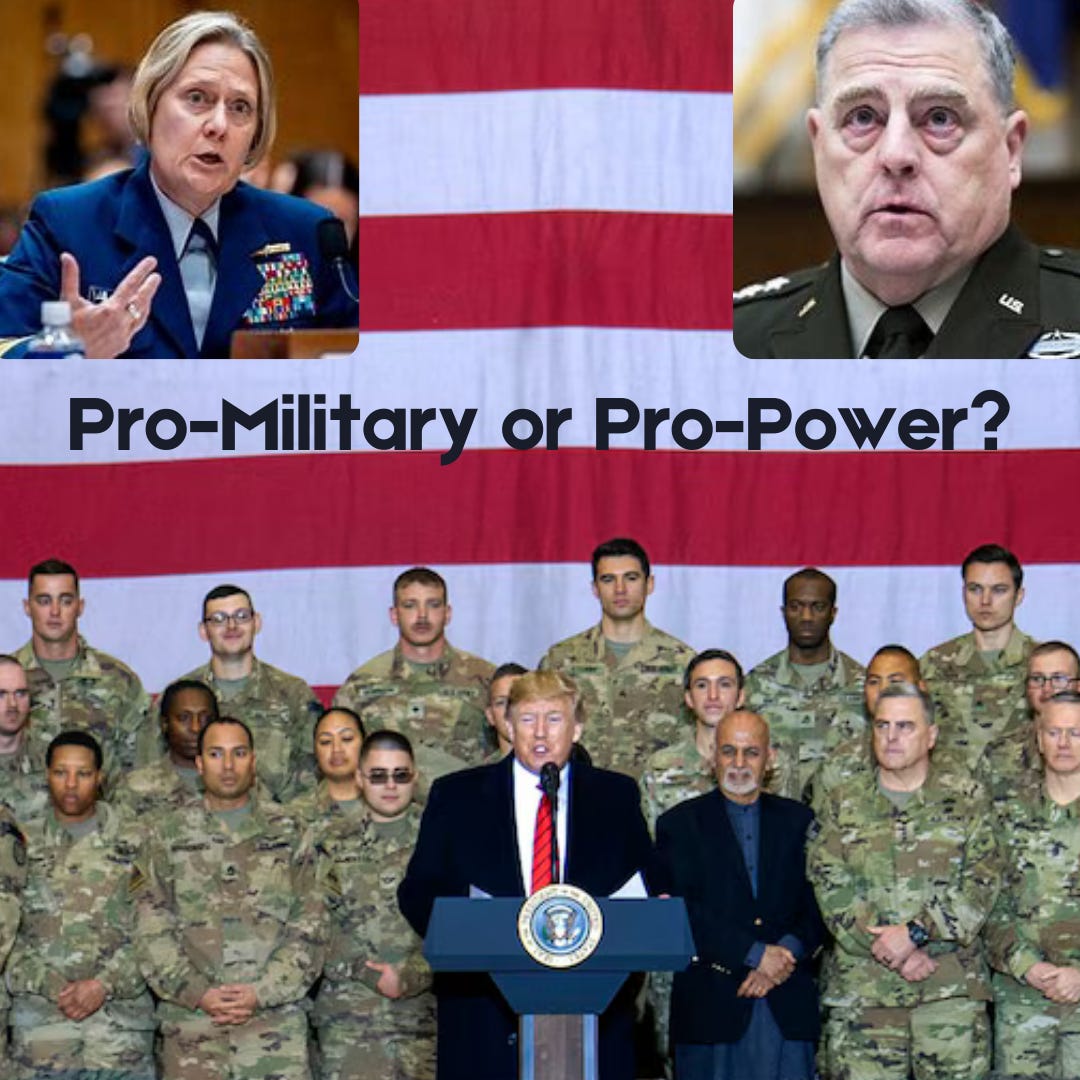
During his second term, one of Trump's most symbolic and contentious moves has been removing General Mark Milley’s portrait from the Pentagon’s E-ring hallway, an honor reserved for former Chairman of the Joint Chiefs of Staff. Milley had clashed with Trump during his first term, notably apologizing for his involvement in a controversial photo op at Lafayette Square during the George Floyd protests. He later condemned Trump’s rhetoric around the 2020 election and the January 6 Capitol attack.
The decision to remove Milley’s portrait, executed within hours of Trump’s inauguration, has been widely interpreted as retribution for these public rebukes. Critics argue that such an act undermines the tradition of honoring military service regardless of political disagreements, sending a chilling message to current and future leaders: dissent will not be tolerated (Reuters).
Response and Implications
While Trump supporters praise the move as holding Milley accountable for what they view as partisan behavior, detractors warn that it risks politicizing the military. The removal could deter military leaders from providing honest, apolitical advice to civilian leadership, undermining trust in the chain of command.
The Dismissal of Admiral Linda Fagan: Undermining Progress on Diversity
Admiral Linda Fagan’s dismissal as the first woman to lead a branch of the U.S. armed forces, serving as Commandant of the Coast Guard, marks another flashpoint in Trump’s reshaping of military leadership. Officially, the administration justified her removal by citing her failure to address sexual misconduct within the Coast Guard Academy adequately. However, critics argue that her dismissal aligns with broader efforts to dismantle diversity, equity, and inclusion (DEI) initiatives—a key tenet of Project 2025.
Fagan, a vocal advocate for increasing diversity and recruitment within the Coast Guard, symbolized progress toward gender equity in the military. Her removal has drawn sharp criticism from lawmakers and advocacy groups, who see it as a setback for inclusivity in military service (Homeland Security Today).
Social and Global Reactions
Progressive lawmakers, including Senator Tammy Duckworth, have condemned Fagan's removal domestically, calling it a devastating blow to gender equity in the armed forces. Internationally, this move risks diminishing the U.S.’s reputation as a global leader in promoting gender equality, potentially alienating allies who prioritize similar values.
Revocation of Security Clearances and Protection: Endangering Critics
In an unprecedented move, the Trump administration has also revoked security clearances for dozens of former officials, including figures tied to military and defense roles. Among those targeted are John Bolton, Mike Pompeo, and Brian Hook, all of whom face credible threats from Iran due to their involvement in the 2020 assassination of Iranian General Qasem Soleimani (CBS News). In addition to losing their clearances, these individuals have also had their government-funded protection details withdrawn.
These actions have been widely criticized as politically motivated retribution against former officials who criticized Trump or were perceived as disloyal (The Hill). Critics argue that such moves endanger the individuals involved and set a dangerous precedent, deterring public servants from challenging the president’s authority.
Political and Institutional Reactions
The withdrawal of security measures has drawn bipartisan condemnation. Republican Senators Lindsey Graham and Tom Cotton have urged Trump to reinstate protection details, citing ongoing threats to national security (NY Post). Meanwhile, Democrats have described these actions as an abuse of power, warning that they erode trust in government institutions.
Halting Efforts to Combat Extremism: A Dangerous Retreat
One of the most troubling decisions of Trump’s second administration has been the dismantling of the Department of Defense’s initiatives to combat extremism within the military. Under President Biden, the DoD had implemented measures to address the growing threat of domestic extremism, including white nationalism, which had gained visibility following the January 6 Capitol attack. These efforts included updated screening procedures and mandatory training programs for service members (Military Times).
Upon returning to office, Trump swiftly halted these initiatives, claiming that they were politically motivated efforts to target conservatives. Defense Secretary Pete Hegseth echoed this sentiment, labeling anti-extremism policies as part of a “woke agenda” that distracted from military readiness.
The Rise of Extremism in the Ranks
Statistics from recent years underscore the urgency of addressing extremism within the military. A 2019 survey revealed that 36% of active-duty service members had witnessed signs of white nationalism in the ranks, an increase from 22% in 2018. Additionally, over 480 individuals with military affiliations were implicated in extremist activities between 2017 and 2023 (US Naval Institute).
Response and Long-Term Implications
Civil rights organizations and military experts have criticized the administration’s actions, warning that failure to address extremism could undermine unit cohesion, readiness, and public trust in the armed forces. Internationally, this retreat could embolden adversaries who view internal discord as a weakness to exploit.
Deploying Troops to the Border: Militarizing Domestic Policy
The deployment of active-duty military personnel to the U.S.-Mexico border reflects Trump’s prioritization of domestic challenges over global commitments. Framed as a necessary response to an immigration “crisis,” this policy aligns with Project 2025’s call to redirect military resources to domestic objectives (Heritage Foundation).
Global and Domestic Response
The deployment has deepened political polarization, with conservatives applauding it as a decisive move to secure the border and progressives condemning it as a misuse of military resources. Internationally, this policy has strained relations with Mexico and several Central and South American countries, whose officials have criticized the militarization as counterproductive to bilateral cooperation.
The Coffman Chronicle is powered by YOU—no billionaires, no corporate overlords. Help us keep exposing the BS, delivering sharp insights, and keeping you informed.
For just $8 a month or $80 a year, you can fuel the fight and be part of the movement.
Not ready to subscribe? No worries, chaos loves company, and you're always welcome. But if you’re fired up to keep us loud, proud, and unfiltered, smash that subscribe button now!
The Project 2025 Blueprint: Transforming Military Priorities
At the heart of these decisions lies Project 2025, a conservative roadmap that seeks to consolidate executive power, eliminate DEI initiatives, and refocus military priorities on domestic challenges. Each of Trump’s military-related actions reflects the goals outlined in this plan, from dismantling counter-extremism programs to emphasizing loyalty over independent leadership.
Conclusion: A Crossroads for Civil-Military Relations
President Trump’s second term has marked a profound redefinition of civil-military relations, with actions that challenge longstanding governance norms, inclusivity, and apolitical leadership. While these decisions align with the administration’s ideological priorities and resonate with its base, they also risk undermining the military’s integrity, global standing, and internal cohesion.
Consolidation of power with only 1 rule.
Lets call it what it is, Trump's SS storm troopers