


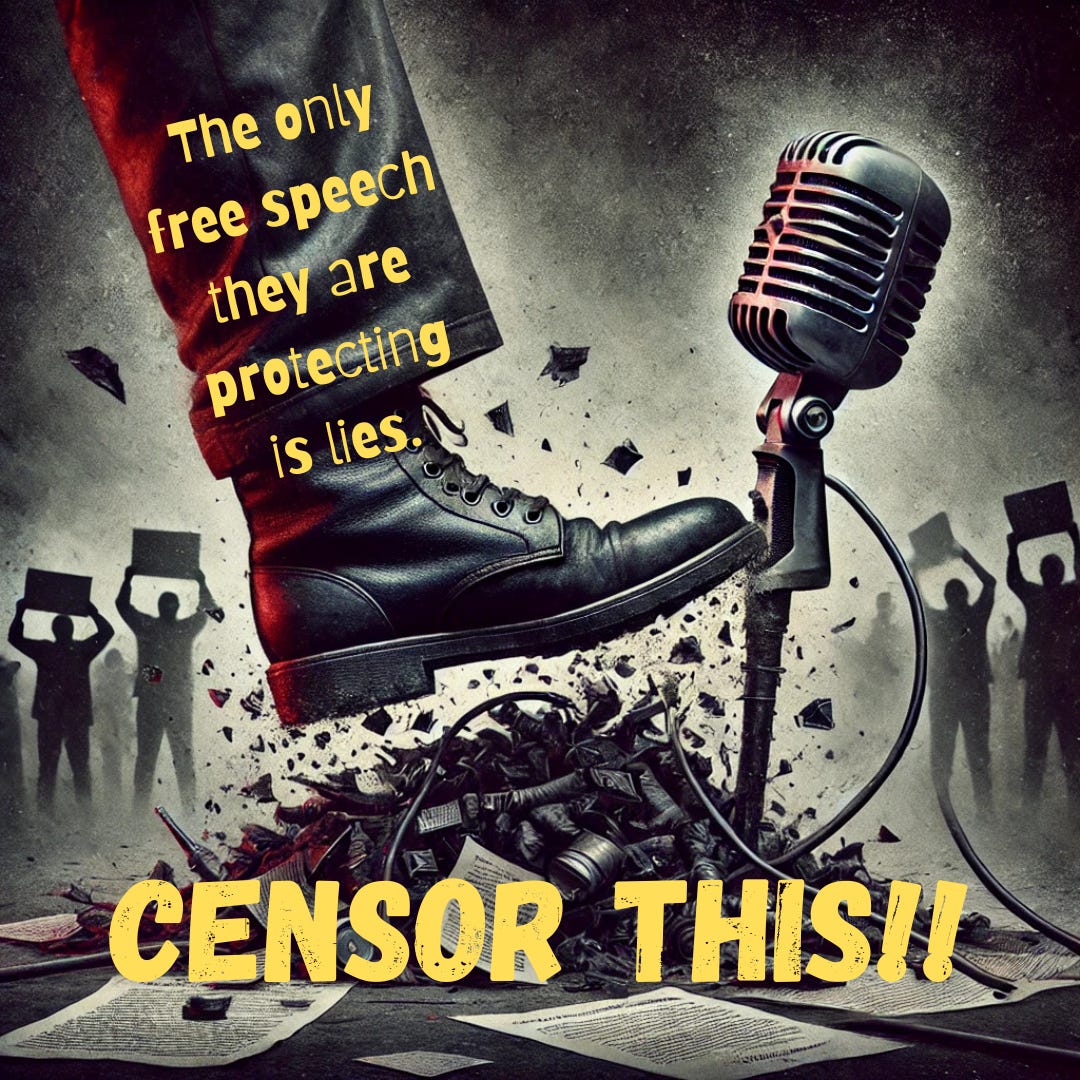
On January 20, 2025, Donald Trump signed “Restoring Freedom of Speech and Ending Federal Censorship,” an executive order that purports to defend Americans’ First Amendment rights. The order bars federal employees and agencies from actions that could be interpreted as suppressing free speech, even in cases of misinformation. It also directs an investigation into prior government efforts to moderate content, citing controversies like the Hunter Biden laptop story and federal responses to COVID-19 misinformation. While the rhetoric of “free speech” surrounds the order, its true intent appears far more calculated: reshaping media, social media platforms, and government oversight to favor Trump’s narratives while silencing dissent. This isn’t about free speech; it’s about crushing democratic freedom.
The consequences of this order stretch far and wide. Media organizations, social media platforms, and federal employees are all in its crosshairs. Viewed in a global context, it follows a familiar playbook: using free speech as a guise to consolidate power and suppress opposition.
A Gut Punch to the Media
The executive order targets journalists and media organizations under the guise of holding them accountable for their “collusion” with federal agencies. It singles out stories like the Hunter Biden laptop controversy as evidence of media bias, but in reality, it sends a chilling message to investigative journalists: report critically on Trump or his allies, and you could face retribution.
1. Retaliation Against Investigative Reporting
Trump’s administration has never hidden its disdain for the press, frequently labeling it the “enemy of the people”. With this executive order, the administration turns up the heat. By specifically ordering investigations into the alleged suppression of politically sensitive topics, it weaponizes the government against journalists who exercise due diligence in vetting questionable claims.
The result is predictable: a chilling effect. Reporters and news outlets will hesitate to fact-check or scrutinize inflammatory claims out of fear of being accused of censorship. Investigative reporting, particularly on Trump’s administration, may grind to a halt—not because the truth isn’t there, but because exposing it will become too dangerous.
2. Polarization of the Media Ecosystem
Trump’s order deepens the fractures in an already polarized media environment. Right-leaning outlets will use it as ammunition to delegitimize mainstream media, accusing them of suppressing conservative voices. Meanwhile, more progressive outlets may steer clear of controversial stories to avoid scrutiny. The result? A media landscape split into partisan echo chambers where misinformation thrives unchecked (Pew Research Center).
Social Media: A Breeding Ground for Chaos
Social media platforms are front and center in this fight. Trump’s executive order targets these companies, accusing them of colluding with federal agencies to silence conservative voices. The timing is particularly striking, given recent shifts by Meta, the parent company of Facebook and Instagram.
1. Zuckerberg’s Bombshell: Dismantling Content Moderation
Two weeks before Trump signed the executive order, Meta CEO Mark Zuckerberg announced the end of Facebook’s third-party fact-checking program. This program, active since 2016, has been replaced by a “Community Notes” system where users themselves flag and contextualize misleading posts.
Zuckerberg justified the move by claiming the previous system had become overly politicized. Critics, however, argue that the new approach will only embolden misinformation campaigns, as user-driven moderation lacks the expertise to combat complex disinformation.
2. Forced Followers: Manipulating the Narrative
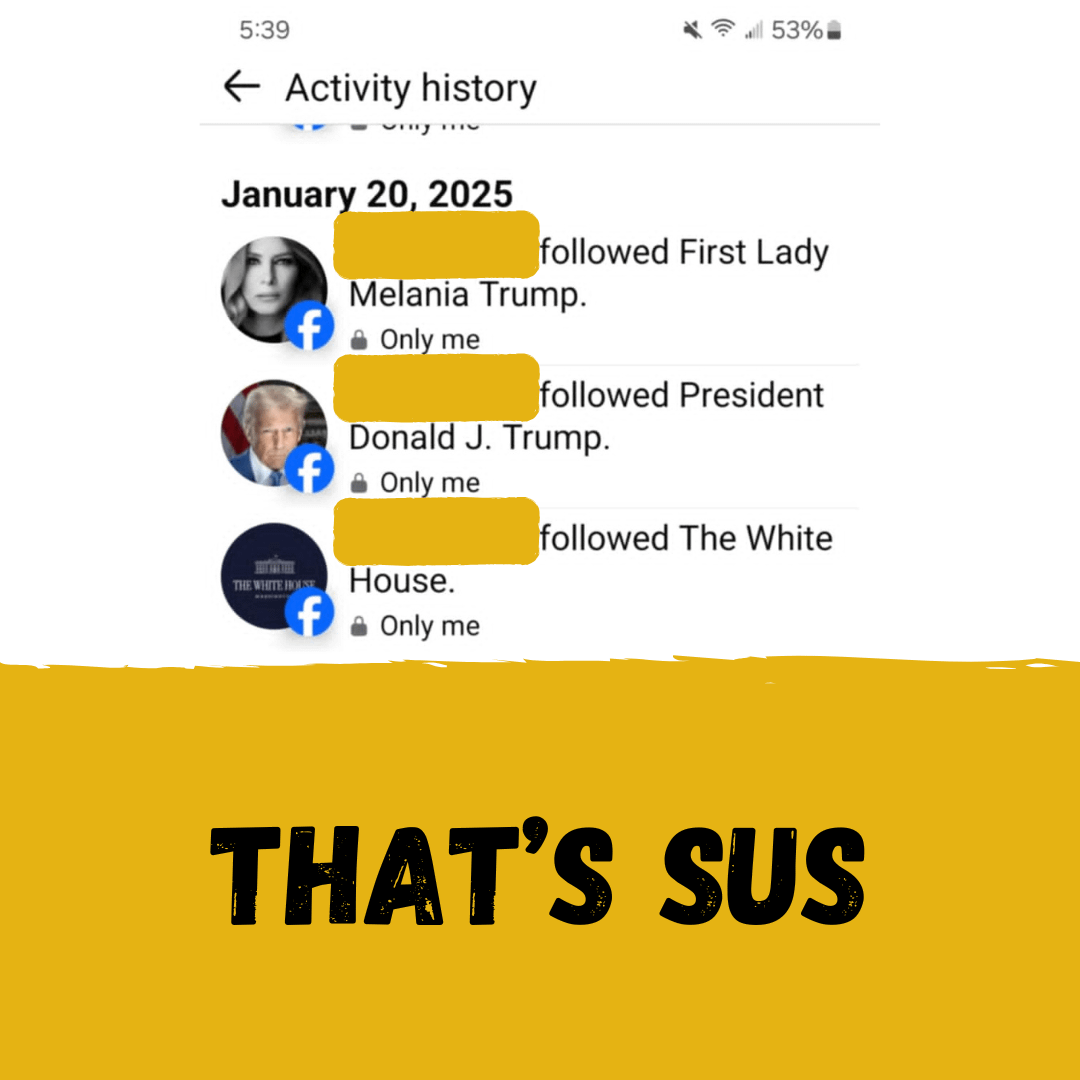
In a controversial move, users on Facebook and Instagram reported on January 20—the same day Trump signed the order—that they were automatically made to follow accounts for Donald Trump, Melania Trump, and the official White House page without their consent. While many outlets have reported that this was simply the result of the transfer of power, many noted that they had never seen this before and that it didn’t explain why they were also now following Melania Trump despite never having followed POTUS or First Lady accounts. If true, this blatant manipulation reflects an aggressive attempt to amplify pro-Trump content, reshaping users’ feeds into curated propaganda.
These changes create a perfect storm: reduced moderation and the artificial promotion of Trump-aligned narratives. Far from fostering free speech, the platforms risk becoming megaphones for disinformation and chaos.
Federal Employees: Silenced and Shackled
Federal employees, particularly those in agencies like the CDC, FBI, and DHS, are also prime targets of Trump’s executive order. The directive effectively stifles their ability to collaborate with social media platforms to address misinformation, leaving the public more vulnerable to falsehoods.
1. Paralysis in Government Oversight
Public servants are critical in addressing harmful narratives, from debunking anti-vaccine propaganda to countering election misinformation. This executive order, however, bars them from coordinating with platforms, even when public safety is at stake (Brookings Institution Report). Efforts that once saved lives—such as tackling COVID-19 falsehoods—are now in jeopardy.
2. Fear of Retaliation
Perhaps most troubling, the order retroactively investigates past actions, targeting Biden-era officials who worked to moderate misinformation. This sends a clear message: do your job, and you could face professional consequences or public vilification. The fear of retaliation will inevitably lead to inaction, creating a vacuum where harmful narratives can thrive unchecked.
Authoritarian Parallels: A Global Playbook
Trump’s executive order isn’t unique. Authoritarian regimes around the world have used similar rhetoric of “protecting free speech” to silence dissent and consolidate power.
1. Russia and Hungary: Weaponizing Free Speech
In Russia, laws targeting “fake news” have been weaponized to jail journalists and crush independent media (Human Rights Watch). Similarly, Viktor Orbán’s government in Hungary centralized media under state control, effectively eliminating dissent (The Pulitzer Center). Trump’s order mirrors these tactics: couching power grabs in the language of free expression while targeting those who challenge the dominant narrative.
2. Bolsonaro’s Brazil: A Cautionary Tale
Jair Bolsonaro implemented decrees to prevent social media platforms from moderating content critical of him. The result was predictable: a surge in misinformation and extremist rhetoric (Reuters). Along with Meta’s policy changes, Trump's executive order risks creating a similar dynamic in the U.S., where platforms are pressured to turn a blind eye to harmful content.
The Broader Cost to Democracy
At its core, Trump’s executive order is a paradox. While it claims to protect free speech, it actively undermines the systems that safeguard truth and accountability.
Misinformation Explosion: Platforms scaling back moderation and federal employees barred from addressing falsehoods will unleash a flood of disinformation.
Suppression of Dissent: Investigations into journalists, critics, and public servants will create a chilling effect, silencing voices questioning Trump or his administration.
Trust on Life Support: Public trust in media, government, and social platforms—already fragile—will erode further, leaving Americans more polarized and less informed.
Conclusion: A Nation at a Crossroads
Trump’s executive order on censorship isn’t just a policy—it’s a warning. Beneath its veneer of free speech lies a calculated effort to reshape the information landscape, silence dissent, and consolidate power. With social media platforms like Meta rolling back moderation and amplifying Trump’s content, the digital town square is being transformed into a propaganda machine.
The only question now is whether Americans will recognize this moment for what it is: a pivotal test of democratic resilience. Will we defend truth, accountability, and the institutions that protect them? Or will we allow the very idea of free speech to be weaponized against the democracy it was meant to serve? We’ve seen this before. WE will NOT be silenced.
On Tyranny by Timothy Snyder and How democracies die by Steven Levitsky and Daniel Ziblatt are must reads. We must not be silent and must challenge the authorities or we will lose our voice, rights and freedom. We cannot allow Trump and his people to subordinate us. We are still free and American.