


In remarks on February 4, 2025, Donald Trump reaffirmed his long-standing desire to dismantle the Department of Education (ED). His response was his most explicit and unequivocal since naming Linda McMahon the nominee for the Secretary of Education position. McMahon, a former WWE executive and Small Business Administration head, has no experience in education policy, but that seems to be the point—Trump doesn’t want a secretary of education; he wants an executioner for the federal government’s role in public schools.

Trump made his intentions clear, stating: "I told Linda: 'Linda, I hope you do a great job and put yourself out of a job.' I want her to put herself out of a job." He also expressed his desire to eliminate the Department of Education through executive action, saying, "I would like to be able to do it with an executive order alone." (Reuters)
This isn’t just a political talking point—it’s a direct assault on the foundation of American democracy: free public education. For nearly two centuries, the U.S. has worked (stumbled and sometimes failed) to ensure that every child, regardless of income, race, or background, has access to an education. Now, that progress is at risk.
The Long Fight for Public Education
The idea that education should be free, universal, and publicly funded dates back to the 1830s when reformers like Horace Mann championed the creation of taxpayer-supported public schools. By the early 1900s, states had passed compulsory education laws, and by the mid-20th century, the federal government took on a more significant role in ensuring equal access through civil rights legislation.
The Department of Education, established in 1979 under Jimmy Carter, was created to enforce civil rights protections, distribute funding to low-income schools, and ensure a baseline standard of education across all states. While public education has never been perfect, and disparities persist, federal oversight has played a crucial role in protecting marginalized students from systemic neglect and discrimination.
Republicans, however, have long sought to dismantle the Department of Education, arguing that education should be left to state and local governments. Ronald Reagan tried to eliminate it in the 1980s. Newt Gingrich’s Contract with America proposed gutting it in the 1990s. Trump’s latest proposal is just the next step in a decades-long conservative effort to strip away federal protections for students.
The Coffman Chronicle is powered by YOU—no billionaires, no corporate overlords. Help us keep exposing the BS, delivering sharp insights, and keeping you informed.
For just $8 a month or $80 a year, you can fuel the fight and be part of the movement.
Not ready to subscribe? No worries, chaos loves company, and you're always welcome. But if you’re fired up to keep us loud, proud, and unfiltered, smash that subscribe button now!
Who Benefits From Dismantling the Department of Education?
Let’s be clear: eliminating the Department of Education does not “give power back to parents.” It gives power to corporations, private interests, and states that want to gut public school funding.
Without the ED, there would be no federal enforcement of civil rights in education, meaning:
Students with disabilities could lose access to federally mandated special education services.
Title IX protections against gender discrimination (including protections for LGBTQ+ students) would weaken or disappear.
Low-income schools relying on federal Title I funding could see devastating budget cuts.
This is where charter schools, school vouchers, and privatization schemes come in. The same conservatives pushing to defund public schools are the ones promoting “school choice” policies that siphon public tax dollars into private, religious, and for-profit charter schools. This is not about improving education—it’s about dismantling the very idea of public education and replacing it with a profit-driven, unregulated free market system.
Marginalized and Rural Communities Will Suffer the Most
1. Rural Schools Are At Risk of Collapse
The school choice model does not work for rural communities where there are no alternative schools to choose from. Many rural areas have only one public school, which serves as the educational center, a community hub, and often the town’s largest employer.
Without federal funding, these rural schools would be gutted, forcing families to homeschool their children or travel long distances for education. States would struggle to replace the lost funding, leaving entire rural regions without functional public education.
2. Charter Schools and Vouchers Harm Low-Income and Minority Students
While charter schools are legally required to follow antidiscrimination laws, they often find ways to exclude high-needs students through strict discipline policies, admissions barriers, or a lack of resources for English language learners and special education students.
A 2020 study by the Civil Rights Project at UCLA found that charter schools are more racially segregated than traditional public schools, with some enrolling 99% minority students while others cater primarily to wealthier, white families. When public schools lose funding to charters and private schools, the students left behind—disproportionately Black, Latino, and low-income—end up in underfunded, struggling schools.
Federal Funding: A Small Yet Crucial Lifeline
While it’s true that federal funding accounts for less than 10% of total public school funding, its impact is critical because it helps offset the deep inequities created by state and local funding models, which rely heavily on property taxes. Wealthier communities naturally raise more money for their schools, while lower-income areas struggle. Federal funds—such as Title I for low-income schools and IDEA for special education—are specifically designed to bridge this gap and ensure that all students, regardless of zip code, have a quality education. Eliminating the Department of Education would strip away this crucial funding, widening the massive disparities between rich and poor districts.
Trump’s Education Plan: A Recipe for Disaster
Trump’s "education plan" is not a plan at all—it’s a wrecking ball aimed at public schools. His nomination of Linda McMahon and statements on February 4th signal that this isn’t about improving education but handing public funds to private interests. If he succeeds in dismantling the Department of Education, the consequences will be catastrophic for millions of students—especially those in the most vulnerable communities.
Public education is among the last great equalizers in American society, offering every child a chance at success, regardless of zip code. Ruby Bridges is 70 years old. Poorer zip codes still struggle to educate their students to the same level as their peers. Poorer, largely Republican-led states consistently appear at the bottom of education quality lists. Stripping away free public education in favor of privatization, vouchers, and corporate-backed education schemes will deepen inequality, worsen segregation, and leave countless children behind.
And let’s be clear: your children will be left behind, not the wealthy and elites.
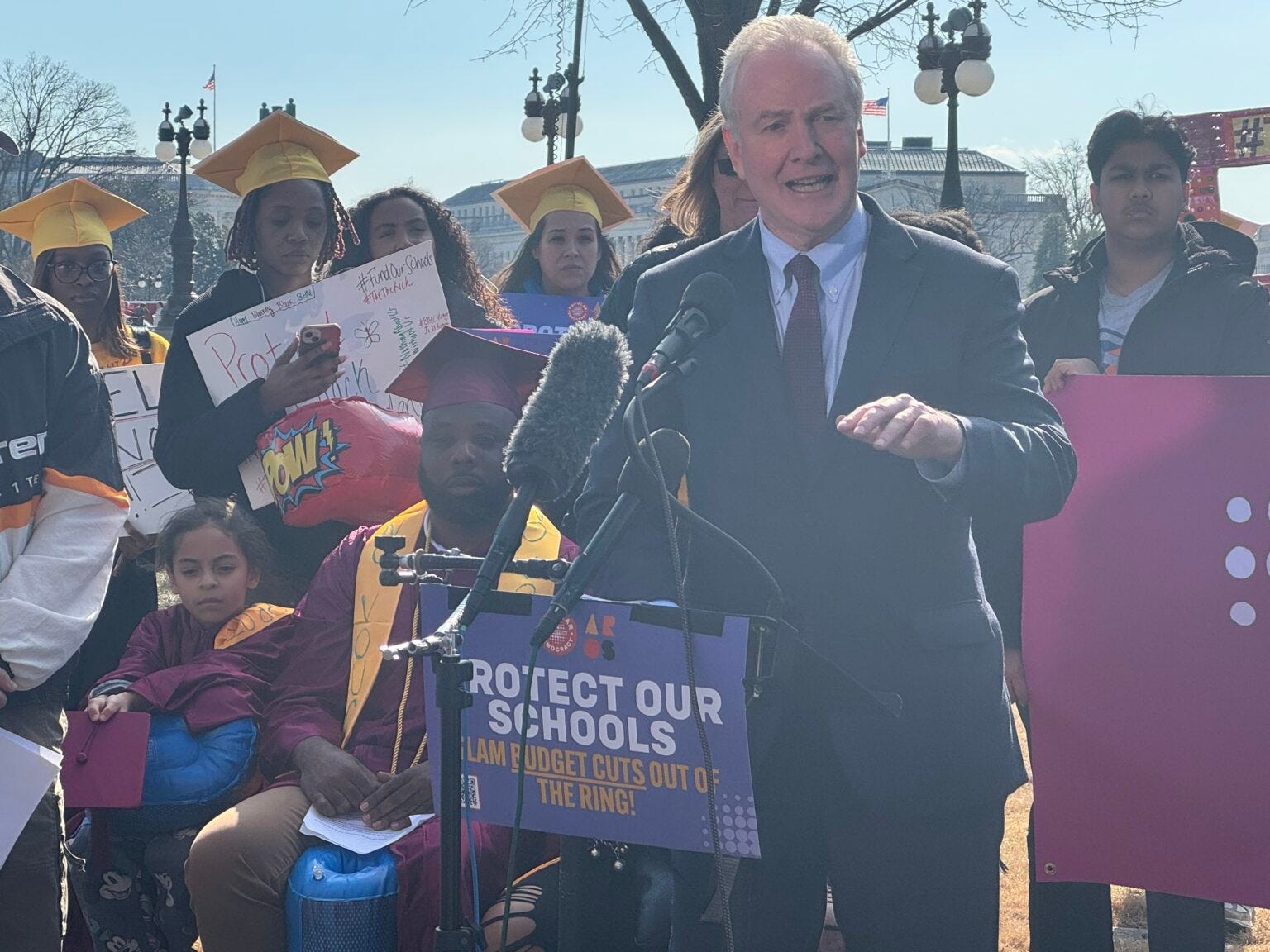
We cannot afford to let this happen. The fight for free, high-quality public education is not just about schools—it’s about the future of our democracy. If we allow public education to be dismantled, we will have betrayed the very foundation of American opportunity. The outcry has begun, from education unions to public demonstrations, but we cannot afford to back down for even a second. The future depends on it.
That is exactly what the Nationalist Republicans want and make sure we reach them my religious beliefs which based on their behavior and actions are nothing short of devil worshipping.