


This Deep Dive is part 1 of our ongoing series: Deregulation Nation.
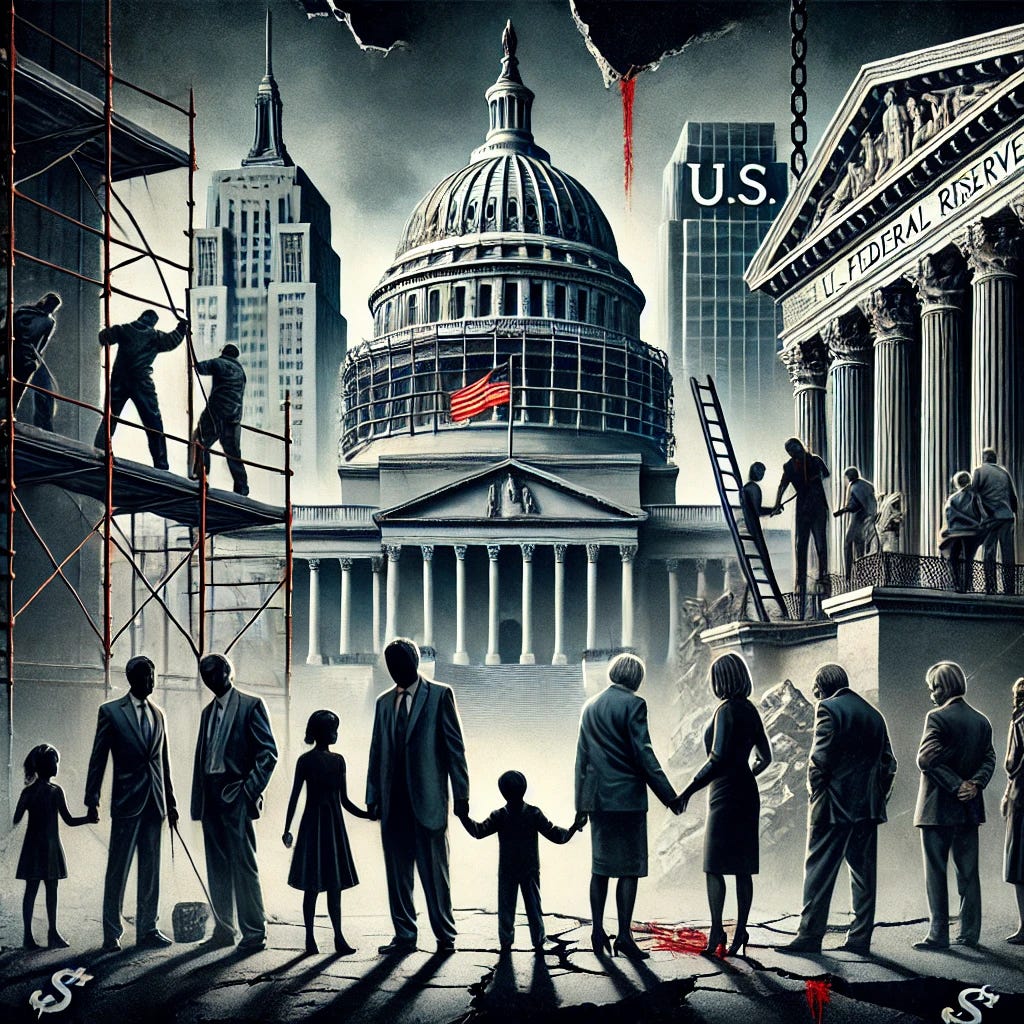
Under the “efficiency” banner, the Trump administration has launched an all-out campaign to dismantle the institutions designed to protect the American economy from collapse and everyday consumers from financial ruin. With Elon Musk’s Department of Government Efficiency (DOGE) leading the charge, the targets are clear: weaken or eliminate the financial regulators that stand between corporate greed and your wallet.
What began with attacks on the Consumer Financial Protection Bureau (CFPB) has now spread to the FDIC, OCC, SEC, Treasury, and the Federal Reserve. Taken together, these moves represent not just a deregulatory agenda, but a systemic unraveling of the safeguards built after previous economic crises. This is a return to the policies and power structures of the Gilded Age, a comparison we explored in the article below.

The stakes couldn’t be higher.
Consumer Financial Protection Bureau (CFPB): Undermining Consumer Safeguards
Established in 2011 in response to the 2008 financial crisis, the CFPB was designed to be a “cop on the beat” for the financial system, protecting everyday Americans from abusive practices by banks, credit card companies, and payday lenders. Its most recent rule capped bank overdraft fees at $5, aiming to end the predatory practice of charging $35 or more whenever an account dipped below zero.
The rule, set to take effect on October 1, 2025, would save consumers an estimated $5 billion annually, or roughly $225 per household. But the Senate recently voted 52–48 to repeal this rule, with legislation now moving through the House.
Senator Tim Scott (R-SC) led the effort, arguing,
“When you start capping this fee structure... you start eliminating the possibility of people working paycheck to paycheck to make the decision to continue to use their resources in the most effective way.”
(BankingDive)
Senator Elizabeth Warren (D-MA) countered,
“Republicans claim they care about lowering costs. But overturning this rule will make big banks richer and hard-working families poorer.”
(BankingDive)
We’ve already broken down the CFPB’s origin story, enforcement wins, and the powerful banking interests working to bring it down in our earlier piece on the CFPB.

Note: This article is more than 45 days old and is currently in the archive behind a paywall. To access it, use your free view or consider upgrading to paid for $1 per week.
FDIC: Undermining Bank Stability
Created in 1933 during the Great Depression, the Federal Deposit Insurance Corporation (FDIC) exists to insure deposits up to $250,000, ensuring that your money is safe even if a bank fails. But under acting chairman Travis Hill, the FDIC is rolling back regulations requiring banks to get pre-approval before engaging in risky cryptocurrency activities.
This is justified as “fostering innovation,” but it invites the same type of unchecked speculation that led to the 2008 financial crisis. Historical precedent shows us what happens when financial institutions are given too much freedom to take dangerous risks. The Savings and Loan Crisis of the 1980s, which cost taxpayers over $100 billion, was triggered by similar deregulatory moves.
We explored the broader implications of this deregulation effort in Trump’s Speech: Economy in Freefall, linked below.

It shows how financial instability is being driven from the top down.
OCC: Dismantling the Infrastructure of Accountability
Founded in 1863 during the Civil War, the Office of the Comptroller of the Currency (OCC) regulates and supervises all national banks and federal savings associations. Its mission is to ensure banks operate safely, soundly, and fairly.
In Trump’s second term, the OCC has been quietly gutted. In a single sweep, 76 employees were terminated, many working in compliance and oversight. This decimates the agency’s ability to inspect banks, review mergers, and enforce fair lending laws.
This is deregulation by attrition—you don’t have to change the rules if no one’s left to enforce them.
In the years leading up to the 2008 crisis, the OCC played a controversial role by shielding national banks from state consumer protection laws and failing to intervene in predatory mortgage practices. Stripping the OCC now invites the same behavior: unchecked lending, consolidation, and corruption—but with even fewer consequences.
SEC: Letting Wall Street Write Its Own Rules
The Securities and Exchange Commission (SEC) was born from the wreckage of the 1929 stock market crash to protect investors, ensure fair markets, and prevent fraud. Today, that mission is being redefined by deregulation.
Under Paul Atkins, a longtime critic of financial oversight, the SEC is being pushed to prioritize industry “freedom” over enforcement, especially in the cryptocurrency space.
“We need to create a rational regulatory foundation for digital assets, not politicized witch hunts.” —Paul Atkins
(MarketWatch)
But critics point out Atkins’s record. He opposed reforms after Enron and WorldCom, pushed back on new oversight following the 2008 collapse, and now wants to strip the SEC of its power to police Wall Street fraud.
It’s not just crypto. With enforcement actions declining and market abuses going unchecked, we’re watching the agency drift back to a pre-crisis era of self-regulation.
Treasury: The Engine Room of Deregulation
Established in 1789, the Treasury Department sets the framework for economic stability and financial regulation. But under Secretary Scott Bessent, the agency has become a vehicle for deregulation, pushing sweeping rollbacks under the guise of “streamlining.”
Bessent has greenlit internal reviews of everything from capital requirements to suspicious activity reporting thresholds, aiming to shrink oversight across the board. These changes might sound technical, but they directly affect how banks manage risk, report abuse, and protect consumers.
This mirrors the repeal of Glass-Steagall in 1999, which dismantled the firewall between commercial and investment banking. Less than a decade later, Wall Street’s recklessness ignited the worst financial collapse in generations.
We analyzed this shift in Who Controls Your Money? The Treasury’s DOGE Disater, revealing how policy “efficiency” is being weaponized to dismantle public protections.

Federal Reserve: When Independence Becomes Inconvenient
The Federal Reserve, created in 1913, is designed to be independent from political pressure, managing inflation, employment, and interest rates in the public interest. But that independence is under siege.
During his first term, Trump attacked the Fed for raising rates, even calling its chair an “enemy.” Now, in his second term, the threat is more systemic, stacking leadership with loyalists, politicizing decisions, and pressuring the Fed to align with short-term electoral goals.
This isn’t without precedent. In the 1970s, President Nixon pressured the Fed to keep rates artificially low ahead of his reelection. The result? Stagflation, a crippling mix of inflation, unemployment, and market instability.
If the Fed becomes a political tool, it stops being a stabilizer and becomes a trigger. And the crash won’t be theoretical: it will hit households, jobs, and retirement savings.
We unpacked the deeper implications of this power shift in Breaking the Bank: Fort Knox, The Fed, and the Crypto Takeover, where we explored how Trump’s second term is transforming the institutions designed to operate independently of political control.

Who’s Pulling the Strings? The Money Behind Deregulation
None of this is happening in a vacuum. The same industries being “unshackled” from regulation are also the ones flooding GOP campaigns with millions in donations. From megabanks and payday lenders to cryptocurrency exchanges and shadow private equity firms, these are the real authors of Trump’s deregulation playbook.
Groups like the American Bankers Association, Consumer Bankers Association, and crypto-funded PACs have aggressively lobbied for repealing overdraft fee caps, the rollback of SEC enforcement, and the gutting of regulatory staff at OCC and FDIC. They call it “efficiency.” We call it pay-to-play sabotage.
It is no accident that many of these deregulations are aimed at cryptocurrency, a volatile industry deeply connected to Elon Musk and more recently, Donald Trump and his family.
They don’t want freedom. They want immunity.
Conclusion: Deregulation Isn’t Reform—It’s a Warning Sign
What we’re witnessing isn’t policy tinkering. It’s a full-scale dismantling of the financial guardrails that keep corporate greed from plunging millions into chaos. Every major economic disaster of the last century—the Great Depression, the Savings and Loan collapse, the 2008 financial meltdown—was sparked by deregulation, corporate capture, and a government that stopped protecting its people.
This isn’t a warning from history. It’s a repeat.
And when these institutions fail—when the next collapse hits—it won’t be the banks that suffer. It’ll be the people. Workers losing jobs. Families losing homes. Taxpayers bailing out billionaires who wrote the rules and broke them.
This is not reform. This is sabotage.
Independent News. Just $1/Week.
We just hit 10,000 subscribers—thank you! We’re offering full access to The Coffman Chronicle for just $1 a week ($52/year) to celebrate.
Get exclusive analysis, daily rundowns, and fearless reporting you won’t find in corporate media.
Support truth. Stay informed.
Bibliography:
Senate Passes Scott-Led Effort to Repeal Biden-Era CFPB Overdraft Rule U.S. Senate Committee on Banking, Housing, and Urban Affairs, March 27, 2025
https://www.banking.senate.gov/newsroom/majority/senate-passes-scott-led-effort-to-repeal-biden-era-cfpb-overdraft-ruleWhat the Senate's Vote to Repeal CFPB Bank Overdraft Fees Cap Means For You
Kiplinger, March 28, 2025 https://www.kiplinger.com/personal-finance/banking/senate-vote-repeal-cfpb-bank-overdraft-fees-cap-means-for-youABA Applauds Senate Disapproval of CFPB's Overdraft Rule American Bankers Association, March 27, 2025 https://www.aba.com/about-us/press-room/press-releases/applauds-senate-disapproval-of-cfpb-overdraft-rule
Trump's SEC Pick Pledges 'Rational' Crypto Regulations Reuters, March 26, 2025 https://www.reuters.com/world/us/trumps-sec-pick-pledges-rational-crypto-regulations-2025-03-26/
Trump SEC Pick Will Make Digital Assets a 'Top Priority' as Pro-Crypto Push Gains Steam MarketWatch, March 27, 2025 https://www.marketwatch.com/story/trump-sec-pick-will-make-digital-assets-a-top-priority-as-pro-crypto-push-gains-steam-912a00cd
Trump’s SEC Nominee Faces Scrutiny on Potential Conflicts of Interest CFO Dive, March 27, 2025 https://www.cfodive.com/news/trump-sec-nominee-faces-scrutiny-potential-conflicts-interest-Atkins/743780/
Senate Passes Resolution to Nullify CFPB Overdraft Rule Dodd Frank Update, March 28, 2025 https://www.doddfrankupdate.com/dfu/articlesdfu/senate-passes-resolution-to-nullify-cfpb-overdraft-94013.aspx
Senate Overturns Overdraft Fee Limit Despite Opposition from Consumer Advocates 10 News, March 28, 2025 https://www.10news.com/politics/congress/senate-overturns-overdraft-fee-limit-despite-opposition-from-consumer-advocates
Paul Atkins Declares Crypto Regulation as Key Priority in SEC Chair Testimony
Mitrade News, March 28, 2025 https://www.mitrade.com/insights/news/live-news/article-3-724963-20250328
Bannon told us back in 2015 that total destruction of our institutions is the goal. Trump is doing his best to make that happen. The fact that Congress is in cahoots with and enabling project 2025 to kill our democracy, kill healthcare, kill the farmers, kill agriculture, kill the auto industry, kill education for all, kill the cap on insulin and drugs, kidnap people off the street with no due process, kill fair and free elections and allowing a South African ketamine addict run our government, should get all republicans voted out of office.