


Part II of our ongoing series on the machinery of mass detention in America
I’ve lived most of my life in rural America. I’ve driven past chain-link fences and nondescript buildings without a second thought. It wasn’t until the headlines from Florida started piling up—about overcrowding, deaths, and ICE abuse—that I realized: this isn’t happening far away. It’s happening here. And it’s been happening for years.
More than 200 immigration detention centers are operating in the U.S. right now. That number still chills me. And it should chill you too.
Independent News. Just $1/Week.
We just hit 10,000 subscribers—thank you! We’re offering full access to The Coffman Chronicle for just $1 a week ($52/year) to celebrate.
Get exclusive analysis and fearless reporting you won’t find in corporate media.
Support truth. Stay informed.
Locked Away, Out of Sight
The U.S. immigration detention system wasn’t designed for transparency. It was designed for throughput and disappearance. After 9/11, the creation of Immigration and Customs Enforcement (ICE) under the Department of Homeland Security expanded a preexisting network of jails, staging sites, and temporary holding cells into something far larger and far harder to see.
Today, over 200 ICE detention facilities are operating across the United States. Some are federally managed. Most are not. Many are contracted out to private prison corporations or county sheriff’s departments. They’re not marked on your maps. You won’t find big signs or front entrances. That’s the point.
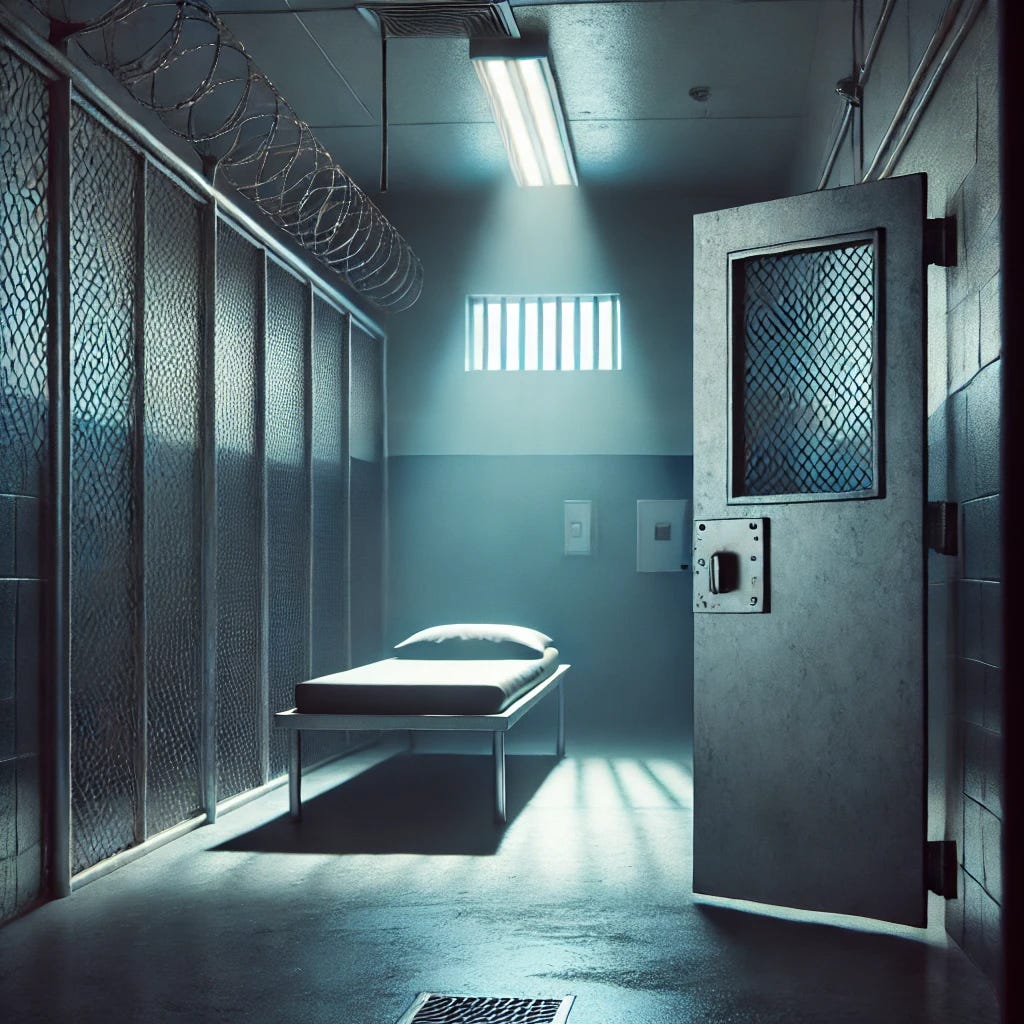
From the outside, they look like warehouses. Municipal buildings. Abandoned factories. They are rural by design, far from courts, journalists, and the kind of legal resources that might offer detainees a way out.
And this didn’t happen under one president. It’s the product of decades of bipartisan neglect and complicity:
The Clinton administration began criminalizing border crossings with legislation that laid the groundwork for mass detention.
The Bush administration built the post-9/11 enforcement regime and expanded facility use.
The Obama administration detained over 400,000 immigrants in 2012 alone, many in private centers.
The Trump administration accelerated everything—privatization, raids, secrecy.
And now, in Trump’s second term, the machine is running at full capacity.
The idea of detaining immigrants isn’t new in America. From the Chinese Exclusion era to Japanese internment to the Cold War camps in Florida and Guantánamo, the U.S. has a long tradition of locking people up based on where they came from or what they might represent. ICE didn’t invent immigrant detention. It perfected it.
This is not a new crisis. It’s a long one, refined, distributed, and invisible by design.
Florida: The Frontline of American Detention
If Guantánamo was the symbol, Florida is the system. The state is home to some of the most notorious ICE detention centers in the country, facilities that have become synonymous with overcrowding, abuse, and death.
We’ll start with three:
Krome North Processing Center (Miami)
Originally designed as a Cold War facility for detaining Haitian and Cuban asylum seekers, Krome has long been a site of racialized detention. In 2025, it’s become emblematic of the crisis.
Designed for 85 people, it has recently held more than 200 in a single room.
At least three people have died at Krome since October 2024, including one man who reportedly begged for medical care for days before collapsing.
Detainees describe freezing temperatures, poor sanitation, and retaliatory punishment for speaking out.
Advocacy groups say conditions have worsened dramatically since Trump’s return to power.
Baker County Detention Center (Macclenny)
Nominally run by the local sheriff’s department but functioning under ICE contracts, Baker has quietly become a holding site for a range of detainees, including long-term residents and asylum seekers.
In February 2025, a Haitian man reportedly died after being held in an isolated, freezing cell without adequate medical attention.
Detainees have described long periods without showers, access to counsel, or phone calls to family.
ACLU Florida has documented Baker’s “pattern of inhumanity,” from solitary confinement to racial discrimination.
Glades County Detention Center
Perhaps the most secretive of the three, Glades has been under scrutiny for years, yet remains open.
A 2021 civil rights complaint flagged Glades for failing to provide COVID-19 protection, retaliating against detainees, and using excessive force.
The Southern Poverty Law Center and other groups have continued to press for its closure.
Despite these efforts, the facility still holds detainees in 2025 under murky oversight and minimal public awareness.
These are just three examples. But they represent the larger problem: overcrowded, under-monitored facilities designed to hide suffering.
What Happens When No One's Watching
You can’t understand America’s immigration system without understanding the trauma it inflicts.
Inside these detention centers, time breaks down. Detainees sleep under flickering lights, eat nutritionally inadequate food, and battle illness without care. Medical requests go unanswered for days. Legal questions are ignored altogether.
Phones don’t work. Lawyers can’t get in. Families can’t get answers.
And when someone dies, the system doesn’t pause. It redirects. Transfers detainees elsewhere. Sanitizes the record. Delays the autopsy. Avoids the press.
The confirmed deaths in Florida this year are not exceptions. They’re symptoms. What happens at Krome, Baker, and Glades occurs across ICE’s entire network: isolation, neglect, and silence.
Some die of medical neglect. Others die inside—mentally and emotionally—cut off from their futures, their children, and any sense of agency.
And this is a civil detention system. These people are not serving criminal sentences. They are awaiting hearings, asylum rulings, or paperwork corrections. Some have lived in the U.S. for years.
None of them were meant to vanish.
As of this writing, no deaths have been publicly confirmed at Glades County Detention Center in 2025. But given ICE’s documented history of concealment, delayed reporting, and the opaque nature of privately run facilities, it would be naive to assume that no one has died. In America’s detention archipelago, death doesn’t always make the paperwork.
There is no independent oversight agency ensuring accountability inside these centers. No standing federal commission. No real-time public reporting. Private contractors are shielded by layers of legal ambiguity and bureaucratic indifference. Detainee deaths can go unreported. Abuses can be buried. The system is designed that way.
Profiting from Pain
Behind every detention center is a contract. And behind every contract is a company that profits when people are held longer, treated worse, and forgotten faster.
The U.S. immigration detention system has been quietly privatized over the past two decades, with companies like GEO Group, CoreCivic, and smaller regional operators raking in billions. Local sheriffs or county governments run the centers under lucrative ICE agreements in some facilities, like Glades and Baker, turning incarceration into economic development.
Here’s how it works:
ICE pays a per diem rate for each detainee, sometimes $150 to $300 per day.
The longer someone is held, the more money the operator makes.
Overcrowding isn’t a failure of the system; it’s profitable inefficiency.
Delays in court hearings? Cha-ching.
Legal access barriers? Lower overhead.
Deaths? PR issues, not deal-breakers.
Meanwhile, the companies spend millions lobbying Congress and funding political campaigns, ensuring the machinery stays greased.
In 2024 alone, GEO Group spent over $1.6 million on lobbying. Their message? More beds. More contracts. Fewer rules.
And it’s working.
Oversight Isn’t Optional. It’s Overdue
In March, five senators flew to Guantánamo Bay. They saw the migrant detention site. They spoke out. And within days, the administration backed off.
Now imagine this: every single Democratic and Independent member of Congress visiting their nearest ICE detention facility on the same day.
Krome. Glades. Baker. Stewart. Adelanto. Otay Mesa. The list goes on.
If their state has one, go. If it doesn’t, pick the next closest. Show up. Speak out. Let the people inside those walls know they haven’t been forgotten, and let the American people see what this system has become.
Don’t just write a letter. Don’t just post a tweet. Visit. Bear witness. Demand accountability.
Because if Guantánamo was too much to ignore, what’s happening inside these invisible walls is too much to excuse.
Up Next: Offshore and Unaccountable
Guantánamo wasn’t the only place the Trump administration wanted to hold migrants. And Florida isn’t the end of the story. When the headlines got too hot and oversight too close, the system simply evolved.
Now, migrants are being deported to El Salvador, Panama, and other countries under shadowy agreements, out of the courts, out of the country, and out of public view. Some are dropped into notorious prisons. Others are left in legal limbo, unable to return, unrecognized by the governments receiving them.
And if you think the suffering ends when the deportation plane lands, you haven’t heard what’s happening inside CECOT, El Salvador’s “mega prison.” Or why Kristi Noem flew there for a photo op, and what she didn’t say when she returned.
We’ll cover all of it in the next installment.
See our previous articles in this series here:


We just hit 10,000 subscribers—thank you! We’re offering full access to The Coffman Chronicle for just $1 a week ($52/year) to celebrate.
Get exclusive analysis and fearless reporting you won’t find in corporate media.
Bibliography:
"Immigration attorneys detail 'inhumane' conditions at ICE facility" WPTV, March 28, 2025.
"Dozens protest conditions at Krome Detention Center amid deportation wave"
WPLG Local 10, March 29, 2025."Overcrowding, poor conditions at Miami's ICE facility" Axios, March 27, 2025.
"Detainees allege abuse, isolation at Baker County Detention Center" The Independent Florida Alligator, March 25, 2025.
"Federal Government Confirms Wide Range of Abuses at Baker County Detention Center" ACLU of Florida, June 28, 2024.
"Shut Down Glades County Detention Center" ACLU of Florida, November 18, 2021.
"GEO Group Profile: Summary" OpenSecrets, 2024.
"Political Activity And Lobbying Report (2024)" The GEO Group, 2024.
"After Visiting Guantanamo Bay, Senators Blast Trump Admin for Wasting Taxpayer Dollars & Misusing Military Resources" Office of Senator Alex Padilla, March 29, 2025.
"Senators tour Guantanamo Bay, criticize misuse of military and taxpayer dollars"
Straight Arrow News, March 30, 2025."Weekly U.S.-Mexico Border Update: El Salvador Renditions, Budget, Military Role, March Migration"
Washington Office on Latin America (WOLA), April 4, 2025.
https://www.wola.org/2025/04/weekly-u-s-mexico-border-update-el-salvador-renditions-budget-military-role-march-migration/"Three deaths in ICE custody in just over a month of Trump's presidency marks most" Detention Watch Network, February 2025.
"Detainee Death Reporting"
U.S. Immigration and Customs Enforcement (ICE), March 2025.
https://www.ice.gov/detain/detainee-death-reporting"Unchecked Growth: Private Prison Corporations and Immigration Detention Three Years into the Biden Administration" ACLU, August 7, 2023.
"Private prison giant GEO Group ramps up lobbying on immigrant surveillance"
Arkansas Advocate, August 1, 2024."Private prison behemoth is first corporation to max out to Trump"
Citizens for Responsibility and Ethics in Washington (CREW), July 2024."Glades County Detention Center" Wikipedia, April 2, 2025.
"Civil Rights and Civil Liberties" U.S. Department of Homeland Security, November 12, 2021.
"Immigrant Right Advocates Submit Complaint on Civil Rights and Civil Liberties Abuses at Glades County Detention Center Amidst Reckless COVID-19 Response" Americans for Immigrant Justice, February 22, 2021.
"Overcrowding plagues detention units amid Trump's immigration blitz" Axios, March 23, 2025.
I NEVER KNEW..
I have been ALMOST everywhere...GITMO IN 89' on the way to get "pineapple face" and his "FRIEND" who was "powdering peoples noses",
had an apt in Ecuador..
im no rookie but I just never stopped to see the "places".
There is a private prison 15m from me, as I type, that I interviewed at with a friend of mine.