


Part VI of our ongoing series on the machinery of mass detention in America, this time with a focus on legal immigrants.
Dr. Rasha Alawieh was an assistant professor at Brown University. A nephrologist. A visa holder. In March 2025, she traveled to Lebanon to complete the renewal of her H-1B work visa—a standard requirement for foreign scholars starting a new academic appointment. She followed the rules. She went through the process. Her visa was approved and issued on March 11.
She returned to the U.S. just days later, landing at Boston Logan Airport on March 14, ready to begin her new role.
She never made it to campus.
Despite holding a valid visa—and despite a federal judge issuing an emergency order blocking her removal—Dr. Alawieh was deported. The Department of Homeland Security alleged that photos on her phone indicated support for Hezbollah. She said they were religious in nature, not political. It didn’t matter. They put her on a plane anyway.
Independent News. Just $1/Week.
We just hit 10,000 subscribers—thank you! We’re offering full access to The Coffman Chronicle for just $1 a week ($52/year) to celebrate.
Get exclusive analysis and fearless reporting you won’t find in corporate media.
Support truth. Stay informed.
And if a Brown professor with a court order can be deported, what chance does a student on her way to break her Ramadan fast really have?
On March 25, Rümeysa Öztürk, a Turkish Ph.D. student at Tufts University, left her Somerville apartment to attend Iftar at the Tufts Interfaith Center. As she stepped onto the street, she was seized by plainclothes ICE agents. Security camera footage later showed her being led to an unmarked vehicle. She was flown to a detention facility in Louisiana. No warning. No charges.
Her crime? A 2024 student newspaper op-ed defending Palestinian rights.
Tufts University has publicly confirmed that Öztürk did not violate any campus policies and was entirely in good academic standing at the time of her detention.
When Status Doesn’t Matter Anymore
Over the past three months, the Trump administration has drastically escalated its immigration enforcement operations, not just at the border, but deep inside U.S. communities. Student visa holders, legal residents, spouses of U.S. citizens, even green card holders are being detained, deported, or denied reentry.
This isn’t about border crossings.
It’s about creating a chilling effect, making presence feel provisional, and punishing anyone who dares to dissent.
These aren't hypotheticals. They’re not edge cases or outliers. They’re real people, each caught at a different rung of the legal ladder. And each one reveals something about a system that no longer cares whether you’re here with permission.
Let’s start where the administration wants you to start, with the one they hope you’ll dismiss.
Camila Muñoz: The Overstayer Who Played by the Rules
Camila Muñoz entered the U.S. legally on a J-1 work-study visa in 2019. When the COVID-19 pandemic disrupted international travel in 2020, she overstayed, a situation tens of thousands of visa holders faced during the global crisis. In 2024, she married Bradley Bartell, a Wisconsin native and Trump supporter, and the couple began the legal process of adjusting her status.
In February 2025, returning from their honeymoon in Puerto Rico, Muñoz was detained by ICE. She spent 49 days in custody, despite having a pending green card application and no criminal record.
The message: Even if you’re trying to make it right—even if your spouse supports the very administration detaining you—compliance isn’t protection.
Student Visa Holders Under Fire
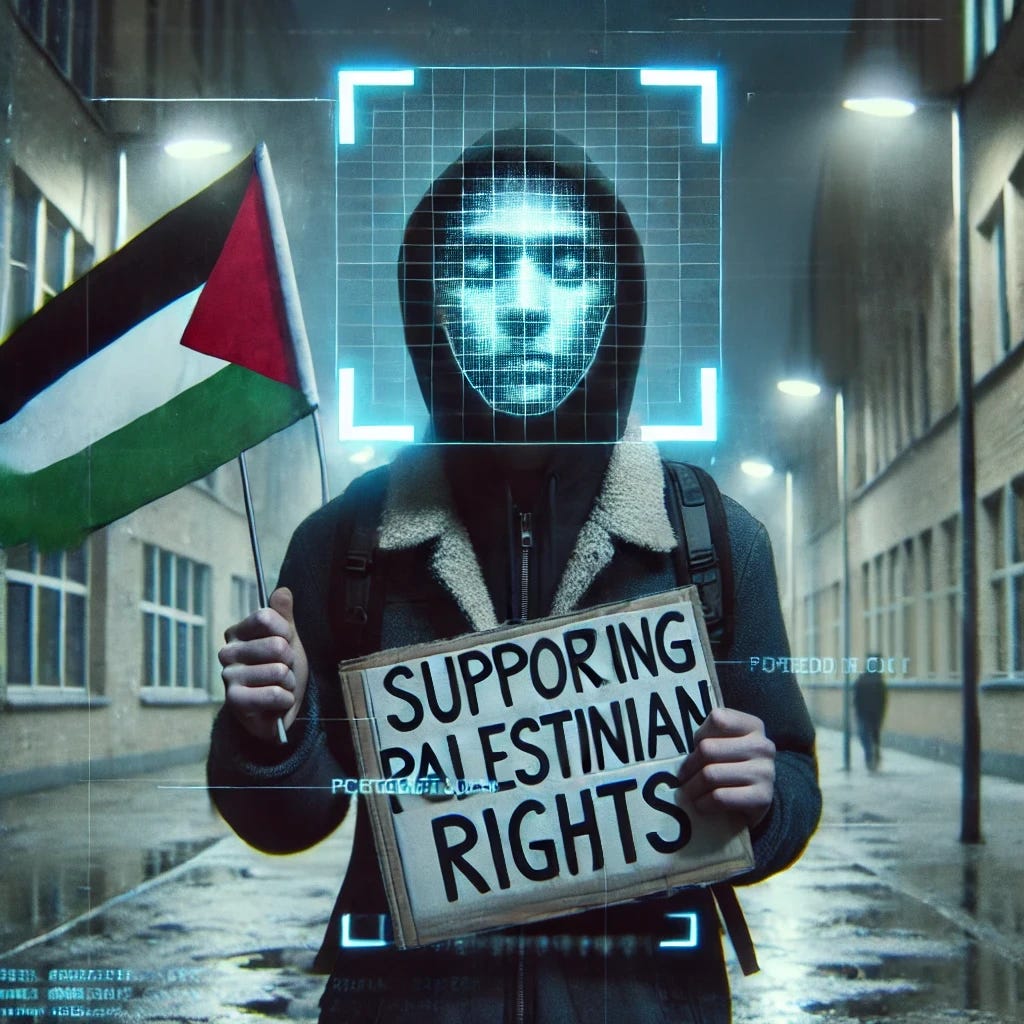
These aren’t militants. They’re scholars. Scientists. Educators. The so-called “best and brightest”—detained, deported, or driven out not for what they did, but for what they said.
In the self-proclaimed beacon of free speech, voicing support for Palestinian lives has become a deportable offense.
Case Summaries:
Let’s look at a few of the most well-publicized examples.
Rümeysa Öztürk
Tufts University – Ph.D. Student (F-1 Visa, Turkey)
Detained by masked ICE agents outside her apartment while heading to Iftar.
Co-authored a 2024 editorial supporting Palestinian rights.
Held in Louisiana. No charges filed.
Momodou Taal
Cornell University – Ph.D. in Africana Studies (F-1 Visa, UK/Gambia)
Visa revoked after campus protests.
Self-deported to the UK using the CBP One app.
Filed a federal lawsuit that was dismissed after he left the U.S.
Ranjani Srinivasan
Columbia University – Ph.D. Candidate (F-1 Visa, India)
Visa revoked for alleged “support of Hamas.”
Self-deported using the CBP One app.
Says Columbia dropped her enrollment without warning.
Badar Khan Suri
Georgetown University – Postdoctoral Fellow (J-1 Visa, India)
Arrested at home in Virginia.
Accused of “close ties” to Hamas officials.
Deportation paused pending court review. No formal charges filed.
Alireza Doroudi
University of Alabama – Mechanical Engineering Graduate Student (F-1 Visa, Iran)
Detained in early April.
DHS cited “significant national security concerns.” No details released.
Family alleges targeting due to political activism.
Even Green Cards Aren’t a Guarantee
Then there are those with more long-term statuses, such as green card holders.
Mahmoud Khalil
Columbia University – Palestinian American Activist (Green Card Holder)
Khalil wasn’t undocumented. He wasn’t out of status. His green card doesn’t expire until 2030.
Still, he was detained by ICE in New York on March 8 and transferred to Louisiana.
The administration alleges he poses a threat to U.S. foreign policy for his pro-Palestinian activism. His wife, a U.S. citizen, is nine months pregnant.
A judge has ordered the government to produce evidence or drop the case by April 11.
Yunseo Chung
Columbia University – Student (Green Card Holder, South Korea)
Targeted by ICE following student protests.
Filed a lawsuit and received a temporary block on arrest and deportation.
Her case remains pending.
The Infrastructure Beneath It
These aren’t just individual missteps. They’re features of a system now designed to criminalize presence.
In early April, the administration revived a rarely used provision of a 1996 immigration law that allows DHS to fine migrants $998 per day if they remain in the U.S. after receiving a final deportation order. The policy could apply to both undocumented individuals and visa overstayers.
At the same time, DHS is encouraging migrants to use the CBP One mobile app to arrange voluntary departure, effectively prompting individuals to report their presence while potentially exposing themselves to steep retroactive penalties.
Meanwhile, DHS is expanding its collection of social media handles for green card, visa, and citizenship applicants. Critics argue the measure will have a chilling effect on speech and disproportionately affect those from Muslim-majority countries or politically active communities.
And Congress is doing its part, too: pushing legislation to ban student visas for Chinese nationals, and enabling deportation for anyone who expresses “support for foreign terrorist organizations,” a term now applied broadly to anyone vocally pro-Palestine.
Conclusion: A System No Longer Concerned With Legality
What the stories in this piece make clear—students, scholars, spouses—is that this system is no longer about legality. It's about compliance. It's about control.
Having a visa, a green card, or even a U.S. citizen spouse isn’t a shield anymore. In 2025, due process is conditional. Rights are provisional. Status can be revoked, silence demanded, and presence punished.
Deportation is no longer just a policy tool. It’s a disciplinary weapon.
And the message is consistent: protest, speak out, or stand in solidarity, and you may vanish into the detention net, regardless of your paperwork. You won’t get a lawyer. You won’t get a warning. You’ll get a transfer, a number, and maybe—if you’re lucky—a story written about you.
This isn't immigration enforcement. This is political infrastructure. It’s a system designed not just to remove people, but to disappear them, discredit them, and deter the rest of us from standing where they stood.
Even citizenship feels conditional at this rate—so long as you say the right things, believe the right people, and don’t protest the wrong war.
You can catch up on this series here:


We just hit 10,000 subscribers—thank you! We’re offering full access to The Coffman Chronicle for just $1 a week ($52/year) to celebrate.
Get exclusive analysis and fearless reporting you won’t find in corporate media.
Bibliography:
"Homeland Security says professor deported to Lebanon with US visa supported Hezbollah leader." Associated Press, March 17, 2025.
"Doctor at Brown University deported to Lebanon despite US judge's order." Reuters, March 16, 2025.
"Tufts student detained by Trump administration defends right to advocate." Reuters, April 3, 2025.
"Tufts battles the Trump administration over detained graduate student's fate." Politico, April 3, 2025.
"Trump Voter’s Wife Freed After 49 Days In ICE Detention." HuffPost, March 30, 2025.
"Pro-Palestinian Cornell student to leave U.S. after officials asked him to surrender passport." Reuters, April 1, 2025.
"Columbia doctoral candidate forced to flee U.S. following threats from ICE, she writes in statement." Columbia Spectator, March 25, 2025.
"Georgetown professor Badar Khan Suri has been detained. Here's what we know." NPR, March 21, 2025.
"University of Alabama graduate student detained by ICE, school says." ABC News, April 1, 2025.
"U.S. authorities arrest Palestinian student protester at Columbia University." Reuters, March 9, 2025.
"Pro-Palestinian student and permanent U.S. resident sues to halt deportation." Reuters, March 24, 2025.
"Trump plans to fine migrants $998 a day for failing to leave after deportation order." Reuters, April 8, 2025.
"DHS tells migrants who used CBP One to leave 'immediately'." NPR, April 8, 2025.
"Exclusive: Fearing espionage, U.S. weighs tighter rules on Chinese students." Reuters, November 29, 2018.
DHS is going after migrants now. Citizens are next.