


Diplomacy used to be about quiet negotiations in closed rooms, where measured words carried weight and trust was carefully built over time. That version of diplomacy feels like ancient history in today’s world of social media spats, where leaders hurl insults and threats with the same nonchalance as teenagers posting selfies. The recent clash between Donald Trump and Colombian President Gustavo Petro has dragged diplomacy into the digital gutter, exposing how volatile and dangerous this new frontier of statecraft can be. And with a President like Trump, known for his late-night social media ranting, we risk waking up each day to a new potential war.
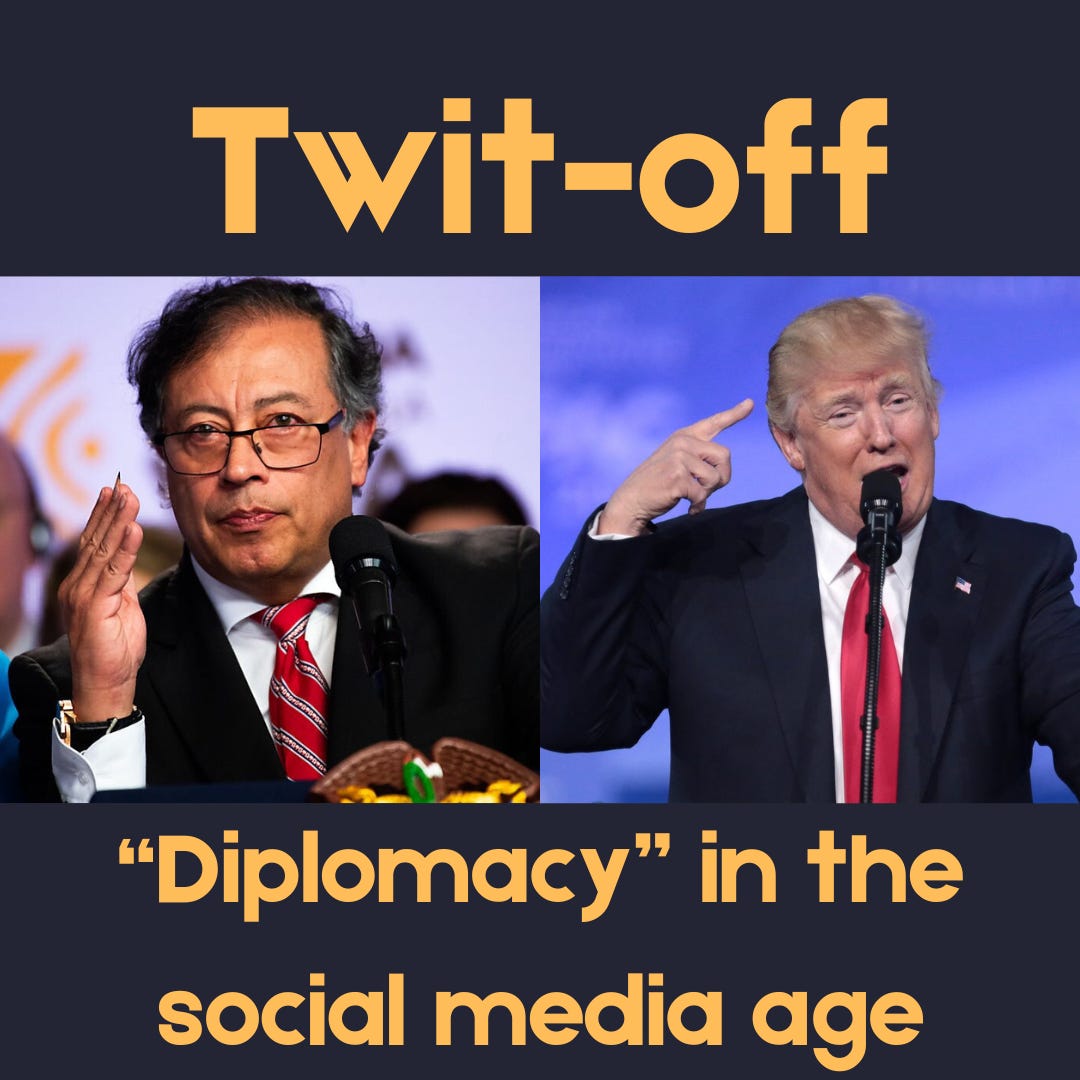
What started as a dispute over U.S. deportation flights quickly spiraled into a public slugfest. Trump, as is his style, didn’t hold back, threatening a 25% tariff on Colombian goods and visa restrictions for its nationals (source). Petro clapped back, accusing Trump of trampling Colombia’s sovereignty. What should have been a sensitive, behind-closed-doors negotiation turned into a toxic spectacle broadcast for the world to see. Meanwhile, actual diplomats scrambled to settle the issue through appropriate channels with increased urgency as the threats grew.
This isn’t just a story about two egos clashing on Twitter. It’s about the pitfalls of weaponizing social media as a diplomatic tool, the risks of escalation, and the chaos it leaves in its wake—not just for nations but for the press and the public caught in the crossfire.
The Death of Quiet Diplomacy
Social media diplomacy—or "Twiplomacy"—has killed discretion. Traditional diplomacy was about subtlety: coded phrases, carefully worded statements, and long nights spent hammering out agreements in private. That’s not sexy in the age of instant gratification, where leaders like Trump have turned platforms like Twitter into arenas for political theater.
In the Trump-Petro debacle, the need for spectacle trumped (pun intended) the need for resolution. Trump’s tariff threats, posted for maximum domestic impact, left little room for Petro to negotiate without looking weak in front of his base (source). Petro, in turn, fired back with his own grandstanding, doubling down on his refusal to accept deportation flights. As toxic masculinity went head to head, real progress was stymied.
What might have been resolved with quiet talks became a public game of chicken, where neither side could afford to blink. This is the heart of the problem with social media diplomacy: it values performance over progress and conflict over compromise.
When Tweets Become Time Bombs
The Trump-Petro feud also underscores how easily social media can turn diplomacy into a ticking time bomb. Twitter’s 280-character limit was never designed for nuanced discussion, let alone the kind of sensitive negotiations required between nations. Instead, it rewards snappy one-liners and bold declarations—perfect for fueling tensions, not resolving them.
Trump’s threat to impose a 25% tariff on Colombian goods wasn’t just a bargaining tactic; it created real-world consequences. Major media outlets reported that the tariffs were imminent, causing business confusion and panic (source). However, when Colombia ultimately agreed to accept deportation flights, the tariffs never materialized. The media was left scrambling to issue corrections, eroding public trust in journalism.
This isn’t just a PR problem—it’s a systemic one. When world leaders treat their Twitter feeds as official policy channels, they create chaos. Allies, businesses, and the media are forced to react to every post, no matter how impulsive or poorly thought out. Worse, when these threats turn out to be bluffs, it feeds a sense of distrust that undermines everyone involved.
Diplomacy as Performance Art
Social media diplomacy also encourages leaders to play to the cheap seats. Trump and Petro weren’t talking to each other on Twitter—they were talking to their followers. For Trump, the tariff threat was red meat for his base, showcasing his “tough-on-immigration” stance. For Petro, defying Trump was a rallying cry for national sovereignty and a way to solidify his image as a defender of Colombia.
This is the problem: social media diplomacy isn’t about solving problems—it’s about scoring points. Leaders use platforms like Twitter to flex for their domestic audiences, often at the expense of actual diplomacy — a measuring contest, if you will. But in this game, everyone loses. Public posturing leaves less room for compromise, hardens positions, and locks leaders into standoffs they can’t easily walk away from.
The Media in the Crossfire
The media doesn’t come out unscathed in this mess. Social media spats between world leaders hijack the news cycle, forcing journalists to react to half-baked policy statements and inflammatory rhetoric in real-time. When Trump tweeted about the 25% tariff, major outlets ran with the story as if the policy was already in effect (source). They weren’t wrong to do so—how could they ignore a statement from the President that could upend trade relations? But when the situation evolved, and the tariffs never materialized, the media looked foolish, forced to print retractions and clarifications.
This kind of chaos erodes trust in journalism, which the president has already attacked for years. Readers are left wondering: Was the media sensationalizing the issue? Or was Trump playing a dangerous game? Either way, the damage is done.
A Powder Keg for Escalation
Perhaps the most dangerous aspect of social media diplomacy is its potential to escalate conflicts. Social media is built for speed, not reflection. Leaders can fire off a tweet in seconds—long before their advisors or cooler heads can intervene. And once those words are out, there’s no taking them back.
In the Trump-Petro case, the escalation stayed in the realm of rhetoric. But imagine if the stakes had been higher—for example, the dispute involved military posturing or sensitive intelligence. A poorly worded tweet could spark panic or provoke a disproportionate response.
This isn’t a hypothetical. In 2018, when Trump tweeted about having a “bigger button” than Kim Jong-un, it heightened fears of a nuclear confrontation. Social media has turned diplomacy into a game of brinkmanship, where the margin for error is razor-thin.
The Coffman Chronicle is powered by YOU—no billionaires, no corporate overlords. Help us keep exposing the BS, delivering sharp insights, and keeping you informed.
For just $8 a month or $80 a year, you can fuel the fight and be part of the movement.
Not ready to subscribe? No worries, chaos loves company, and you're always welcome. But if you’re fired up to keep us loud, proud, and unfiltered, smash that subscribe button now!
A Smarter Way Forward
Social media doesn’t have to be a diplomatic disaster zone. When used thoughtfully, it can be a powerful tool for transparency, engagement, and collaboration. The key is for leaders to treat it as a complement to diplomacy, not a substitute for it.
Use It for Clarity, Not Conflict:
Social media can be used to explain policies, build trust, and counter misinformation. During the COVID-19 pandemic, New Zealand Prime Minister Jacinda Ardern used social media to provide clear, empathetic updates, earning widespread praise for her leadership.Amplify Shared Goals:
Ukrainian President Volodymyr Zelenskyy has shown how social media can rally international support. His posts tag world leaders, highlight urgent needs, and focus on unity rather than division.Keep the Tough Talks Offline:
Social media is not a place for threats or sensitive negotiations. Leaders should save bold declarations for closed-door meetings, where they can speak freely without the pressure of public scrutiny.
Conclusion: Diplomacy Deserves Better
The Trump-Petro feud is a masterclass in how not to handle diplomacy in the digital age. It reminds us that while social media is a powerful tool, it’s also dangerous when wielded recklessly. Tweets may win headlines, but they don’t solve problems. They inflame tensions, create confusion, and erode trust in diplomacy and the media.
Leaders can use social media to build bridges or burn them. If diplomacy survives in the 21st century, it will require more than hashtags and hot takes. It will require restraint, strategy, and a recognition that some things are too important to reduce to 280 characters. After all, the world deserves better than diplomacy by tweet.
Tweet diplomacy might not be a good thing but, wow, Petros response was poetic. Words beautifully spoken are not coming from our right wing politicians who are talking like schoolyard bullies. His words touched my heart.