


In America, the measure of a life too often comes down to its usefulness—a brutal calculus of productivity, conformity, and cost. If you can’t work a full-time job, need accommodations, or move through the world differently, then in the eyes of our systems, you are expendable.
Nowhere is that more evident than in how this country treats autistic people.
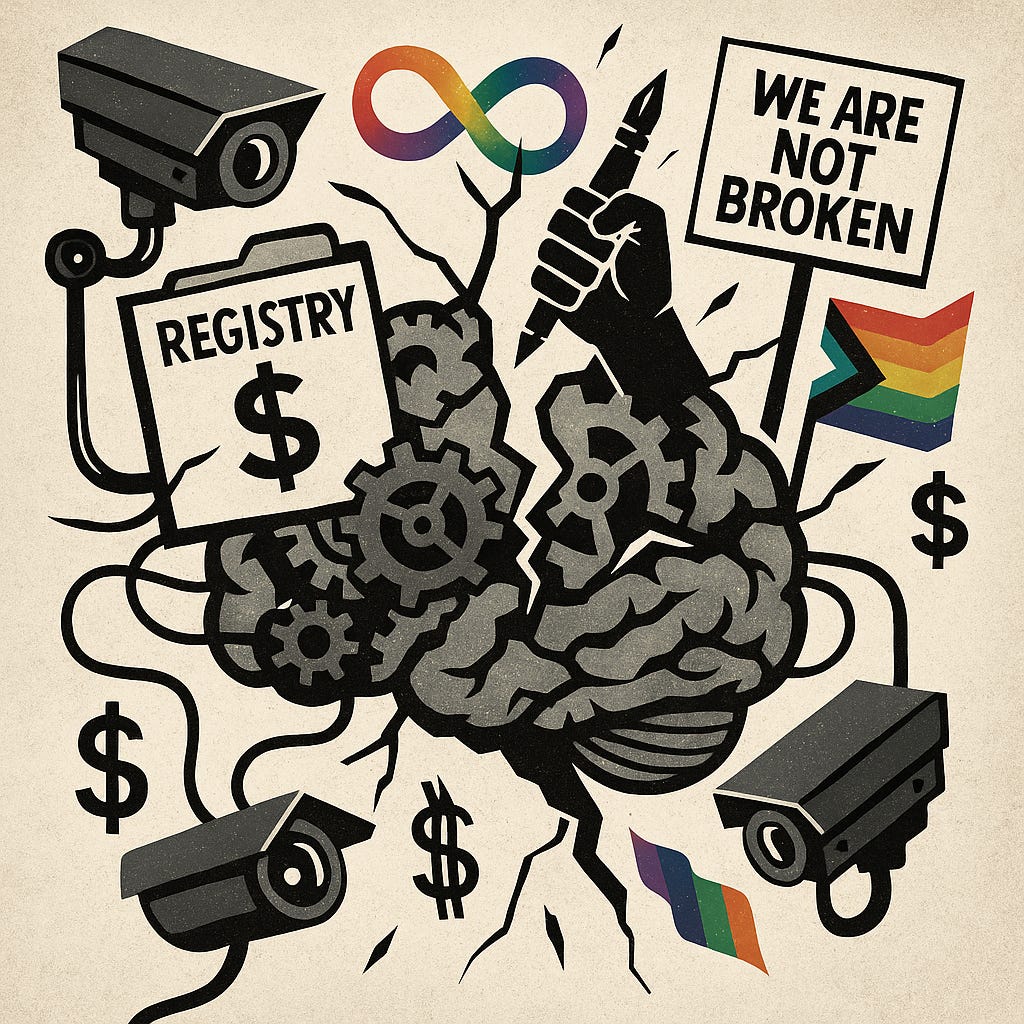
In this installment of Disposable America, we examine a population that has been persistently misunderstood, pathologized, and politically scapegoated. At a moment when public services are shrinking and disability programs are being dismantled, the federal government, under HHS Secretary Robert F. Kennedy Jr., is pushing for a sweeping autism registry initiative. Framed as a scientific breakthrough, it’s raising alarm among experts who see it as surveillance by another name.
Autism isn’t a crisis. But the response to it—misinformation, institutional neglect, and rights erosion—absolutely is.
This isn’t just about one misguided initiative. It’s about a federal health system restructured not to serve, but to surveil. The Kennedy-led reorganization of HHS has already gutted community health programs, shuttered disability support offices, and redirected funds away from inclusive services in the name of “efficiency.” The autism registry is not a stand-alone project; it’s the logical next step in a system that prioritizes austerity and ideology over evidence and care.
Autistic people are not broken. But the structures built around them—from classrooms to clinics to the halls of federal power—are. And if we want to understand who America deems disposable, we need to start by listening to those it has long refused to see.
We just hit 13,000 subscribers—thank you! To celebrate, we’re offering full access to The Coffman Chronicle at 50% off.
Get exclusive analysis and fearless reporting you won’t find in corporate media.
Support truth. Stay informed.
Autism Isn’t a Crisis—Stigma Is
When Robert F. Kennedy Jr. claimed that autistic individuals will “never pay taxes, hold a job, or go on a date,” he wasn’t just trafficking in ignorance. He was echoing decades of dehumanizing myths. We wrote about those comments last month in our piece, Autism Isn’t a Crisis—Stigma Is, where we unpacked the historical, scientific, and human cost of reducing an entire community to a stereotype.
Read that here:

Autism is not new, and vaccines do not cause it. What’s new is our willingness, or lack thereof, to actually see it. Broader diagnostic criteria, better awareness, and stronger self-advocacy have made the spectrum more visible than ever. But for every person who finally gets the support they need, there are countless others still being misdiagnosed, criminalized, or left behind, especially those who are Black, Brown, LGBTQ+, or living in poverty.
Kennedy’s rhetoric does more than misinform; it distracts. It siphons attention, resources, and public trust away from real solutions and pours them into discredited science. Instead of funding inclusive education, housing, or job supports, his HHS prioritizes surveillance, pseudoscience, and politically motivated investigations.
We explored the roots of that rhetoric last month, now we follow where it leads.
Historical Marginalization and Medical Control
Before we can talk about the datafication of autism, we have to talk about its pathologization. Because the impulse to track, fix, and “normalize” autistic people is not new; it’s just evolving.
For much of the 20th century, autistic children were warehoused in institutions, often under the guise of medical care. These facilities weren’t places of healing. They were holding tanks for people society didn’t know how to deal with. A core belief linked them all: neurodivergent lives were better lived out of sight.
Even into the 1980s and ’90s, parents of autistic children were routinely told to place them in residential institutions. Those who remained in the community often faced forced sterilization, physical restraints, and chemical sedation.
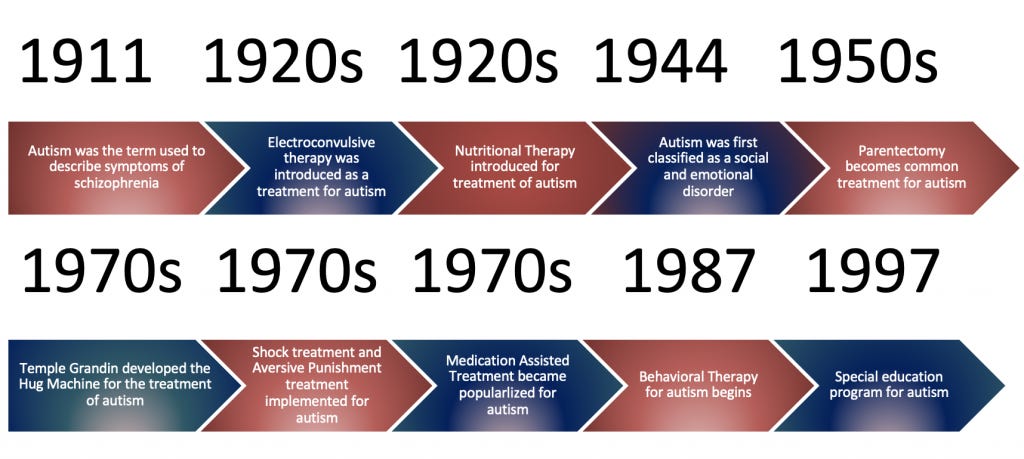
Autism: A Brief History Timeline
Applied Behavior Analysis (ABA), still widely prescribed today, stems from this same mindset. Many autistic adults describe ABA not as therapy, but as training to suppress who they are. As one advocate put it: “The most important thing: any therapy should help autistic people get what we want & need, not what other people think we need.”
The language and methods have changed, but the core impulse—control over compassion—remains disturbingly consistent.
Healthcare, Surveillance, and the Profit Motive
At first glance, a centralized autism registry might sound like a data-driven path to progress. But look closer—at the leadership, funding, and stated goals—and a different story emerges—one not of support but of control.
In April, HHS Secretary Robert F. Kennedy Jr. announced a sweeping initiative to investigate the “causes” of autism. Central to this plan is a national autism data platform—a “registry”—that will collect everything from genomic profiles and insurance records to behavioral assessments and biometric data from wearable devices. Crucially, this data could be aggregated without the informed consent of the individuals involved.
“ASAN is gravely concerned by HHS Secretary Robert F. Kennedy Jr.’s plans to establish a ‘registry’ of autistic people... likely without their consent,” warned the Autistic Self Advocacy Network.
Those concerns became even more urgent with the revelation that Kennedy had appointed David Geier to lead the initiative. Geier, who practiced unlicensed medicine and once chemically castrated autistic children using Lupron under a debunked theory, is a figure so discredited that multiple medical boards and courts have sanctioned him.
Personnel is policy. And this appointment tells us everything.
Meanwhile, the Trump administration’s proposed 2026 budget would slash over $33 billion from federal health agencies. Disability services, inclusive education grants, and public health tracking programs are among the targets. These cuts follow the Department of Government Efficiency’s earlier moves to consolidate and defund essential support offices.
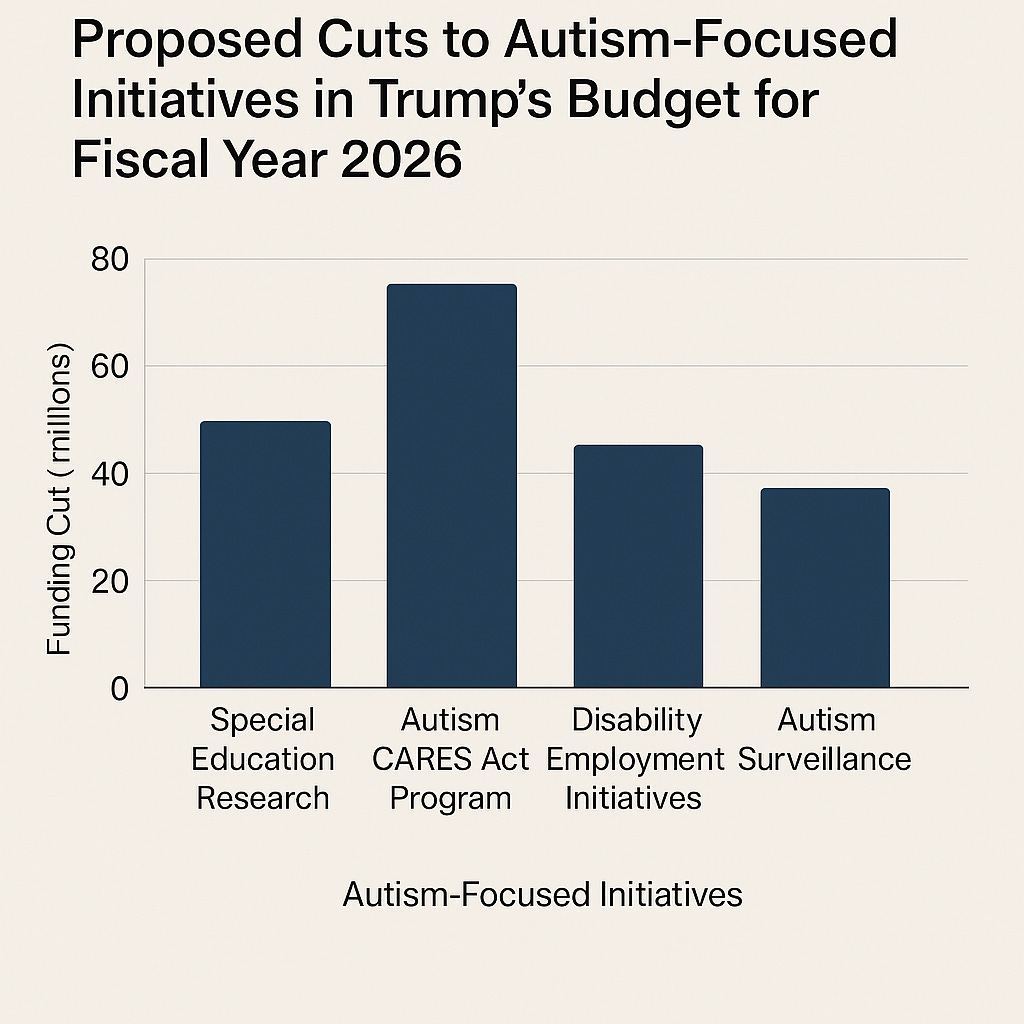
So the math becomes simple. Funds are being pulled from the services autistic people rely on and redirected toward projects that threaten their autonomy. What should be resourced is abandoned. What should be scrutinized is celebrated.
And through it all, autistic people—once institutionalized, now surveilled—are again treated not as full citizens, but as subjects of scrutiny.
The Capitalist Workforce and Systemic Exclusion
In a system where your productivity measures your value, autistic people are often deemed expendable before they even enter the workforce. Despite decades of awareness campaigns and corporate lip service about “inclusion,” the numbers remain damning: nearly 80% of autistic adults are unemployed or underemployed.
Autism employment rates have remained staggeringly low over the past two decades, despite increased visibility and policy attention.
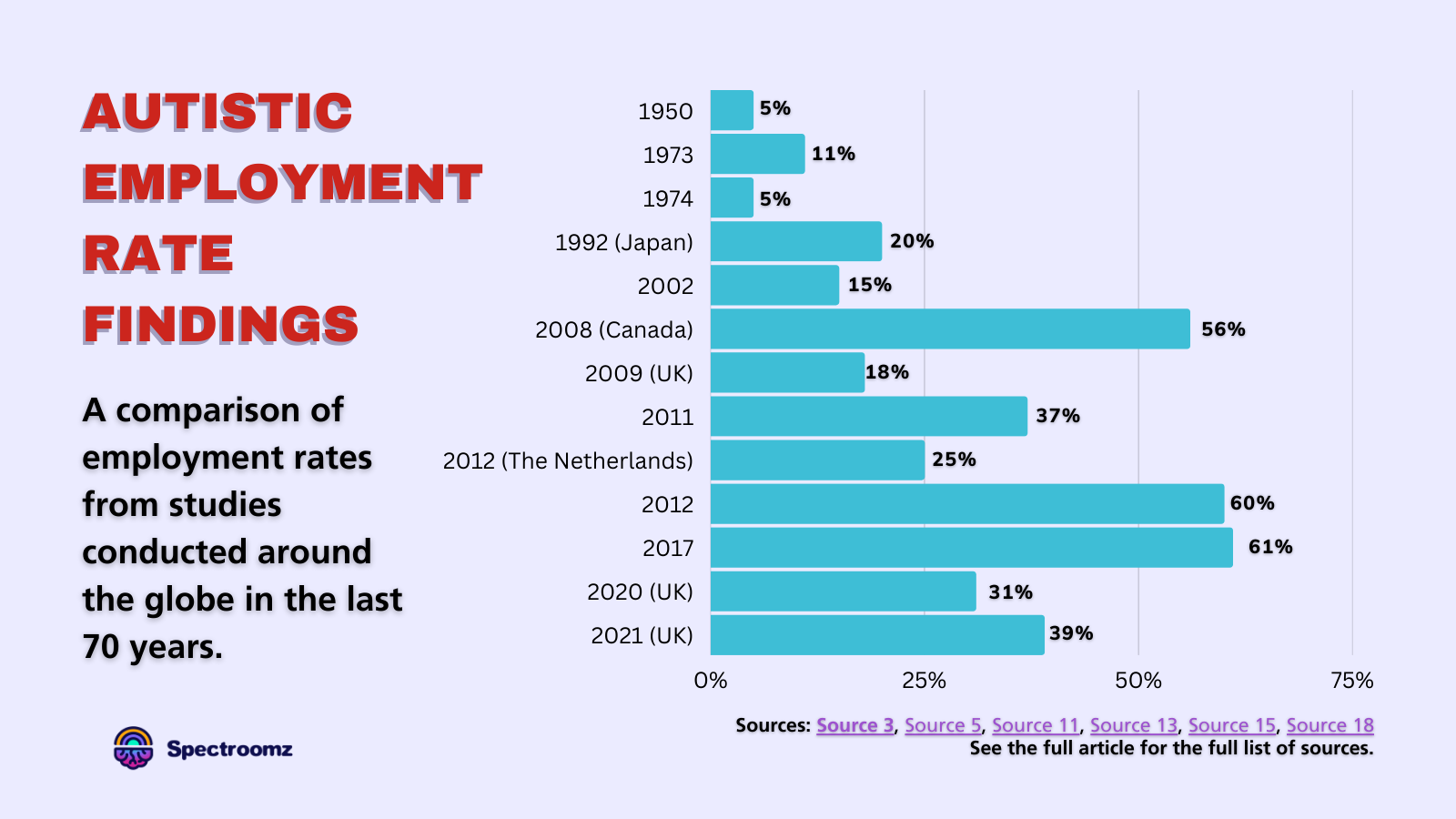
This isn’t because autistic people can’t work. It’s because the workplace isn’t built for them. Interview processes reward charisma, not competence. Accommodations, when requested, are often delayed, denied, or weaponized.
And for those who do find work, exploitation is rampant. In many states, autistic workers—especially those in “sheltered workshops”—are still legally paid subminimum wages.
The cost of systemic exclusion is massive—lost economic potential and taxpayer spending on services that meaningful employment pathways could replace.
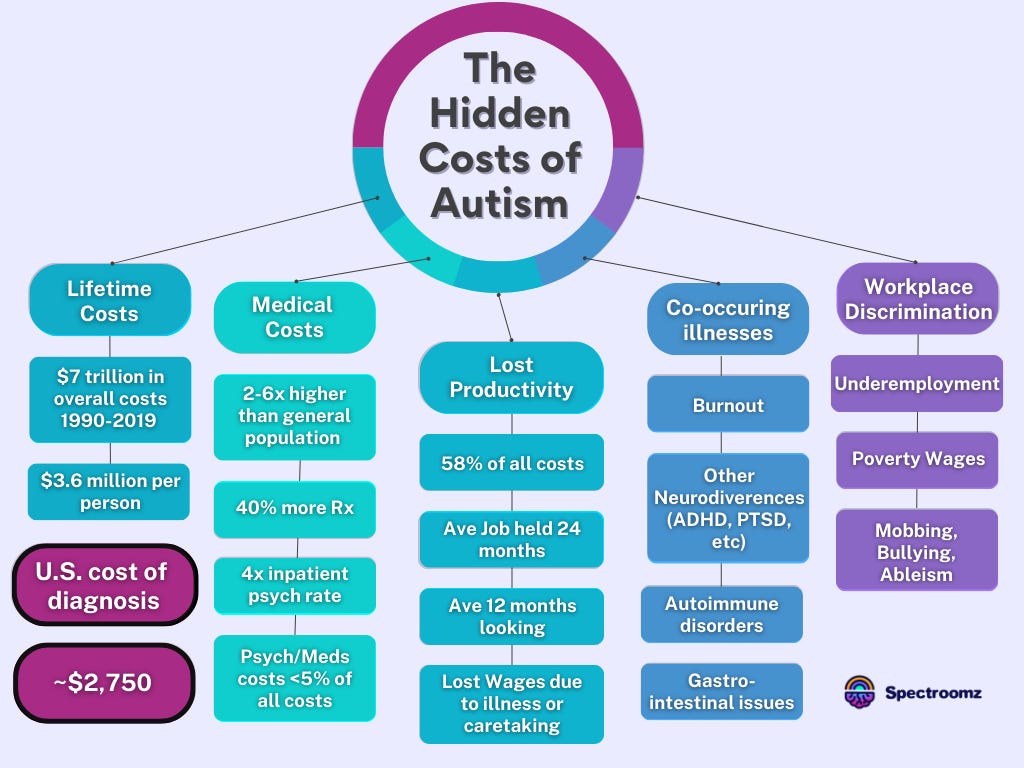
Meanwhile, corporate America continues to roll out glossy “neurodiversity hiring initiatives” that do more to burnish reputations than shift power.
And if the system fails autistic adults in the workplace, it begins much earlier in the classroom.
Education, Policing, and Carceral Structures
The American education system was never built to accommodate neurodiversity, but to standardize. For autistic students, especially those who are non-speaking, multiply disabled, or Black and Brown, that means schools become places of punishment, not support.
Disproportionate suspensions. Physical restraint. Seclusion rooms. These are not fringe cases; they're daily realities.
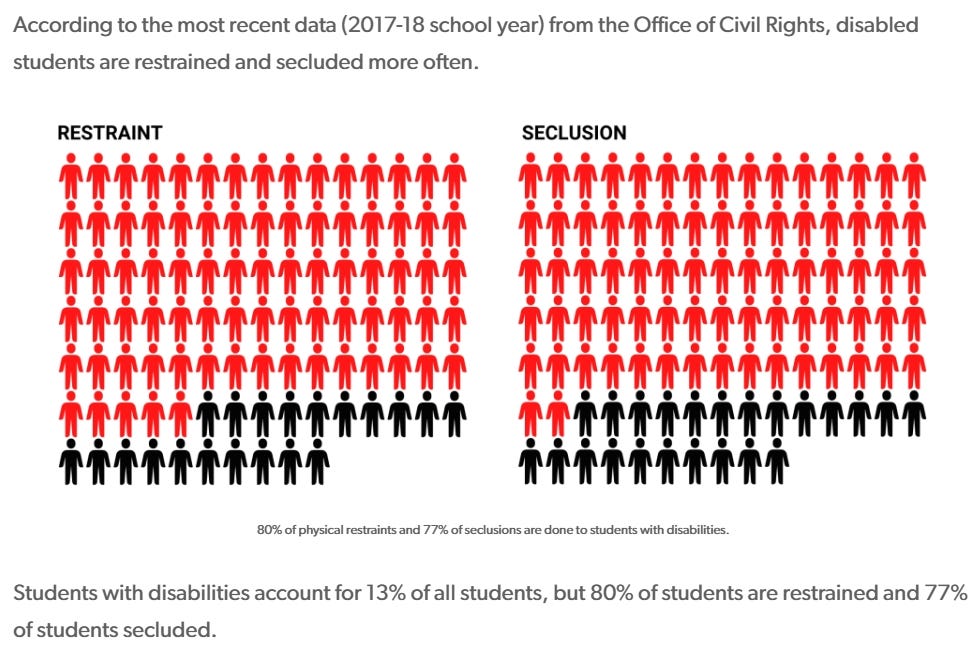
These aren't just disciplinary practices—they’re a pipeline. “If you don’t have that adequate education, you're already in prison—they just haven’t closed the jail cell,” said civil rights attorney Ben Crump.
Outside of schools, police misinterpretations of autistic behavior can escalate into violence. Lack of eye contact becomes “defiance.” A delayed response becomes “noncompliance.” What autistic people need are trained counselors and sensory-safe spaces. What they get is force.
And when community-based alternatives are cut, the result is more confinement. The buildings may have changed, but the carceral logic hasn’t.
Toward Neurodivergent Liberation
If this country is serious about inclusion, and not just as branding, then autistic liberation must be central to the conversation. That means listening to autistic people, funding the systems they say they need, and dismantling the ones built to manage or erase them.
“Autism is not a disease. It's just another way of thinking and experiencing the world,” said Temple Grandin.
Autistic-led organizations like ASAN and the Neurodivergent Liberation Coalition have built entire frameworks for what real support looks like:
End subminimum wage by repealing Section 14(c)
Fully fund IDEA and inclusive education
Pass Medicare for All and expand long-term supports
Ban involuntary chemical restraint and institutional warehousing
Defund surveillance research and reinvest in autistic-designed solutions
This movement doesn’t ask for tolerance; it demands liberation. Autistic people are not broken, failed versions of the norm. They are, and always have been, whole human beings—speaking, stimming, resisting, surviving.
And when systems built to flatten them are finally dismantled, what emerges isn’t dysfunction; it’s possibility.
We just hit 13,000 subscribers—thank you! To celebrate, we’re offering full access to The Coffman Chronicle at 50% off.
Get exclusive analysis and fearless reporting you won’t find in corporate media.
Bibliography:
“ASAN Gravely Concerned by Administration’s Plans for Autistic People’s Medical Data.” Autistic Self Advocacy Network, April 24, 2025.
Ben Crump. “Graduating without a quality education means you're already in prison.” WBFF, March 4, 2022.
Grandin, Temple. “Autism is not a disease; it's just another way of thinking and looking at the world.” TED Education, March 31, 2022.
“Schools Are Restraining and Secluding Students With Disabilities: New Bill Would Limit Practices.” The Arc, March 14, 2023.
“Autism Employment Statistics: The 100% Complete Guide.” Spectroomz, January 2024.
“Why many people with autism fear RFK Jr.'s focus on the condition.” The Washington Post, May 1, 2025.
“RFK Jr.'s autism study to amass medical records of many Americans.” CBS News, April 25, 2025.
U.S. Department of Education, Office for Civil Rights. 2017–18 Civil Rights Data Collection: The Use of Restraint and Seclusion. 2020.
“Elimination of restraint and seclusion in schools is not only possible, but it is also morally and ethically imperative.” End Seclusion, January 9, 2021.
“Restraint and Seclusion in California Schools: Findings and Recommendations from the 2021-22 School Year Data.” Disability Rights California, 2023.
“Autism Statistics You Need To Know in 2024.” Autism Parenting Magazine, 2024.
Wonder how my born-again Christian Republican loving brother feels now about his vote when his autistic son is now on the same hit list as women, LGBTQ and the other marginalized humans??? I cannot and will not forgive or forget this, ever.
You are such a good writer!