


It’s 5:30, and that man is getting hangry. The refrigerator is sadly lacking in actual meals but rife with random bits: half an onion, a handful of mushrooms that need to be used up, two pork chops left over from last night, and the usual collection of condiments and such. Sound familiar?
For many of us, having to feed ourselves and our families every night can feel unbearable. But here’s the thing: you don’t need to know a thousand recipes, hire a private chef, or maintain an immaculate meal plan. You need to understand a handful of cooking techniques, learn how flavors work together, and maintain a reasonable pantry.
Great cooks don’t necessarily know hundreds of recipes. They know how to turn the ingredients they have into a cohesive meal. There’s a difference between knowing how to follow a recipe and knowing how to make dinner. A recipe tells you what to do with a particular set of ingredients. A technique teaches you what to do with whatever you’ve got.
So let’s start with one of my favorites: polenta.
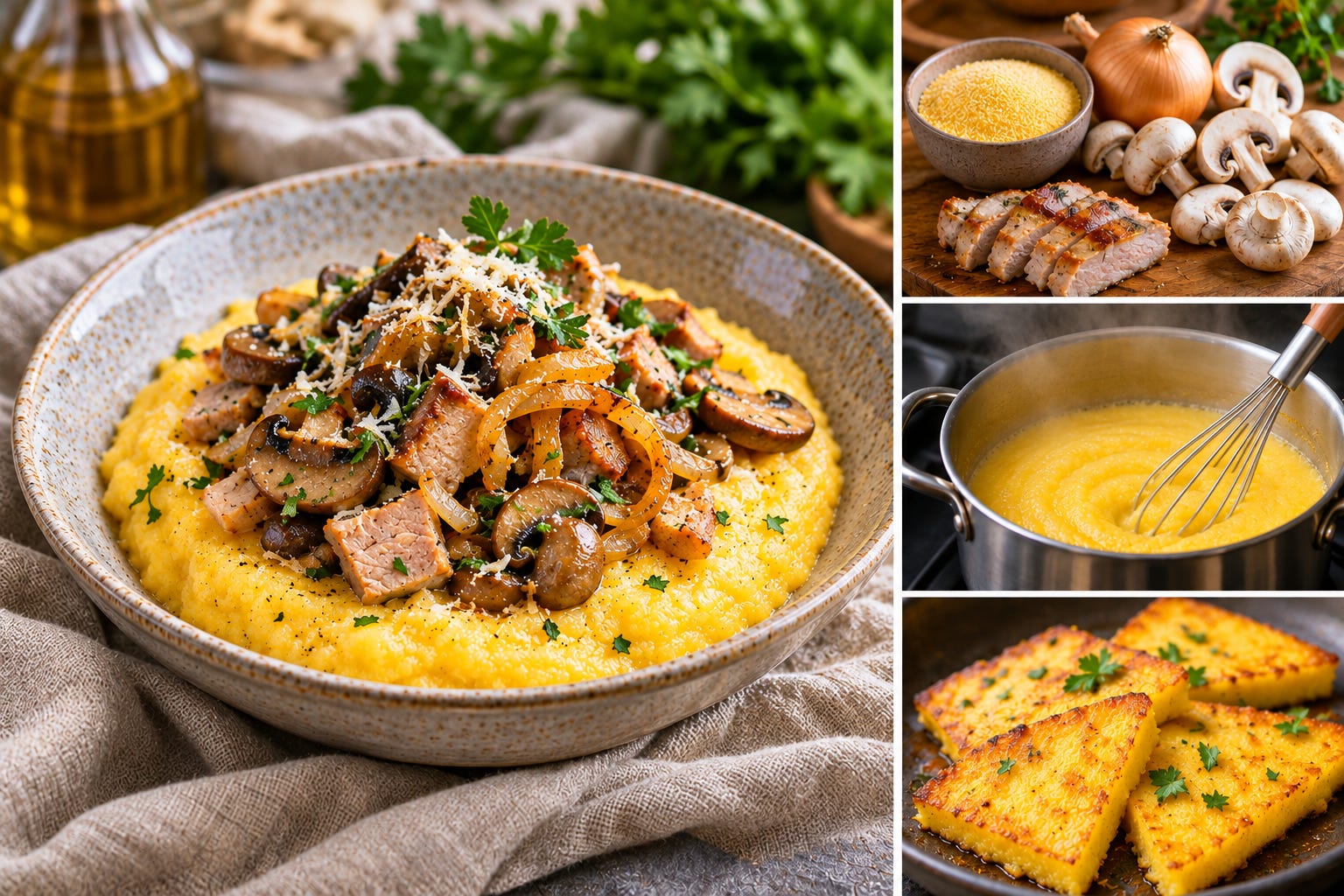
Polenta? What the Heck Is That?
At its simplest, polenta is cornmeal cooked in liquid until it becomes soft, creamy, and delicious. It’s a traditional staple of northern Italian cooking, and if you’re familiar with Southern grits, you already understand the general idea. Otherwise, imagine something like a savory, creamy cornbread pudding. It is not quite the same thing, but close enough to give you an idea of what you’re getting into.
You can serve polenta soft and creamy, almost like mashed potatoes, or let it cool until firm enough to slice and fry.
It’s inexpensive, filling, versatile, and an excellent foundation for all sorts of vegetables, meats, sauces, and other odds and ends.
The best part? It doesn’t demand much of you.
Where the Heck Do I Find Polenta?
Depending on your grocery store, dry polenta may be hiding near the pasta, rice, international foods, or baking supplies.
Here’s a little secret. You don’t necessarily need a specialty product labeled polenta. Plain cornmeal works, too. Medium- or coarse-ground cornmeal will give you a more traditional texture, while finer cornmeal produces a smoother result. Cooking times will vary. Just make sure you’re buying plain cornmeal, not cornbread mix.
You may also find prepared polenta sold in tubes, often near the pasta or refrigerated specialty foods. This is actually how we first discovered polenta in our household. It’s already cooked! You can slice it and fry it, or warm it in a saucepan with a little broth, water, or milk, mashing and stirring until it softens. Add whatever flavors appeal to you, and you’re in business. Easy peasy.
Before you crown yourself the Polenta God and buy ten pounds of cornmeal, however, perhaps establish whether you and your crew actually like the stuff.
If you’re in a hurry, a tube is convenient. If cost is a concern, dry cornmeal is generally cheaper per serving, and you may already have some in the pantry. Better yet, if polenta turns out not to be your jam, cornmeal has plenty of other uses. Cornbread, muffins, breading, pancakes—it’s hardly a one-trick pony. No unitaskers allowed in the kitchen!
Let’s Make Dinner
Remember those pork chops, mushrooms, and half an onion? That’s what we’re working with tonight, but these are not required ingredients. They’re simply what happened to be in my refrigerator.
Maybe you’ve got a jar of roasted red peppers, a sad bag of spinach, and a hunk of tofu. Okay. Great. Let’s go!
The goal is to make a flavorful mix of whatever vegetables and proteins you have on hand, then serve it over creamy polenta. This meal is tailor-made for whatever you have on hand. No meat? No problem. Only have frozen or canned stuff? That works great too.
First, Let’s Talk Quantities
As a starting point, plan on approximately ¼ cup of dry polenta per person, with about ¾ to 1 cup of liquid. It doesn’t sound like much, but I assure you, it is hearty.
Cooking for one? Start there. Feeding four? Multiply accordingly. Want leftovers? Make extra.
Different grinds of cornmeal absorb liquid differently, so check the package directions and adjust as necessary. We’re aiming for a consistency you enjoy, not mathematical perfection.
You’ll also need whatever vegetables, protein, and seasonings you want to use, in whatever quantities make sense for your household. Don’t buy something special. Use what is already lurking in your kitchen, especially flavors you already enjoy.
Get the Polenta Going
If you’re using traditional dry polenta, start here, since coarser varieties can take 30–45 minutes to cook. Quick-cooking versions may be ready in just a few minutes.
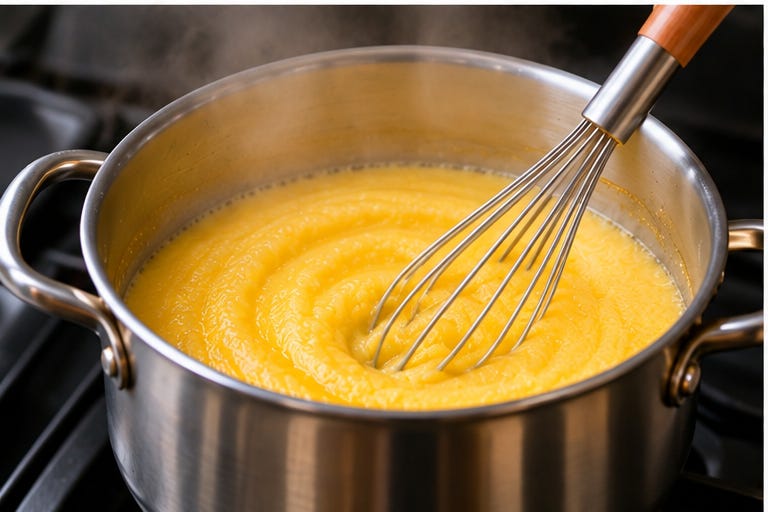
Bring your liquid to a simmer. Water is perfectly fine, but broth adds lovely flavor. A little bouillon? Sure. A splash of milk? Why not? Use what makes sense for your house.
Add some salt, then slowly whisk in your cornmeal. Reduce the heat and let it cook gently, stirring regularly to prevent lumps, dry pockets, and burnt bits. It will gradually thicken as the cornmeal softens.
If it gets too thick before the grains are tender, add more liquid. If it’s thinner than you’d like, give it more time. Polenta is very forgiving. Taste it. Is the cornmeal tender? Do you like the texture? Does it need a little salt?
Congratulations. You’re cooking.
Meanwhile, Let’s Deal with Those Leftovers
Chop up your vegetables and protein into manageable pieces. Around here, when in doubt, we sauté.
Heat a little oil, butter, or your pan lubricant of choice until it’s ready for business, then add the onion and mushrooms. Good news! Unless you turn them into charcoal, it’s hard to overcook mushrooms. Give them time to release their moisture and begin browning.
Add a little salt and pepper, then consider your other seasonings. Garlic? Always good. Chili flakes? If you like a little heat, have at it. You put cumin in everything? Go you. Italian seasoning works with an astonishing variety of vegetables and proteins. Herbes de Provence might be lovely, too.
However, the key is to consider what you’re working with. How were those pork chops seasoned last night? Maybe you want to build on those flavors rather than introduce something completely different.
Once the onions have softened and the mushrooms have browned, add your chopped pork chops and heat everything thoroughly. A splash of broth can help bring the mixture together.
If you’re using leftover cooked meat, reheat it to 165°F. If you’re starting with raw meat, cook it to the appropriate safe internal temperature before serving. We encourage creativity here, not food poisoning.
Now, Back to the Polenta
Once the cornmeal is tender and the consistency is to your liking, consider whether you want to add anything. A little butter? Some grated Parmesan? A spoonful of cream cheese? Maybe.
Here’s my test:
Does it sound good?
Will it add flavor I want?
Will it mix into what I’m making?
You have a bit of Boursin but no cream cheese? Okay! No Parmesan, but a little cheddar? Sure. That dab of flavored butter you haven’t figured out how to use? If the flavors work together, why not? Nothing at all? That’s fine, too.
I’m not here to gatekeep flavor. I don’t take directions particularly well, especially in my own kitchen, and I’m certainly not going to start issuing orders in yours. You don’t need my permission or my thumbs-up. If it sounds good and is safe to eat, devour. You do you, boo.
Dinner Is Served
Spoon your creamy polenta into bowls or onto plates and top it with your sautéed vegetables and protein. That’s it. Half an onion, a handful of mushrooms, and leftover pork chops make a hearty dinner.
However, don’t limit yourself to what was hiding in my fridge. Maybe your version includes white beans, tomatoes, and spinach; chicken and roasted peppers; or mushrooms and a fried egg.
Different ingredients. Same basic technique. You haven’t memorized a new recipe. You’ve learned a way to make a meal.
Do Future You a Favor
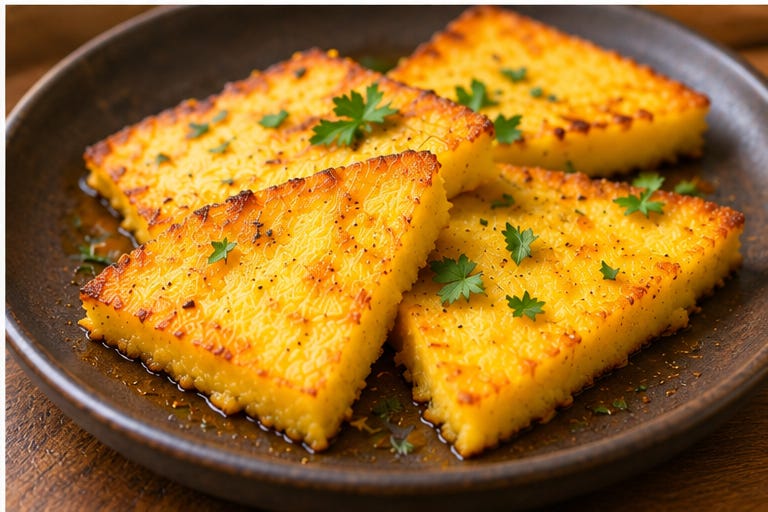
Here’s another reason I love polenta: leftovers. When freshly cooked, polenta is soft and creamy. As it cools, it firms up. If you’re making dinner tonight, consider preparing a little extra. Spread the leftovers into a shallow, lightly greased dish, refrigerate promptly, and let them firm up.
Tomorrow, slice the chilled polenta into squares or wedges and pan-fry them until golden and crisp. Serve them with eggs for breakfast, alongside vegetables for lunch, or under another collection of refrigerator odds and ends for dinner.
You can also freeze portions of homemade polenta, particularly if you intend to slice and fry them later. The texture may change after thawing, especially with creamy preparations, but it’s a useful option.
Refrigerate cooked leftovers within two hours and use refrigerated portions within three to four days, or freeze them for later. Future you appreciates the effort.
Your Pantry Should Work for You
Now, you might be wondering what else you need to keep in your pantry to make this kind of cooking possible. Don’t. The meals you actually cook will tell you what belongs in your pantry— not a food blogger, not an influencer, and certainly not me.
If you regularly reach for garlic, broth, canned tomatoes, rice, and dried herbs, those ingredients have earned their place. Perhaps your kitchen always has peanut butter, canned chicken, pasta, and marinara. That’s fine. Work with how you live.
If a recipe calls for ten ingredients you never normally purchase, let’s be honest. In my kitchen, that recipe isn’t happening. The flavors you prefer are likely already in your home.
If you only need one clove of garlic for a particular dish, but never use fresh garlic otherwise, perhaps garlic powder is a more sensible purchase. Maybe a tube of jarlic is a better option, or another seasoning you already enjoy.
A useful pantry isn’t necessarily an enormous pantry. It’s one stocked with ingredients that work for the way you actually cook. A bag of cornmeal can become polenta tonight, cornbread tomorrow, or a crunchy coating for fish next week. That’s an ingredient earning its shelf space.
The same principle applies to many pantry staples. Rice, beans, pasta, broth, canned tomatoes, and other familiar ingredients can form the foundation of countless meals when you understand a few techniques. That’s what we’re really working toward.
Recipes Are Suggestions, Not Commandments
Good cooking isn’t about memorizing hundreds of recipes. It’s about understanding what happens when you combine ingredients, how to prepare them safely, and how to recognize flavors and textures you enjoy.
Learn how to make polenta, and you’ve gained one versatile technique. Learn to make risotto, soup, omelets, quiche, or quesadillas, and you’ve added several more. You don’t have to master them all. Find a handful that appeal to you and practice until they become familiar.
Soon, instead of opening the refrigerator and wondering which recipe uses half an onion, a handful of mushrooms, and two leftover pork chops, you’ll start asking a different question: What do I know how to make with these ingredients?
That’s when cooking becomes less about following instructions and more about making decisions. I don’t want you to make my polenta. I’m not you. I want you to make your polenta.
Mangia!
This is such an important skill few people know how to do. I could have made a frittata with frozen kale, maybe a little cheese and a hot pepper (staples in our house). Now my husband would have probably made fried or curried rice with the pork chops and whatever veggies (fresh or frozen) in the house.
As you indicated, it is understanding the food itself and how it can easily be repurposed into a whole different kind of nourishing meal. It does help to get basics in the house; rice, pasta, lots of herbs and spices, eggs, canned tomatos and frozen veggies.
When the amount of leftovers are two small for a meal for 2, the dogs end up with a nice supper.
What a great article! My mom's grandparents came from Northern Italy. Of course, there was only one way my Gram ma (their daughter) made it. She cooked tomato paste sauce and then used 'polish' sausage to flavor it. Took some of the tomato gravy and put it into green beans and let those flavors absorb. Then, she served the polenta on a plate that had monterey jack cheese thinly sliced in a few places, topped that with the tomato gravy, then topped that with the green beans/sauce. Ate in in layers, not all mixed up. Awesome. Today, I make the same, except I use a pressure cooker to cook the sausage, then add the sauce, pressure cook again on low for a few minutes to marry the flavors, and then serve with the green beans (which also have had the sauce added and given a few minutes to absorb their flavor (in a separate sauce pan).
Now, in my later years, I sometimes just nuke up a bowl of the polenta in the micro, then add shredded cheese, and top with some great salsa for an entirely different flavor! Food is love....