


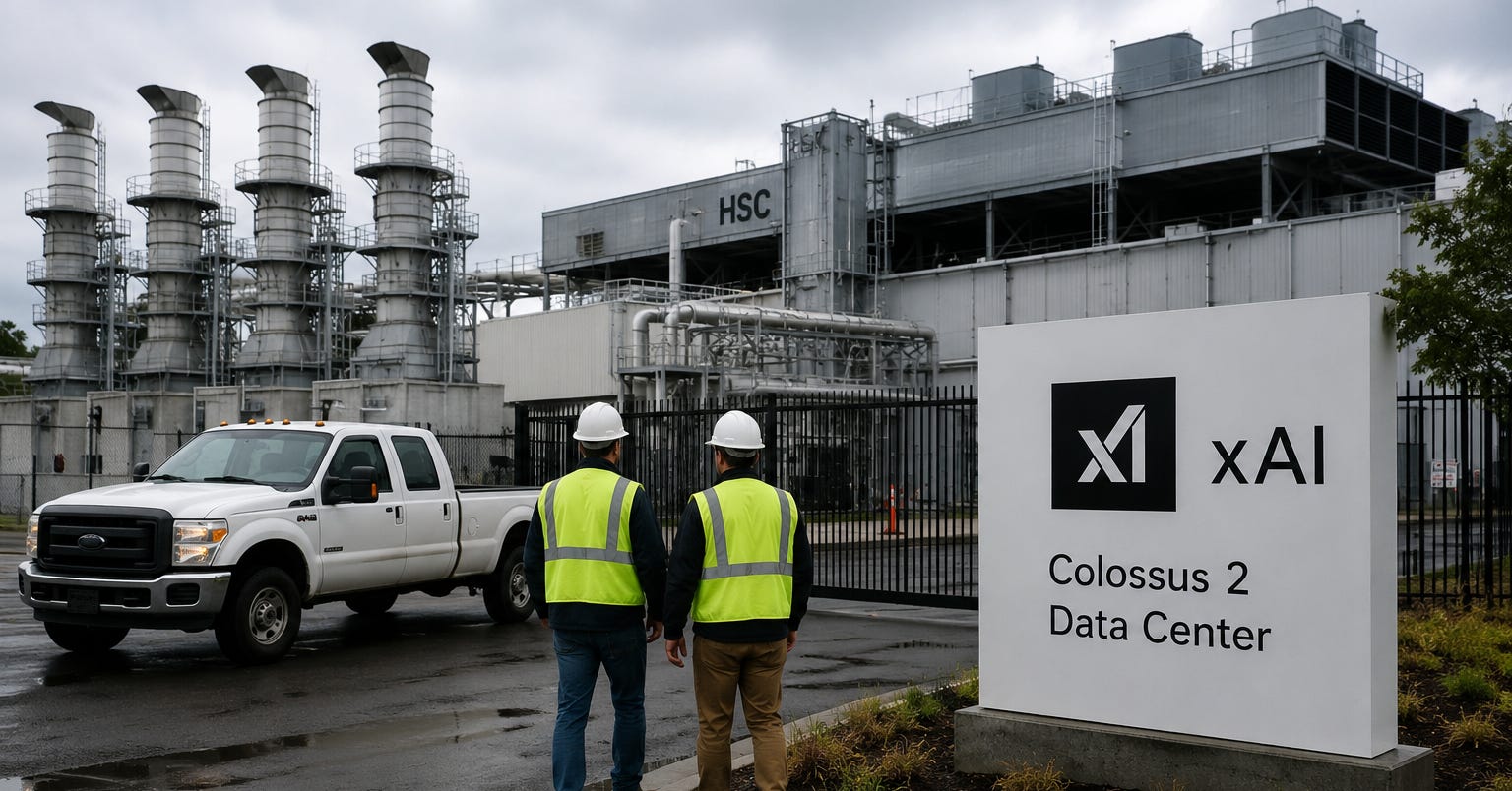
The Department of Justice has moved to dismiss a Clean Air Act lawsuit targeting Elon Musk’s AI company xAI, placing the Trump administration behind a major artificial-intelligence infrastructure project and providing a significant window into how the administration views environmental regulation in the era of AI expansion.
The lawsuit was filed by the NAACP and environmental organizations against xAI and its subsidiary MZX Tech. Plaintiffs allege the company operated dozens of natural-gas turbines at its Southaven, Mississippi, data center without obtaining permits required under federal law. They argue the emissions pose health risks to nearby communities and violate the Clean Air Act.
The DOJ’s filing argues the facility serves important economic, energy, and national-security interests. Federal lawyers said Mississippi regulators determined permits were not required and warned that continued litigation could interfere with infrastructure viewed as important to America’s technological competitiveness.
Beyond the immediate lawsuit, the filing may represent one of the clearest statements yet of where the Trump administration stands when environmental regulation intersects with strategic technology development.
The administration has repeatedly emphasized artificial intelligence as a national priority, framing AI leadership as an economic and geopolitical competition in which the United States cannot afford to fall behind. In that context, data centers, power generation, and supporting infrastructure are increasingly being treated as strategic assets rather than ordinary commercial projects.
Subscribe free for daily political analysis they won’t broadcast. Join 110K+ readers →
The DOJ’s position does not argue that environmental laws should be eliminated. Instead, it reflects an approach that weighs environmental enforcement against broader economic, energy, and national-security objectives. Supporters say that balance is necessary to accelerate investment, expand domestic energy capacity, and maintain U.S. leadership in emerging technologies. Critics argue it risks weakening environmental protections and reducing the ability of local communities to challenge pollution sources.
The filing also suggests a willingness to defer to state regulators when federal and local environmental disputes arise. DOJ lawyers emphasized that Mississippi, not the federal government, made the permitting determination at the center of the lawsuit.
Environmental groups have sharply criticized the intervention, arguing it prioritizes a politically influential technology company over public-health concerns and environmental enforcement. Meanwhile, supporters of the administration’s approach contend that AI infrastructure should be treated similarly to other strategically important industries because of its potential economic and national-security significance.
As a result, the xAI case has evolved beyond a dispute over permits and emissions. It is becoming an early test of how the federal government will balance environmental protections, state regulatory authority, energy development, and AI infrastructure growth as the United States accelerates investment in artificial intelligence.
The court has not yet ruled on the DOJ’s request to dismiss the lawsuit.
Subscribe free for daily political analysis they won’t broadcast. Join 110K+ readers →