


Few people are nearly universally beloved. Across demographics, politics, and socioeconomic divides, it takes someone incredibly special to capture the respect, affection, and love of so many. Dolly Parton is perhaps the best example in generations.
When Dolly died Tuesday at the age of 80, ending one of the most remarkable American lives of the past century, social media exploded with memorials, memories, and sadness. She will rightly be remembered for her music, including Jolene, Coat of Many Colors, 9 to 5, I Will Always Love You, and thousands of other songs written across a career that took a girl born in a two-room cabin in the mountains of East Tennessee to international stardom. Some may recall her filmography fondly, including 9 to 5 and Best Little Whorehouse in Texas.
Another part of her legacy is worth remembering. At a moment when Americans are reconsidering what responsibilities accompany economic success, her life provides an inspiring example of what that can look like. Dolly Parton made an enormous amount of money, built successful businesses, retained ownership of much of what she created, and became one of America’s wealthiest self-made women. She also spent much of her life putting some of what she had earned back into the people, institutions, and communities around her.
Dolly did not reject capitalism after becoming successful within it. Instead, she demonstrated something closer to what we call Good Steward Capitalism, the idea that success creates responsibilities beyond oneself, and that ownership should carry an obligation to leave workers, communities, and institutions stronger than we found them.
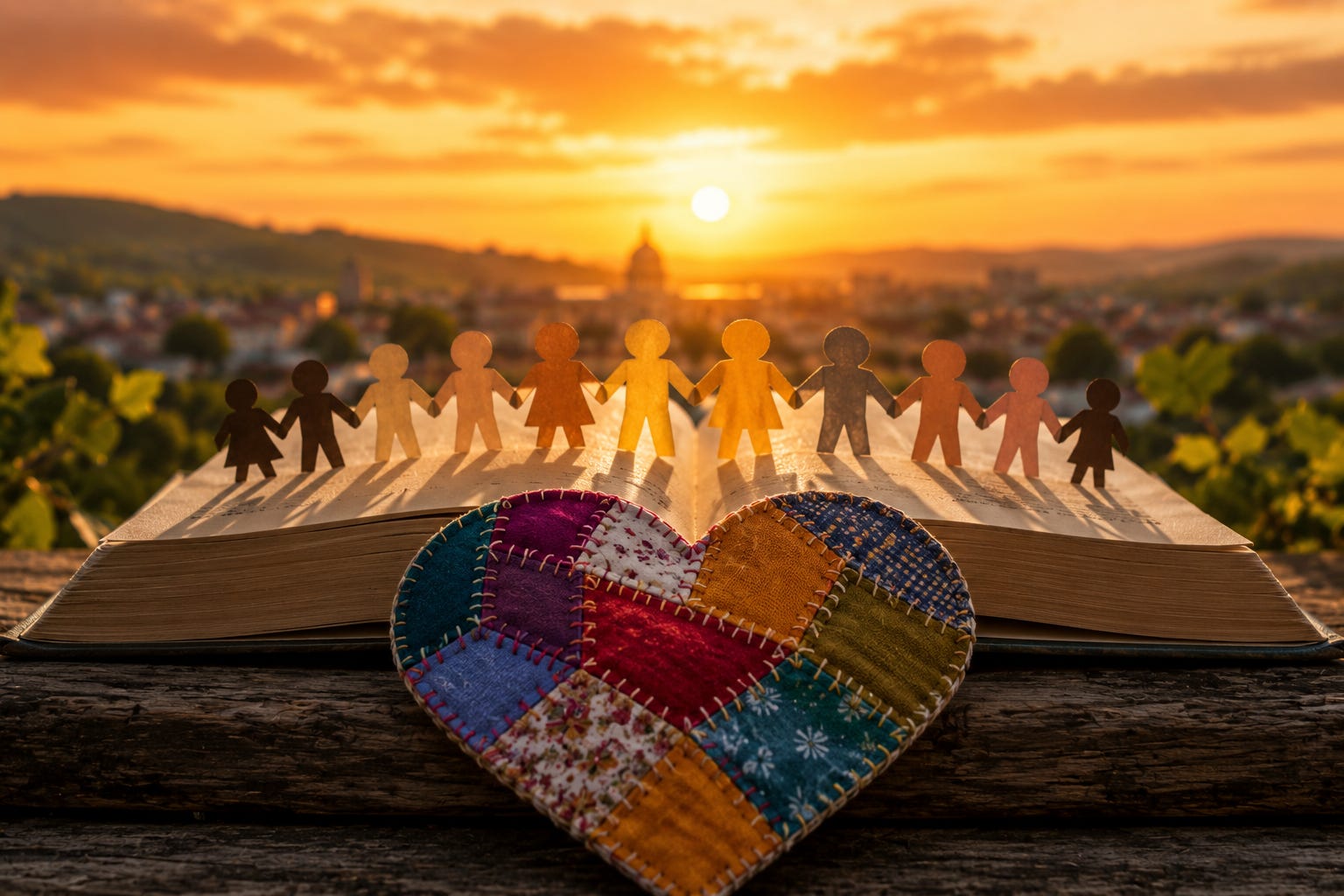
This Community Is Powered by You
What started as a small circle has grown into something much bigger, and it’s all because of readers like you.
Every time you forward this email, post it on socials, or bring someone new into the fold, you’re helping build one of the most passionate, independent communities out there.
Want to keep the momentum going?
Share this newsletter with someone who should be part of this conversation.
Thank you for being here. It means everything.
She Made It, Then She Put Something Back
Dolly Rebecca Parton was born on January 19, 1946, in Sevier County, Tennessee, the fourth of twelve children. Her family had little money, although the poverty of her childhood never became something she treated with either shame or romanticism.
Her extraordinary musical talent eventually carried her far beyond East Tennessee. Though success also gave her the opportunity to leave those mountains behind permanently, Parton repeatedly brought pieces of her success home.
One of the largest is, of course, Dollywood. In 1986, she became a partner in an existing Pigeon Forge theme park, Silver Dollar City Tennessee, which was renamed Dollywood. Over the following decades, the park grew into the centerpiece of a much larger tourism enterprise that now includes lodging, entertainment, a water park, and other attractions. The enterprise has become a major employer and helped strengthen a tourism economy that now draws millions of visitors to the region each year.
Two years later, she created the Dollywood Foundation in 1988. Its original mission was remarkably local: improve educational outcomes for children in her home county. The Foundation’s early Buddy Program addressed Sevier County’s high school dropout problem. Seventh- and eighth-grade students were paired with a buddy, and Dolly promised each participating student $500 upon high school graduation. According to the Dollywood Foundation, the dropout rate among the participating classes fell from 35% to 6%. Importantly, the Foundation says the effort encouraged the broader community to organize additional resources to sustain the improvement.
Seeing a Need and Responding
Dolly’s philanthropy eventually reached far beyond the educational programs with which the Dollywood Foundation began. Sometimes she worked through the Foundation, sometimes she gave personally, and sometimes her businesses and other organizations became involved. The common thread was a tendency to encounter a need, recognize that she had resources to address it, and then act.
Education remained particularly important. The Dolly Parton Scholarship was established in 2000 and eventually expanded across Sevier County. Today, the Dollywood Foundation and its local partners award a $15,000 scholarship each year to a graduating senior at each of the county’s five high schools. The criteria reflect Dolly’s own story. The scholarship is intended for students who have a dream they want to pursue and who can explain both their plan and their commitment to achieving it.
Her investment in her home county also extended into health care. In 2007, Dolly helped raise $1 million to support the Sevier County hospital’s birthing unit and women’s services. Half came through contributions from her businesses and Foundation, while a benefit concert Dolly performed at Smokies Park raised another $500,000. The effort helped support what became the Dolly Parton Center for Women’s Services at LeConte Medical Center, expanding health care available to women and families in the region.
Another encounter with the health-care system was far more personal. Dolly’s niece, Hannah Dennison, was diagnosed with leukemia as a young child and underwent four years of treatment at Monroe Carell Jr. Children’s Hospital at Vanderbilt beginning in 1993. Hannah survived, and Dolly later wrote the song Chemo Hero in her honor. During a visit to the children’s hospital in October 2017, Dolly announced a $1 million gift to its Pediatric Cancer Program. She made the contribution in honor of Hannah, Hannah’s parents, and Dr. Naji Abumrad, Dolly’s longtime Vanderbilt physician. The following year, the hospital dedicated the Hannah Dennison Butterfly Garden, giving patients and their families a place of respite during treatment.
Three years after that gift, another medical crisis presented another opportunity to help. In April 2020, during the opening months of the COVID-19 pandemic, Dolly donated $1 million to Vanderbilt University Medical Center for coronavirus research. Research supported by that contribution became part of the scientific work behind Moderna’s COVID-19 vaccine. In 2022, she gave Vanderbilt another $1 million, this time to support pediatric infectious-disease research.
Her disaster response followed the same pattern. When wildfires devastated Gatlinburg and surrounding communities on November 28, 2016, Dolly asked the Dollywood Foundation to create the My People Fund. Within two weeks, the program was operating and providing direct financial assistance to families who had lost their primary homes. It ultimately distributed more than $12 million to around 900 affected families. Following Hurricane Helene in 2024, Dolly and her businesses committed another $2 million to recovery efforts in Appalachian communities.
No single grand program connected all of these efforts. Instead, there was a recurring sense that possessing resources created a responsibility to use them when a need presented itself. That is one of the simplest forms of stewardship.
Yet one project went considerably further. It did not merely address a need or finance an institution. It developed a way for thousands of other communities to become stewards themselves. That story began with Dolly’s father.
The Problem Her Father Could Not Hide
Robert Lee Parton was a farmer and construction worker whom his daughter regarded as one of the smartest people she knew. He could not read or write. Dolly saw what that meant in everyday life. Illiteracy was not an abstraction expressed as a percentage on a government report. It was a limitation imposed upon a man she loved and admired.
In 1995, she decided to do something about it. The idea was remarkably simple. Every enrolled child in Sevier County would receive an age-appropriate book in the mail every month from birth until age five. A child enrolled at birth could therefore accumulate a personal library of up to 60 books before beginning kindergarten. The first books went to Sevier County children in 1996. That program became Dolly Parton’s Imagination Library.
It would have been easy for the story to end there. A wealthy celebrity saw a problem and used her money to give something free to children in her hometown. What happened next is what makes the Imagination Library particularly relevant to Stewardship and the Square New Deal.
Dolly Did Not Try to Do It All Herself
The Imagination Library worked in Sevier County, and other communities began asking whether they could have one too.
Dolly could have responded by trying to personally finance an ever-expanding national book giveaway. Her foundation took a different approach, building the infrastructure that allowed other communities to replicate what Sevier County had done.
The Dollywood Foundation developed the relationships with publishers, assembled expert committees to select age-appropriate books, negotiated favorable pricing, created enrollment and administrative systems, and built the fulfillment infrastructure necessary to put an individually addressed book into a child’s mailbox every month.
Those are precisely the things that would be difficult and inefficient for every town in America to reinvent. The Foundation centralized the how.
The community retained responsibility for the whether. A community had to decide that it wanted the program. A local organization had to step forward as a partner to promote the program, enroll children, maintain local relationships, and, crucially, raise the money necessary to cover the wholesale cost of the books and mailing them to participating children.
Families never receive a bill. While the program is free to the child, it is not free to the community. The foundation built a how and handed the key to the communities it would serve.
Everybody Has a Part
The Imagination Library has become a system of layered responsibility. Dolly supplied the original idea and helped prove that it could work. Her Foundation supplies expertise, purchasing power, administrative infrastructure, and economies of scale. Local organizations supply leadership, fundraising, community relationships, and the decision that this was something worth doing.
Businesses and foundations can contribute. Public libraries, civic organizations, school systems, local governments, and individual residents can participate.
Over time, some state governments have decided they have a role, too. Rather than replacing the local structure, several states have developed partnerships or matching arrangements that allow local Imagination Library programs to expand into areas that might otherwise struggle to raise adequate funding. State support has helped make statewide availability possible while local organizations remained part of the system.
Other states have left responsibility largely with local communities. The result has been a patchwork in which access can depend upon whether somebody in a particular county has assembled the organizations and financing necessary to bring the program there.
Pennsylvania provides an example of how this layered approach could expand. Imagination Library programs already operate in communities across the Commonwealth, supported by local organizations that have assembled the partnerships and funding necessary to bring the program to their children. Statewide coverage, however, has not yet been established.
In 2025, Pennsylvania lawmakers introduced legislation intended to build upon those local efforts. The proposal passed the state House on December 17, 2025, by a vote of 116–87 and was referred to the Senate Education Committee five days later, where it remains. As amended, the legislation would establish a broader Statewide Children’s Literacy Program modeled in part on the Imagination Library approach.
The proposal illustrates the layered responsibility at the heart of the model. Rather than replacing local organizations, state funding could help expand what communities are already building themselves. The infrastructure can exist nationally, the initiative and partnerships can originate locally, and state resources can help successful local efforts reach children in communities that might otherwise lack the resources to participate. That is very close to the principle behind a Square New Deal.
Centralize What Benefits From Scale, Localize What Benefits From Ownership
There are things Washington can do better than a town, and there are things a state can do better than a county. There are things a large corporation can do better than a neighborhood organization. Some things none of them can do particularly well from a distance.
The challenge is not to decide whether government, business, philanthropy, or local communities should solve America’s problems, but to determine which participant is best positioned to perform each part of the work.
The Imagination Library provides a surprisingly sophisticated answer. Centralize what benefits from scale. Purchasing millions of books is more efficient than purchasing a few hundred. Negotiating with publishers once makes more sense than requiring hundreds of local organizations to negotiate separately. Book selection, technology, fulfillment systems, and institutional knowledge can be shared.
Localize what benefits from ownership. A community knows whether early-childhood literacy is a priority. Its residents know which organizations can bring people together. Local businesses know their customers and workers. Libraries know their patrons and schools know their families.
Higher levels can then multiply local effort rather than automatically replacing it. The result is not government, philanthropy, or business doing everything, nor is it a community being told to fend for itself. Everybody has a part.
From One Tennessee County to Hundreds of Millions of Books
The results demonstrate what can happen when that structure is allowed to replicate. The Imagination Library began in one Tennessee county in 1995. A national replication effort began in 2000, and the millionth book was mailed by 2003.
The program has subsequently crossed national borders. By the time of Dolly Parton’s death, the Imagination Library had distributed more than 300 million books to children around the world.
That scale is remarkable precisely because Dolly did not personally try to pay for 300 million books. She helped build something other people could join.
That is a fundamentally different model of philanthropy. The benefactor is not permanently positioned at the center, dispensing resources while everyone else remains a recipient. Instead, the original investment creates the infrastructure through which thousands of others become participants.
From Charity to Stewardship
There is a lesson here for Good Steward Capitalism.
Imagine that a company encounters a problem in the community surrounding one of its facilities. Perhaps it is childcare, transportation, vocational education, abandoned housing, addiction recovery, elder care, food insecurity, or another need that residents themselves have identified. Writing a check may help. Creating partnerships and coalitions may be more beneficial.
The better question sometimes comes afterward: What did we learn? If the solution works, can the company document it, create templates, or negotiate purchasing agreements that smaller organizations could never obtain on their own? Can it make software available, or share legal structures, training materials, expertise, and lessons learned from failures? Can it help another community solve the same problem without requiring that community to start from zero?
In other words, can private success create public capacity? The Imagination Library suggests that it can.
A good steward does not have to solve every problem. Instead, it recognizes the resources under his or her control, listens to the people closest to the problem, contributes what he or she is uniquely capable of contributing, and leaves behind something others can carry forward. That principle applies to individuals, businesses, foundations, governments, and communities alike.
The Square New Deal Is a Partnership
This is one of the ideas at the heart of a Square New Deal. America has spent decades trapped in an argument over whether government or markets should solve our problems, as though those were the only institutions available to a functioning civilization, but they are not. Many other entities exist and can contribute to solutions: families, businesses, labor, churches, civic organizations, libraries, and foundations matter. Municipalities, counties, states, and the federal government all have different capabilities.
The goal should not be to transfer every responsibility upward until nobody locally has any responsibility left, nor should higher levels of government use the language of local responsibility as an excuse to abandon communities that lack sufficient resources to solve major problems alone. The better principle is subsidiarity joined to stewardship. Solve problems at the level closest to them that can do the job, then bring in higher levels when their resources or scale can make local action more effective.
Sometimes that means a state provides half the money while a community raises the other half. Sometimes a corporation provides equipment while a municipality provides land. Sometimes government builds infrastructure while private businesses create the jobs that make use of it. Sometimes a national foundation figures out how to put books into children’s mailboxes inexpensively while thousands of communities decide that putting them there is worth paying for.
A Square New Deal should not simply deliver things to communities, but increase communities' capacity to build solutions themselves.
The Stewardship Dolly Leaves Behind
There is a poignant aspect to Dolly Parton’s death coming at this particular moment. Some states that expanded the Imagination Library through public support have recently reconsidered or reduced that funding. Other states continue expanding it. Pennsylvania has debated whether the state should help local organizations make the program available more broadly.
Those debates are about more than books. They force us to confront the question that eventually faces every successful act of stewardship. What happens when the person who started it is no longer here?
Dolly Parton did her part. She saw needs and responded. She invested in the community that had invested in her. When something worked, she did not try to own its expansion. In the case of the Imagination Library, her Foundation created infrastructure that allowed other communities to take an idea born in Sevier County and make it their own.
Stewardship was never supposed to depend upon the Dolly Partons of the world living forever. A steward is, by definition, a temporary custodian. We inherit things from people who came before us, care for them while they are entrusted to us, improve them where we can, and eventually hand them to people we may never meet.
Dolly inherited a place in the mountains of East Tennessee, a family and culture that shaped her music, a remarkable talent, and a country in which a poor girl from Sevier County could become an extraordinarily successful entertainer and businesswoman. She spent much of the rest of her life putting something back.
The needs did not disappear with her. Children still need to learn to read, towns still need jobs, hospitals still need equipment, and schools still need music programs. Families will still lose homes to fires and floods. Communities will continue encountering problems that no distant institution will recognize as quickly as the people who live there.
A Square New Deal cannot depend upon finding another Dolly Parton whenever one of those problems arises. Good Steward Capitalism cannot mean waiting for an unusually generous millionaire or billionaire to notice what needs fixing.
We can and should build a society in which stewardship is ordinary rather than extraordinary. Businesses should understand that prosperity carries obligations beyond the quarterly report. Government should know when to provide what communities cannot provide for themselves and when to strengthen local initiative rather than supplant it. Citizens should see themselves not merely as taxpayers, consumers, workers, or residents, but as temporary custodians of the places they call home.
Dolly Parton left us thousands of songs, businesses and jobs in the mountains where she grew up, educational programs for the children who came after her, help for neighbors who lost everything, investments in medicine and health, and an institution that has placed more than 300 million books into the hands of children around the world. Perhaps, without ever intending to write a political philosophy, she also left us an example of what it means to prosper without forgetting that prosperity creates obligations.
She carried those obligations for a very long time. The institutions she helped build remain, as do the communities and children they were created to serve. Now the stewardship passes to us.
That is how we honor her legacy. We play her music, watch her films, enjoy her many interviews and inspiring words, and most of all, we remember her example and act as good stewards of our communities. Dolly Parton spent a lifetime showing us that what we have matters less than what we make of it and what we do with it. Her mother once stitched scraps of cloth into a coat that became priceless because of the love sewn into every piece. Perhaps that is how we should think about our communities, too, something entrusted to many hands, each of us responsible for adding our piece, caring for what others have given us, and leaving behind a coat of many colors for the generations still to come.
If you believe we can build an America rooted in stewardship, shared responsibility, and leaving our communities stronger than we found them, subscribe to The Coffman Chronicle. Together, we can explore the ideas, examples, and practical solutions that might help us stitch our own piece into America’s coat of many colors.
Sources:
“History,” Dollywood Foundation, n.d.
“Scholarships,” Dollywood Foundation, n.d.
“Dolly Parton’s Imagination Library – Year In Review,” Dolly Parton’s Imagination Library, n.d.
“Local Program Partners,” Dolly Parton’s Imagination Library, September 2024.
“My People Fund Serves Nearly 900 Families,” DollyParton.com, December 22, 2016.
“Dolly’s Children’s Hospital visit highlights strong ties,” Vanderbilt University Medical Center, October 19, 2017.
“Dolly Parton and niece Hannah Dennison honored at Monroe Carell Jr. Children’s Hospital at Vanderbilt,” Vanderbilt University Medical Center, May 21, 2018.
“Dolly Parton donates $1 million to pediatric infectious disease research at Vanderbilt University Medical Center,” Vanderbilt University Medical Center, June 15, 2022.
“Dolly Parton Birthing Unit,” Covenant Health LeConte Medical Center, n.d.
“NEA honors Dolly Parton with Friend of Education Award,” National Education Association, May 6, 2022.
“Announcing the 2022 Carnegie Medal of Philanthropy Honorees,” Carnegie Medal of Philanthropy, August 3, 2022.
“Strengthening Early Literacy Attainment for All Washington Children through the Imagination Library of Washington Program,” Washington Office of Superintendent of Public Instruction, September 2025.
“2026 Legislative Session | ILWA Talking Points,” Imagination Library of Washington, 2026.
“HB 1663 — Statewide Imagination Library Program / Act 41 of 2025,” Pennsylvania Legislative Services summary, page 18-19, November 4, 2025.
“Dolly Parton put her heart in the Heartland with books,” Axios Kansas City, August 25, 2026.
“Dolly Parton, ‘Addicted to the Feeling of Giving,’ Leaves Behind a Remarkable Legacy of Charity,” People, August 25, 2026.
“Dolly Parton, country star, actor and philanthropist, dies aged 80 after fighting cancer,” The Guardian, August 25, 2026.
“Notable people react to the death of country singer Dolly Parton,” Reuters, August 25, 2026.
Thank you so much for this deep dive into the ingenious way the foundation Dolly Parton created works, and for suggesting how such structures in other areas could begin to build or repair some of the destruction to our social/political/economic fabric. It would be wonderful, indeed, if this amazing woman's legacy turns out to have positive effects far, far beyond her artistic and humanitarian gifts to the world. Your clear writing is much appreciated.
Dolly and her her sisterhood of benevolent wealthy women put almost every morbidly rich male oligarch in this country to pitiful shame.