


Two seemingly disconnected developments in American politics are converging into something far more consequential than either might appear on the surface. One comes from Congress. The other comes from the Supreme Court. Together, they reveal a coordinated effort not just to reform the immigration system or tighten citizenship laws, but to redefine what it means to be American.
Want to Know Your Rights?
Download a free digital copy of the U.S. Constitution—the same document Trump is trying to bulldoze. Learn exactly what he’s breaking… and how to fight back.
70,000+ strong — and counting.
This holiday, become a paid subscriber for just $1 a week and help us keep the truth alive.
Join The Coffman Chronicle — $1/Week
A Citizenship Purity Test in the Senate
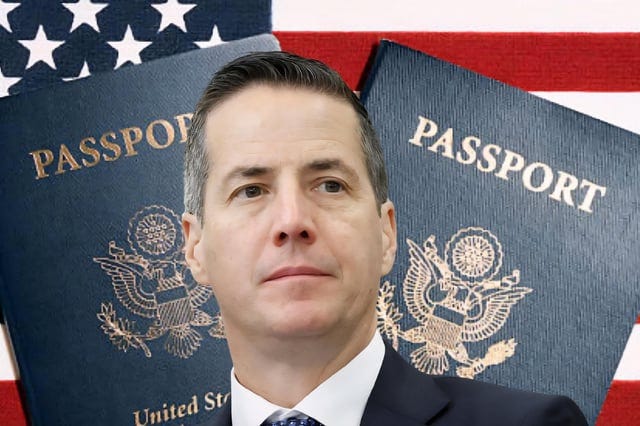
On December 1, 2025, Senator Bernie Moreno of Ohio introduced a bill that would effectively ban dual citizenship in the United States. Called the Exclusive Citizenship Act of 2025, it would require Americans who hold another nationality to choose. They can either renounce their foreign citizenship or be deemed to have voluntarily relinquished their U.S. citizenship.
In a statement, Senator Moreno asserts, “It was an honor to pledge an Oath of Allegiance to the United States of America and ONLY to the United States of America! Being an American citizen is an honor and a privilege — and if you want to be an American, it’s all or nothing. It’s time to end dual citizenship for good.” Moreno is himself a naturalized citizen. He was born in Colombia and renounced his citizenship upon naturalization in the U.S. at age 18.
“If you’re an American, you’re an American citizen — you’re only an American citizen,” argues Ohio College Republican leader Gabe Guidarini, in support of the bill. He continues, “If you’re going to come to this country and use our resources and seek the American dream, then that has to be a full-term commitment to the American dream. Otherwise, how can we trust you?”
The law offers a one-year window for compliance, after which, in theory, the government would begin stripping Americans of their legal status.
Why This is Unreasonable
This radical proposal has no viable enforcement mechanism. There is no national registry of dual citizens. While the State Department and Department of Homeland Security have some information regarding passport applications and visa records, there is no database or list. It is unclear how many people such legislation may impact. Estimates vary wildly, from a few hundred thousand to several million.
How is that possible? There are many reasons, but one of the most important is that there are several ways to obtain dual citizenship. Dual citizenship can be acquired in many private, often undocumented ways, including by birth abroad, through a parent, through naturalization in another country, through marriage, or via ancestral rights. Some choose to claim it. Others never do.
How Could it Be Enforced?
Without a database or registry, the starting point for enforcement is nearly impossible. The resources necessary to slog through all potential records, explore possible avenues to obtain dual citizenship, verify deaths to remove obsolete records, remove duplicates, and create a working list are unimaginable.
The alternatives are nearly equally unthinkable. One option would be to verify every American citizen against potential dual citizenship and root out violations from there. This would require cooperation from all other nations, extensive research and time, and constant modification. Another means would require extensive surveillance, seizure at points of entry, and related authoritarian policies.
What About the Law?
Despite using the term “citizen” multiple times, the Constitution did not initially define citizenship. Instead, states were allowed to interpret it as they wished. In 1857, the Supreme Court sought to address the inconsistency. The result was the deeply problematic Dred Scott decision, which stated “People of African descent, whether enslaved or free, could not be citizens of the United States.” This exposed the risk of weaponization of the lack of clarity, leading to the passage of the Fourteenth Amendment in 1868 following the Civil War. It remains the only definition of citizenship in the Constitution.
The Supreme Court has weighed in again twice. In United States v. Wong Kim Ark in 1898, the court affirmed that the Fourteenth Amendment guarantees birthright citizenship to virtually anyone born on U.S. soil, regardless of their parents’ nationality or immigration status. For context, this occurred when Chinese immigrants were not eligible for naturalization. This case cemented the principle that citizenship by birth in the U.S. is a constitutional right. It only excludes specific groups, like children of foreign diplomats or enemy occupiers — not immigrants or undocumented people.
In 1967, the Court went further. The case, Afroyim v. Rusk, revolved around involuntary revocation of citizenship. Specifically, the issue was Afroyim, a naturalized citizen, voting in a foreign election. The Supreme Court ruled that citizenship is a constitutional right and cannot be involuntarily taken away by the government. It established that the Fourteenth Amendment protects citizenship and that it can be lost only if a citizen knowingly and voluntarily renounces it.
Yet, despite being unenforceable and unconstitutional under the Fourteenth Amendment, the bill is real. It’s sitting in the Senate, and its implications are chilling.
The Supreme Court Case
On January 20, 2025, the Trump administration issued Executive Order 14160 (“Protecting the Meaning and Value of American Citizenship”), which instructed federal agencies not to recognize U.S. citizenship for certain children born in the U.S. if their parents are undocumented or hold only temporary immigration status. The outcry was immediate. Various states, civil rights organizations, and immigrant rights groups challenged the order in court. Multiple lower courts issued injunctions blocking enforcement of the order, concluding that it is likely a violation of the Citizenship Clause of the Fourteenth Amendment.
The word “likely” may seem absurd, but there is a reason for its usage. In legal parlance, early in a case, such as in a preliminary injunction, the word here indicates that the courts found that, despite the case not yet being fully heard, the law is so clearly on the side of the challengers that the judge believes they are likely to prevail, thus justifying the court's preemptive issuing of the injunction.
The Trump administration appealed the preliminary injunctions, taking the issue to federal appellate courts. Because this is a constitutional challenge involving a sitting president’s executive authority and Fourteenth Amendment rights, the case fast-tracked its way to the Supreme Court.
On December 5, 2025, the Supreme Court agreed to hear the case. Experts argue that the law is clear. The Fourteenth Amendment, as affirmed by the Supreme Court twice, justifies preliminary injunctions, and the cases should proceed through the lower courts without interference. Because the new case before the Court stems directly from an executive action, many legal scholars further call it a constitutional crisis rather than a policy debate.
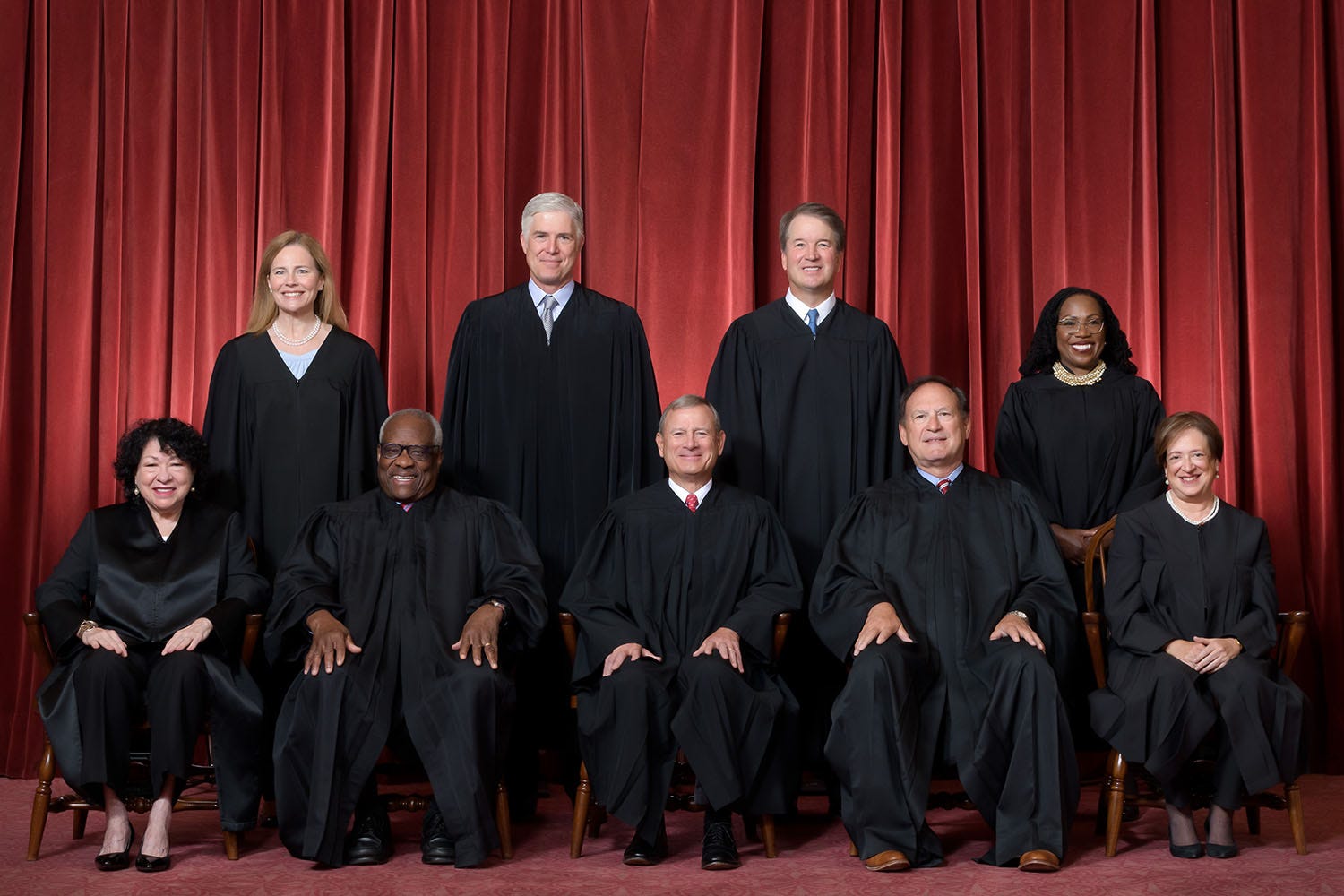
This begs the question: why would the Supreme Court agree to take up this case when the precedent appears clear? Historically, the highest court receives thousands of requests per year and typically accepts only 1 to 2% of them for hearing. The only plausible reason SCOTUS would take this case — under these circumstances — is that at least four justices, the number needed to grant cert, are interested in revisiting or possibly overturning established precedent. Though technically, the case before them is about the scope of the injunctions and thus the power of the lower courts, the Court can’t decide whether the injunction was justified without at least analyzing the underlying constitutional claims. The result could still be a functional erosion of the Fourteenth Amendment’s guarantees by enabling selective enforcement of executive orders that directly violate it.
See our reporting from May, here:
Note: Articles over 45 days old live in our archive. Become a paid subscriber for exclusive perks including occasional early access, unique content, and full access to our full 1300+ article archive.

These Are Not Policies. They Are Signals.
What unites these two developments is not some coordinated legal theory, but a shared political instinct to narrow the circle of American identity. It aims to change citizenship from a legal status into a conditional privilege, to ask not just where you were born or what you contribute, but whether you pass an unspoken ideological test. Further, it attempts to enforce that test with the full force of the law.
They are not serious responses to problems of national security, migration flows, or administrative integrity. The dual citizenship bill cannot be implemented without an Orwellian surveillance apparatus that does not exist. The birthright citizenship challenge runs directly into the granite wall of the Constitution.
These are not functional reforms. They are ideological weapons, tools to reshape who is seen as fully American.
The MAGA Project: Nostalgia, Not Governance
Why now? Why these policies, in this moment?
The movement currently driving the American right — the Make America Great Again movement — is not motivated by governance, but by nostalgia. It is a campaign to rewind, not rebuild. When they say “great,” they don’t mean united, inclusive, or strong in diversity. They mean the 1950s. They mean the Gilded Age. They mean the unchallenged rule of white, Christian, native-born men and the silencing of everyone else.
The aim isn’t reform. It’s regression.
Myth Over Memory: The Weaponization of “In God We Trust”
Supporters of these measures often invoke a kind of mythic America, one defined by moral clarity, social order, and religious conviction. They cite mottos like “In God We Trust” as proof of a Christian national foundation, ignoring that this phrase was adopted as the official national motto only in 1956, not by the Founders, but by Cold War politicians seeking to draw a contrast with “godless communism.”
It was a tool of political fear, not a theological declaration.
The real founding motto — the one etched into the Great Seal of the United States — is E pluribus unum.
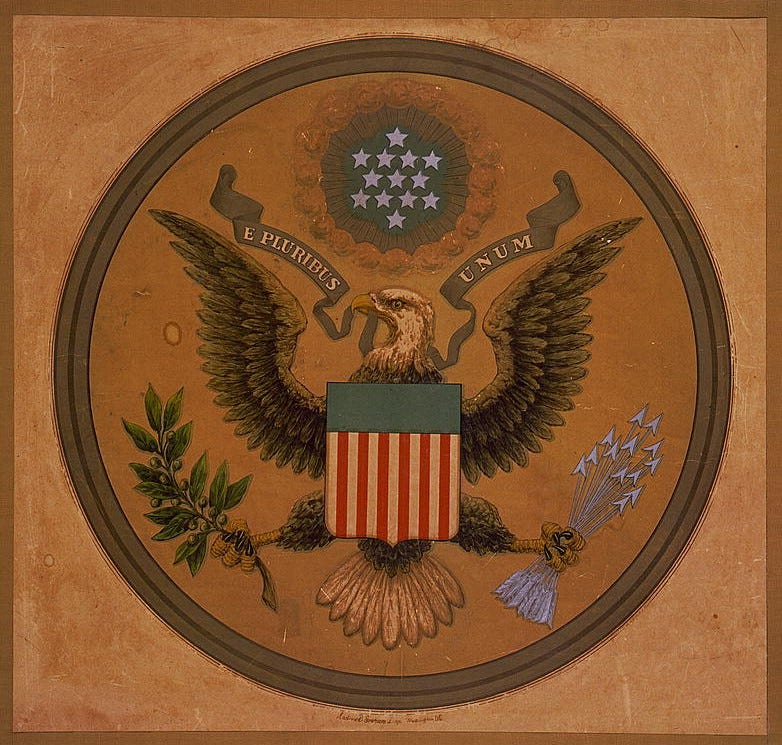
Out of many, one. That phrase reflected a revolutionary idea at the time, that people from different backgrounds, beliefs, and nations could come together to form a single democratic people. It was never about uniformity. It was about unity amid difference.
This Isn’t a Revival. It’s a Last Gasp.
This isn’t about strengthening the nation. It’s about shrinking it, shrinking who it serves, who it protects, and who gets to be counted as belonging.
White Christian men no longer hold uncontested dominance in culture or power. The country has become more diverse, more pluralistic, more complicated, and, to some, therefore more threatening. This wave of regressive policy is not about solving that complexity, but erasing it.
The real issue is that this movement wants capitalism without multiculturalism. They want to profit from global markets, labor, and culture without accepting the people who come with them. They want to extract from the world, but not live in it.
That’s not patriotism. That’s colonialism with better branding.
The Founding We Were Supposed to Remember
The people now pushing this vision of faith-and-flag nationalism are often descendants of those who fled exactly that kind of world. Many came to what became the United States to escape religious persecution, royal decrees, and rigid social orders.
The American experiment — even in its flawed inception — was built on a desire to separate belief from governance, to ensure the state could not define or enforce identity. And while white, land-owning men drafted the Constitution, it was also written with the capacity to evolve.
It was never meant to be sacred. It was meant to be improved. “To form a more perfect union,” one of the key phrases of the Preamble, did not claim that this document would create a utopia or an exclusionary nation. It sought, instead, to aspire to do better and to do so together.
The Dangerous Redefinition of Citizenship
No one is American without context. Unless you are 100% Indigenous, your right to be here is the result of colonization, slavery, or migration. That is not shameful. That is reality. Recognizing it is not about guilt. It’s about responsibility.
This is what makes today’s efforts so insidious. They do not reflect our past. They seek to cancel our future.
What is emerging now is a vision of citizenship not rooted in law, but in ideology, not in rights, but in belief. You’re no longer protected because you were born here or naturalized here. You’re only protected if you pass the test, believe the right things, hold only one passport, worship the right way, and speak the right language.
That is how democracies collapse, not in war, but in redefinition.
We Can’t Let Them Rebrand Belonging
Citizenship in a democracy is not a spiritual purity. It is a shared civic contract. It is imperfect, evolving, and legally grounded — not divinely granted. It is expansive, not exclusive.
To make E pluribus unum mean something again is not nostalgia, but resistance.
We cannot allow the past — or the myths built to protect it — to swallow our future. The stakes are nothing less than who gets to belong, who gets to stay, and who gets to be American.
Don’t let the bastards sneak anything past you. Subscribe and get your daily dose of rage and receipts delivered fresh, before the spin doctors can scrub it.
Sources:
“US senator from Ohio introduces bill to ban dual citizenship in the US” — WCNC
“Sen. Moreno’s Bill Seeks to End Dual Citizenship in U.S.” — Forbes
“Ohio Senator Bernie Moreno introduces bill to end dual citizenship” — WFMJ
“Ohio Republican U.S. Sen. Bernie Moreno wants to ban dual citizenship” — Ohio Capital Journal
“Is abolishing dual citizenship constitutional? Here’s what to know” — Inquirer
“Supreme Court agrees to hear Trump’s challenge to birthright citizenship” — SCOTUSblog
“Supreme Court to decide whether Trump’s birthright citizenship order violates the Constitution” — AP News
“US appeals court blocks Trump’s order curtailing birthright citizenship” — Reuters
Executive Order 14160 — Wikipedia
“In God We Trust” — Wikipedia
Due to their reckless behavior, had my parents stayed in England just a few more months when I was a teen, and I had the privilege then to have choosen dual citizenship, I would be relocating now. These morons are going to cause a great many, wonderful, intelligent people to flee.
America is an idea - and central to that idea is that everyone is welcome to come here, to be a part of our dream. EVERYONE. I suppose Trump and his ilk want us to decide we are "full." - and also, quite interesting that they essentially want primarily European versions of Americans - it's as if they are saying "we had the good fortune to be born here and/or naturalized, but too bad for you." Waiting for the "America is Closed" signs any day now.