


Imagine if your doctor told you to stop weighing yourself because the scale was “too much hassle.” You’d laugh them out of the room. How are you supposed to track your health if you’re not even allowed to see the numbers?
That’s exactly what the Environmental Protection Agency just proposed for America’s biggest polluters. For more than a decade, power plants, refineries, landfills, and other industrial giants have been required to publicly report how much climate-warming gas they pump into the air. That information isn’t just for scientists. It’s for all of us. States use it to set policy. Communities use it to hold local plants accountable. Investors use it to measure climate risk.
Now, the EPA wants to eliminate the program, labeling it “burdensome paperwork” that doesn’t directly improve health or the environment. What it really does is make life easier for polluters and much harder for the public to know what’s going on in their own backyard.
If this proposal goes through, we’ll be flying blind. The public will be left guessing about pollution, while corporations pocket billions in “savings.” This isn’t cutting red tape. It’s cutting the lights.
So what exactly are we about to lose? To answer that, you have to understand what the program actually did.
Want to Know Your Rights?
Download a free digital copy of the U.S. Constitution—the same document Trump is trying to bulldoze. Learn exactly what he's breaking… and how to fight back.
📬 Stay Informed. Stay Loud.
Subscribe to The Coffman Chronicle for no-BS political analysis, action guides, and weekly truth bombs you won’t get from corporate media.
What the Program Did
The Greenhouse Gas Reporting Program may sound like government jargon, but the idea behind it was simple: if you pollute, you have to show your work.
Since 2010, approximately 8,000 of the largest polluters in the country — including power plants, oil refineries, landfills, chemical plants, and large manufacturers — have been required to report their greenhouse gas emissions annually. They didn’t just mail it in to Washington and forget about it. The data was published online for anyone to see.
That information became the backbone of climate accountability in the U.S.:
States used it to design their own climate laws and measure whether they were cutting pollution.
Communities living near smokestacks or refineries could track how much was being released into their air.
Researchers relied on it to study trends and provide policy advice.
Investors used it to verify whether companies were being truthful in their sustainability reports.
In plain terms, it was the receipts. Without it, states, watchdogs, and regular people would have had no way of knowing if promises about “cutting emissions” were real or just PR spin.
The program wasn’t perfect. It didn’t cover every source of pollution, and some industries found ways to game the numbers, but it was the single best tool Americans had to see who was polluting and how much. And that’s exactly what’s now on the chopping block.
What the EPA Wants to Do Now
So what’s actually changing? The EPA, under Administrator Lee Zeldin, has proposed ending mandatory reporting for most of those major polluters. That means many power plants, refineries, and industrial suppliers would no longer have to tell the public how much carbon dioxide, methane, or other greenhouse gases they’re releasing.
A few scraps of reporting might survive — methane from oil and gas sites, for example — but the backbone of the system would be gutted. And in some cases, reporting wouldn’t just be rolled back; it would be suspended until 2034. That’s nearly a decade of emissions disappearing from public view.
The EPA’s official explanation? The program is “burdensome” paperwork that doesn’t deliver a “material impact” on health or the environment. Translation: Keeping the public informed isn’t worth the hassle for industry.
For companies, the math is clear. Cutting the program could save them about $2.4 billion over ten years. That’s the equivalent of a major corporate tax break, but without a single vote in Congress.
For the public, the math is just as clear. We lose the receipts. We won’t know if emissions are rising or falling, which plants are the worst offenders, or whether anyone is being truthful about “going green.”
This isn’t a cost-saving measure. It’s a cover-your-tracks measure. And when polluters cover their tracks, it’s ordinary people who pay the price. That’s why this matters far beyond Washington paperwork.
Why This Matters for Ordinary People
It’s easy to think greenhouse gas reporting is some far-off, bureaucratic fight that only policy wonks care about. But strip away the acronyms, and this comes down to your air, your health, and your wallet.
Think about it this way:
If you live downwind of a power plant or refinery, those numbers tell you how much pollution is being pumped into your community’s sky. Without them, you’re left guessing.
If your state is trying to cut emissions to avoid worsening floods, wildfires, or heat waves, that data was its roadmap. Without it, your leaders are flying blind.
If your kid has asthma or your town faces rising utility costs because of climate-driven storms, you have a stake in knowing which industries are driving the problem.
We don’t run our households this way. We check our bank balances, our grocery receipts, and our utility bills. We track calories when we’re dieting or miles when we’re driving. Information is how we make decisions.
Now imagine trying to manage your finances if the bank stopped sending statements because “it’s too much paperwork.” That’s what the EPA is proposing with emissions data. Oh, and you can’t pull it up online either.
And here’s the real kicker: when pollution drives up hospital visits, damages crops, or fuels disaster clean-ups, it’s taxpayers who pay the bill. While the industry pockets $2.4 billion in “savings,” the public is left with higher health costs, increased insurance premiums, and higher disaster recovery bills.
This isn’t an abstract policy debate. It’s about whether families get to know what’s in the air they breathe, and whether we’re forced to foot the bill for problems we’re not even allowed to measure.
Who Wins and Who Loses
Let’s be clear: this rollback isn’t neutral. It creates winners and losers, and the split tells you everything about whose side the EPA is really on.
The Winners:
Big Polluters. Power plants, oil refineries, and chemical giants no longer have to disclose their records, or even keep any. Less reporting means less scrutiny, less pressure to clean up, and fewer lawsuits or bad headlines.
Industry Lobbyists. For years, they’ve complained that reporting requirements are “burdensome.” Now they get exactly what they wanted, a shield from accountability, dressed up as “regulatory relief.”
Political Allies. Rolling back transparency lets the administration claim it’s cutting “red tape,” even though what’s really being cut is the public’s right to know.
The Losers:
Ordinary Americans. Families lose their clearest picture of what’s in their air and how it connects to health costs, higher utility bills, or local climate risks.
States and Local Governments. Many relied on the EPA’s data to enforce their own climate rules. Now they’ll either have to spend millions building their own systems or give up on accurate tracking.
Investors and Businesses Playing by the Rules. Companies that actually report emissions honestly — or spend money to cut them — now get undercut by competitors who can hide their pollution.
Taxpayers. When unchecked emissions fuel more asthma emergencies, crop failures, or billion-dollar disasters, the cleanup bill falls on the public’s shoulders.
So who really benefits? A narrow slice of industry, at the direct expense of everyone else. This isn’t about saving time on paperwork. It’s about protecting profits by keeping the public in the dark.
The Political Context
The EPA’s move to kill pollution reporting isn’t happening in a vacuum. It’s part of a much larger playbook, one that’s been unfolding steadily since Trump returned to the White House and tapped Lee Zeldin to run the EPA.
The strategy is simple: dismantle oversight piece by piece.
Rollback #1: weaken power plant emission standards.
Rollback #2: gut vehicle efficiency rules.
Rollback #3: undermine climate science advisory boards.
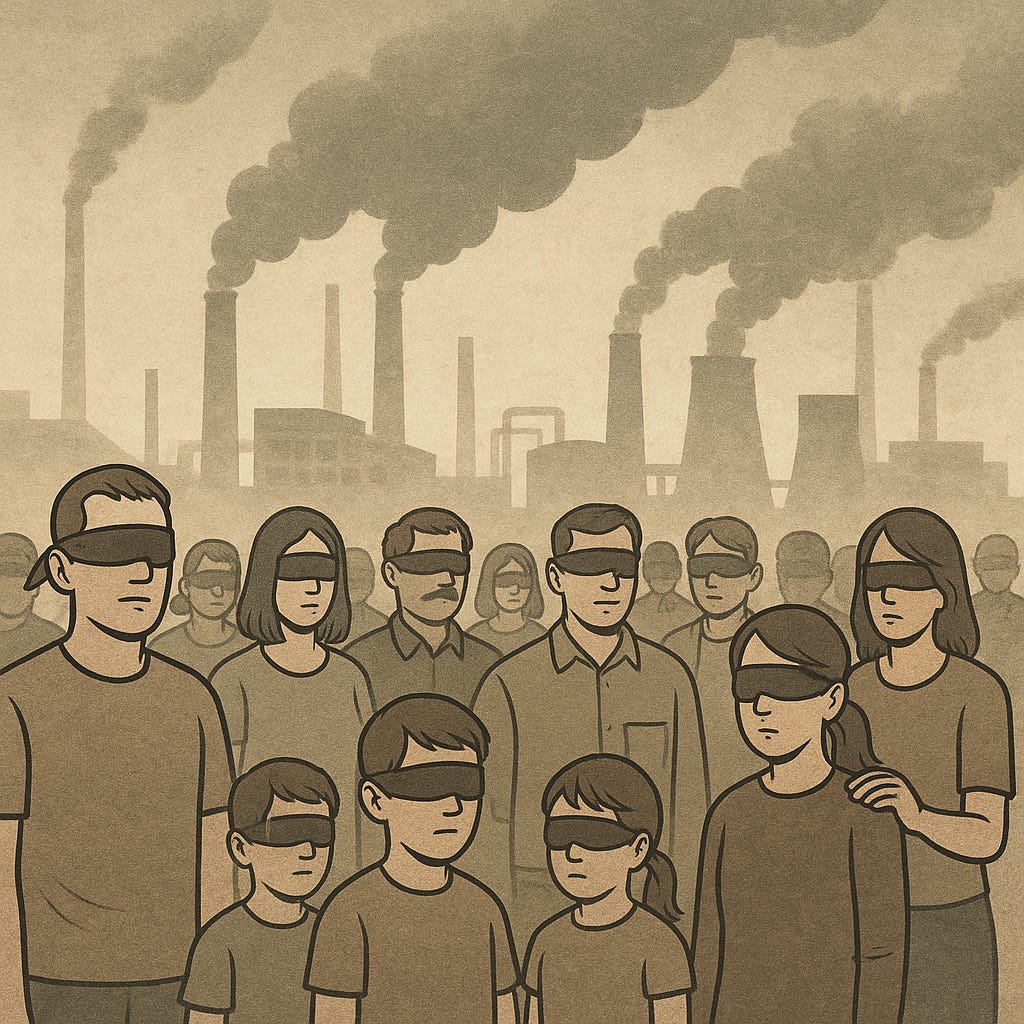
And now, Rollback #4: blindfold the public by cutting off the very data that proves whether emissions are rising or falling.
Each of these steps may appear to be a technical “regulatory change,” but taken together, they form a pattern: reducing corporate accountability, silencing watchdogs, and shrinking the government’s ability to respond to climate change.
This proposal also fits a broader Trump narrative — pitching environmental safeguards as “red tape” and climate action as an “elitist agenda.” By calling emissions reporting “burdensome paperwork,” the administration reframes transparency as an obstacle rather than a safeguard.
And the deeper question is even bigger: what kind of country do we want to be — one that keeps its eyes open, or one that chooses to look away?
The Bigger Picture: Accountability vs. Secrecy
At its core, this fight isn’t about paperwork, spreadsheets, or regulatory jargon. It’s about whether Americans get to know the truth about what’s happening in their own backyard.
Transparency has always been the bare minimum of accountability. We expect food labels to tell us what we’re eating. We expect banks to show us our balances. We expect doctors to explain our test results. Without information, there is no trust — only blind faith.
That’s what this rollback demands: blind faith in the very industries that profit from pollution. It asks us to let the fox guard the henhouse, to trust polluters to grade their own homework, and to take their word for it that everything is fine.
But history tells us the opposite. From tobacco to lead paint to oil spills, industries often conceal the damage until the evidence becomes undeniable. Data is often the only tool communities have to push back. Strip that away, and the public isn’t just disempowered. It’s deliberately kept in the dark.
This isn’t regulatory reform. It’s regulatory amnesia. And once the numbers disappear, so does accountability.
Conclusion & Call to Action
The EPA wants to save industry $2.4 billion over ten years, but the real cost will be measured in hospital visits, higher insurance premiums, and taxpayer-funded disaster cleanups. That’s not savings. That’s a bill quietly shifted from corporations onto ordinary Americans.
We can’t fix what we can’t measure. And right now, the agency that’s supposed to protect our air and water is proposing to blindfold the public so polluters can operate in the shadows.
But the story doesn’t end here. The rule is open to public comment, which means ordinary people still have a voice. Submitting a comment may feel small, but those statements become part of the legal record that courts and lawmakers can’t ignore. And every phone call to Congress adds pressure to maintain transparency.
This is more than a climate issue. It’s a democracy issue. Do we have the right to see the receipts when corporations pollute our communities, or will that information be buried to protect profits?
The EPA wants us to think emissions reporting is “red tape.” Don’t buy it. Transparency is a safeguard. Without it, we’re not just losing data. We’re losing the power to defend our own future.
If we can’t even measure the problem, we’ll never fix it.
Stay Informed. Stay Loud.
Subscribe to The Coffman Chronicle for no-BS political analysis, action guides, and daily truth bombs you won’t get from corporate media.
Bibliography:
“US EPA proposes end to mandatory greenhouse gas reporting.” Reuters, September 12, 2025.
“EPA wants to end a requirement that large polluters report their greenhouse gas emissions.” AP News, September 12, 2025.
“EPA says companies shouldn’t have to report planet-warming emissions.” The Washington Post, September 12, 2025.
“EPA proposes ending Greenhouse Gas Reporting Program.” Politico Pro, September 12, 2025.
“US environment agency could end reporting of greenhouse gas emissions.” The Guardian, September 12, 2025.
“Reconsideration of the Greenhouse Gas Reporting Program: Fact Sheet.” US EPA, September 2025.
This era is the final nail in the coffin to FDR's New Deal and Johnson's Great Society - Trump and Heritage are ending it all.
" It’s a democracy issue"
No, first and foremost, it's a health issue, and a continuation of all the actions that bloody industry is using - and has been for decades - to keep hiding just how bad that is from the American people.
It's literally killing people.