

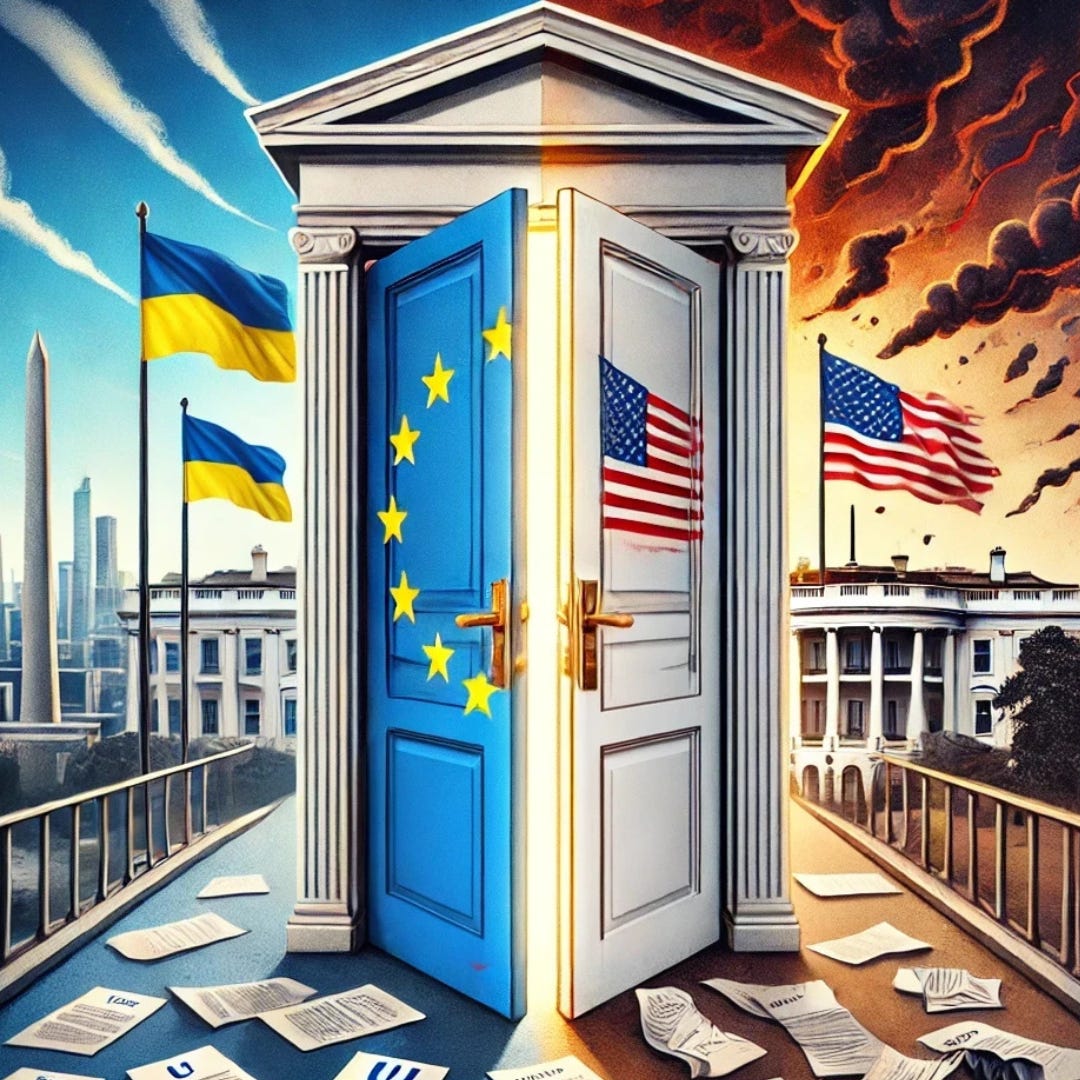
While Europe offered Ukraine a minerals partnership, Donald Trump secured a diplomatic disaster.
The European Union proposed a deal on February 24, seeking access to Ukraine’s vast reserves of critical minerals vital for Europe’s tech, energy, and defense industries. Unlike the U.S. proposal, which attempted to secure partial control over Ukrainian mineral revenue, the EU’s offer was framed as a “win-win partnership” rather than an outright purchase of mineral rights. The deal is still in negotiation but presents an alternative path for Ukraine that doesn’t require bending the knee to Washington.
The Coffman Chronicle is powered by YOU—no billionaires, no corporate overlords. Help us expose the BS, deliver sharp insights, and keep you informed.
You can fuel the fight and join the movement for just $8 a month or $80 a year.
Not ready to subscribe? No worries, chaos loves company, and you're always welcome.
Four days later, Trump met with Ukrainian President Volodymyr Zelenskyy in the Oval Office. Instead of closing his own minerals deal, he blew it up. The meeting spiraled into chaos, with Trump warning Zelenskyy he was “gambling with World War Three” and Vice President J.D. Vance delivering a patronizing lecture.
Zelenskyy had good reason to hesitate. The New York Times reported that the U.S. proposal would have forced Ukraine to hand over revenues from its minerals, oil, gas, ports, and other infrastructure—totaling up to $500 billion—as repayment for U.S. support. Zelenskyy, ahead of the visit, reportedly declared, “I will not sign what 10 generations of Ukrainians will have to pay back.” The deal was dead on arrival.
Oval Office Carnage, European Calculations
While Trump left his own negotiations in shambles, European leaders wasted no time reaffirming their commitment to Ukraine. French President Emmanuel Macron dismissed Trump’s bullying, stating, “Russia is the aggressor, and Ukraine is the aggressed people.” German Chancellor Olaf Scholz, typically reserved, took an uncharacteristically strong stance supporting Kyiv. EU Commission President Ursula von der Leyen sent a direct message of solidarity to Zelenskyy: “Be strong, be brave, be fearless.”
U.S. Silence Speaks Volumes
Despite the high stakes, the White House has barely acknowledged the EU’s proposed deal: no official statement, no press briefing, nothing. Major U.S. media outlets? Also crickets. Instead, coverage has been dominated by the fallout from Trump’s Oval Office theatrics, with pundits either spinning the incident as a show of strength or an unforced error.
A Power Shift in Real Time
The message is clear: While the U.S. hesitates and strong-arms allies, Europe is making moves. The EU’s proposed minerals partnership—still in negotiation—signals a geopolitical shift in which Europe, not Washington, may emerge as Ukraine’s most reliable economic partner.
For Ukraine, the choice is becoming apparent. For America, the silence is deafening.
See our previous reporting on Ukraine here:


Receipts:
EU’s minerals deal proposal (Politico)
Trump-Zelenskyy Oval Office meltdown (The Guardian)
U.S.-Ukraine minerals deal collapses (AP News)
European leaders rally behind Ukraine (The Guardian)
Trump’s tough talk on Ukraine deal (Reuters)
Zelenskyy’s rejection of U.S. minerals deal, NYT report on $500B repayment terms (Politico)