


This week, President Donald Trump signed two executive orders that further solidify his administration’s alignment with Christian nationalism and authoritarian governance. The first, a task force on “anti-Christian bias,” directs the Department of Justice, FBI, and IRS to investigate and eliminate discrimination against Christians within federal agencies. The second re-establishes the White House Faith Office, which aims to give faith-based organizations a more significant role in policymaking.
On the surface, these actions might seem like a routine Republican effort to appeal to evangelical voters. But in reality, they are part of a much larger, more dangerous strategy—one that aligns with Project 2025, the broader conservative effort to restructure the government in favor of religious nationalism. These moves also mirror authoritarian tactics worldwide, where leaders use religion as a tool to consolidate power.
The Coffman Chronicle is powered by YOU—no billionaires, no corporate overlords. Help us keep exposing the BS, delivering sharp insights, and keeping you informed.
For just $8 a month or $80 a year, you can fuel the fight and be part of the movement.
Not ready to subscribe? No worries, chaos loves company, and you're always welcome. But if you’re fired up to keep us loud, proud, and unfiltered, smash that subscribe button now!
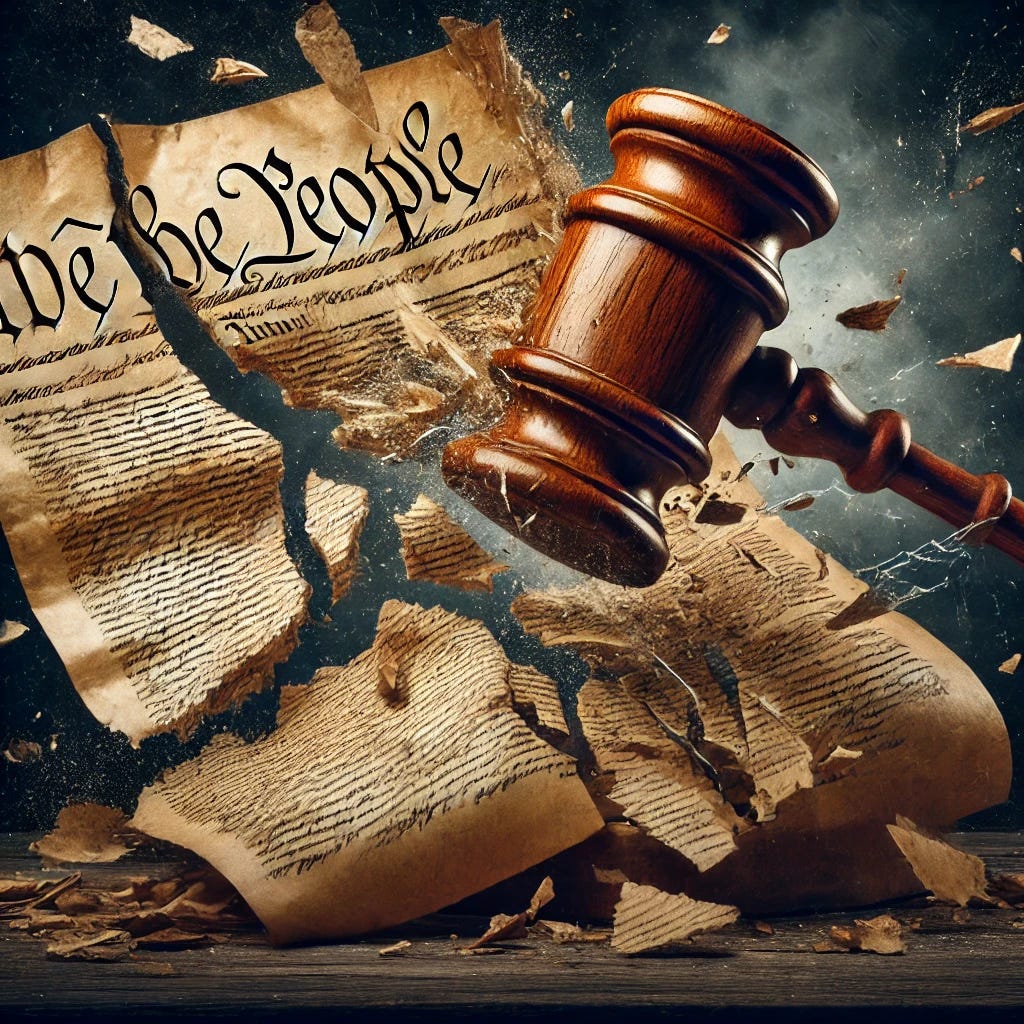
A Religious Agenda Rooted in Christian Nationalism
Trump’s focus on Christianity—to the exclusion of all other religions—fits directly into White Christian Nationalism. This ideology argues the United States was founded as a Christian nation and should be governed by biblical principles. This belief system, popular among Trump’s base, is intertwined with white nationalist politics, as it often equates Christianity with European-descended Americans while marginalizing religious minorities and immigrants.
His “anti-Christian bias” task force follows the same logic that far-right groups have used for years: claiming white Christians are under attack despite being the dominant religious and cultural group in the country. FBI hate crime data consistently shows that Jewish and Muslim Americans experience more religiously motivated hate crimes than Christians, yet Trump’s order ignores them.
By prioritizing Christianity above all other faiths, Trump is not protecting religious freedom; he is using religion as a weapon to mobilize his base and justify government interference in religious affairs.
How This Fits Into Project 2025
Trump’s executive orders are not isolated actions but part of a much larger plan known as Project 2025. Spearheaded by the Heritage Foundation and other conservative organizations, this initiative is a blueprint for restructuring the federal government in favor of Christian nationalist ideology.
Among its goals:
Weaken the separation of church and state by embedding Christian values into federal policies.
Replace career government workers with ideological loyalists.
Eliminate progressive programs in education, healthcare, and civil rights that conflict with conservative Christian views.
Trump’s White House Faith Office will likely channel federal funds toward Christian organizations, while the “anti-Christian bias” task force could pressure agencies into prioritizing Christian interests over others.
Trump’s Longstanding Signals to White Christian Nationalists
These executive orders are just the latest in a long history of Trump signaling to white Christian nationalists and far-right extremists.
Charlottesville (2017): After white nationalists chanted “Jews will not replace us” at the deadly “Unite the Right” rally, Trump refused to fully condemn them, saying there were “very fine people on both sides.”
Proud Boys (2020 Debate): When asked to condemn white supremacist groups, Trump instead told the Proud Boys to “stand back and stand by”, which members of the group interpreted as a call to action.
January 6 Pardons (2025): One of Trump’s first acts in office was pardoning white nationalist extremists convicted for their roles in the Capitol insurrection, including Proud Boys leader Enrique Tarrio and Oath Keepers founder Stewart Rhodes.
By refusing to condemn white supremacy, elevating Christian nationalism, and now enshrining it into policy, Trump has continually aligned himself with the far-right.
Bannon, Miller, and Trump’s Far-Right Religious Network
Trump’s embrace of Christian nationalism has been heavily influenced by key advisors like Steve Bannon and Stephen Miller, both of whom have played crucial roles in shaping his nationalist, anti-immigrant, and authoritarian policies.
Steve Bannon: The Christian Nationalist Ideologue
Bannon has long pushed for a Christian nationalist revolution, arguing that Western civilization is under siege from globalism, secularism, and non-Christian immigration.
He has promoted far-right Catholic and evangelical leaders who seek to blend Christianity with authoritarian governance.
Trump’s executive orders directly reflect Bannon’s vision—using religion as a tool to consolidate power and marginalize political opponents.
Stephen Miller: The Architect of Anti-Immigrant, White Christian Policies
Miller was the mastermind behind Trump’s Muslim Ban, family separations at the border, and policies limiting non-white immigration.
His ideology aligns closely with white Christian nationalism, aiming to preserve America’s “Christian heritage” by restricting immigration from non-European countries.
Trump’s latest religious orders continue Miller’s broader agenda—strengthening the dominance of white, conservative Christians in American governance.
Together, Bannon and Miller have shaped Trump’s authoritarian Christian nationalist strategy, which these latest executive orders now codify into federal policy.
Pastor Paula White-Cain: The Prosperity Gospel Connection
Trump’s newly re-established White House Faith Office will be led by Pastor Paula White-Cain, a televangelist known for preaching the prosperity gospel, the belief that wealth and success are signs of God’s favor.
White-Cain was Trump’s personal spiritual advisor during his first term, leading prayer events at the White House.
She is a significant figure in evangelical Christian nationalism, claiming that Trump was “appointed by God” to lead the country.
Her leadership in this faith office signals that Trump’s religious policies will likely favor charismatic evangelical groups, especially those aligned with his political agenda.
Rather than focusing on religious freedom for all, White-Cain’s leadership suggests that government resources will be used to promote Trump’s evangelical Christian base, further blurring the line between church and state.
Other States Following Suit
Trump’s religious agenda is not isolated—several states have moved to declare Christianity a guiding principle of government.
North Dakota (February 7, 2025): Proposed a bill proclaiming the state a Christian state, citing Jesus Christ as its rightful ruler.
Louisiana (June 2024): Passed a law requiring the Ten Commandments in public schools, now facing legal challenges.
Texas (November 2024): Introduced a curriculum integrating Bible teachings into K-12 education. Optional with financial incentive, for now.
Oklahoma (2024): Mandated Bible instruction in public schools.
These state-level actions further blur the separation of church and state, creating a nationwide push toward Christian nationalism.
The Coming Legal Challenges
Trump’s orders are almost certain to face legal challenges, particularly on constitutional grounds.
First Amendment (Establishment Clause) → The government cannot favor one religion over another, yet Trump’s orders explicitly prioritize Christianity.
Equal Protection (14th Amendment) → If non-Christian groups are excluded from the Faith Office’s funding or protections, they could sue for religious discrimination.
Weaponization of Government Agencies → If the DOJ, FBI, or IRS target individuals or organizations based on religion, lawsuits could arise over abuse of power and civil rights violations.
Organizations like the ACLU and Americans United for Separation of Church and State are likely preparing to challenge these orders in court.
Final Thoughts: A Theocratic Future?
Trump’s executive orders on religion are not about protecting faith. They are about consolidating power, suppressing opposition, and advancing a far-right Christian nationalist agenda.
The question is: Will Americans resist, or will they allow Trump’s vision of White Christian Nationalism to take hold?
Project 2025 was MAGA’s blueprint all along.
Make America Great Again
in other words:
Make America White Again
This is really a crazy nightmare becoming a reality.
Unbelievable…
🇨🇦🇺🇸
Yes - we are heading the way of Iran - or, well, Turkey. Christian Nationalists are aligned with oligarchs to seize power - I suspect the supposed Christians will be quite surprised when the oligarchs dispose of them