


The Money Was Already the Law
The money was not waiting for another election. Congress created the $27 billion Greenhouse Gas Reduction Fund through the Inflation Reduction Act of 2022. In 2024, the Environmental Protection Agency awarded $20 billion through two programs to eight nonprofit organizations financing clean-energy and energy-efficiency projects.
Five primary grantees later joined the lawsuit: Climate United Fund, awarded $6.97 billion; the Coalition for Green Capital, $5 billion; Power Forward Communities, $2 billion; Inclusiv, $1.87 billion; and the Justice Climate Fund, $940 million.
These were no longer proposed expenditures. The EPA had obligated the awards, and the Treasury Department had disbursed the funds into restricted Citibank accounts governed by the grant agreements and accompanying account-control agreements.
Then the administration changed. Access to the accounts was frozen in February 2025. On March 11, EPA Administrator Lee Zeldin terminated the grants, citing concerns about program integrity, conflicts of interest, fraud, waste, abuse, and misalignment with the agency’s priorities. The administration sought to terminate the agreements and reclaim money already obligated and disbursed under a law Congress had enacted.
The administration could have asked Congress to repeal the program, requested that lawmakers rescind any funds still legally available, or investigated specific violations. Instead, it attempted to obtain through administration what it had not obtained through legislation.
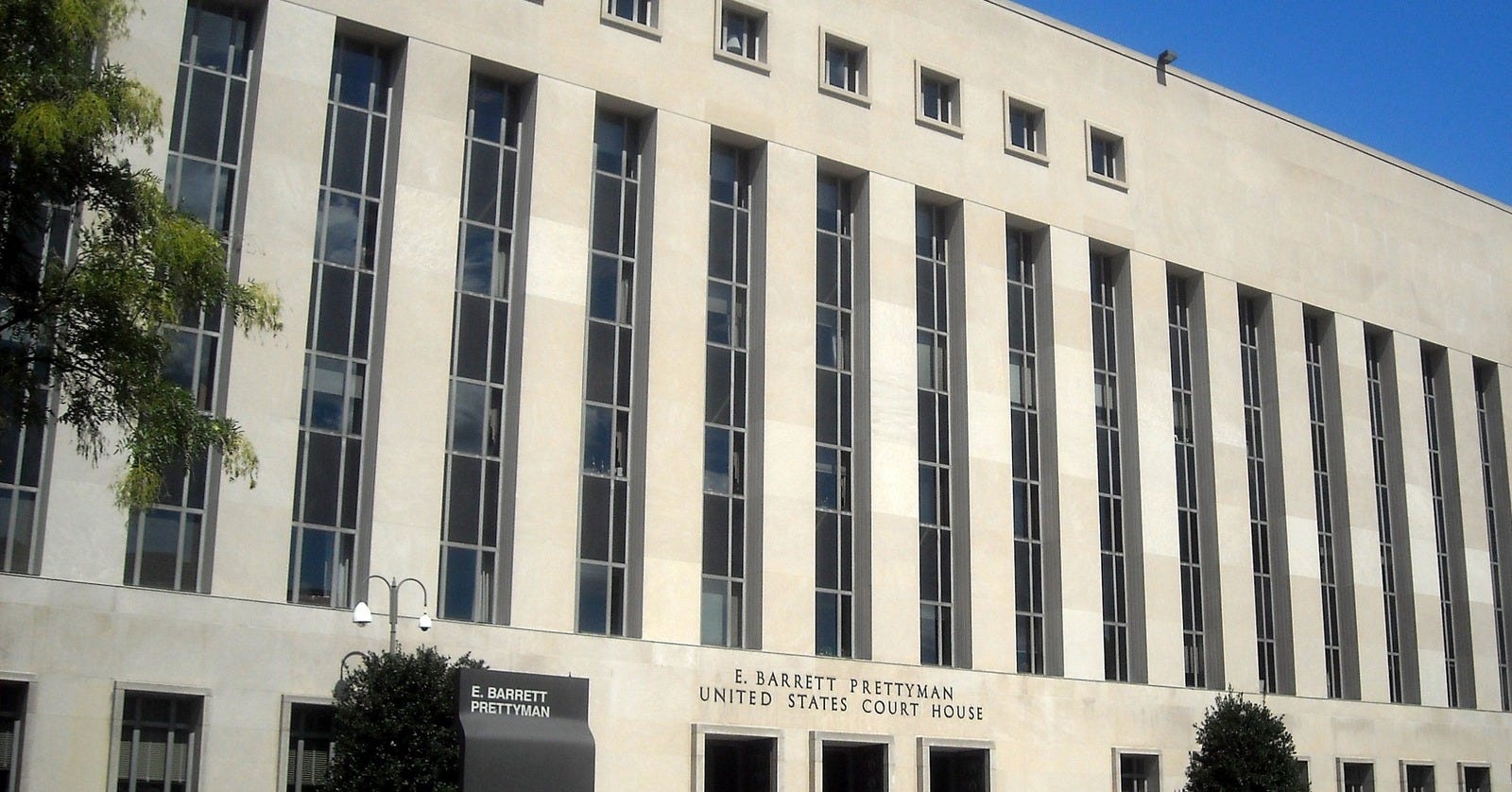
On August 4, 2026, the full U.S. Court of Appeals for the District of Columbia Circuit preserved the portion of a preliminary injunction blocking the EPA from carrying out its March 11 termination notices. Six judges concluded that terminating the grants and reclaiming the funds based solely on policy disagreement likely violated Congress’s mandatory appropriation.
The ruling is preliminary. The litigation is not over, and the grants have not been guaranteed permanent survival, but the restraint is real.
The court stopped the executive branch from treating presidential disagreement as authority to erase a spending decision Congress had already made. It preserved the dispute long enough for law, rather than administrative speed, to determine what happens next.
The Constitution is working, even though the constitutional process is not finished. A president may inherit laws he despises. He may criticize them and ask Congress to repeal them. What he may not do is treat an appropriation as optional because the policy behind it no longer carries his approval.
Congress made the choice. Congress supplied the money. The executive branch received responsibility for administering that decision. The Constitution’s answer begins with two words: Congress decides.
This Community Is Powered by You
What started as a small circle has grown into something much bigger, and it’s all because of readers like you.
Every time you forward this email, post it on socials, or bring someone new into the fold, you’re helping build one of the most passionate, independent political communities out there.
Want to keep the momentum going?
Share this newsletter with someone who should be part of this conversation.
Thank you for being here. It means everything.
Congress Had Already Made the Choice
Congress creates programs, appropriates funds, and places legal conditions around their use. Once legislation becomes law, the executive branch does not receive a second vote on whether the policy was wise. It must carry out the statute within the authority Congress provided.
Congress can spend unwisely. The people may punish lawmakers for those decisions, and a future Congress may change the law, but a bad congressional decision does not become an invitation for presidential government.
Allowing a president to erase an appropriation whenever he believes Congress chose badly would transfer the spending power from the branch closest to the people to the single official temporarily occupying the White House.
Congress made the policy choice and supplied the funds. The EPA received authority to administer the program within the law Congress wrote. The appropriation did not become presidential property when the Oval Office changed hands.
The Administration Chose Cancellation Over Legislation
The Trump administration was not powerless to challenge the program. It could investigate credible allegations, enforce grant conditions, and terminate recipients that committed material violations. It could also ask Congress to repeal the program or rescind funds that remained legally available. Constitutional government does not require silence when public money may be misused. It requires evidence and lawful authority.
The EPA described conflicts of interest, inadequate oversight, waste, fraud, and misalignment with agency priorities. Those allegations did not prove that every recipient had violated its agreement or that the president possessed the authority to erase the program as a whole.
A president’s judgment that a law is wasteful does not repeal the law. Political hostility may explain the result an administration wants, but it does not supply the power necessary to produce it.
The administration sought a legislative outcome: the grants would end, the money would be pulled back, and Congress’s earlier decision would no longer control. It pursued that outcome through agency termination notices rather than a congressional vote.
Administrative power became the vehicle for achieving a result the administration had not secured through legislation. The president may propose the repeal, but Congress must write it.
An Agency Cannot Become a Second Congress
The EPA did not create the program it attempted to terminate. Congress did. The agency could administer the grants, enforce lawful conditions, and protect the public from proven misuse. It could not transform that responsibility into an independent power to decide that the appropriation should no longer exist.
An agency is not a second Congress. The Constitution gives Congress control over the public purse and gives the president responsibility for faithfully executing the law. It does not provide an administrative veto after legislation has been enacted.
If presidential disagreement were enough to suspend an appropriation, Congress’s spending power would exist only on paper. The appropriation could remain printed in the statute while presidential preference determined whether it remained real.
The danger grows when a legislative result is hidden inside managerial language. Congressional repeal requires legislation and recorded votes. Administrative repeal may be described as a review, a pause, or a termination. The terminology sounds managerial, but the result is legislative.
Until Congress changes the law, an agency must remain an administrator of the statute, not a replacement for the legislature that wrote it.
Fraud Is an Investigation, Not a Slogan
Federal grants should not be protected from scrutiny. Agencies should investigate credible allegations of fraud, enforce written conditions, and terminate recipients that materially violate their agreements. Taxpayers should not finance misconduct merely because money was once appropriated.
However, accountability begins with evidence. The government must identify the violation and the authority permitting its response. The recipient must receive whatever process the law and the grant agreement require.
Political hostility can create a reason to investigate, but it cannot become the result before the evidence has been tested. Fraud is a factual allegation that must be investigated. It is not a constitutional password that allows the executive branch to unlock money Congress already appropriated.
The government may follow evidence to termination. It may not begin with termination and use political rhetoric as the evidence. If the EPA’s real objection is that Congress funded the wrong policy, the remedy is legislation.
The Promise Had Already Entered the Economy
Federal appropriations do not remain numbers on a government ledger once agencies begin carrying them out. They enter the economy.
Grant recipients hire employees, negotiate contracts, and arrange financing. Communities plan around funded projects. Workers organize household budgets around jobs that now appear real. Each promise creates another promise. A recipient signs a lease. A contractor reserves workers and materials. A lender considers the federal commitment before extending credit.
When the government abruptly attempts to reverse that commitment, the cost travels downhill through delayed projects, disrupted contracts, uncertain paychecks, and mounting legal expenses.
A congressional appropriation becomes a commitment around which communities, workers, and contractors may organize their lives. Government cannot demand that the public rely on its word and then treat that reliance as irrelevant when presidential power changes hands.
The separation of powers may be written in institutional language, but its consequences arrive at the kitchen table.
The Court Restored the Route, Not the Program Forever
The en banc D.C. Circuit did not declare that every grant must survive permanently. It did not prevent Congress from changing the law, immunize recipients from legitimate investigation, or guarantee that every disputed dollar will ultimately be spent.
A district judge issued a preliminary injunction in April 2025. A three-judge appellate panel later vacated it, reasoning in part that many of the claims belonged in the U.S. Court of Federal Claims. The D.C. Circuit then granted rehearing en banc, vacated the panel judgment, and reconsidered the dispute as a full court.
Congress also acted. In July 2025, it repealed the provision creating the fund and rescinded unobligated balances. That was the constitutional route available to the administration: persuade the people’s representatives to change the law.
The repeal created a new question about money already obligated and disbursed. Five judges concluded that the later legislation likely did not undo the earlier statute’s application to those funds. Judge Patricia Millett kept the March 11th terminations blocked but took a narrower view of the EPA’s future obligations. Four judges would have lifted that portion of the injunction.
Six judges nevertheless agreed that the EPA’s attempt to terminate the grants and reclaim the funds based solely on policy disagreement likely contravened Congress’s mandatory appropriation. The court therefore preserved the injunction against carrying out the March 11th termination notices.
The court did not settle every question, but it stopped the administration from making its preferred answer irreversible before the law had finished examining the authority behind it. Without preliminary relief, funds could be reclaimed, workers dismissed and contracts broken before a final ruling arrived. Executive power would gain through speed what it had not proved it possessed through law.
This was a victory against executive confiscation, not a final guarantee of permanent funding. The program’s future remains unsettled, but the boundary the administration encountered was real.
The Constitution Worked Before the Case Was Finished
The Constitution does not work only when the Supreme Court delivers a final opinion. It also works when power is challenged before it becomes irreversible.
The administration acted. The grantees went to court. Judges tested whether the executive branch had crossed the boundary Congress wrote. The government had to defend its authority rather than merely announce it.
A preliminary injunction does not finally decide the case. It prevents one side from turning a disputed claim of power into an accomplished fact before the constitutional process can test it.
The Constitution is not working because one political side received everything it wanted. It is working because the administration was forced to stop, explain itself, and submit its claimed power to independent review.
The decision was preliminary, but the constitutional restraint was real. That should not invite complacency. Courts can reverse course. Congress may change the law, as it did here. An administration may search for another route, but constitutional government is also measured by whether institutions can prevent concentrated power from making itself unanswerable.
Sometimes the Constitution works through a final judgment. Sometimes it works through a locked door that power must stop and justify opening. The constitutional process is not finished, and that is precisely why preventing the president from finishing it alone matters.
The Principle Does Not Belong to Climate Policy
One does not have to support these grants to understand the danger. The Inflation Reduction Act can be criticized, individual projects can be questioned, and Congress can be held responsible for every dollar it appropriated. None of that requires giving the president authority to erase an appropriation alone.
The same theory could reach rural broadband, agricultural assistance, veterans’ facilities, bridge construction, disaster recovery, opioid treatment, police grants, or domestic energy projects opposed by the next administration. The program changes, but the power remains.
A constitutional power that feels convenient when used against someone else’s program becomes dangerous when it reaches your community’s hospital, highway, farm, or paycheck.
The question is whether every appropriation should depend on the personal approval of the next president. The climate policy may belong to one Congress, but the principle belongs to every citizen who expects a public commitment to remain governed by law after the next election.
Elections Change Tomorrow, Not Yesterday
Elections should have consequences. A new president may propose a different budget, establish new priorities within the discretion Congress provided, and ask lawmakers to repeal programs the administration believes should end, but electoral victory is not a power to rewrite the legal past.
If presidential transitions could nullify lawful commitments already made, businesses, nonprofit organizations, states, and communities would have to treat every federal agreement as temporary. A grant extending beyond Inauguration Day would become a wager on the next election. Organizations would hesitate to hire. Lenders would discount federal promises. Local governments would struggle to plan projects extending beyond a presidential term.
The president may ask Congress to change the law. Lawmakers may repeal the program, as Congress later did here, and courts may determine what that repeal means for existing commitments. That is how elections produce lawful change. Congress changes the law, and the executive branch carries out the change.
Elections authorize new choices for tomorrow. They do not automatically cancel lawful commitments made yesterday. A transition of power changes who occupies the presidency, but it does not transfer ownership of the past.
Courts Can Stop the Seizure. Congress Must Write the Rule.
The court has stopped one attempted cancellation from becoming irreversible, but that does not mean Congress has finished its work.
Congress should write clearer rules for suspending, terminating, or reclaiming obligated funds. Those rules should define the evidence required, the process recipients receive, and how later legislation affects existing agreements.
Congress should decide whether political disagreement can ever constitute lawful cause for termination, when transferred money may be recovered, and who carries the cost when government unlawfully breaks a commitment upon which others have relied.
None of those protections would prevent the government from confronting fraud, but they would make the government prove it. Public money should not be immune from accountability. Presidential power should not be immune from it either.
The judiciary can stop one attempted seizure. The people’s branch must write a rule that prevents the next one.
Repairing the republic does not mean finding a president who will cancel only the programs we dislike. It means refusing to create the power at all.
The president may investigate the program, ask Congress to end it and enforce every condition Congress lawfully supplied, but the power to turn disagreement into repeal must remain where the Constitution placed it: with the people’s branch.
The Administration Controls the Agency. The People’s Branch Controls the Law.
President Trump controls the executive branch. That authority is real. It allows him to select agency leaders, direct lawful priorities, and argue that earlier programs should be changed or ended. It does not make every statute administered by those agencies his property.
The EPA exists because Congress created its authority. Its power begins with law and ends where that law ends. A president may direct the agency within those boundaries. He may not use control of the agency to claim control of an appropriation Congress enacted.
The decision is not final. Higher courts may review it, Congress’s later repeal may affect the administration of the grants, and the EPA may still prove that particular recipients violated lawful conditions.
The Constitution does not guarantee that these grants will survive forever, but it guarantees that the president does not get to decide their fate alone.
The Constitution is working, not because the conflict has disappeared or one side received a permanent victory, but because power encountered a boundary. The government was required to explain itself, and the president did not receive the final word merely by acting first.
The outcomes must arrive through the constitutional process, not through an agency’s attempt to make that process irrelevant. Presidents do not own the laws they administer. They do not own the money Congress appropriates, and they do not own the public commitments made before they entered office.
They may ask Congress to change those commitments, but they may not erase them alone. The court has not delivered the final word, but it has prevented the president from claiming that word for himself. The administration may control the agency, but the people’s branch controls the law.
Support Independent Media
If this article helped you see why presidential power must remain inside the law, please share it with someone who believes elections should change policy without erasing the Constitution.
Subscribe to The Coffman Chronicle to support independent reporting and Article I accountability. If you can afford it, consider becoming a paid subscriber. Your support helps keep this work independent, accessible and focused on the principle that when Congress gives up power, the people lose power.
The administration may control the agency, but the people’s branch controls the law.
Sources:
U.S. Congress. An Act to Provide for Reconciliation Pursuant to Title II of H. Con. Res. 14. Public Law 119-21. July 4, 2025.
U.S. Congress. Inflation Reduction Act of 2022. Public Law 117-169. August 16, 2022.
U.S. Court of Appeals for the District of Columbia Circuit. Climate United Fund et al. v. Citibank, N.A., Environmental Protection Agency, and Lee M. Zeldin. Nos. 25-5122 and 25-5123. Opinion. September 2, 2025.
U.S. Court of Appeals for the District of Columbia Circuit. Climate United Fund et al. v. Citibank, N.A., Environmental Protection Agency, and Lee M. Zeldin. Nos. 25-5122 and 25-5123. Judgment on Petition for Rehearing En Banc. August 4, 2026.
U.S. Environmental Protection Agency. “Administrator Zeldin Terminates Biden-Harris $20B ‘Gold Bar’ Grants.” March 11, 2025.
U.S. Environmental Protection Agency. “Biden-Harris Administration Announces $20 Billion in Grants to Mobilize Private Capital and Deliver Clean Energy and Climate Solutions to Communities Across America.” Published April 4, 2024. Last updated August 16, 2024.
Trump ignores research evidence, to make policy decisions that are damaging to people and programs that make America strong. Trump's demise cannot come soon enough.
We have to fight back. The Fapweasel (Trump) is not just denying climate change, he is accelerating it, like pedal to the metal accelerating it!