


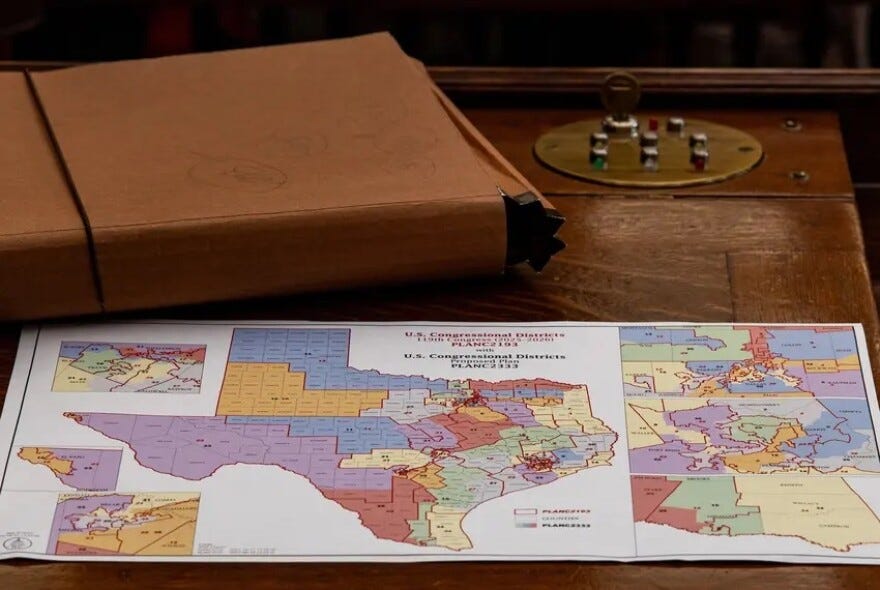
A three-judge federal panel has blocked Texas from using its newly drawn congressional map in the 2026 elections, ruling that the map approved by the GOP-controlled Legislature earlier this year was crafted in violation of federal law.
In a 2–1 decision issued Tuesday, the panel found that the 2025 map was racially gerrymandered and could not be used in the upcoming primary and general elections. The ruling forces Texas to revert to its previous congressional map, drawn in 2021.
Court Says Map Went Beyond Partisan Line-Drawing
While federal courts have generally avoided weighing in on partisan gerrymandering, the panel concluded that Texas crossed a legal line by diminishing the voting strength of Black and Hispanic voters in multiple districts.
Judge Jeffrey Brown, writing for the majority, said “substantial evidence shows that Texas racially gerrymandered the 2025 map,” adding that the changes reduced the number of minority-coalition districts where non-white voters collectively hold political power.
The court highlighted that the Legislature collapsed several coalition districts and rearranged boundaries in a way that favored Republican candidates while diluting minority influence.
Potential GOP Gains Now Off the Table
The blocked map was expected to help Republicans gain as many as five additional U.S. House seats, strengthening the party’s advantage in one of the largest congressional delegations in the country.
Texas currently has 38 House seats, 25 of which are held by Republicans. With the 2021 map now reinstated, the GOP’s planned expansion is effectively halted for the 2026 cycle unless an appeal succeeds.
Timing Creates Election-Year Tension
The ruling comes just weeks before the December 8 filing deadline for the March 2026 primaries. Candidates who had been preparing to run under the new district boundaries must now adjust to the previous map, which could alter campaign strategies and fundraising plans.
Texas officials are expected to appeal the decision, potentially sending the case to the U.S. Supreme Court. Because redistricting cases involve significant federal questions, the high court could move quickly — though not necessarily before the filing deadline.
Broader National Implications
The decision lands in a political climate where control of the U.S. House is expected to be highly competitive. Blocking Texas’ new map removes a potential boost for Republicans in a state central to their national strategy.
Voting-rights advocates praised the ruling, saying the court recognized evidence that minority voters were being sidelined. Republican leaders argued that the map was legally crafted and reflected political, not racial, considerations.
What’s Next
Unless the Supreme Court reverses the ruling, Texans will vote under the 2021 congressional boundaries in 2026. State officials have not yet said whether they will call a special legislative session to attempt new revisions or rely entirely on appeals.
The case underscores how redistricting battles continue to shape federal elections — and how court decisions can shift the balance of power long after lines are drawn.