


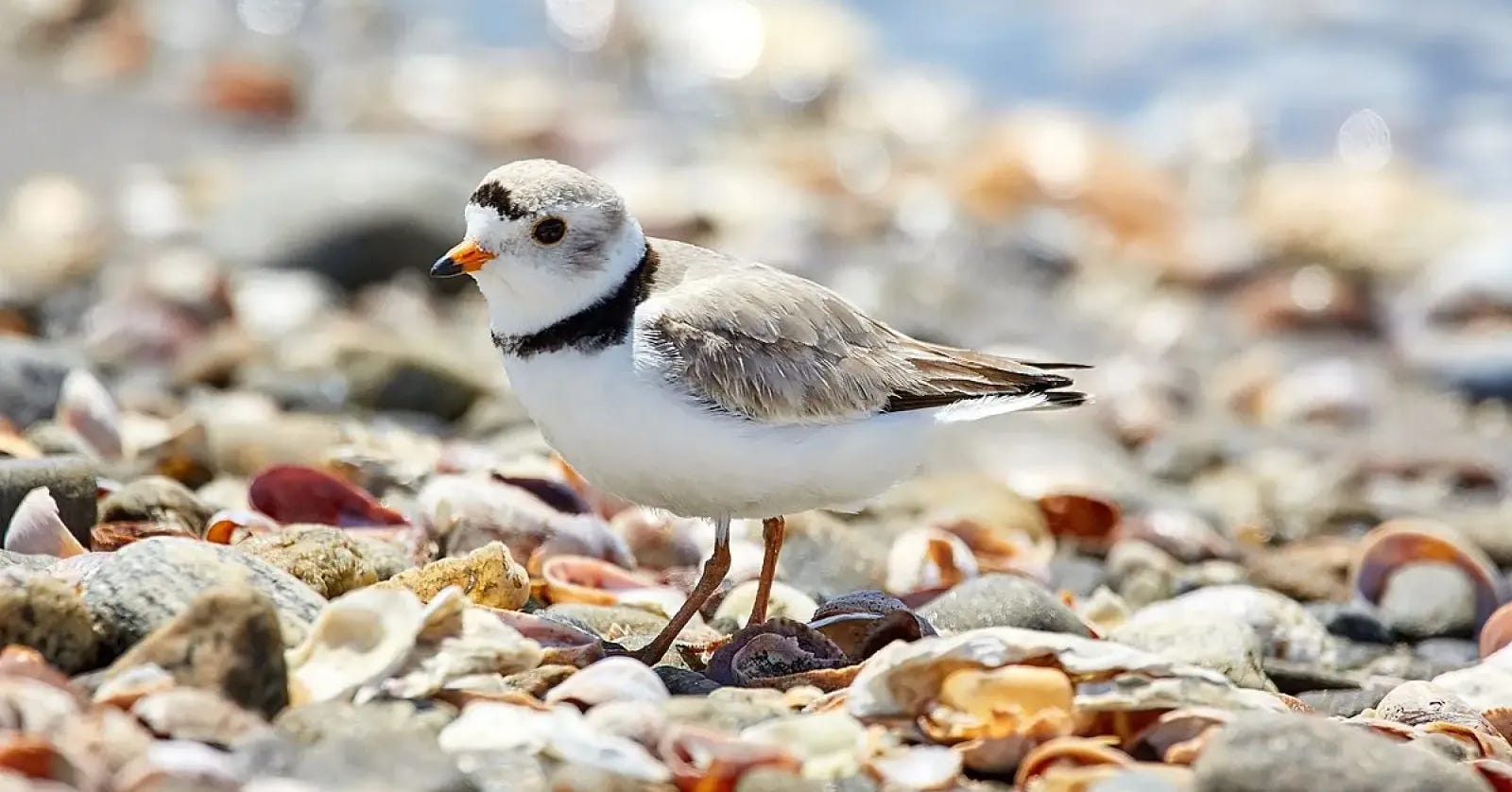
This summer, five young Piping Plovers took flight from the Cat Island chain in Lower Green Bay, Wisconsin. This small milestone is part of a larger story: the birds are nesting again on islands that washed away decades ago.
Cat, Willow, and Bass Islands once formed a habitat chain for shorebirds and other wildlife. In the 1970s, high water, storm waves, and ice shoves eroded the islands. Much of the habitat disappeared, leaving the remaining wetlands more exposed to waves and storms. Piping Plovers need sandy, relatively undisturbed places to nest, and that habitat was gone.
The restoration took years to plan. Wisconsin Sea Grant proposed rebuilding the islands and worked with agency partners to develop a plan. Beginning in 2012, the U.S. Army Corps of Engineers used clean sediment dredged from Green Bay’s shipping channel to rebuild island habitat. The Port of Green Bay, U.S. Fish and Wildlife Service, Wisconsin DNR, Wisconsin Department of Transportation, and other partners also contributed to the project.
The birds responded. In 2016, Piping Plovers nested on the restored site and fledged three chicks—the first successful breeding on Green Bay in 75 years. Today, Audubon Great Lakes coordinates monitoring at Cat Island with staff, partners, and volunteers, who watch nests and help protect the birds through the breeding season.
This year, two broods fledged five chicks at Cat Island. Across the Great Lakes, 99 pairs nested and 184 chicks fledged: 160 raised in the wild and 24 cared for through a program involving 13 zoos. Piping Plovers nested on all five Great Lakes, making 2026 their strongest season since the population was listed as endangered.
Recovery isn't finished; the Great Lakes population remains endangered. But five chicks taking flight from a rebuilt island chain show what can happen when people restore habitat and tend to it year after year.
Sources: U.S. Department of the Interior · Audubon Great Lakes · U.S. Fish & Wildlife Service