


The Household Food Security Report was never sexy. It didn’t trend and rarely made headlines. However, it told the truth, quietly, methodically, every year since 1995.
Run by the USDA’s Economic Research Service, the report measured the number of American households that lacked sufficient food, not in abstract, economic terms, but in real, gut-level questions:
Did you skip meals because you couldn’t afford groceries?
Did your kids go to bed hungry?
Have you run out of food before the end of the month?
It gave us numbers, yes, but it gave them with consistency. It used the same questions and the same methodology for three decades.
And now, it’s gone.
On September 20, the Trump administration’s USDA announced it was scrapping the 2025 survey altogether, calling it “inaccurate,” “politicized,” and “redundant.” The 2024 edition, already in development, will still be released, but it will be the final one.
If you’re wondering why they’d kill the country’s only consistent hunger-tracking system after 30 years, you’re not alone.
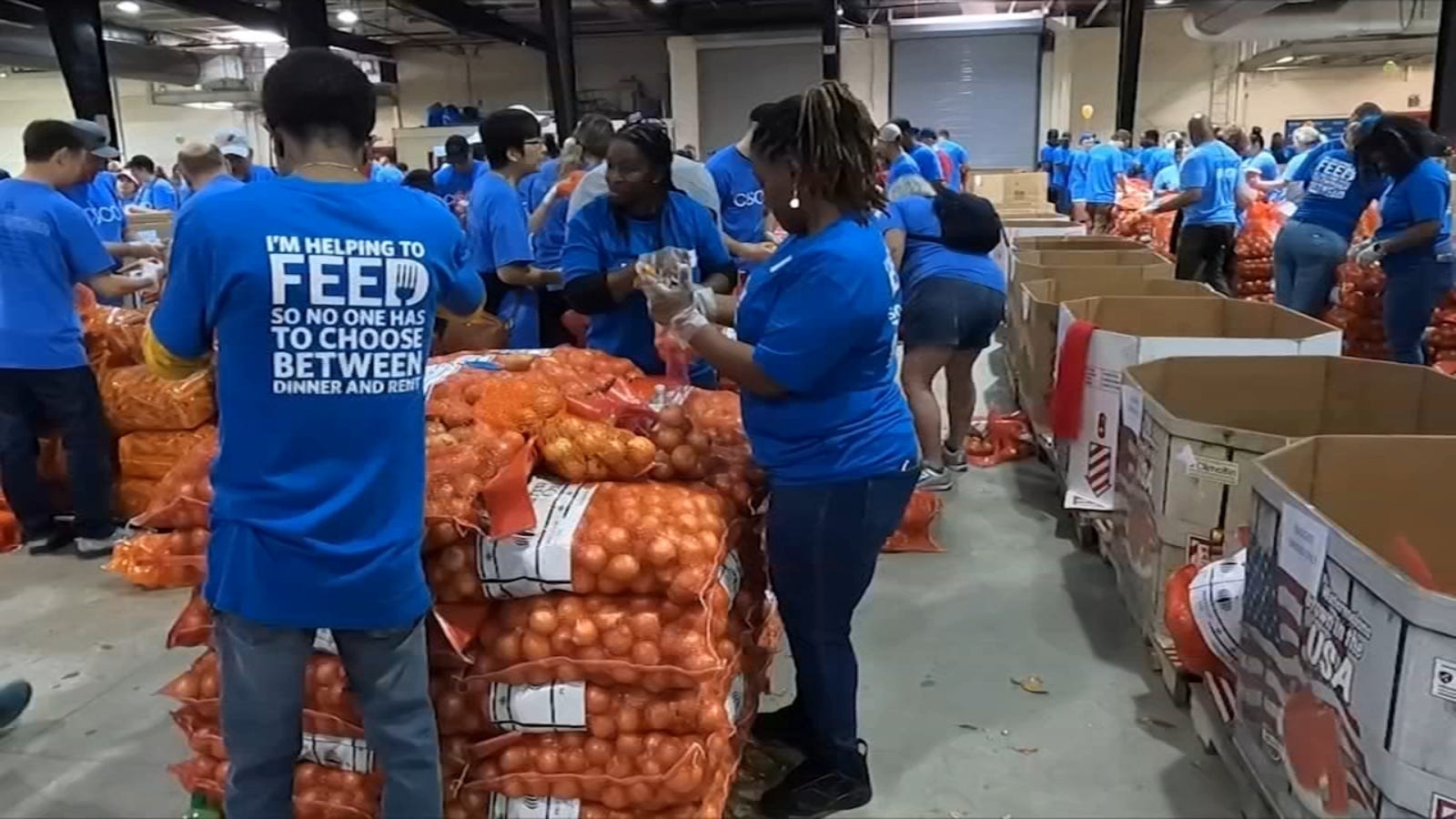
North Carolina Food Bank (Image ABC11)
Stay Informed. Stay Loud.
Subscribe to The Coffman Chronicle for no-BS political analysis, action guides, and daily truth bombs you won’t get from corporate media.
What We Lose When We Stop Measuring Hunger
When data disappears, so does accountability.
Without this report, we lose the ability to track whether food insecurity is rising or falling. We lose state-level comparisons. We lose the only long-term, apples-to-apples measure of how economic shifts or policy decisions impact people’s ability to eat.
And yes, the timing stinks.
Five months ago, the implementation of tariffs led to a rise in the prices of everything. Two months ago, in July, the “One Big Beautiful Bill Act” passed with sweeping cuts to food assistance programs. The bill rolled back expansions to SNAP, added new work requirements, and capped eligibility for adults without children. Even more damning, it slashed USDA commodity food purchases, which previously went directly to food banks and pantries from farms and dairies.
Now, with that policy taking hold, the data that would show us the consequences has been canceled.
USDA says the survey is flawed. However, it’s the same survey that was conducted under George W. Bush, Barack Obama, Donald Trump (the first time), and Joe Biden. It was good enough then. It only became a problem, apparently, when it might reveal the real impact of the current administration’s policies.
Silencing the Alarm, Not Solving the Problem
This isn’t about statistics. It’s about stories that would have been told and now won’t be.
It’s about the West Virginia food bank losing 60% of its expected USDA food deliveries and not knowing how it will be replaced. It’s about the single mom in New Mexico whose SNAP benefits now run out in three weeks instead of four. It’s about the fact that Feeding America projects that over 44 million Americans lived in food-insecure households last year, and that number is likely climbing. And it is about the farmers who are praying in Arkansas while their crops rot in the fields or in warehouses with markets gone.
We won’t know because we’ve decided not to look, or more accurately, someone doesn’t want us to.
You don’t cancel the smoke alarm because it’s too noisy. You cancel it when the fire is politically inconvenient, and this report will undoubtedly be a political bomb.
What We Call It Doesn’t Matter. What It Is, Does
Here’s where the conversation usually breaks down. Say “food insecurity,” and we can talk policy. Say “socialism,” and people shut down.
However, the truth is that what saved families like mine, and perhaps yours, wasn’t ideology. It was government peanut butter and cheese. It was food stamps, even if they were hard to accept. It was Christmas gifts from strangers in offices that adopted our family. It was garden produce we grew, stored, shared, and gave away. It was extended family who babysat, neighbors who shared, and churches that fed.
None of us called it socialism.
Yet let’s be crystal clear: that’s what it was — people helping each other through shared systems, backed by public investment.
These are the kinds of systems that only work when we admit they exist, when we measure what matters, and when we’re brave enough to say: this is what dignity looks like in a hard world. In our rural, one-light town, we called it being neighborly. Across the nation, people are looking out for one another the same way they always have because they know what it is like to need a hand up, not a handout.
So no, I don’t care what you call it. You can say “community.” You can say “mutual aid.” You can say “taking care of our own.”
Just don’t cancel the data that tells us when people are going hungry. Don’t cut the benefits that are keeping the lights on. And don’t insult the people who use these programs by pretending they’re the problem.
The Inconvenient Truth
Because here is the cold, hard truth they don’t want us to know. We aren’t struggling because the lady down the street uses WIC. Our bills aren’t piling up because Mr. Jones is on disability due to a work accident.
We are being robbed, our labor exploited, our wages frozen, and prices constantly rising, not because we want too much, but because the wealthy and their shareholders cannot get enough.
We’ve been told to tighten our belts again and again, and are slowly realizing that a tightened belt over a long enough timeline becomes a noose. We continue to argue over language while people suffer.
It does not have to be this way. We are not serfs serving feudal lords. Without our labor, they have no profits. Together, through mutual aid and social programs that build us up collectively instead of lining corporate pockets, we can all do more than just survive. We can thrive. Together.
Stay Informed. Stay Loud.
Subscribe to The Coffman Chronicle for no-BS political analysis, action guides, and daily truth bombs you won’t get from corporate media.
Sources:
“Trump administration cancels annual food insecurity survey, USDA says” — Reuters, September 20, 2025
“After cuts to food stamps, Trump administration ends government’s annual report on hunger in America” — AP News, September 20, 2025
“Impact of Trump cuts will be harder to track without USDA hunger survey, advocates say” — Reuters, September 22, 2025
“USDA cuts hit food banks, risking hunger for low‑income Americans” — Reuters, March 25, 2025
“The Emergency Food Assistance Program (TEFAP)” — USDA Food and Nutrition Service
“USDA cuts more than $1bn in local food purchases for schools, food banks” — The Guardian, March 11, 2025
“USDA halts millions of dollars worth of deliveries to food banks” — Politico, March 19, 2025
“Blumenthal & Colleagues Press USDA to Not Take Food Away from Food Banks & Hungry Families” — Office of Senator Richard Blumenthal, press release, March 25, 2025
“USDA Terminates Redundant Food Insecurity Survey” — USDA Press Release, September 20, 2025
Here is the true nature of greed. When you let your poorest of the population starve.
This is going to turn into a full-blown class war between the morbidly wealthy (and their Republican apologists) and the rest of us.