


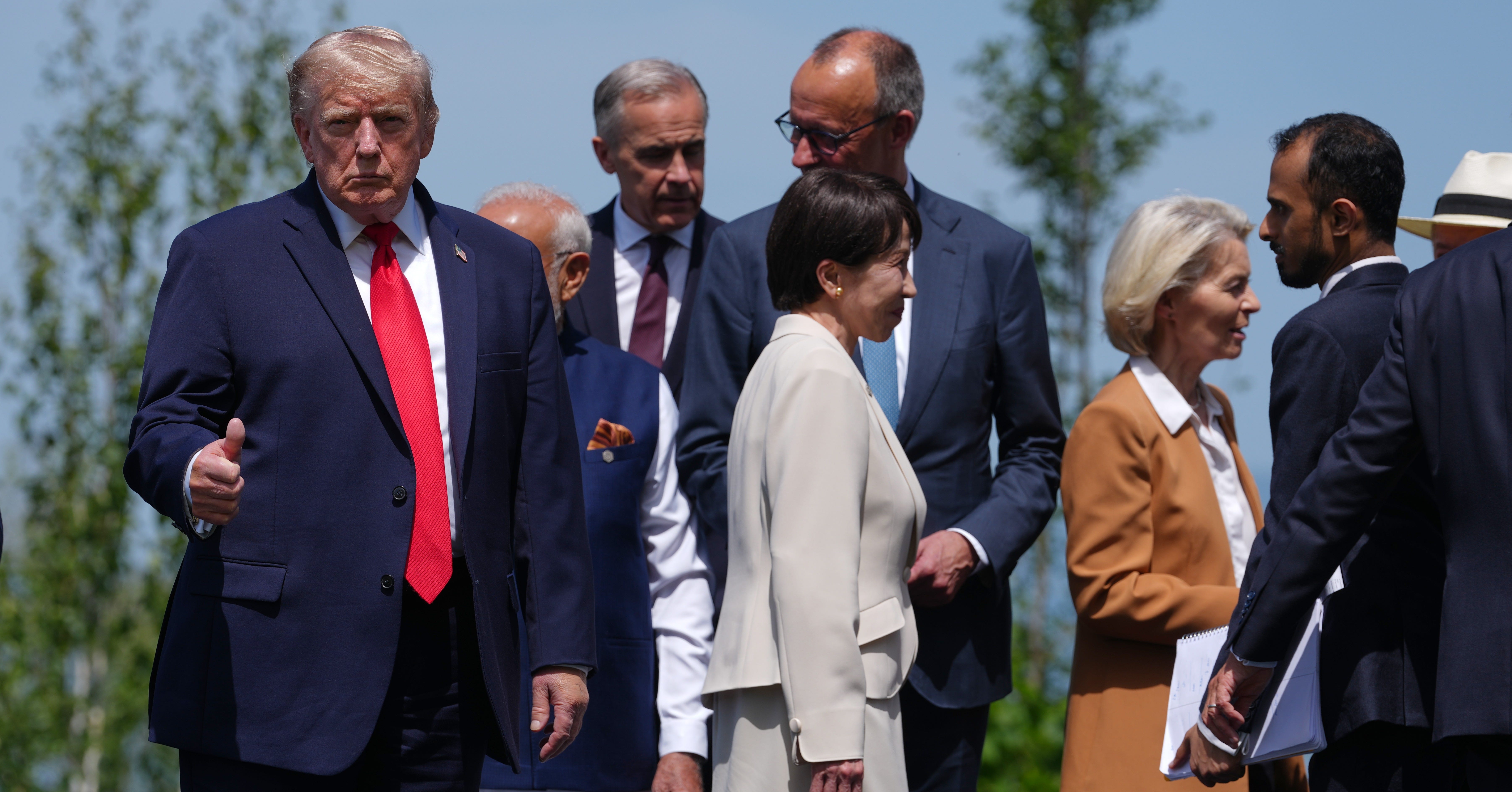
G7 leaders are trying to manage a familiar challenge at this year’s summit: how to keep President Donald Trump engaged without letting disagreements over Iran, Ukraine, Russia sanctions and trade dominate the meeting.
Reuters reported that Trump defended an interim Iran agreement during the summit and later said Russia “should make a deal” after talks involving Ukrainian President Volodymyr Zelenskiy. AP separately reported that Trump arrived with a history of public friction with several G7 counterparts, making the diplomatic atmosphere unusually delicate.
Subscribe free for daily political analysis they won’t broadcast. Join 110K+ readers →
The practical stakes are significant. European leaders need U.S. cooperation on sanctions, Ukraine’s air defense needs and the future of Iran negotiations. Trump needs allied support to turn his Iran diplomacy into a broader geopolitical win.
The result is a summit built around careful language, private pressure and public restraint, a diplomatic balancing act shaped by Trump’s influence over U.S. foreign policy.
Subscribe free for daily political analysis they won’t broadcast. Join 110K+ readers →