


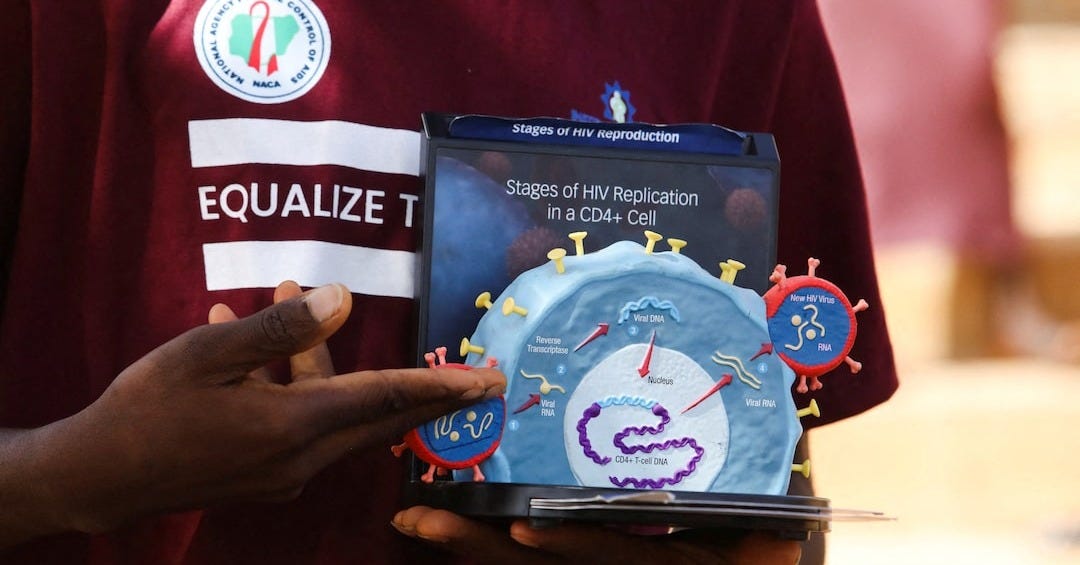
A small early-stage study is raising cautious hope that genetically modified immune cells could one day help some people control HIV without lifelong daily medication.
Researchers used a form of CAR-T therapy, best known for treating some cancers, to reprogram patients’ T cells to recognize and fight HIV. According to Reuters and AP, two participants in the small study maintained undetectable or very low virus levels after stopping antiretroviral therapy, one for nearly a year and another for more than two years.
Subscribe free for daily political analysis they won’t broadcast. Join 110K+ readers →
The findings do not mean a cure is available. The trial involved only nine participants, and researchers say larger, longer studies are needed.
Still, the global stakes are large. UNAIDS estimates 40.8 million people were living with HIV in 2024. A durable, one-time or infrequent therapy could reshape HIV care worldwide, especially if future versions become safer, cheaper and easier to deliver.
Subscribe free for daily political analysis they won’t broadcast. Join 110K+ readers →