


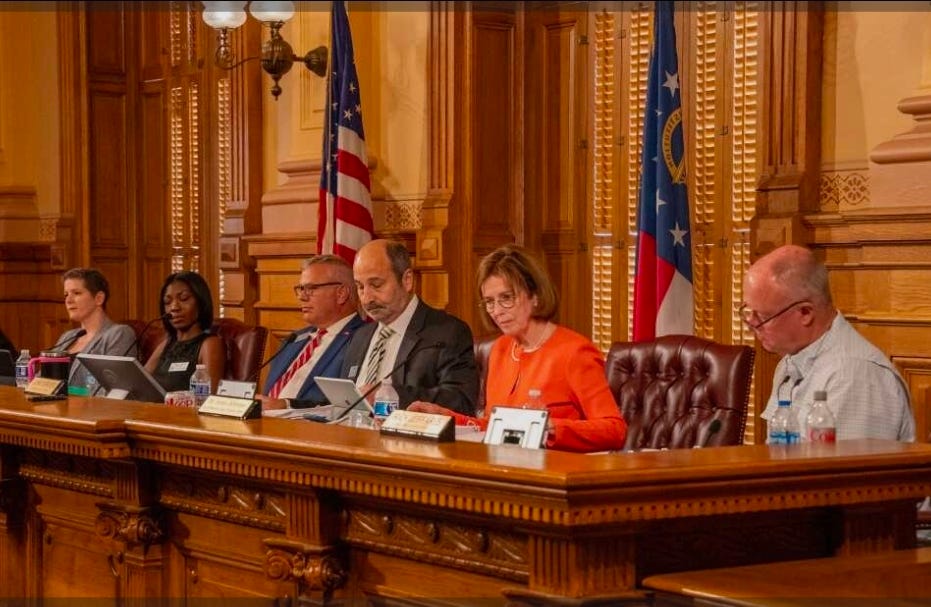
ATLANTA — Georgia’s State Election Board on Wednesday rejected a key rule change that would have defined when hand-marked paper ballots can replace the state’s touchscreen voting machines, setting up a fresh debate about election procedures. The board’s 2–2 tie vote killed the measure, and members said the issue belongs with state legislators, not the board.
The stakes are high in Georgia, where election integrity and voting-system security have been politically charged topics since 2020. Proponents of the rule argued clearer criteria are needed for when machines can be bypassed in favor of pen-and-paper ballots, especially given concerns that voters cannot verify QR codes on machine-marked ballots.
But opponents, including key legislators and the state attorney general’s office, said the board was in danger of exceeding its legal authority and potentially creating a loophole around state law that mandates touchscreen ballot-marking devices. A ruling earlier this year from the Georgia Supreme Court said the board can implement election laws but cannot contradict or expand on what lawmakers have established, a precedent cited in the debate.
Board vice chair Janice Johnston, who voted against the rule, said, “This really is the duty and the job of the legislators.”
That split reflects wider tensions: supporters claim current machines sometimes fail to protect voter privacy or allow genuine verification, while critics worry the rule could have forced broader shifts without legislative backing.
Georgia law already allows hand-marked ballots in emergencies, but the proposal sought to define “impossible or impracticable” conditions that would trigger that switch. Opponents argued that listed definitions could be used to expand paper ballot use beyond true emergencies.
Now the board says it will work with lawmakers in the General Assembly to address concerns through legislation rather than board rules.
What happens next: Legislators are expected to consider similar language in the 2026 session, potentially reshaping Georgia’s emergency voting procedures and sparking further debate over election systems.