


The most significant development in the ongoing controversy surrounding the Department of Homeland Security is not what Democrats said this week. Democratic lawmakers have been criticizing DHS operations and demanding reforms for months. The notable shift is that Republican senators are now raising similar concerns in public and in a formal oversight setting.
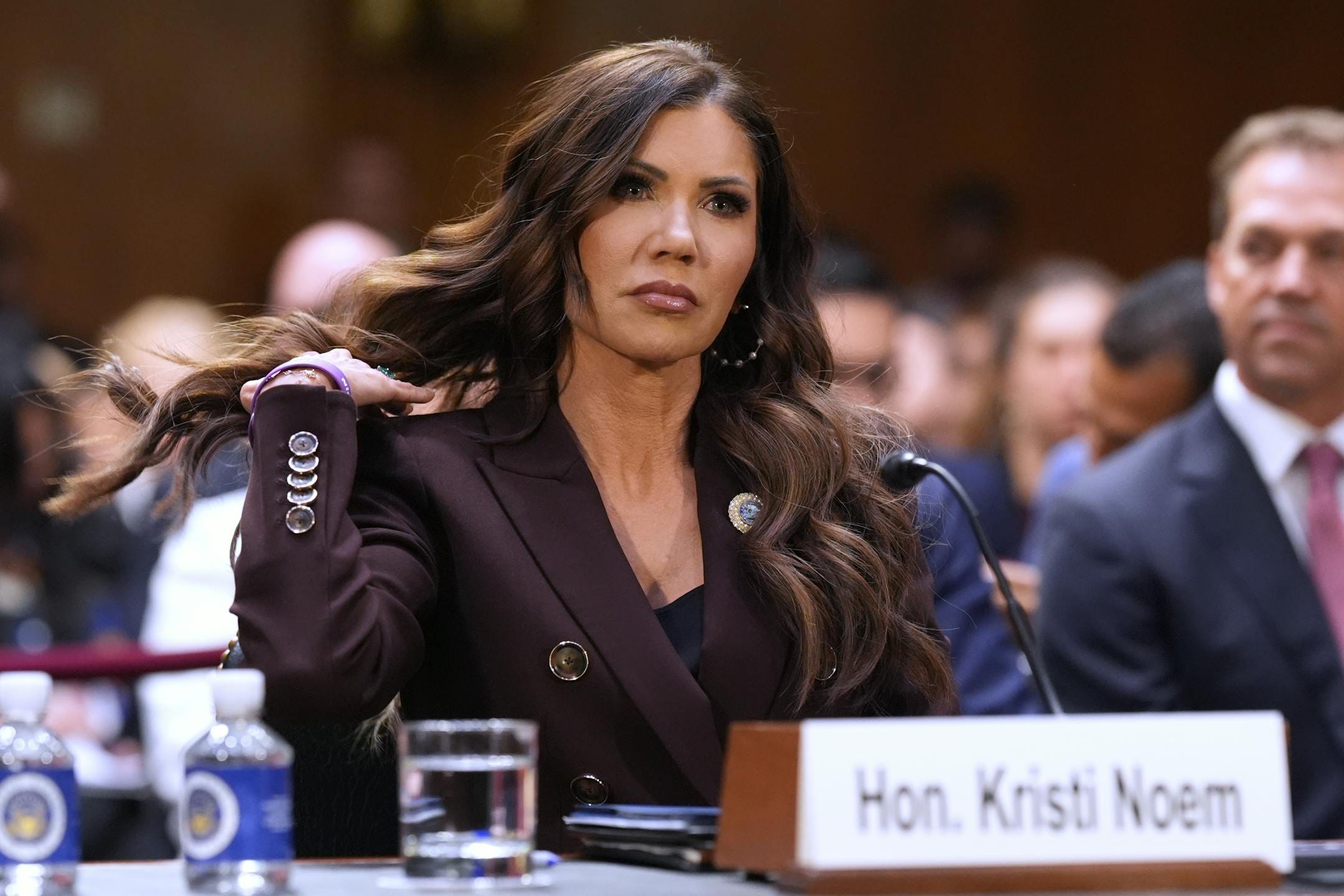
That dynamic was on display during a Senate Judiciary Committee hearing this week with Homeland Security Secretary Kristi Noem. What began as an oversight session evolved into something more consequential as multiple Republican senators pressed the department on accountability, transparency, and leadership decisions. Some questions were measured. Others were sharply critical.
This moment matters because oversight pressure inside a governing coalition often signals that a political controversy has crossed an important threshold. The Senate hearing did not produce immediate policy changes, and it did not resolve the standoff over DHS funding. Yet it demonstrated that scrutiny of the department is no longer confined to one party.
To understand why those exchanges unfolded the way they did, it helps to understand how the current dispute developed.
This Community Is Powered by You
What started as a small circle has grown into something much bigger, and it’s all because of readers like you.
Every time you forward this email, post it on socials, or bring someone new into the fold, you’re helping build one of the most passionate, independent political communities out there.
Want to keep the momentum going?
Share this newsletter with someone who should be part of this conversation.
Thank you for being here. It means everything.
The Road to the Hearing
A surge in immigration enforcement operations
Over the past year, the Department of Homeland Security and Immigration and Customs Enforcement have significantly expanded immigration enforcement activity. The increase has involved more agents, more operations across multiple jurisdictions, and additional federal funding directed toward enforcement and related equipment.
Such expansions are not unprecedented. Immigration enforcement priorities have shifted repeatedly across administrations. What makes the current moment different is the scale and speed of the increase, combined with the visibility of the operations themselves.
More enforcement actions naturally mean more encounters between federal agents and members of the public. In many cases, those encounters involve individuals who are not the targets of immigration enforcement. They may be neighbors, family members, journalists, or people documenting the activity.
The growing public presence around enforcement operations has become an operational reality for ICE agents in many communities.
Rising incidents and growing scrutiny
As operations increased, so did the number of controversial incidents.
Several encounters involving federal agents have resulted in shootings or fatalities. Some incidents involved individuals who were not suspected of immigration violations. Others occurred during chaotic encounters, with video footage later circulating online and prompting questions about the official narrative initially provided by federal authorities.
Two deaths in particular drew national attention earlier this year. The killings of Renée Good and Alex Pretti became flashpoints in the national debate over immigration enforcement tactics and transparency. Video evidence and witness accounts prompted significant scrutiny of the department’s description of events.
Those cases were not the only incidents that generated concern. Yet they became the most widely discussed examples and helped catalyze political pressure on DHS leadership.
In January, several Republican senators responded publicly. Senator Thom Tillis and Senator Lisa Murkowski were among those who raised concerns about the department’s handling of the incidents and about the broader direction of immigration enforcement policy.
Their comments signaled that criticism of DHS operations was beginning to extend beyond the usual partisan lines.
Funding becomes leverage
The fallout from those incidents also fed directly into the current funding dispute.
Democratic lawmakers have refused to approve additional DHS funding without reforms to increase oversight, transparency, and operational safeguards. Republicans have criticized that position as risking national security by delaying funding for an essential agency.
DHS continues operating because many of its functions are considered essential government services. Some components also have access to other funding streams. The dispute nonetheless remains politically significant because Congress is using appropriations as leverage in the broader debate over how immigration enforcement should be conducted.
Against that backdrop, the Senate Judiciary Committee convened this week’s oversight hearing.
Inside the Senate Judiciary Hearing
Grassley sets the tone
Senator Chuck Grassley of Iowa, the Republican chair of the Senate Judiciary Committee, opened the hearing by acknowledging the seriousness of the issues surrounding DHS operations.
Grassley stated plainly that “mistakes have been made” and emphasized that even one death during a federal operation is too many. At the same time, he stressed that immigration enforcement remains a legitimate government function and used the opportunity to criticize the previous administration and praise the current one.
He drew a distinction between individuals lawfully observing federal operations and those actively obstructing them. The First Amendment protects peaceful observation, protest, and documentation of government activity. Obstruction involves interfering with law enforcement duties. Grassley argued that the two should not be conflated.
The chair also framed the broader challenge in terms that resonated throughout the hearing. Immigration enforcement, he said, must coexist with dignity and constitutional protections.
While Grassley’s comments were largely supportive of Noem, DHS, and the administration, he left room for the questions that were to come.
Tillis renews his criticism
Later in the hearing, Senator Thom Tillis escalated the conversation.
Tillis had already emerged as one of the most outspoken Republican critics of DHS leadership following the high-profile deaths earlier this year. During the hearing, he reiterated concerns about the department’s direction and questioned whether the current leadership had lost Congress's confidence.
His remarks were striking not only for their content but for their venue. Public criticism of an administration official from within the same party carries greater weight when it occurs during a formal oversight hearing rather than in a press statement.
Tillis framed his concerns as a matter of accountability and governance rather than ideology. In his view, the pattern of incidents and the department’s responses raised legitimate questions that required answers.
“What we’ve seen is a disaster under your leadership, Miss Noem, a disaster. What we’ve seen is innocent people getting detained that turn out are American citizens.”
Senator Thom Tillis
Whether other Republican senators ultimately adopt Tillis’s position remains uncertain. However, the fact that such criticism occurred during the hearing itself underscored how far the debate has evolved.
Kennedy presses on spending and transparency
Senator John Kennedy of Louisiana approached the issue from a different angle.
Kennedy focused on DHS spending decisions and public messaging, including a costly advertising campaign associated with the department’s immigration enforcement efforts. His questions centered on whether taxpayer funds were being used appropriately and whether the messaging campaign blurred the line between public information and political promotion.
That line of inquiry expanded Republican scrutiny beyond operational incidents. It suggested that some concerns about DHS extend to financial accountability and the department’s public communications strategy.
Taken together, the exchanges with Grassley, Tillis, and Kennedy illustrated the range of questions Republican senators are now willing to ask about DHS operations.
Democrats respond with courts and credibility
The Republican pushback produced the viral moments, yet Democrats used the hearing to underline what they see as the core problem: a department that keeps asking for more power while bristling at the institutions meant to restrain it.
Senator Dick Durbin confronted Noem over court orders related to DHS and ICE operations. His argument was straightforward and difficult to dodge. Court orders are not suggestions, and the executive branch does not get to treat judicial rulings as optional when it is politically inconvenient. Durbin’s questions framed the funding standoff less as partisan hostage-taking and more as a predictable response to a department that, in Democrats’ telling, has forced Congress to choose leverage because voluntary compliance has not been enough.
Senator Sheldon Whitehouse hit a different nerve, pressing Noem about the department’s aircraft and the optics of official travel. The jet exchange mattered for more than tabloid appeal. It was an attempt to connect the ethical and the operational. When a department insists it needs extraordinary authority and extraordinary resources, it also inherits a higher obligation to be transparent about how those resources are used. Whitehouse’s point was not simply that the visuals look bad. It was that public trust erodes more quickly when secrecy and privilege appear to accompany coercive power.
Neither line of questioning required Democrats to concede the broader premise that DHS has a real job to do. Their message was that enforcement must remain within the boundaries of the law, and that legitimacy depends on accountability that is visible and verifiable.
The House Takes Up the Issue Next
A different political environment
Attention now turns to the House Judiciary Committee, which is scheduled to hold its own hearing on DHS oversight on Wednesday.
Observers expect the tone of that hearing to differ from what unfolded in the Senate.
The House and Senate operate under different political incentives. Senators serve six-year terms and often exercise greater individual independence. House members face elections every two years and tend to align more closely with party leadership.
As a result, intra-party criticism is generally more common in the Senate than in the House. Whether that pattern holds in this case will become clearer once the House hearing begins.
The Funding Standoff Continues
Congress remains deadlocked
The broader dispute over DHS funding remains unresolved.
Democratic lawmakers continue to insist that additional funding should be tied to reforms addressing oversight and operational transparency. Republican leaders argue that delaying funding risks undermining national security and immigration enforcement.
For now, DHS continues operating under existing authorities and available resources as an essential agency. Yet the underlying political fight shows no immediate signs of resolution.
Previous reporting has examined the specific reforms under discussion and the incidents that prompted them. Those proposals range from expanded transparency measures to stronger oversight of use-of-force policies.
The current standoff reflects a larger disagreement about how immigration enforcement should balance operational authority with public accountability.
An Unresolved Political and Policy Fight
Calls for Secretary Noem’s resignation continue to circulate among some lawmakers. Congressional hearings are continuing. The funding dispute remains stalled.
At the same time, immigration enforcement operations across the country are continuing as well.
That combination of ongoing enforcement, unresolved political conflict, and increasing bipartisan scrutiny ensures that the debate over DHS leadership and ICE operations is far from finished.
For now, the Senate hearing has clarified one important point. Questions about the department’s direction are no longer coming from only one side of the aisle.
If you found this reporting valuable, consider subscribing to support our work. We focus on the intersection of law, policy, and accountability, and we rely on readers like you to keep independent analysis possible.
Sources:
“US homeland chief Noem stands by remarks accusing slain US citizens of terrorism” — March 3, 2026 — Reuters
“Noem defends her portrayal of killed Minneapolis protesters as agitators, in her Senate hearing” — March 3, 2026 — Associated Press
“Kristi Noem refuses to retract statement calling Minnesotans killed by federal agents ‘domestic terrorists’” — March 3, 2026 — The Guardian
“WATCH: Sen. Tillis calls for Noem’s resignation as DHS head at oversight hearing” — March 3, 2026 — PBS NewsHour
“Noem slammed by senators of both parties as Tillis calls for her resignation” — March 3, 2026 — CBS News
“Homeland Security Secy. Noem Testifies on Agency Oversight” — March 3, 2026 — C-SPAN
“Oversight of the Department of Homeland Security” — March 3, 2026 — U.S. Senate Judiciary Committee
“Grassley Opens Senate Judiciary DHS Oversight Hearing” — March 3, 2026 — U.S. Senate Judiciary Committee Republicans
“Grassley Questions Noem at DHS Oversight Hearing” — March 3, 2026 — Sen. Chuck Grassley’s Office
The goddamned German Nazis at Nuremberg were more forthcoming than her.