


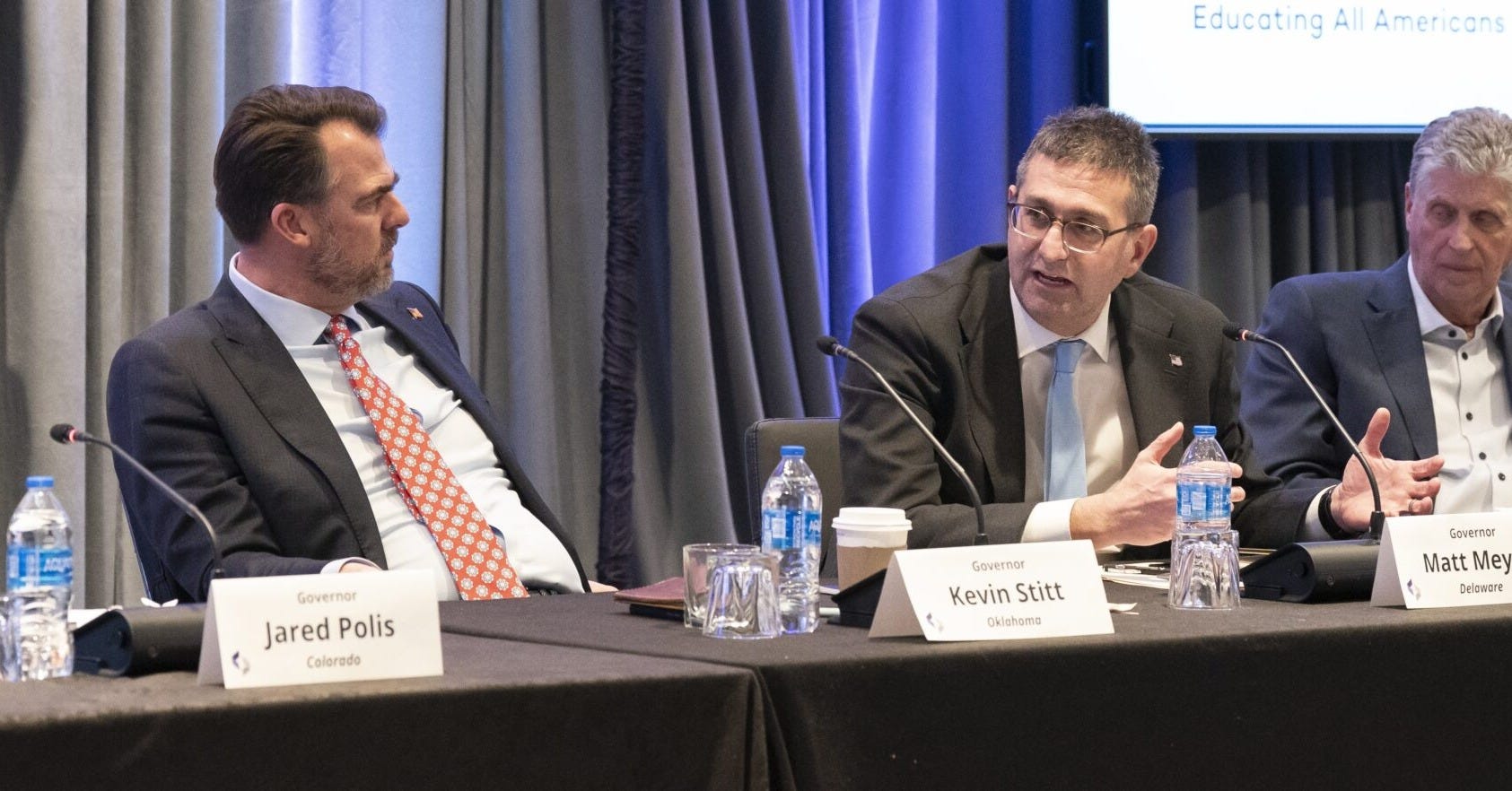
The National Governors Association cancelled its scheduled meeting with President Donald Trump later this month after the White House planned to invite only Republican governors, officials confirmed — a break from decades of bipartisan tradition.
The move sparked conflict between state leaders and the administration, with Democratic governors threatening to boycott related events and calling the exclusions a politicization of a historic federal-state collaboration.
According to Reuters, Oklahoma Republican Gov. Kevin Stitt, chair of the NGA, told members the White House had intended to limit invitations for the Feb. 20 White House session to GOP governors only, prompting the NGA to remove the meeting from its agenda.
The annual NGA winter conference in Washington, D.C., runs Feb. 19-21 and typically includes a working meeting at the White House and a bipartisan dinner for governors and spouses.
White House press secretary Karoline Leavitt said Tuesday the president “can invite whomever he wants” to events at the White House, defending the decision despite fallout.
Follow The Coffman Chronicle on NewsBreak for daily breaking political coverage.
“To disinvite individual governors… undermines an important opportunity for federal-state collaboration,” NGA CEO Brandon Tatum said in a statement, criticizing the shift away from historical bipartisanship.
The cancellations have compounded partisan tensions, with at least 18 Democratic governors vowing to skip a White House dinner tied to the conference if exclusions continue, according to reports.
Why it matters: Governors of both parties depend on federal cooperation for funding and crisis response, and sidelining half the nation’s governors could strain policy coordination ahead of midterms and critical budget negotiations.
Next steps: Officials are watching whether the White House will revise invitations or push ahead with separate gatherings, and whether Democratic leaders will seek alternative forums for collaboration.
A broader question now looms over the future of bipartisan federal-state meetings early in the 2026 political cycle.
Follow The Coffman Chronicle on NewsBreak for daily breaking political coverage.