


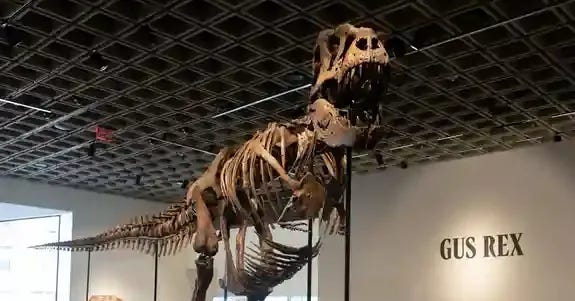
A Tyrannosaurus rex skeleton nicknamed Gus sold for $50.1 million at Sotheby’s, setting a new auction record for a dinosaur fossil and immediately renewing a fight over whether rare specimens should remain available to science.
The 67 million year old fossil was discovered on private land in Harding County, South Dakota. Sotheby’s described Gus as about 38 feet long, 12 ½ feet tall and approximately 61 percent complete by bone count, with 183 fossil bone elements and an exceptionally preserved skull.
The buyer, who bid by phone, was not publicly identified. AP reported that the winner outbid six other bidders during a 10 minute contest and that the fossil had been estimated before sale at $20 million to $30 million.
The sale drew immediate reaction from paleontologists. The Society of Vertebrate Paleontology said scientifically important fossils should be held in accredited museums, universities or other public research institutions so they remain available for study, education and public display.
Subscribe free for daily political analysis they won’t broadcast. Join 110K+ readers →
That is the core consequence. If Gus enters a private collection without guaranteed research access, future scientific work could depend on one owner’s willingness to cooperate.
There is a competing view. Sotheby’s and fossil professionals involved in commercial excavation argue that skilled private teams often help discover and preserve fossils that might otherwise erode or remain buried. South Dakota fossil expert Walter Stein told South Dakota News Watch that a specimen with 183 bones is rare, but also said private ownership may not damage science as much as critics fear.
The next question is simple. Will the anonymous buyer loan or donate Gus to a museum, or will one of the world’s most valuable fossils become a private asset with uncertain public access?
Subscribe free for daily political analysis they won’t broadcast. Join 110K+ readers →