


In December 2025, the U.S. Department of Health and Human Services published an interim final rule formally rescinding minimum staffing standards for nursing homes certified under Medicare and Medicaid, a protection finalized under the Biden administration in 2024. The change wipes away a modest requirement that had been years in the making and was intended to counteract some of the most dangerous conditions exposed in long‑term care facilities during the pandemic. The rescission is set to take effect on February 2, 2026.
The sequence of events that led to this rollback is as noteworthy as the policy itself. After the Biden administration finalized the staffing rule in April 2024, nursing home industry leaders mobilized against it, arguing that workforce shortages and operational costs made compliance difficult. In mid‑2025, executives from major nursing home companies attended a private lunch with President Trump at one of his golf clubs. Shortly before that meeting, industry political committees reported donating nearly $5 million to Trump‑aligned political spending vehicles. In the weeks that followed, the Trump administration ceased defending the rule in federal court and, by early December, formally withdrew it.
For critics of the repeal, it is no coincidence. For advocates of older adults and people with disabilities, it is deeply troubling. However, regardless of intent, the net effect is the same: the federal floor for nursing home staffing has been lowered at a time when many families and communities are struggling with access to care across the continuum.
This Community Is Powered by You
What started as a small circle has grown into something much bigger, and it’s all because of readers like you.
Every time you forward this email, post it on socials, or bring someone new into the fold, you’re helping build one of the most passionate, independent political communities out there.
Want to keep the momentum going?
Share this newsletter with someone who should be part of this conversation.
Thank you for being here. It means everything.
What the Rule Actually Required
When finalized in April 2024, the minimum staffing rule represented the first time a nationwide numeric baseline had been established for nursing home staffing. It required facilities to provide at least 3.48 total hours of nursing care per resident per day, based on hours worked by RNs, licensed practical nurses, and nurse aides, divided by the number of residents. Of that total, at least 0.55 hours had to come from a registered nurse, and at least 2.45 hours from a nurse aide. In addition, the rule mandated a registered nurse to be on-site 24 hours a day.
Before this rule was finalized, federal requirements set only general standards, and many facilities operated with far lower staffing levels. Indeed, in 2023, an industry analysis projected that 94 percent of facilities did not meet at least one of the proposed new staffing measures.
Under the Trump administration’s repeal, those specific numerical standards no longer apply. Instead, facilities once again default to the older policy requiring only an RN for a limited portion of each day, and staffing overall is governed by state rules or internal facility assessments rather than a consistent federal minimum.
Why the Rule Was Needed
The urgency behind the staffing standards stemmed from widespread neglect, long before the pandemic. Advocacy organizations, nursing home workers, families of residents, and long‑term care quality researchers consistently documented chronic understaffing that resulted in missed medication doses, untreated infections, pressure sores, and other preventable harms. During COVID‑19, those conditions were compounded, contributing to some of the highest mortality rates seen anywhere in the health care system.
Federal nursing home regulation before 2024 contained basic staffing expectations but no enforceable minimums tied to hours per resident. As advocates often put it, facilities could receive taxpayer funds through Medicare and Medicaid while operating with staffing levels that would be unthinkable in a hospital setting. The 2024 rule was intended to change that by raising the floor, especially in those facilities with the weakest staffing and the highest risk of harm.
Supporters of the rule estimated it could save thousands of lives and substantially improve the quality of care by ensuring residents had consistent access to trained caregivers. Opponents argued that workforce shortages and financial constraints, particularly in rural and tribal areas, made the rule untenable. Whatever the merits of those operational arguments, the context that led to the policy was clear. People in nursing homes were suffering due to systemic understaffing.
What This Really Means
The figure of 3.48 hours of care per day might seem abstract on paper, but it is deeply consequential in practice. In a long‑term care facility, these are the hours dedicated to all hands‑on activities, including bathing, toileting, dressing, turning immobile residents to prevent pressure sores, feeding, repositioning, administering medications, monitoring vitals, responding to calls for help, and providing basic human contact and supervision.
Even advocates and researchers who supported the rule acknowledged that 3.48 hours was a modest standard, far below what many experts believe would be necessary for truly comprehensive, dignified care. Before federal minimums were ever proposed, some studies recommended upward of 4 to 5 hours of direct care per resident per day to meet basic needs and reduce avoidable harm. The 2024 rule was a step toward that direction, but by rescinding it, the federal government has effectively lowered expectations further.
Put in human terms, what looks like a small increment on a regulatory chart translates into minutes with trained professionals for someone who may be immobile, incontinent, in pain, or cognitively impaired. Those minutes can mean the difference between dignity and neglect.
The Broader Context: A Health System Under Strain
The rollback of nursing home staffing minimums did not occur in isolation. It is part of a larger pattern of policy changes that, together, are reshaping who can access care, how much it costs, and where it is available.
In 2025, Congress passed and President Trump signed the One Big Beautiful Bill Act, a budget reconciliation package that included sweeping changes to federal health programs. Among its provisions were new work requirements for Medicaid recipients aged 19 to 64, tighter eligibility checks, increased cost-sharing for some services, and other measures intended to reduce federal health care spending. Projections from the Congressional Budget Office and analysts suggest these changes could result in millions of people losing coverage or facing higher costs over the next decade.
At the end of 2025, enhanced premium tax credits that had helped millions of Americans afford insurance through Affordable Care Act marketplaces expired. Now, just weeks into 2026, the effects are already being felt. Insurers raised monthly premiums across most states, and many consumers are facing higher deductibles and co-pays as they begin using their plans. Analysts estimate that millions of Americans will either pay significantly more for coverage this year or drop their plans altogether, as the expanded subsidies that had been in place since 2021 are no longer available.
In rural communities across the country, the pressures are even more acute. As federal support programs expire and reimbursement changes take effect, rural hospitals and clinics are reporting mounting financial strain, leading some to reduce services or consider closure. In Louisiana, Virginia, Colorado, and other states, health care administrators and elected officials warn that the loss of inpatient and maternal care services could leave vast regions without essential health facilities.
This convergence of higher insurance costs, reduced coverage, more stringent work and eligibility rules for Medicaid, and shrinking provider networks is already reshaping what it means to seek care in the United States. It is especially stark when viewed alongside the nursing home story: a population with high health needs, now facing weakened staffing protections just when access and affordability are deteriorating elsewhere.
What This Means for Families and Communities
Taken together, these developments sketch the outline of a health care landscape that demands more from individuals while giving them less in return. Many Americans face rising insurance premiums that strain household budgets but still leave them exposed to high deductibles and surprise costs. Others, particularly in rural areas, must travel long distances for basic care or go without entirely. Those with low incomes may find it harder to maintain Medicaid coverage due to new requirements and administrative barriers. And for older adults and people with chronic conditions who end up in long‑term care, the safety net that once ensured minimum staffing standards has been pulled back.
For families navigating these intersecting pressures, the experience is sobering. Public programs that once provided some measure of security are being reshaped in ways that shift costs and responsibilities onto individuals and states. At the same time, the federal government has signaled through policy decisions—from health program cuts to regulatory rollbacks—that it is retreating from a more expansive view of care as a public good.
A Health System in Need of Re‑Evaluation
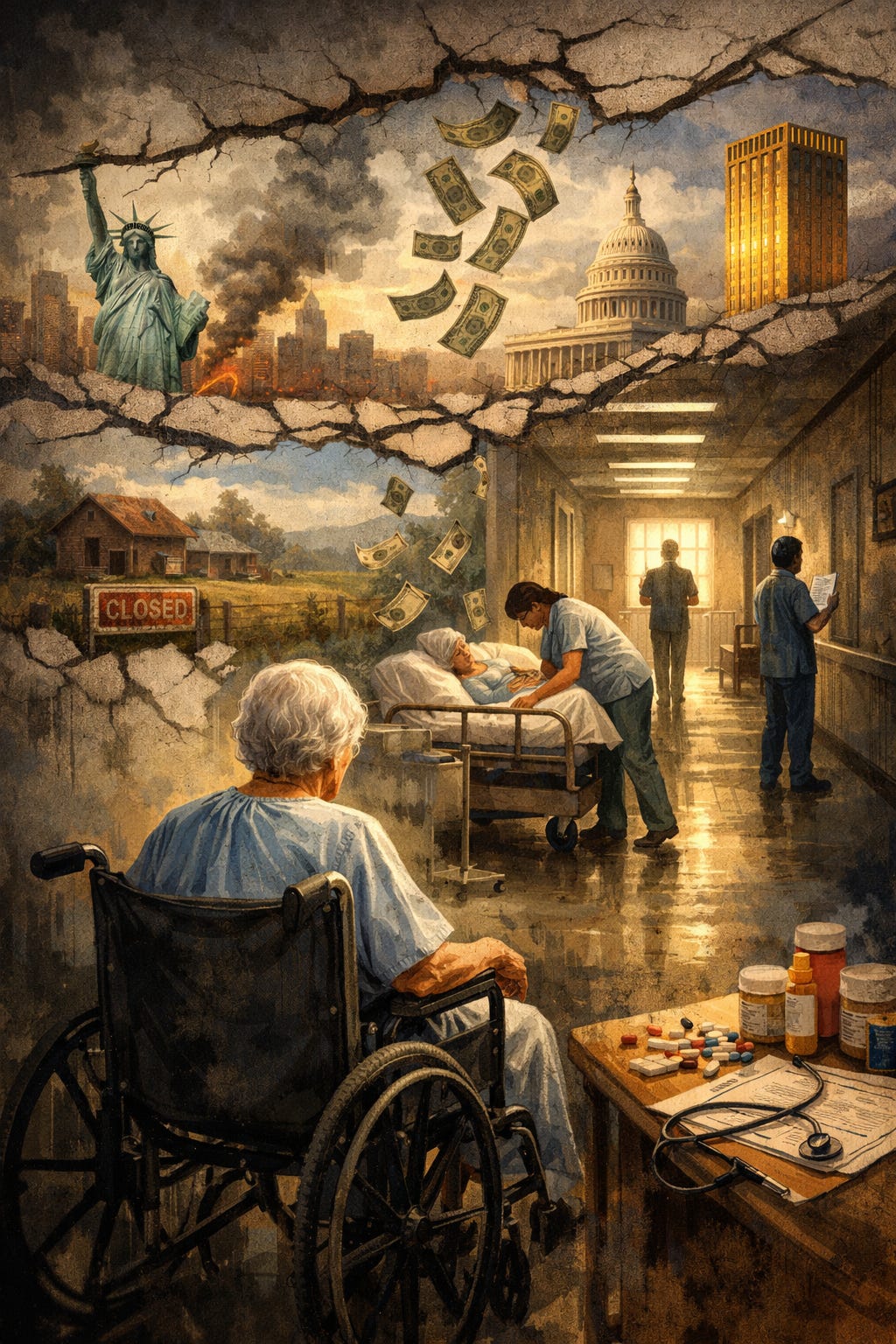
The repeal of the nursing home staffing rule is a striking illustration of how policy choices reverberate through the lives of everyday people. A modest requirement designed to ensure a minimum level of care for some of the most vulnerable has been undone even as broader health care access and affordability are under pressure.
That juxtaposition raises fundamental questions about the priorities shaping American health policy. When systemic understaffing contributes to harm and preventable decline in long‑term care settings, the existence of a staffing minimum is a baseline expectation of compassion and competence. When that expectation is removed without clear, community‑driven alternatives, families and residents are left to fill the gap.
Viewed as part of a broader tapestry of policy shifts—not isolated, but interconnected—the nursing home staffing rollback underscores a moment of reckoning. It is a moment that deserves not only scrutiny but serious conversation about what kind of health system the nation wants to sustain and for whom it exists.
Enjoying this analysis?
Subscribe to stay informed about the policies shaping health care, economic justice, and public accountability. No spin—just sharp reporting, grounded in facts and the stakes for real people.
Sources:
“HHS’ Cleanup of Federal Nursing Home Minimum Staffing Standards Rule Expands Access to Rural and Tribal Health Care” — U.S. Department of Health and Human Services (press release), December 2, 2025
“CMS repeals minimum staffing requirements for skilled nursing, long‑term care facilities” — American Hospital Association / Healthcare Dive reporting, December 2–3, 2025
“CMS Rescinds Nursing Home Nurse Staffing Rule” — Medicare Advocacy, December 4, 2025
“Trump administration repeals Biden‑era nursing home staffing mandate” — Healthcare Dive, December 3, 2025
“Minimum Staffing Standards for Nursing Homes Rolled Back” — AARP, December 10, 2025
“Trump Screwed Over Nursing Homes After Essentially Accepting Bribes” — The New Republic, January 27, 2026
“What the data says about Affordable Care Act health insurance exchanges” — Pew Research Center, January 22, 2026
“Millions of Americans Are Expected To Drop Their Affordable Care Act Plans. They’re Looking for a Plan B.” — KFF Health News, January 12, 2026
I’m wondering since this is the first comment if others are as speechless and enraged as I am. Right after I graduated from nursing school I worked in a long term care facility. The staff was dedicated and extremely overworked. The aides were constantly on the run, many skipping breaks (what’s that?) leaving meals for after work. The rules set up by Biden were better but still inadequate. And now Trump wants to go back, meaning an increase in inadequate care but more money for the owners. Don’t get old.
The premise for all companies to make a profit is what can be expendable.
If it’s a restaurant can the owner purchase lower grade product through the backdoor but still charge higher prices at the front door of the house will make that ROI.
If it’s any business if an owner can reduce the staff doing whatever the task or pay them at minimum at the backdoor but still have more orders coming in the front door will make that ROI.
It’s beyond appalling how we treat human beings. From Medicare, Medicaid, health insurance, senior centers, nursing homes, and even day cares. We’ve treated human beings as a commodity like a grain of corn, a piece of coal, just a stinking item, that can be expendable. It’s abhorrent, absolutely sickening.
“Three great forces rule the world: stupidity, fear and greed” - Albert Einstein