


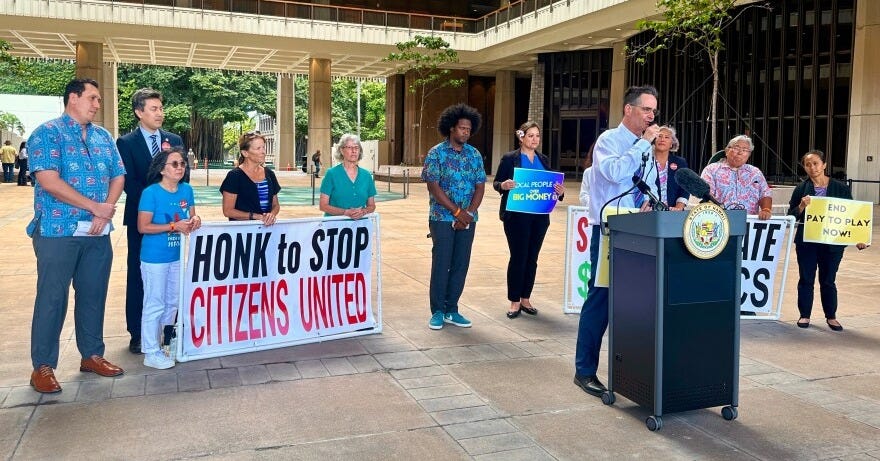
Hawaii lawmakers are advancing legislation aimed at limiting the role of corporate political spending, renewing national attention on the long-running effects of the Supreme Court’s Citizens United v. Federal Election Commission decision.
The legislation comes amid broader concerns from reform advocates who argue the 2010 ruling dramatically expanded the influence of corporations, wealthy donors, and outside political groups in American elections.
In Citizens United, the Supreme Court ruled that corporations and unions have a First Amendment right to spend unlimited amounts on independent political advertising, so long as the spending is not directly coordinated with campaigns. The decision helped fuel the rise of Super PACs and dramatically increased outside spending in federal elections over the past decade.
Supporters of the ruling argue that political spending is a form of protected speech and that limiting independent expenditures risks violating constitutional rights. Critics counter that the decision gave wealthy interests disproportionate influence over elections and policymaking.
Subscribe free for daily political analysis they won’t broadcast. Join 110K+ readers →
Hawaii’s effort reflects a broader push among some lawmakers and advocacy groups to revisit campaign finance rules through state legislation, disclosure laws, and constitutional amendment efforts. States cannot directly overturn Citizens United, but they can pursue transparency requirements and restrictions designed to increase public visibility into political spending.
The debate remains politically significant because outside political spending now plays a major role in presidential races, congressional campaigns, and issue advertising nationwide. Campaign finance reform has repeatedly emerged as a major issue during election cycles, particularly as political advertising costs continue to rise.
The renewed attention from Hawaii lawmakers highlights how Citizens United continues to shape debates over democratic accountability, corporate influence, and the balance between free speech protections and election regulation in the United States.
Subscribe free for daily political analysis they won’t broadcast. Join 110K+ readers →