


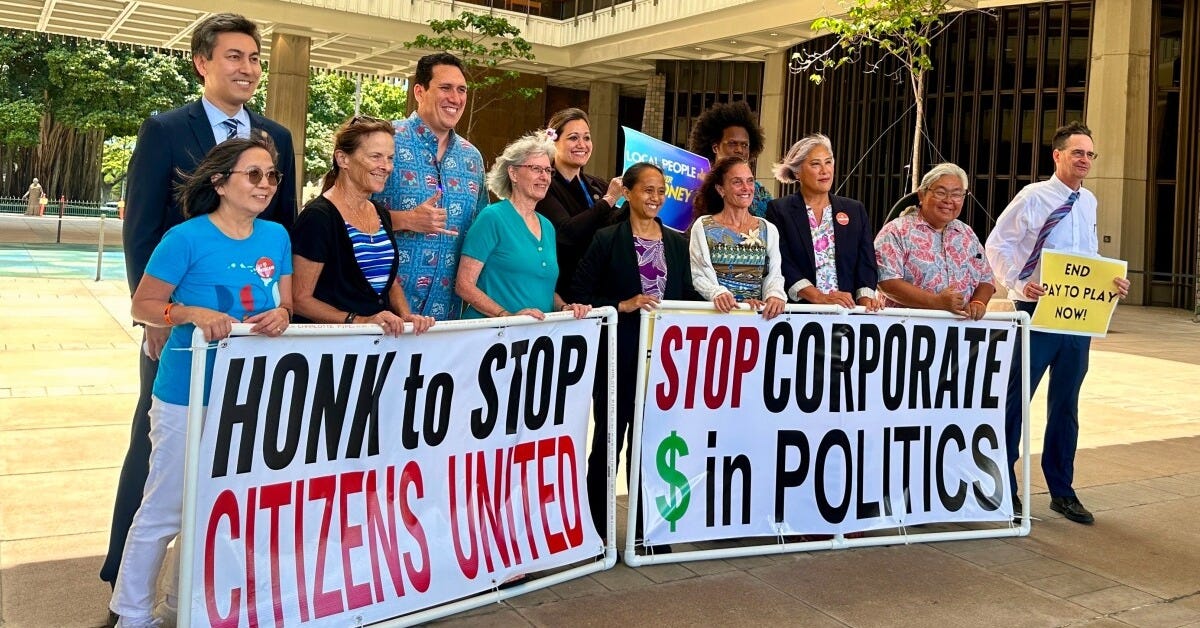
Hawaii lawmakers are advancing legislation aimed at limiting corporate political influence, reviving national debate over the Supreme Court’s landmark Citizens United v. Federal Election Commission ruling and its impact on American elections.
The 2010 decision allowed corporations, unions, and outside groups to spend unlimited amounts on independent political advertising, reshaping campaign finance across the country. Supporters argued the ruling protected political speech under the First Amendment. Critics said it opened the door to massive corporate influence and weakened public trust in democratic institutions.
Subscribe free for daily political analysis they won’t broadcast. Join 110K+ readers →
Hawaii’s legislation reflects a broader movement among some states and reform advocates seeking to reduce the role of large political donors and outside spending in elections. While states cannot directly overturn Citizens United, they can pursue disclosure requirements, transparency laws, and constitutional reform efforts.
Since the ruling, Super PAC spending and outside political advertising have grown dramatically in federal elections, especially during presidential and congressional races. The debate has remained central to questions about money, influence, and accountability in American politics.
Subscribe free for daily political analysis they won’t broadcast. Join 110K+ readers →